Tea Pets - The Little Companions on Your Tea Table
Tea pets are the finishing touch on any tea table. Nourished by tea, they grow more beautiful with time. From the auspicious meanings of golden toads and pixiu, to choosing between purple clay and ceramic materials, to nurturing methods and the spirit of tea ceremony—a complete guide to the world of tea pets.
Tea Pets - The Little Companions on Your Tea Table
If you frequent tea houses or are a tea enthusiast, you have likely seen those small, whimsical figures adorning tea tables: a crouching golden toad, a charming little monk, a pixiu carrying gold ingots... They sit quietly, gradually becoming smooth and lustrous under the gentle pouring of tea.
These are tea pets—the elegant companions of tea lovers, the finishing touch to any tea table.
What is a Tea Pet?
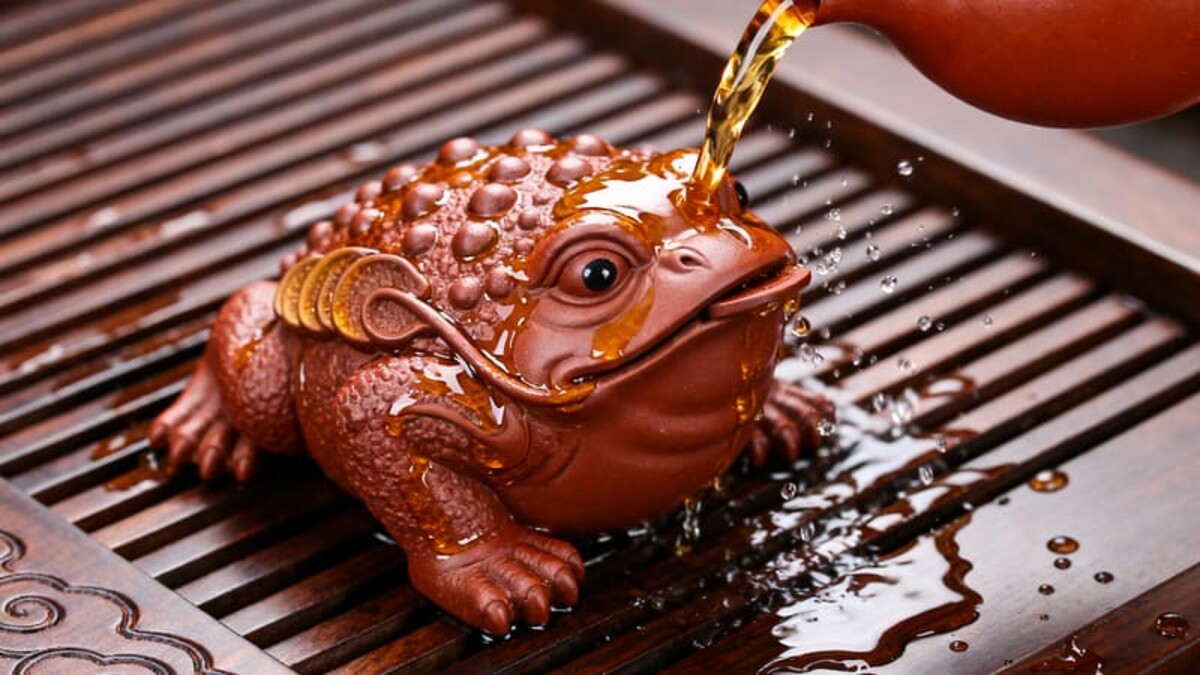
A tea pet, as the name suggests, is a "pet" nourished by tea. It is a small ornament placed on a tea tray, typically made of materials such as Yixing purple clay (zisha), fine mud, or ceramics. During tea appreciation, tea lovers pour leftover tea over their tea pets. Over time, the surface develops a warm, glossy "tea patina" (baobao), becoming smooth and radiant.
Tea pets are different from ordinary decorations. They are not meant to be merely "looked at"—they are meant to be "nurtured." Each pour of tea is a dialogue with your tea pet; each mark of time is a witness to your tea-drinking moments.
The Cultural Origins of Tea Pets
The origin of tea pets is inextricably linked to purple clay (zisha) culture.
The Ming and Qing Dynasties
In the mid-to-late Ming Dynasty, Yixing purple clay teapots flourished, and purple clay craftsmanship matured. Artisans used leftover clay to sculpt small animals and ornaments, which began appearing on tea lovers' desks.
During the Qing Dynasty, tea pets gradually gained popularity. Literati and scholars took pleasure in nurturing tea pets during their tea sessions, regarding them as "elegant playthings" in the tea room. Tea pets of that era were often mythical beasts and auspicious symbols, embodying people's aspirations for a good life.
Contemporary Tea Pet Culture
Today, tea pets have become indispensable "old friends" on the tea table. From ordinary tea pets costing a few dollars to master-crafted pieces worth thousands, from traditional designs to creative innovations, tea pet culture continues to evolve while honoring tradition.
Common Tea Pet Types and Their Meanings
Tea pets come in a rich variety of forms, each with its unique cultural significance. Understanding these meanings helps you find the tea pet that resonates with your spirit.
Golden Toad (Jin Chan) - Attracting Wealth
The golden toad is one of the most common tea pets. Legend has it that it can spit gold coins and is a symbol of prosperity.
Features:
- Three-legged toad with a coin in its mouth
- Crouching or squatting, with a serene expression
- Some carry strings of coins, others tread on gold ingots
Meaning: Attracting wealth and prosperity
Placement Wisdom: The direction the toad faces matters—if it has a coin in its mouth, its head should face inward, meaning "spitting wealth into the home"; if it has no coin, its head should face outward, meaning "gathering wealth from outside."
Pixiu - Guardian Against Evil
Pixiu is a mythical creature in Chinese legend, with a dragon's head, horse's body, and qilin's feet, resembling a lion.
Features:
- Majestic and imposing
- Some carry gold ingots, others tread on copper coins
- Open-mouthed and fierce
Meaning: Warding off evil, attracting and guarding wealth
Legend: Pixiu feeds on wealth, gathering riches from all directions, letting nothing escape—hence its association with "guarding wealth." Businesspeople particularly favor pixiu tea pets.
Elephant - Auspiciousness
"Elephant" (xiang) is homophonous with "auspicious" (xiang), making it a traditional symbol of good fortune.
Features:
- Sturdy build with a gentle expression
- Often depicted carrying a treasure vase or gold ingots
- Trunk curled or raised in various poses
Meaning: Good fortune and peace
"Peace and Prosperity": An elephant carrying a treasure vase symbolizes "peace and prosperity" (taiping youxiang), representing world peace and abundant harvests.
Little Monk/Child - Zen Life
Tea pets featuring children or little monks are full of Zen charm and childlike wonder.
Features:
- Innocent expressions, charmingly naive
- Common poses: meditation, reading scriptures, playing
- Some are "urinating boys"—they "pee" when hot water is poured on them
Meaning: Returning to simplicity, maintaining a childlike heart
Zen Spirit: These little monks remind tea lovers that appreciating tea is like practicing Zen—only with a pure, undistracted mind can one truly taste the essence of tea.
Chinese Zodiac - Guardian of Your Birth Year
Tea pets featuring the twelve zodiac animals are widely popular.
Meaning: Everyone can choose a tea pet of their zodiac sign as a guardian for their birth year.
Gift Suggestion: Zodiac tea pets are often given as gifts, symbolizing "peace year after year."
Other Common Tea Pets
| Tea Pet | Meaning |
|---|---|
| Turtle | Longevity, stability |
| Carp | Success, abundance year after year |
| Crane | Longevity, nobility |
| Gourd | Good fortune, warding off illness |
| Chinese Cabbage | Wealth, integrity |
| Lotus Pod | Fertility, spiritual growth |
| Cicada | Success, wealth |
Materials for Tea Pets
The material of a tea pet directly affects its "nurturing" results and collectible value.
Purple Clay (Zisha) - The Preferred Material
Purple clay is the best material for making tea pets for these reasons:
- Excellent Breathability: The dual-pore structure of purple clay allows it to absorb tea
- Improves with Age: Long-term pouring develops a warm patina
- Mold-Resistant: Purple clay is breathable and不易滋生细菌
Characteristics of Purple Clay Tea Pets:
- Initially slightly dry
- Begins to glow after several months of care
- Becomes jade-like after a year or two
- Grows more beautiful with time
Price Range: From tens to thousands of dollars; master-crafted pieces can reach tens of thousands
Fine Mud (Chengni) - Delicate and Smooth
Chengni is fine mud that has been washed and settled, with a delicate texture.
Features:
- Smooth surface, uniform texture
- Various colors (red, purple, yellow, green, etc.)
- Nurturing effects similar to purple clay
Shanxi Chengni: Chengni inkstones are one of China's "Four Famous Inkstones," and this material is also used for tea pets.
Ceramics - The Classic Choice
Ceramic tea pets include Ru ware, Guan ware, Ge ware, and Jun ware.
Ru Ware Tea Pets:
- Sky-blue color, jade-like smoothness
- Unique crackle patterns
- Develops distinctive "gold thread and iron line" patterns when nurtured
Jingdezhen Porcelain Pets:
- Full glaze, high gloss
- Exquisite craftsmanship, rich details
- Relatively difficult to "nurture" a patina
Resin - Entry-Level Choice
Resin tea pets are inexpensive and come in various designs, but lack the joy of "nurturing" and are not recommended for long-term collection.
How to "Nurture" a Tea Pet
Nurturing a tea pet is a refined pleasure for tea lovers. A good teapot paired with a good tea pet, daily companionship, and the passage of time—the tea pet gradually becomes warm and lustrous, recording the owner's tea-drinking journey.
Methods for Nurturing Tea Pets
1. Pouring Tea
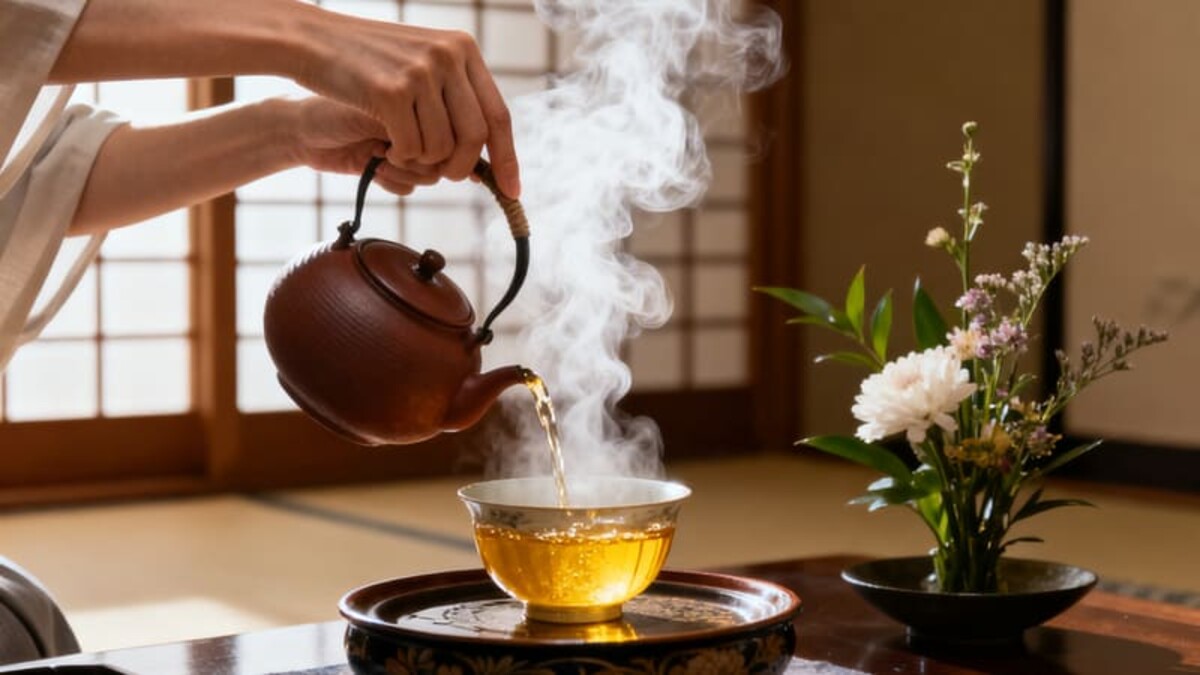
During each tea session, pour leftover tea over your tea pet. Note:
- Don't use rinse water: The first brew contains more impurities and shouldn't be poured over the pet
- Moderate Temperature: Tea should be 60-80°C; too hot will damage the tea pet
- Even Coverage: Let all parts of the tea pet be nourished by the tea
2. Wiping with a Tea Cloth
After pouring, gently wipe the tea pet's surface with a clean tea cloth. This helps the tea absorb evenly and accelerates patina formation.
3. One Tea, One Pet
It's recommended to nurture the same tea pet with the same type of tea. Mixing different teas will affect the patina's color and texture.
- Pu'er, Black Tea → Deep patina
- Oolong, Tieguanyin → Amber patina
- Green Tea, White Tea → Light golden patina
4. Patience is Key
Nurturing a tea pet is a slow process. A good tea pet requires months or even years of careful nurturing to achieve a jade-like luster. Don't rush—enjoy the process.
Taboos in Nurturing Tea Pets
| Taboo | Reason |
|---|---|
| No dish soap | Will damage the tea pet's surface, affecting patina formation |
| No cold water on hot pets | Temperature shock may cause cracking |
| Don't neglect cleaning | Tea scale buildup leads to mold and odors |
| Avoid oil and grease | Oil clogs the pores, affecting "breathing" |
| No direct sunlight | Will cause fading and cracking |
Daily Cleaning of Tea Pets
Every one to two weeks, clean your tea pet:
- Soak in warm water for 10-15 minutes
- Gently scrub with a soft brush
- Rinse with clean water
- Wipe dry with a tea cloth and let air-dry in a cool place
Tea Pets and the Spirit of Tea Ceremony
Tea pets may seem like small objects on a tea table, but they embody the profound essence of the tea ceremony spirit.
Nurturing a Pet is Nurturing the Heart
Nurturing a tea pet requires patience, perseverance, and tranquility. Pouring and wiping daily, year after year. This process itself is a form of spiritual practice.
In the fast-paced modern world, nurturing a tea pet allows you to slow down and find calm. Each pour of tea is a dialogue with yourself; each mark of time is an imprint of life.
All Things Have Spirit
In traditional Chinese culture, all things possess spirit. Under a tea lover's careful nurturing, a tea pet transforms from a cold object into something warm and spiritual. It is no longer just a "thing" but becomes the tea lover's "old friend" and "companion."
This state of "unity between person and object" is the essence of Eastern aesthetics.
Following Nature
Nurturing a tea pet emphasizes "going with the flow." Don't force the patina's color, don't rush. Let time do its work, let nature reveal itself.
This aligns with the spirit of the tea ceremony—no contention, no grabbing, no forcing. Following nature leads to true taste.
How to Choose a Tea Pet
1. Look at Material
Prioritize purple clay and fine mud materials. Only good materials can develop a good patina.
2. Look at Craftsmanship
- Is the design vivid and expressive?
- Are the details refined?
- Are the proportions balanced?
- Are there flaws or cracks?
3. Trust Your Connection
A tea pet is a companion—choose one you genuinely like. The one that catches your eye at first glance often has a connection with you.
4. Consider Practicality
- Does the size fit your tea tray?
- Is it easy to pour over and clean?
- Is the base stable?
Price Guide
| Type | Price Range | Suitable For |
|---|---|---|
| Ordinary tea pets | $5-20 | Beginners |
| Quality tea pets | $20-100 | Daily use |
| Master-crafted | $100-1000 | Collecting |
| Rare masterpieces | $1000+ | Serious collectors |
Conclusion
A tea pet is an elegant companion for tea lovers, the finishing touch on a tea table, and a faithful recorder of tea-drinking moments.
Choose a tea pet that speaks to your heart, nourish it with tea, nurture it with time. It will transform from a cold object into something warm and spiritual, becoming an indispensable "old friend" in your tea life.
Nurturing a tea pet is not just about caring for a small object—it's about cultivating a state of mind, a way of life.
May your tea pet accompany you as you taste tea, nurture your heart, and realize the Way. In the rising steam of tea, may you find inner peace and joy.
Though small, tea pets carry the tea lover's years and sentiments. Nurturing pets with tea, accompanied by pets while drinking tea—this is the true joy of tea.