Amulets - A Spiritual Journey Through Culture
Amulets: A Spiritual Journey Through Culture
"Every amulet is a vessel of blessings, a witness to history."
Introduction
Amulets, these small objects, carry cultural memories spanning thousands of years. From ancient meditation tools in India to modern fashion accessories, the identity of amulets may change, but their core value—the power to connect hearts—remains unchanged.
In Eastern culture, amulets are not just physical protection, but spiritual anchors. They remind us of our inner strength, carry blessings and prayers, and connect the past with the future.
Origins of Amulets
Buddhist Heritage
The history of amulets can be traced back to ancient India. Early Buddhists used scriptures, mantras, and sacred objects as aids for spiritual practice. These items were believed to possess divine power, capable of:
- Protecting the wearer from negative energies
- Enhancing concentration for meditation practice
- Carrying blessings and transmitting good intentions
As Buddhism spread to China, amulet culture merged with local Taoism and folk beliefs, forming unique Chinese characteristics.
Cultural Fusion
Chinese Amulet Traditions:
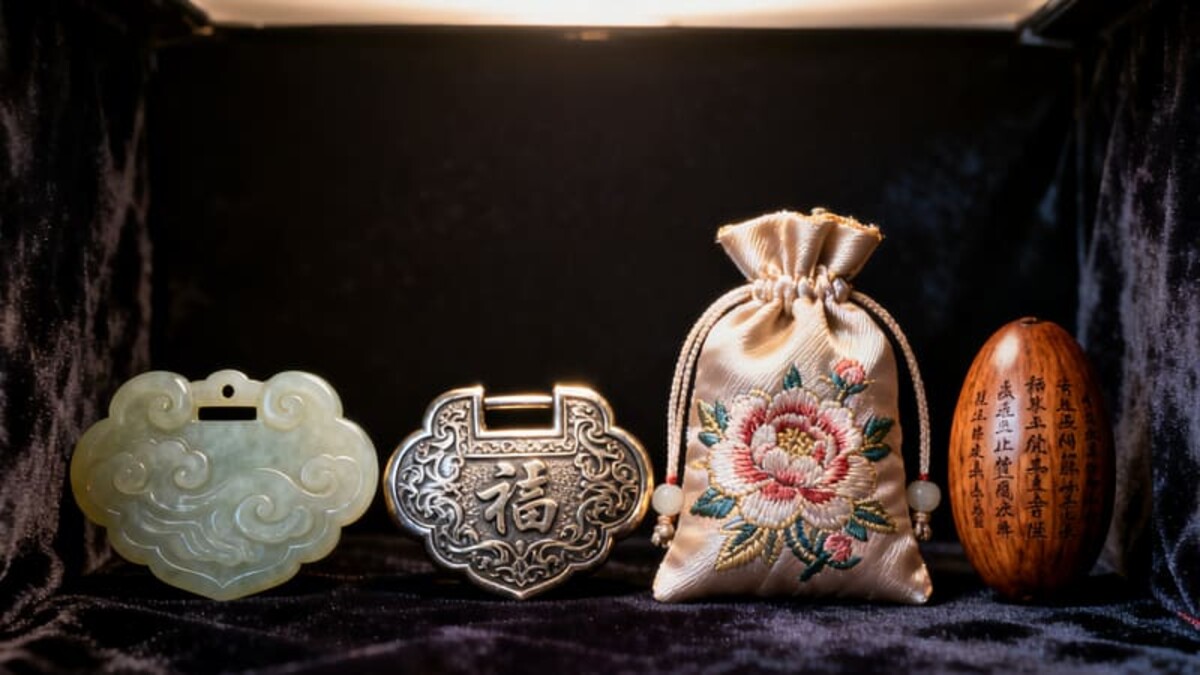
- Taoist talismans (Fu 符)
- Buddhist prayer beads (Mala 佛珠)
- Jade pendants (Yu 玉)
- Red string bracelets (Hong Sheng 红绳)
- Sachets (Xiang Nang 香囊)
Each type carries different meanings and uses, but all share the same essence: connecting matter with spirit.
Types and Meanings
1. Buddhist Mala Beads
Origin: Ancient India Material: Sandalwood, Bodhi seeds, crystals, gems Function: Meditation counting tool, spiritual reminder
Mala beads are not just jewelry, but meditation tools. Each bead represents a mantra or prayer. Traditional malas have 108 beads, symbolizing:
- 108 afflictions in Buddhism
- Completeness and wholeness
- Connection to the universe
2. Jade Pendants
Origin: China Material: Jade (Hetian jade, Jadeite, etc.) Symbolism: Protection, luck, virtue
In Chinese culture, jade is endowed with spirituality:
- Protects the wearer from misfortune
- Accumulates virtue through long-term wearing
- Connects generations as family heirlooms
3. Red String Bracelets
Origin: Multiple cultures Material: Red cord, sometimes with charms Meaning: Protection, fate, connection
The red string represents:
- Protection from negative energy
- Fate and destiny (red thread of fate)
- Connection between people
- Good fortune and blessings
4. Taoist Talismans (Fu)
Origin: Chinese Taoism Material: Yellow paper, red ink Function: Protection, blessing, exorcism
Taoist talismans combine:
- Calligraphy and symbols
- Mantras and incantations
- Five Elements theory
- Cosmic energy alignment
5. Sachets (Xiang Nang)
Origin: Ancient China Material: Silk, herbs, aromatic woods Use: Health, beauty, protection
Traditional sachets contain:
- Medicinal herbs
- Aromatic woods
- Dried flowers
- Protective symbols
Modern Amulet Culture
From Sacred to Everyday
In modern society, the function of amulets has shifted:
Past:
- Essential for religious rituals
- Divine tools for protection
- Status symbols
Present:
- Fashion accessories
- Spiritual anchors
- Cultural identity markers
New Forms of Amulets
As times change, amulets continue to evolve:
Traditional Forms:
- Jade pendants and plaques
- Red string bracelets
- Sachets and pouches
- Scripture talismans
Modern Forms:
- Designer jewelry
- Customized amulets
- Tech-integrated pieces (smart bracelets)
- Digital amulets (phone wallpapers)
Psychological and Spiritual Significance
1. Spiritual Anchor
In a complex world, amulets provide a spiritual anchor. When we touch them, we can:
- Return to inner peace
- Remind ourselves of our intentions
- Gain spiritual strength
2. Cultural Heritage
Every amulet carries deep cultural traditions:
- Buddhist wisdom
- Taoist practices
- Folk beliefs
- Family blessings
3. Emotional Connection
Amulets often serve as bridges for emotional connection:
- Blessings from elders to younger generations
- Love tokens between couples
- Symbols of friendship
- Promises to oneself
Amulets and Mindfulness
The Power of Ritual
Wearing an amulet is itself a ritual:
- Putting it on each morning reminds us of a new beginning
- Touching it brings us back to the present moment
- Taking it off before sleep invites gratitude for the day's peace
This sense of ritual can:
- Enhance mindfulness awareness
- Cultivate gratitude
- Establish life order
Psychological Suggestion
From a psychological perspective, amulets have powerful suggestive effects:
Placebo Effect: Believing in an amulet's protective power can:
- Boost self-confidence
- Reduce anxiety
- Improve ability to handle difficulties
Self-fulfilling Prophecy: When we believe an amulet brings good luck, we:
- Notice positive events more
- Take more proactive actions
- Maintain optimistic attitudes
Connection to Meditation
Amulets and meditation share common elements:
Focus Object:
- Amulet as a concentration point
- Physical anchor for wandering mind
- Reminder to return to breath
Intention Setting:
- Amulet carries our intentions
- Regular practice reinforces purpose
- Physical symbol of spiritual goals
Protection:
- Creating sacred space
- Warding off distractions
- Maintaining practice consistency
Choosing Your Amulet
By Purpose
For Protection:
- Jade pendants
- Taoist talismans
- Red string bracelets
For Meditation:
- Mala beads
- Crystal pendants
- Sandalwood bracelets
For Luck:
- Lucky charms
- Zodiac symbols
- Feng Shui items
For Connection:
- Matching bracelets
- Family heirlooms
- Gift from loved ones
By Material
Wood (Grounding):
- Sandalwood - calming, spiritual
- Rosewood - protective, healing
- Bodhi wood - enlightenment, wisdom
Stone (Stability):
- Jade - harmony, balance
- Crystal - clarity, amplification
- Turquoise - protection, healing
Metal (Strength):
- Silver - purification, intuition
- Gold - success, abundance
- Copper - energy conduction
By Feeling
Most importantly, choose an amulet that resonates with you:
- Trust your intuition
- Notice your emotional response
- Consider the story behind it
- Feel the energy connection
Caring for Your Amulet
Traditional Guidelines
Traditionally, there are some taboos for wearing amulets:
Avoid:
- Wearing in unclean places
- Letting others touch it casually
- Mixing with miscellaneous items
- Continuing to wear when damaged
Recommendations:
- Keep it clean
- Purify regularly (sunlight, moonlight)
- Hold it with respect
- Treat it well
Establishing Connection
1. Set Your Intention When wearing it for the first time, clarify what the amulet means to you:
- "This amulet reminds me to maintain inner peace"
- "This amulet carries my family's blessings"
- "This amulet represents my promise to myself"
2. Daily Rituals
- When putting it on in the morning, silently recite a mindfulness phrase
- Touch the amulet to bring yourself back to the present
- Express gratitude before sleep
3. Regular Purification
- Sunlight exposure for 10-15 minutes
- Overnight in moonlight
- Rinse with clean water (check material first)
- Purify with sandalwood or agarwood incense
Conclusion
Amulets are bridges connecting the past with the future, intersections of matter and spirit.
They are not just objects, but:
- Carriers of culture
- Spiritual anchors
- Emotional connections
- Self-reminders
In this fast-paced era, we all need an anchor to find peace in chaos and direction in confusion.
An amulet is such an anchor.
It reminds us of:
- Inner strength
- Cultural roots
- Connections between people
May you find your amulet, let it accompany you, protect you, and remind you.
Recommended Reading
- "Tea Ceremony: Zen and Life in a Cup of Tea"
- "Meditation for Beginners: A Complete Guide to Starting Your Practice"
- "Mala Beads: A Spiritual Journey from Prayer Beads to Fashion Accessories"
Choose your amulet and begin a spiritual journey through culture.