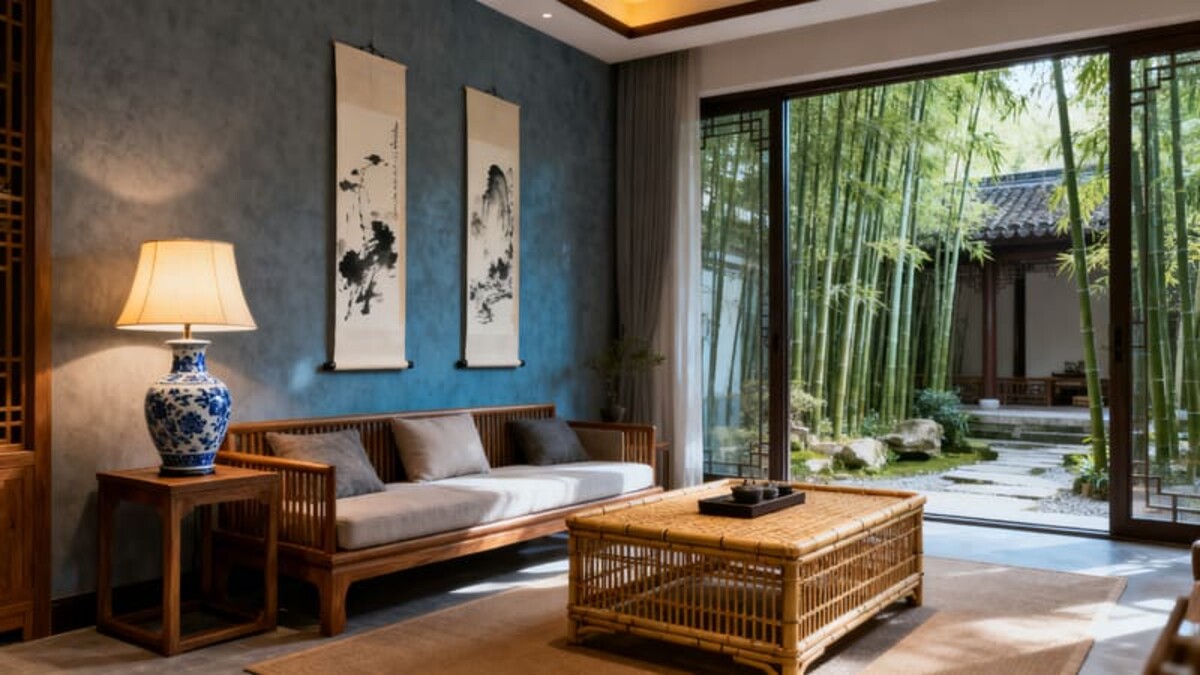
History of Chinese Incense Culture: From Rituals to Lifestyle Aesthetics
Chinese incense culture spans thousands of years. From ancient rituals to modern lifestyle aesthetics, incense has always been an important part of Chinese culture. Understanding incense is understanding the Chinese spiritual world.
History of Chinese Incense Culture: From Rituals to Lifestyle Aesthetics
Introduction
A wisp of smoke rises gracefully.
This wisp carries thousands of years of Chinese spiritual pursuit.
From rituals for deities to literati gatherings to daily aromatics, incense culture has long been integrated into Chinese life, becoming a unique cultural form.
Let us enter the world of incense together.
I. The Origins of Incense
Earliest Use of Incense
The history of Chinese incense use can be traced back to the Neolithic Age.
Archaeological discoveries show that as early as 6,000 years ago, our ancestors began burning aromatic plants.
The initial purposes were simple: repelling insects, curing diseases, rituals.
Pre-Qin Period
Pre-Qin classics contain many records about incense:
The Book of Songs mentions "xiao ai," an aromatic herb used for rituals.
The Chu Ci uses aromatic herbs as metaphors for virtue:
"I wear Jiangli and Bizhi, and thread autumn orchids as a pendant."
Incense, from a practical insect repellent, began to have symbolic meaning.
Han Dynasty
The Han Dynasty was a crucial period for incense culture development.
Zhang Qian's mission to the Western Regions brought back foreign aromatic materials like agarwood and sandalwood.
From then on, Chinese incense culture had richer materials.
The appearance of the Boshan censer marked the refinement of incense vessels.
Han Dynasty incense use evolved from pure rituals to lifestyle enjoyment.
II. Tang and Song: The Golden Age of Incense
Tang Dynasty
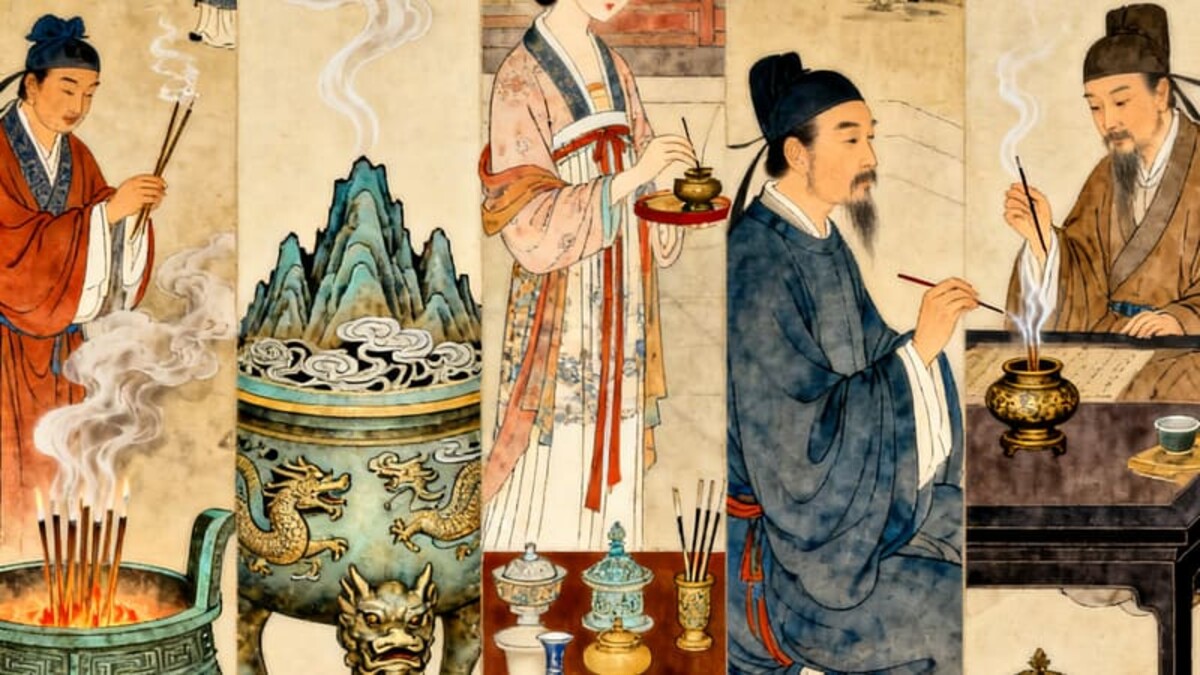
The Tang Dynasty was the peak period for incense culture.
Imperial Incense Use
- Special incense workshops in the palace
- The emperor at court always had incense burners
- Nobles used incense to display status
Buddhist Incense Use
- Buddhism arrived, bringing new incense practices
- Temples had flourishing incense offerings
- Incense became an important tool for practice
Literati Incense Use
- Poets wrote about incense, painters depicted incense
- Incense became inspiration for artistic creation
- Li Bai: "Fragrant wind sends purple stamens, reaching the Longevity Palace"
Song Dynasty
In the Song Dynasty, incense culture reached its apex.
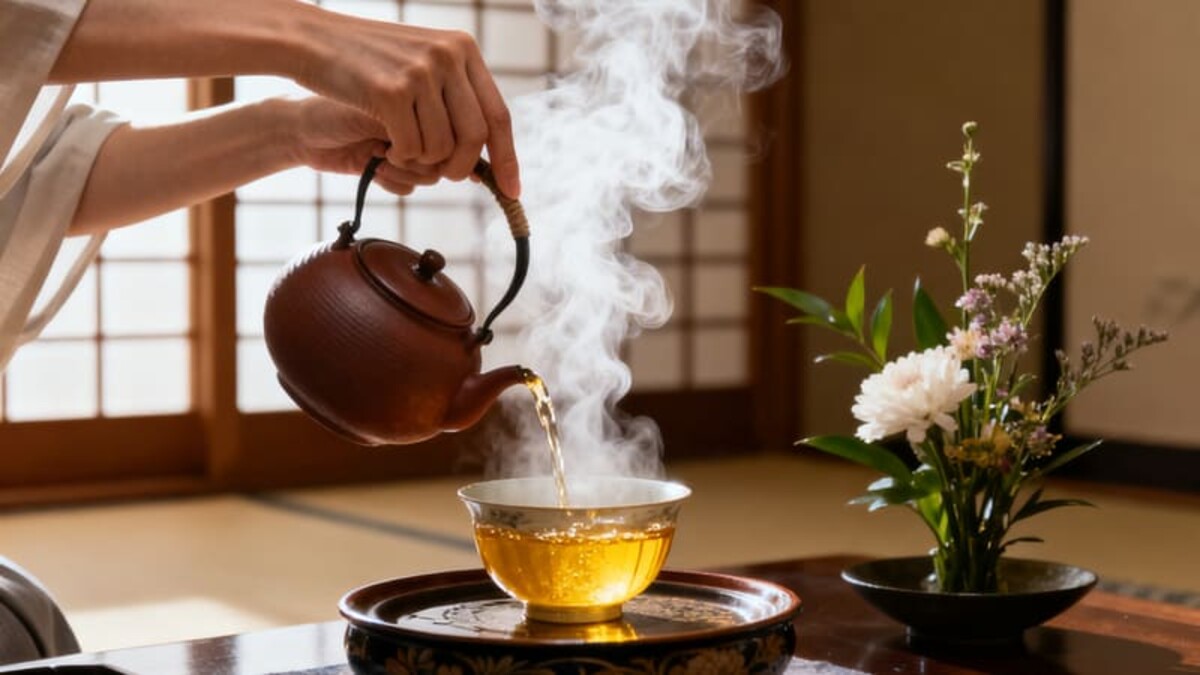
Four Arts The Song people called "tea whisking, incense burning, flower arranging, painting hanging" the four arts of leisure.
Incense became part of literati life.
Incense Scholarship
- Chen Jing's Incense Manual
- Hong Chu's Incense Manual
- These works systematically summarized incense knowledge
Refined Incense Vessels
- Censer shapes became more diverse
- Special incense boxes and bottles appeared
- Incense implements became art objects
Incense Markets
- Kaifeng and Hangzhou had specialized incense markets
- Aromatic material trade flourished
- Incense became an important commodity
III. Ming and Qing: Heritage and Popularization
Ming Dynasty
The Ming Dynasty saw continued incense culture development.
Zhou Jiazhou's Xiang Cheng This was ancient China's most comprehensive incense scholarship, recording:
- Origins and characteristics of various aromatic materials
- Incense blending formulas and methods
- Types and use of incense vessels
- Stories of incense use through the ages
Literati Incense Gatherings Literati using incense for social gatherings became a social practice.
Appearance of Incense Sticks The Ming Dynasty invented incense sticks, making incense use more convenient.
Qing Dynasty
The Qing Dynasty saw incense culture become even more popular.
Imperial Incense Use
- The Qing palace had a special "Incense Workshop"
- The Qianlong Emperor loved agarwood
- Imperial incense formulas have been passed down
Folk Incense Use
- Temples had flourishing incense offerings
- Ordinary homes kept incense
- Incense became a daily item
IV. Types of Incense
By Form
Incense Sticks
- Most common form
- Convenient to use
- Suitable for daily aromatics
Incense Coils
- Can burn longer
- Suitable for extended aromatic use
- Curling smoke creates beautiful atmosphere
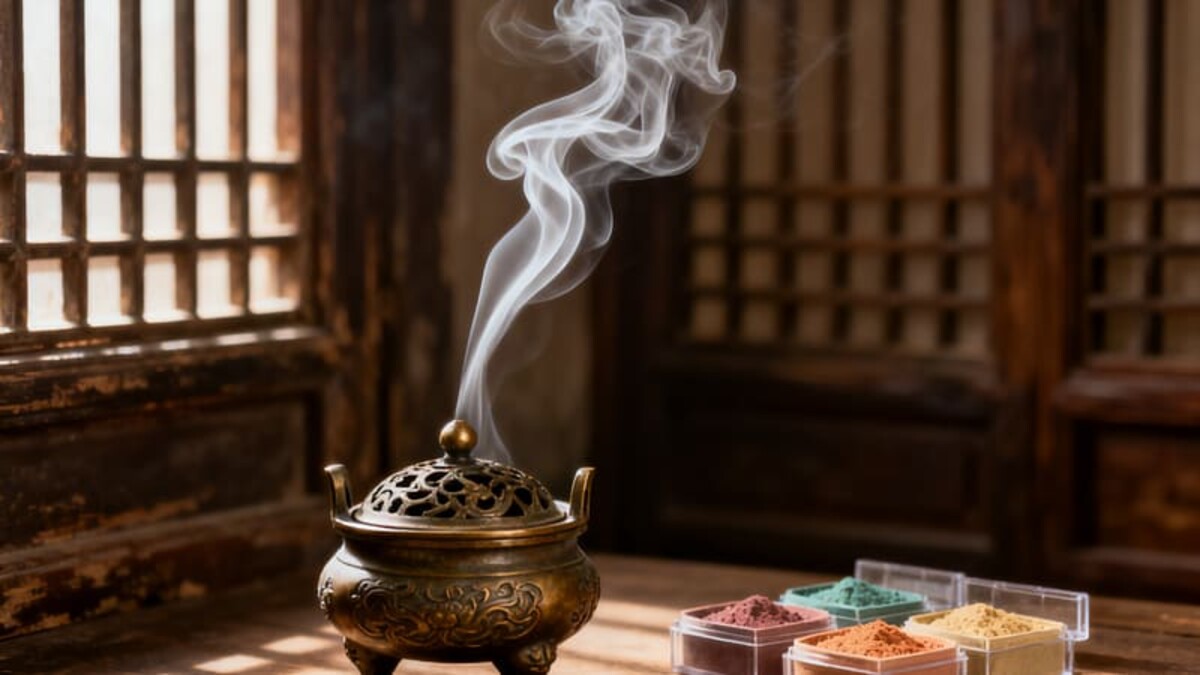
Incense Powder
- Original form of incense use
- Can use incense seals for patterns
- Strong experiential quality
Incense Pills/Cakes
- Common form in ancient times
- Can be worn or heated
- Long-lasting fragrance
Incense Sachets
- Bags containing aromatic materials
- Can be worn
- Protective and decorative
By Material
Agarwood (Chenxiang)
- The king of incense materials
- Formed when aquilaria trees are infected
- Rich, deep fragrance
- Very precious
Sandalwood (Tanxiang)
- Mild, elegant fragrance
- One of the most common incense materials
- Has calming, centering properties
Frankincense (Ruxiang)
- Resin from Boswellia trees
- Used since ancient times
- Has medicinal value
Aloeswood (Milu)
- Another precious incense material
- Sweet, lasting fragrance
V. The Art of Using Incense
Incense Appreciation Methods
Smelling Incense
- Heat incense and appreciate its fragrance
- Note the changing notes: top, middle, base
- Different incenses have different characteristics
Incense Seal
- Press incense powder into patterns
- Light and watch it burn along the pattern
- A meditative practice
Incense Competition
- Traditional literati game
- Identify incense types by smell
- Test knowledge and sensitivity
Incense and Meditation
Creating Atmosphere
- Light incense before meditation
- The fragrance helps calm the mind
- Creates a sacred space
Mindfulness Practice
- Focus on the rising smoke
- Watch it curl and dissipate
- A metaphor for impermanence
Purification
- Traditionally used to purify spaces
- Modern use for creating calm atmosphere
VI. Incense and Health
Traditional Chinese Medicine View
Aromatic Materials and Health
- Sandalwood: Calms the mind, relieves anxiety
- Agarwood: Warms the middle, regulates qi
- Mugwort: Disperses cold, stops pain
- Clove: Warms the middle, descends rebellious qi
Incense Therapy
- Using incense for wellness
- Different incenses for different constitutions
- Combine with other TCM methods
Modern Scientific Research
Aromatherapy Effects
- Certain fragrances reduce stress hormones
- Can improve sleep quality
- May enhance cognitive function
Caution
- Ensure good ventilation
- Avoid excessive use
- Some people may be sensitive
VII. Buying Incense Guide
How to Judge Quality
Agarwood
- Smell: Rich, deep, long-lasting
- Look: Natural, with resin channels
- Test: Should sink in water (high quality)
- Price: Very expensive for genuine material
Sandalwood
- Smell: Mild, sweet, lasting
- Look: Fine grain, natural color
- Touch: Smooth, warm
- Price: More affordable than agarwood
Incense Sticks
- Look: Even thickness, natural color
- Smell: Not harsh when burning
- Burn: Steady, minimal smoke
- Ash: White or light gray
Common Pitfalls
- Fakes: Other materials posing as precious woods
- Dyeing: Chemical dyes to enhance color
- Filling: Glue filling cracks
- Piecing: Small pieces joined to make larger ones
Price Reference
| Material | Entry Level | Mid-Range | High-End |
|---|---|---|---|
| Sandalwood sticks | $10-30 | $30-100 | $100+ |
| Agarwood sticks | $50-200 | $200-1000 | $1000+ |
| Incense powder | $15-50 | $50-150 | $150+ |
VIII. Incense Culture in Modern Life
Incense in Daily Life
Morning Ritual
- Light incense after waking
- Set intention for the day
- Create a peaceful beginning
Evening Relaxation
- Burn calming incense
- Transition from work to rest
- Improve sleep quality
Special Occasions
- Meditation sessions
- Yoga practice
- Tea ceremonies
- Reading time
Creating a Sacred Space
Location
- Choose a clean, quiet corner
- Set up a simple incense altar
- Keep it tidy
Tools
- A good censer
- Incense holder
- Lighter or matches
- Incense storage
Practice
- Light incense mindfully
- Watch the smoke rise
- Breathe deeply
- Appreciate the fragrance
Conclusion
Incense culture is not just about fragrance.
It's about:
- Creating atmosphere
- Cultivating mindfulness
- Connecting with tradition
- Enhancing life quality
From ancient rituals to modern aesthetics, incense has accompanied humanity's spiritual journey.
May a wisp of incense bring you peace and beauty.
Light some incense, close your eyes, and let the fragrance take you to a peaceful place.
Carrying the Way through vessels · Transmitting the heart through things