Have Some Tea: The Three-Word Wisdom of Zhaozhou
No matter who you are, no matter what you ask, Zen master Zhaozhou's answer is always the same: "Have some tea." Three simple words that contain the essence of Zen.
Have Some Tea: The Three-Word Wisdom of Zhaozhou
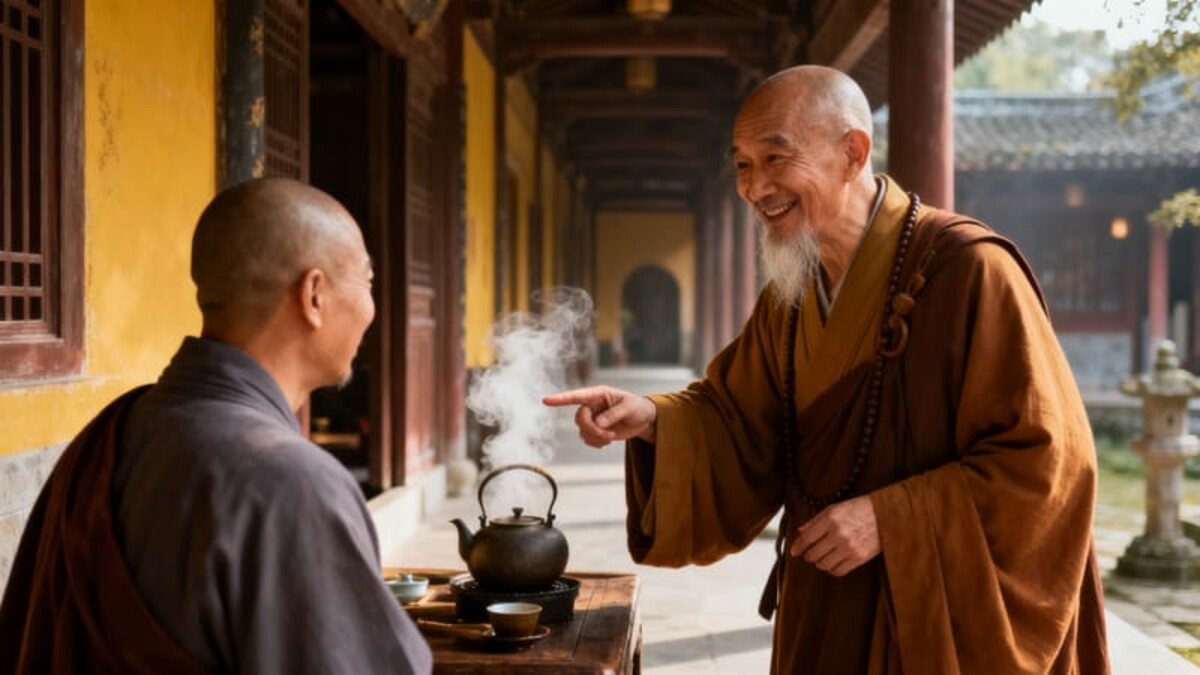
A monk came to see Zen master Zhaozhou Congshen.
The monk said: I have just left home to become a monk. Please, Master, point out the essentials of practice.
Zhaozhou asked: Have you had your porridge?
The monk said: Yes.
Zhaozhou said: Have some tea.
Another monk came.
The monk said: I have practiced for many years and visited many masters. Please, Master, show me the way.
Zhaozhou asked: Have you had your porridge?
The monk said: Yes.
Zhaozhou said: Have some tea.
The temple director was confused and asked Zhaozhou:
The first monk just left home, and you told him to have tea. The second has practiced for years, and you told him the same thing. Why?
Zhaozhou called: Director!
The director answered: Yes?
Zhaozhou said: Have some tea.
Why "Have Some Tea"?
Three people. Three situations. One answer.
- Just ordained—have some tea.
- Practiced for years—have some tea.
- Asking why—have some tea.
Why?
Because the Question Itself Is the Problem
The first monk, just ordained, was anxious about the "essentials of practice." He thought practice had some trick, some secret, something to grasp.
The second monk, practiced for years, visited everywhere, wanted someone to "show the way." He thought he was lost and needed pointing.
The third, the director, asked "why." He thought the answer lay in reasons, in explanations.
All three were asking. Searching. Thinking.
And Zhaozhou didn't give them answers.
He gave them a way to stop asking, stop searching, stop thinking.
Have some tea.
What Is the State of "Having Tea"?
When you are truly having tea—
You're not thinking about the past. You're not thinking about the future. You're not asking questions. You're not seeking answers.
You're just having tea.
This is the present moment.
Zen Doesn't Answer Questions. Zen Dissolves Them.
Ordinary people want answers to their questions.
Zen masters don't give you answers. Zen masters show you—
The question never existed in the first place.
"Where are the essentials of practice?"—Nowhere. You ARE the practice. "How do I find the way?"—There is no way. You were never lost. "Why is the answer the same?"—No why. Just have tea.
Why Do We Always Have to Ask?
Because we are restless.
We're afraid we're doing it wrong. Afraid we're missing something. Afraid we're not good enough.
So we ask. We seek confirmation. We want validation.
But Zen tells you:
You don't need confirmation. You just need to live.
Living is having tea. Having tea is living.
Having Tea vs. Thinking About Having Tea
"Having tea" and "thinking about having tea" are two different things.
Most people spend their whole lives "thinking about having tea":
- Is this tea good?
- Am I drinking it correctly?
- What do others think of how I drink?
- What are the benefits of drinking tea?
But truly having tea is just having tea.
The tea in your mouth. The warmth on your tongue. The fragrance in your nose.
No question of good or bad. No question of right or wrong. No question of why.
Zhaozhou's Tea Has Been Drunk for 1,200 Years
This koan occurred in the Tang Dynasty. Over 1,200 years ago.
Countless people have studied it.
Some awakened because of it. Some let go because of it. Some simply... went and had tea.
All good.
Because "have some tea" is not a riddle to solve. It's an invitation.
An invitation to drop the question and return to now.
Afterword
Zhaozhou Congshen lived to 120 years old.
He served as abbot of Guanyin Temple in Zhaozhou (today's Bailin Temple in Hebei) for over forty years. He was honored as "Zhaozhou the Ancient Buddha."
His Zen style was known for being "ordinary."
No mystery. No tricks. Just daily life—eating, dressing, having tea.
The deepest truth is in the most ordinary places.
Later generations called "Have some tea" the "Zhaozhou Tea," making it one of the most important koans in Zen.
Not because it's difficult to understand. But because it's too simple—so simple we dare not believe it.
You, Right Now
After reading this article, you might be thinking:
"What does this mean?" "How should I understand this?" "What does this have to do with my life?"
If you're thinking like this, I will imitate Zhaozhou and say to you:
Have some tea.
Reflections
- What are you thinking right now? Is that thought necessary?
- If you thought nothing right now, just drank tea (or water), what would happen?
- Is there a "having tea" moment in your life? What were you like in that moment?
May you find the answer within the question, let go of the question within the answer, and find tea within tea.