The Secret of Mala Beads: The Meaning of 108
Why are mala beads usually 108? What does each bead represent? Understand the deep meaning behind mala bead counts and choose the right prayer beads for yourself.
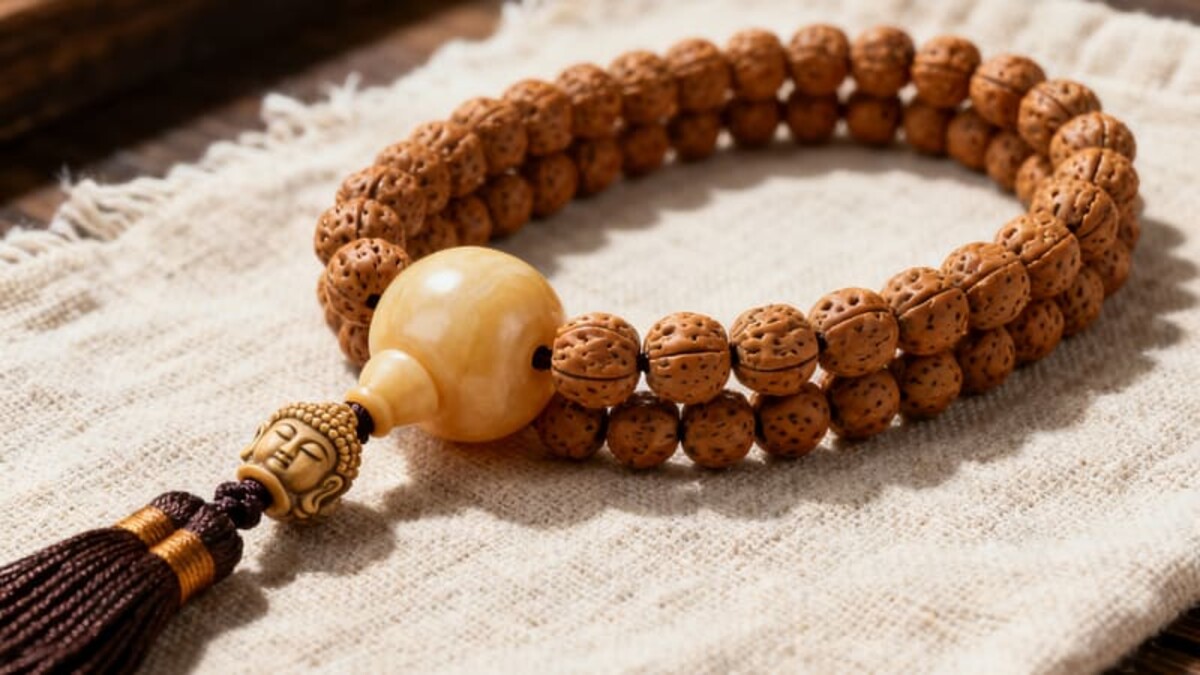
The Secret of Mala Beads: The Meaning of 108
Introduction
Have you ever wondered why mala beads usually have 108 beads? What makes this number so special?
Actually, 108 has profound significance in Buddhism and Indian culture. Understanding these meanings will give you a deeper appreciation for the mala beads you wear.
I. Why 108?
Mathematical Significance of 108
108 is a sacred number that can be understood from multiple perspectives:
1 + 0 + 8 = 9
In Indian mathematics, 9 represents completeness and perfection. 1 represents beginning, 0 represents emptiness, and 8 represents infinity.
1 × 0 × 8 = 0
This represents emptiness—the nature of all phenomena.
108 = 12 × 9
12 represents the Twelve Links of Dependent Origination, and 9 represents the Nine Grades of Rebirth.
Buddhist Meaning of 108
In Buddhism, 108 represents 108 defilements (afflictions).
Our minds are troubled by 108 types of afflictions. By reciting mantras or Buddha's name 108 times, we can eliminate these afflictions.
These 108 afflictions can be broken down as:
- Greed, Anger, Ignorance—the Three Poisons
- Each poison has Past, Present, Future aspects
- 3 × 3 = 9
- 9 × 12 Links = 108
II. Meanings of Different Bead Counts
While 108 is most common, malas come in other counts, each with specific meanings:
1080 Beads
The longest mala, representing 108 afflictions across the ten dharma realms.
Used only by great masters during ceremonies. Rarely used by ordinary practitioners.
108 Beads
The most common choice, representing elimination of 108 afflictions.
Suitable for daily recitation and wearing.
54 Beads
Represents the 54 stages of Bodhisattva practice.
Suitable for those with some practice foundation.
42 Beads
Represents the 42 stages of Bodhisattva practice.
Suitable for practitioners.
36 Beads
One-third of 108, convenient for carrying.
Still carries the meaning of eliminating afflictions.
27 Beads
Represents the 27 sages of Theravada Buddhism.
Suitable for those seeking simplicity.
21 Beads
Represents the Ten Grounds, Ten Perfections, and Buddhahood—21 stages total.
Suitable for practitioners.
18 Beads
Represents the Eighteen Arhats or Eighteen Elements.
The most common count for portable malas.
14 Beads
Represents Guanyin Bodhisattva's Fourteen Fearless Virtues.
Suitable for devotees of Guanyin.
III. How to Choose the Right Mala
By Purpose
Daily Wear
- Recommended: 18 or 14 beads
- Benefits: Lightweight, beautiful, not conspicuous
Recitation Practice
- Recommended: 108 or 54 beads
- Benefits: Easy counting, complete merit
Collection & Appreciation
- Recommended: Choose based on material and craftsmanship
- Focus: Quality, rarity, artistic value
By Wrist Size
| Wrist Circumference | Recommended Count (8mm beads) |
|---|---|
| 14-15cm | 15-17 beads |
| 16-17cm | 17-19 beads |
| 18-19cm | 18-21 beads |
| 20cm+ | 21+ beads |
By Material
Wood
- Sandalwood: Calming, centering
- Agarwood: Precious, pleasant fragrance
- Red Sandalwood: Noble, health-promoting
Gemstones
- Crystal: Purification, energy
- Agate: Protection, balance
- Giant Clam: Pure white, sacred
Seeds
- Bodhi Seed: Enlightenment, wisdom
- Rudraksha: Strength, power
- Star & Moon Bodhi: Beautiful, popular
IV. Mala Wearing Etiquette
Which Hand to Wear?
Traditionally, left hand is more appropriate.
Reasons:
- Left hand represents "virtue," right hand represents "evil"
- Left hand is used less frequently, reducing wear
- From a circulation perspective, left hand better absorbs energy
Of course, modern habits can be flexible—what matters most is sincerity.
When Not to Wear?
Occasions when not recommended:
- While bathing (avoid water damage)
- While sleeping (avoid crushing)
- During vigorous exercise (avoid impacts)
- During unclean activities (maintain purity)
How to Maintain?
Wooden Malas:
- Avoid water contact
- Wipe regularly with dry cloth
- Can use olive oil for maintenance
- Avoid direct sunlight
Gemstone Malas:
- Avoid collisions
- Clean regularly
- Avoid chemical contact
- Store separately to prevent scratches
V. Malas and Practice
The Function of Mala Beads
The original function of mala beads is as a counting tool.
When reciting Buddha's name, mantras, or sutras, using mala beads helps:
- Maintain focus
- Track progress
- Build habit
- Accumulate merit
How to Practice with Malas?
Basic Method:
- Start beside the guru bead (the largest bead)
- Recite one invocation, move one bead
- When completing a round, don't cross the guru bead
- Can recite 108 times or more
Important Notes:
- Don't cross the guru bead (represents respect for the Buddha)
- Keep hands clean
- Maintain reverence
The Energy of Malas
Many people feel calmer and notice improved fortune after wearing mala beads.
This isn't superstition—it's the combined effect of psychological suggestion and material energy:
- Psychological level: Reminds you to maintain mindfulness
- Physical level: Certain materials do have energy fields
- Cultural level: Carries deep cultural significance
VI. Mala Buying Guide
How to Judge Quality?
Wooden Malas:
- Look at grain: Natural, clear
- Smell: Authentic sandalwood has light fragrance
- Touch: Smooth, warm
- Compare weight: Those that sink in water are superior (agarwood)
Gemstone Malas:
- Look at clarity: More transparent is better (crystal)
- Look at color: Even, natural
- Look at flaws: Fewer is better
- Touch temperature: Natural gemstones feel cool
Bodhi Seeds:
- Look at density: Denser is better
- Look at star eyes: Clear, even
- Look at skin color: Natural, undyed
- After handling: Changes naturally
Common Pitfalls
- Fakes: Other materials masquerading as precious woods
- Dyeing: Chemical dyes to enhance color
- Filling: Glue filling cracks
- Piecing: Small pieces joined to make larger ones
Price Reference
| Material | Entry Level | Mid-Range | High-End |
|---|---|---|---|
| Sandalwood | $10-40 | $40-200 | $200+ |
| Agarwood | $100-400 | $400-2000 | $2000+ |
| Crystal | $20-100 | $100-400 | $400+ |
| Giant Clam | $40-160 | $160-600 | $600+ |
| Bodhi Seeds | $6-20 | $20-100 | $100+ |
VII. The Cultural Significance of Malas
Buddhist Culture
In Buddhism, mala beads are important ritual implements.
They're not just decorations—they're tools for practice, symbols of enlightenment.
Each bead represents a sentient being. Strung together, they represent the oneness of all beings.
Chinese Culture
Malas have a long history in China.
From imperial courts to common people, from monks to scholars, all appreciated malas.
They carry:
- Faith: Reverence for the Dharma
- Culture: Transmission of tradition
- Aesthetics: Pursuit of beauty
- Wellness: Concern for health
Modern Significance
In modern society, malas have new meanings:
- Fashion accessory: Expressing personality and taste
- Stress relief tool: Relaxing while handling beads
- Social topic: Medium for meeting like-minded people
- Spiritual anchor: Maintaining peace amid chaos
Conclusion
A 108-bead mala is not just 108 beads.
It represents the elimination of 108 afflictions, represents the pursuit of enlightenment, represents inner peace and harmony.
When you understand these meanings and wear mala beads again, you'll feel the thousand-year wisdom and good wishes they carry.
May each bead bring you a measure of peace.
Choose a mala that has affinity with you, and begin your journey of Eastern aesthetics.
Carrying the Way through vessels · Transmitting the heart through things