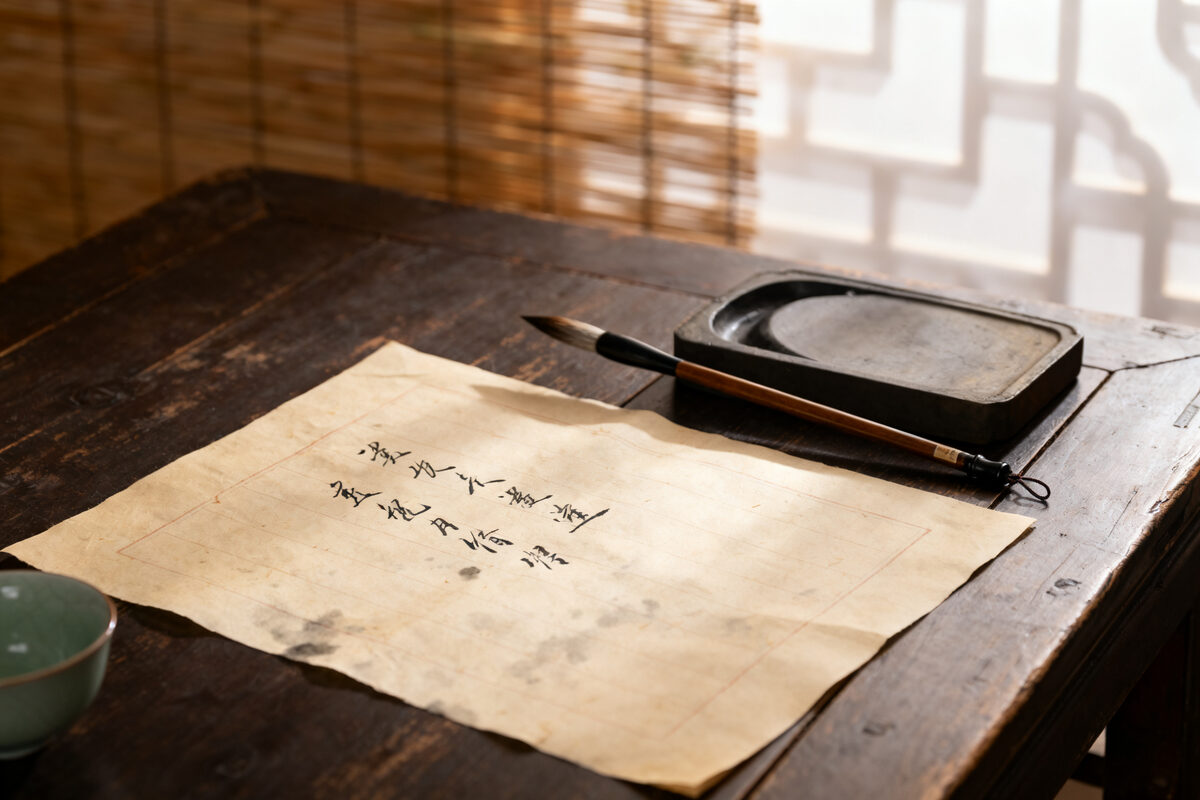
You Can't Polish a Brick into a Mirror
My meditation app says 1,095 days in a row. Staring at the number, no pride came — only the memory of an old Zen master who, thirteen hundred years ago, sat polishing a brick in front of a young monk. A brick can't become a mirror. So how does sitting make a Buddha?
My meditation app says I've meditated for 1,095 days in a row.
Three years. Not one missed. I've done it in airports on business trips, done it lying down with a fever. One night I forgot completely and sprang up from bed in the last minute before midnight to get it done.
That night I stared at the number "1095," waiting for a wave of pride. Waited a while. Nothing came. Instead, a strange thought surfaced: am I meditating, or am I working for this number?
Then I remembered a story. From thirteen hundred years ago.
The Man Polishing a Brick
Tang dynasty, Mount Heng in southern China. A young monk named Daoyi. Everyone later called him Mazu — because his family name was Ma.
This monk was serious about practice. He sat in meditation all day, every day. Before dawn he was there; after dark he was still there. Silent, never leaving, like a stone growing out of his cushion.
On the same mountain lived an old Zen master, Huairang. He passed by, saw the young man, and stopped. He watched for a long time.
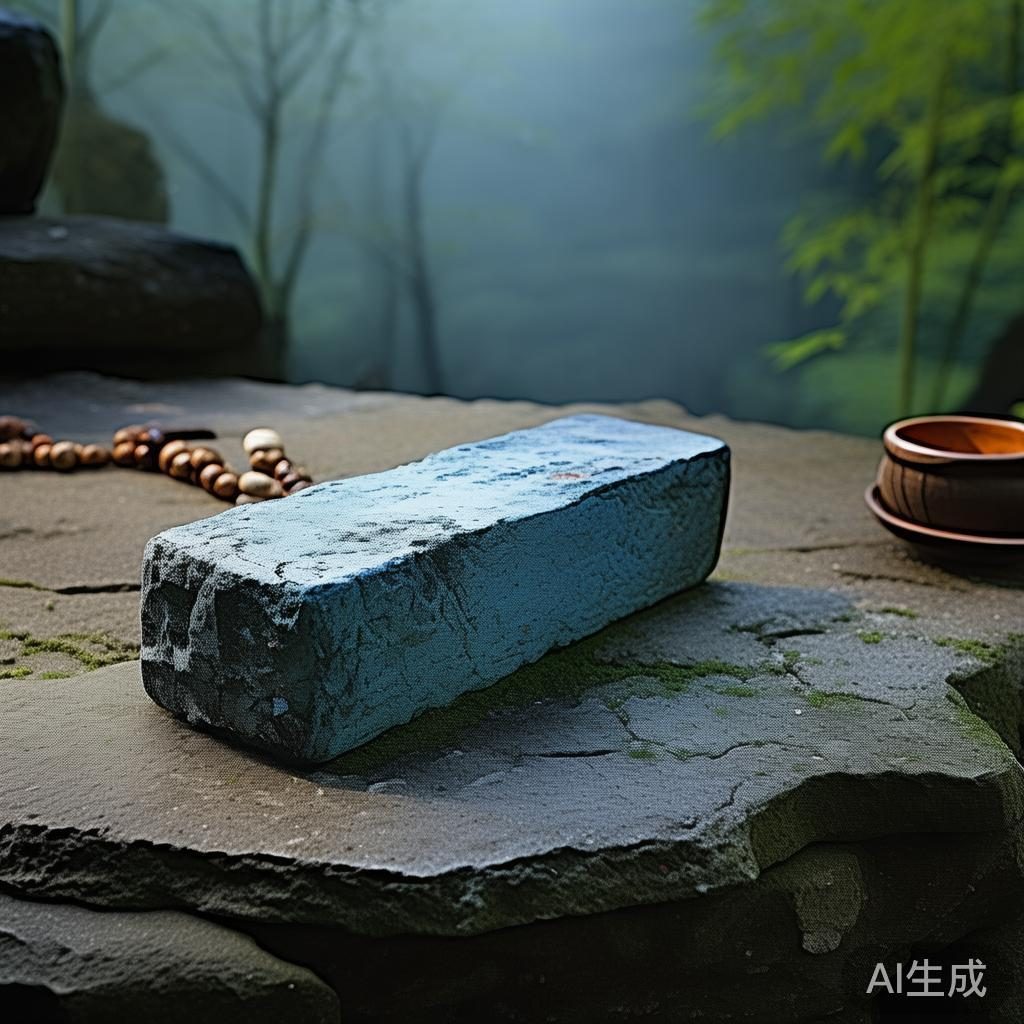
The next day, Huairang came back. This time he brought something: a brick. He sat down in front of Mazu and began rubbing the brick against a stone.
Scritch. Scritch.
Mazu ignored him. Huairang said nothing. Just kept polishing.
Third day, fourth day. Huairang came every day, sat down, and polished. So focused, so earnest, as if he were doing something tremendously important.
Finally Mazu couldn't take it: "Master, what are you doing?"
Huairang didn't look up. "Polishing this brick into a mirror."
Mazu laughed. "How can polishing a brick make a mirror?"
Huairang raised his head and looked at him: "If polishing a brick cannot make a mirror, how can sitting in meditation make a Buddha?"
The record gives it in eight characters. Thirteen hundred years later, it still lands like a bucket of cold water.
Whipping the Cart, or Whipping the Ox
They say Mazu froze there, as if something had been poured over his head.
He asked: Then what should I do?
Huairang gave him an image. An ox pulls a cart, and the cart doesn't move. Do you whip the cart, or do you whip the ox?
The first time I read that, I was on the subway. People pressed against people, everyone looking down at their phones. I looked up and suddenly felt this thirteen-hundred-year-old metaphor was about this exact train car.
We are so good at whipping the cart.
The meditation isn't working, so we buy a better cushion, better incense, a more expensive course. Not seeing results at the gym, so we upgrade the gear, switch apps, hire a trainer. Can't focus on reading, so we buy more books and fill the shelf. All the effort goes into the cart.
Where the ox is — nobody asks.
Other People's Bricks
A while ago I was watching videos of Silicon Valley people talking about meditation. Some fly across the world for ten-day silent retreats: no talking, ten hours of sitting a day. The comments were full of admiration — how do they do it?
Watching them, I thought of that brick. I'm not saying they're wrong — ten days of sitting takes real strength. I just find it interesting: even "quiet" becomes a competition. Who sits longer, who sits more correctly, who went somewhere harsher.
The moment it becomes a competition, the brick appears.
My Own Brick
Later I sat down and went through my three years, honestly. Which parts were the mirror, which were the brick.
The number on the app — brick. It's for others to see, and for me to see. It proves I worked hard. It doesn't prove I was ever quiet.
That feeling of "done" — brick. Some days I'd sit twenty minutes, spend nineteen of them thinking about work and the last one thinking "almost over." And at the end, a flash of relief. Relief from what? From the meditation itself. Ridiculous, if you think about it.
But there were things I'm sure were not bricks.
One morning, sitting there, I suddenly smelled the osmanthus that had bloomed overnight downstairs. Just one instant — no thoughts, no numbers, nothing to complete. Another time, light rain at dusk. I sat and listened to drops hitting the AC unit outside. Tak. Tak. Tak. Listened for a long time. My mind held nothing, and held everything.
Those moments were short. Too short to check in.
My mom recites the Buddha's name, beads moving through her fingers, counting. Once I asked her what number she'd reached. She said she'd lost track. Then why count at all, I asked. She said: when the hands have something to hold, the heart settles.
I've never forgotten that. She counts the beads, but she doesn't live for the beads. I meditate, but for a long time I lived for the streak. Same counting, opposite directions.
What Happened After
In the story, Mazu didn't quit meditation, and he didn't become lazy. Quite the opposite — he became one of the most important figures in the history of Zen. Dozens of awakened students came out of his teaching. The rules of Zen monasteries for centuries afterward grew half from what he built.
Huairang's brick never became a mirror. But it wore away something larger — the misunderstanding that the posture of sitting is the practice itself.
The posture is not the practice. The number is not the practice. Even "persistence" itself is not. They're all fingers pointing at the moon. Not the moon.
I still meditate. The app is still there; the streak is still there. The difference is, if I miss a day now, I miss it. When I sit down the next morning, I'm still the same person sitting down — nothing more, nothing less.
A few days ago the app sent a notification: "1,102-day streak. You've meditated more than 99.9% of users."
I glanced at it, turned the phone face down, and sat.
Whether a brick can become a mirror — it doesn't matter that much. Polish long enough and you realize: maybe what I wanted was never the mirror at all.
Three questions I want to leave with you:
- Is there something you've done so long you've forgotten why you started?
- In your life, do the streaks and checkmarks feed that thing — or replace it?
- If no one could ever see, would you still do the thing you keep doing?