The Blind Man's Lantern: Lighting the Way for Others Is Lighting the Way for Yourself
A blind man carries a lantern at night. Not to see for himself, but to let others see him. Helping others is helping yourself — this ancient wisdom still shines today.
A Lantern on the Mountain Path
The night was deep. The stone path wound upward through dense bamboo groves, moonlight painting everything in pale silver. The wind rustled through the leaves — a soft, ceaseless whisper.
A Zen master was returning to his temple from the village below. His steps were quick, hoping to reach home before midnight.
Then, ahead in the darkness, a single point of light appeared.
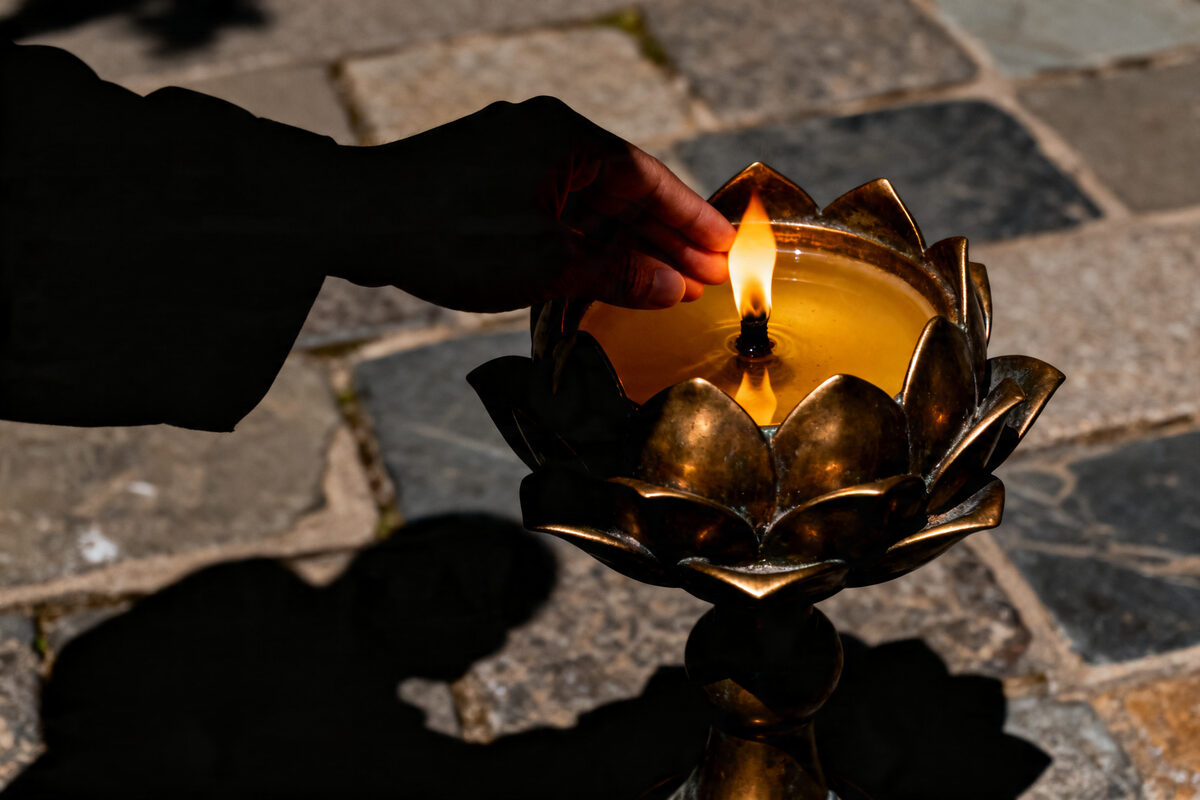
It was a lantern. Flickering, warm, fragile against the vast night.
Beneath it moved a figure — slow, deliberate, one hand holding the lantern high, the other gripping a bamboo cane. Each step was placed with painstaking care.
As the master drew closer, he saw the man's face: sunken eyes, a gaze that registered nothing. This was a man who could not see.
If You Cannot See, Why Light a Lantern?
The master stopped and pressed his palms together.
"Friend, the hour is late and the mountain road is treacherous. I notice you cannot see — yet you carry a lantern. Why?"
His question held no mockery. Only genuine puzzlement.
What use is light to eyes that cannot perceive it?
The blind man smiled gently. "Master, what do you think my lantern is for?"
The master shook his head.
The First Layer: Let Others See Me
The blind man said, "I don't carry this lantern so that I can see the road."
"I am blind. Day or night makes no difference to my eyes. Even with this flame burning bright, I see nothing."
"But—"
He paused. The lantern swayed slightly in the breeze.
"Others can see."
"People walking this road at night, they see this light from far away. They know someone is here. They won't crash into me. They won't trip over me."
"So I light this lantern to let others see me."
The master blinked, then nodded slowly.
"I see. That is most thoughtful."
Simple words. But beneath them lay a profound truth: the lamp was not for himself, yet it protected him nonetheless.
You don't need to see the world. Let the world see you, and the world will make way.
The Second Layer: Illuminating the Inner Path
The master was about to take his leave when the blind man spoke again.
"Master, I haven't finished."
The master turned back.
The blind man said, "Protecting myself from being bumped into — that was only my first thought."
"Later, I discovered something far more extraordinary."
"Ever since I began carrying this lantern each night, something inside me has grown brighter."
"Before, I lived in total darkness. The darkness behind my eyes, the darkness within my heart — I couldn't tell which was deeper. I resented my fate. I resented everything."
"But once I started lighting this lantern — even though I cannot see its glow — I came to know that there is a light in this world that exists because of me."
"Someone didn't stumble on this road because of my lantern. Someone felt less alone on a dark mountain path because of my lantern."
"I don't know who they are. They likely don't know me. But between us, because of this single flame, there is a connection."
"That thought — it lit up the path inside my heart."
The master stood in silence for a long time.
Then he bowed — deeply, reverently — to this blind man on the mountain road.
Not out of politeness. Out of genuine reverence.
The one who lights a lantern for others illuminates their own path as well.
This is not a slogan. This is something a living person proved, night after night, with nothing but a single lantern.
Modern Reflection: Helping Others Is the Best Way to Help Yourself
This story is centuries old. Yet its truth is as relevant as ever.
In the workplace, when you generously share resources and connections with colleagues, they remember — and they stand by you when you need support.
At home, when you offer patience and care, what returns to you is often deeper understanding and warmth.
In social life, when you genuinely consider others' needs, people are naturally drawn to you.
This isn't transactional. It's not about keeping score. It's about karma.
You light the lamp, and the light finds its way back. Perhaps not from the person you illuminated — but it returns, inevitably.
Buddhism speaks of "benefiting oneself and benefiting others." Not self first, then others. Not only others, never yourself.
Rather — altruism and self-benefit are two sides of the same coin.
Just like that lantern. The light shines outward, illuminating another's steps while shielding the bearer from harm. And more than that — it illuminates a principle:
True wisdom is knowing that the boundary between "self" and "other" was never as clear as we imagined.
Questions for Reflection
-
Have you ever done something that "lit a lantern" for someone else? How did it make you feel afterward?
-
When you help someone, do you quietly expect something in return? If so, is the "lantern" still pure?
-
If helping others ultimately helps ourselves, why do we so often feel that generosity is a loss? Where does that feeling come from?