Clouds in the Sky, Water in the Vase
A Tang dynasty governor climbed a mountain to ask "What is the Way?" The master pointed up, pointed down, and said eight words: clouds in the sky, water in the vase. We keep feeling real life is somewhere else — maybe it has been in the vase in front of us all along.
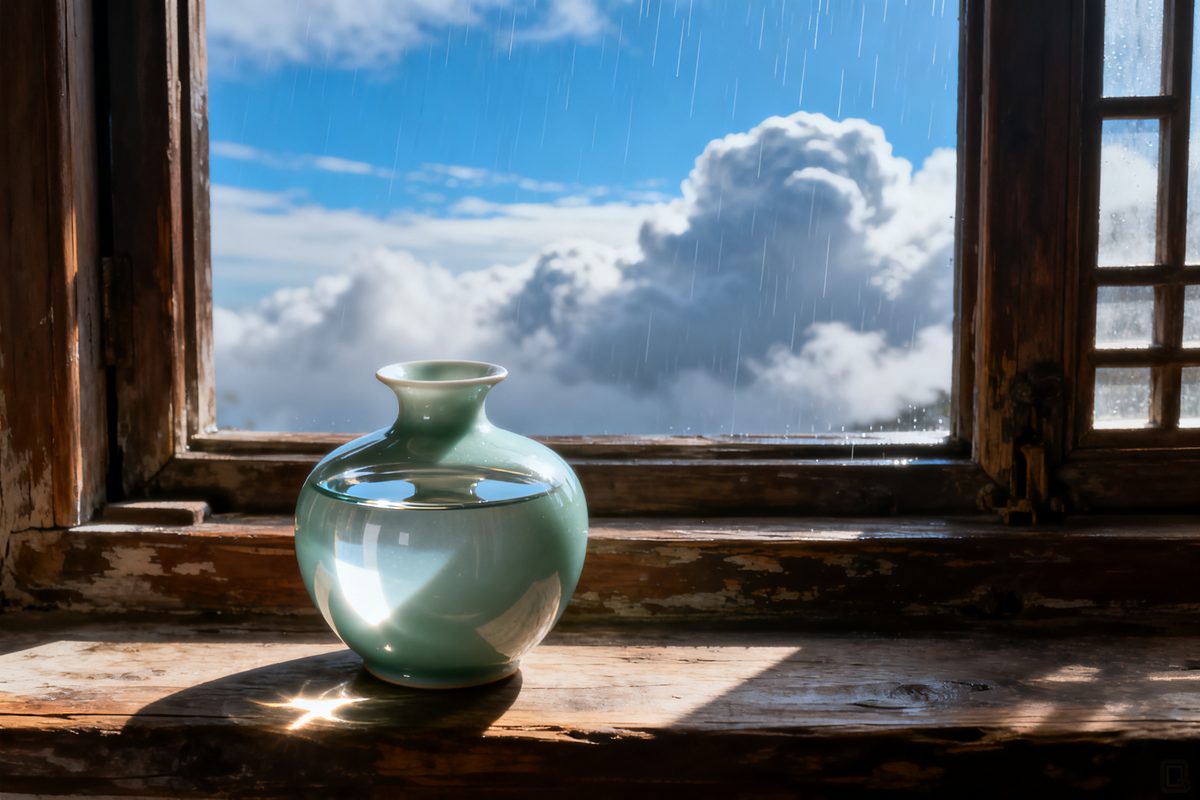
Summer is almost over. Sunday morning, I boiled water, wiped the table, and changed the water in a celadon vase on the windowsill. Just that one motion — old water out, clear water in, and the vase suddenly brightened. I stood there holding it for a moment, and remembered a line of poetry from twelve hundred years ago.
First, the story.
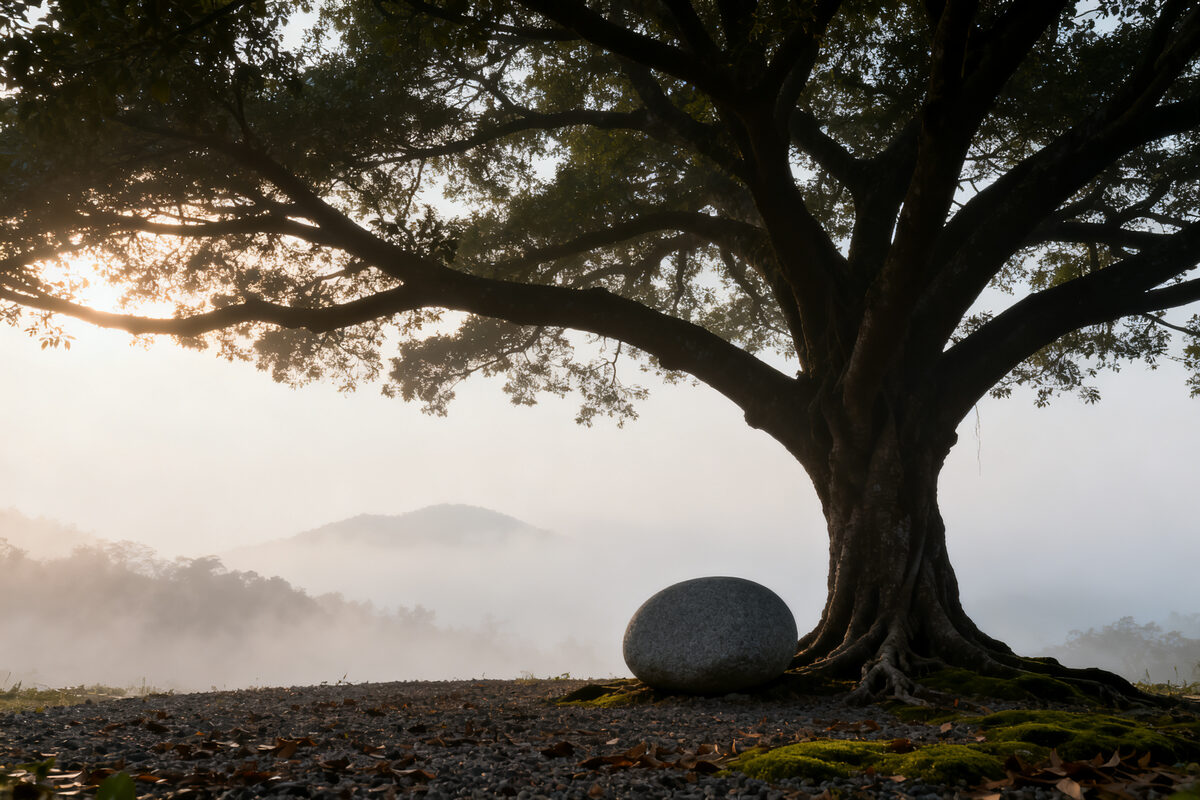
In the Tang dynasty there was a high official named Li Ao. A student of Han Yu, a fine scholar, governor of more than one prefecture. He heard that in his territory, on a certain mountain, there lived a Zen master named Yaoshan Weiyan. Li Ao sent messengers several times to invite the master down. The master would not come.
So Li Ao climbed the mountain himself.
He arrived to find the master reading a sutra, not lifting his head. A sitting governor stood before him, and the master acted as if he saw no one. Li Ao had a temper. He said something sharp:
"Meeting you is not as good as hearing about you."
— I'd have been better off never coming. And he turned to leave in a huff.
Then the master spoke. He asked one thing:
"Governor, why do you honor your ears and despise your eyes?"
— Why is what you heard so precious to you, and what you see with your own eyes so cheap?
Li Ao stopped mid-step. The question was like a pin holding him to the floor. He turned back, bowed with cupped hands, and asked what he'd been carrying all along:
"What is the Way?"
The master said nothing. He raised a hand, pointed up, then pointed down. Asked: do you understand?
Li Ao honestly shook his head. No.
Only then did the master say eight characters. In Chinese, anyway:
Clouds are in the blue sky. Water is in the vase.
Li Ao stood there — and by the old accounts, woke up on the spot. He wrote a poem that became famous:
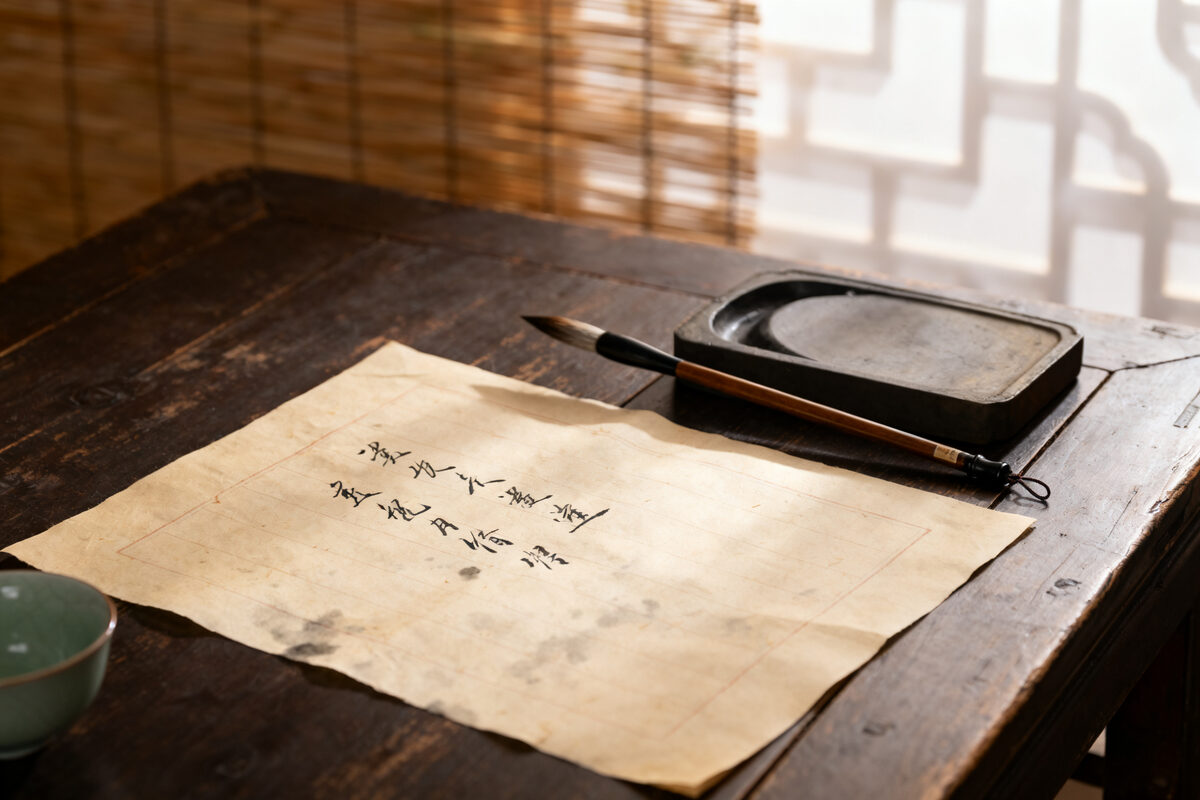
Trained to a crane's thin shape, beneath a thousand pines, two cases of sutras. I came to ask about the Way; there was nothing more to say — clouds in the blue sky, water in the vase.
Honestly, the first time I read this story, I was disappointed. What kind of answer is that? The man asks about the great matter of life and the universe, and you point up and down and say clouds are in the sky and water is in the vase — isn't that just a non-answer?
Many years later, on a certain morning of changing water, I think I finally got a piece of it.
Have you noticed — the great sickness of our generation is not lacking anything. It's refusing to stay inside our own "vase."
Scrolling the phone, watching other people's lives: someone is watching auroras in Iceland, someone quit to open a café, someone retired at thirty and moved to Dali. Then we look back at our own: a so-so job, a rented flat, a vase of not-deep, not-shallow water. And a voice inside says: real life is somewhere else. This is only temporary. I'm just passing through my own life.
Li Ao was the same. He heard there was a sage on the mountain, so the answer had to be up there — in the mouth of that old monk who ignored him, in something mystical you had to humble yourself and beg for. That's why he burned when the master wouldn't speak, and couldn't read the gesture pointing up and down.
And the master simply pointed at the most ordinary things in front of them: clouds — in the sky. Water — in the vase.
The clouds don't envy the vase. The water doesn't envy the sky. They simply stay where they are, wholly. The cloud doesn't feel it "should be drifting somewhere else." The water doesn't feel "trapped in a bottle."
The Way isn't somewhere else. Your life is the training ground.
I know how that sounds — like chicken soup. But I don't mean the effort of "loving the present moment." Quite the opposite: you don't even have to love it. The water in the vase doesn't need to love the vase. It's just in it. Clearly, completely in it.
My mother's generation seemed to know this by nature. She tends a few pots on the balcony, wiping the leaves one by one, unhurried, never thinking "other people's gardens are bigger." I once asked her, doesn't it bore you? She said: the flowers are here, so I'm here. I didn't understand then. Now I think that's the folk version of "clouds in the sky, water in the vase."
Our problem is usually this: body in the vase, mind in the sky; and when we finally pull the mind back, we start resenting the vase for not being prettier. Losing on both ends.
That day, after changing the water, I set the vase back on the windowsill. Slanting light came in, and the glaze flashed for an instant. For a few seconds I thought of nothing. No anxiety about next week, no regrets about last week, no feeling that I should be anywhere else.
A few seconds. Then the voice started up again: groceries, the afternoon meeting.
But that's all right. Yaoshan never demanded that Li Ao stay enlightened every minute thereafter. He only pointed out the door. The door is always there; the clouds are always in the sky, the water always in the vase. When it isn't so, it's we who have run off.
Autumn is coming. I plan to keep this vase on the windowsill, changing the water when it clouds. Not hoping to attain anything — just as practice: practicing these few seconds of staying inside the vase.
Three questions. No need to rush.
- When did you last feel "real life is somewhere else"? Did you ever get to that somewhere?
- If the Way is in the water right in front of you, why do you keep wanting to climb a mountain to find it?
- Clouds in the sky, water in the vase — so where are you?