Gravel to Gold: The Transformation of Devadatta
Devadatta was the Buddha's cousin and greatest adversary. He tried to kill the Buddha and split the sangha. Yet in the Mahayana sutras, the Buddha says: Devadatta too will become a Buddha. In a single moment, gravel can turn to gold.
The Most Dangerous Man Beside the Buddha
The Buddha had ten great disciples.
Sariputra, foremost in wisdom. Maudgalyayana, foremost in supernatural powers. Ananda, foremost in learning. Each name shines with the light of awakening.
But there was one man who always stood in the shadows.
He was the Buddha's cousin — and his greatest adversary. His name was Devadatta.
A Monk's Ambition
Devadatta was born into the royal family. He was handsome, intelligent, and charismatic.
He followed the Buddha into monastic life, practiced diligently, and soon attained deep meditative states and supernatural powers. To everyone around him, he was among the finest in the sangha.
But supernatural powers cannot dispel the darkness within.
When he realized his influence in the world could never match the Buddha's, the seed of jealousy took root.
That seed grew into a towering poison tree.
Three Attempts on the Buddha's Life
Devadatta's hatred escalated step by step toward the extreme.
First, he pushed a boulder.
At Vulture Peak, Devadatta hurled a massive rock down the mountainside, aimed directly at the Buddha. A splinter struck the Buddha's toe, drawing blood that stained the earth.
Yet the Buddha showed no anger. He only said calmly, "This is the manifestation of karma."
Second, he unleashed a drunken elephant.
In Rajagriha, Devadatta intoxicated a fierce elephant and sent it charging toward the Buddha. Everyone fled in terror.
The Buddha walked slowly toward the raging beast, extended his right hand, and radiated boundless compassion.
The drunken elephant knelt before him.
Third, he poisoned his fingernails.
Devadatta coated his nails with deadly poison, planning to approach the Buddha under the guise of paying respect, then strike with poisoned claws.
But before he could even get close, the earth split open. Devadatta plunged alive into the Avici Hell.
After the Fall into Hell
Devadatta fell into hell while still alive.
In most people's understanding, this is where the story ends. The wicked receive their punishment. Justice is served.
But the most astonishing thing in Buddhism is precisely this — the story never truly ends.
The Stunning Prophecy in the Lotus Sutra
In the Mahayana scripture The Lotus Sutra, in the "Devadatta" chapter, the Buddha spoke words that shocked everyone:
"I now tell you: Devadatta... after countless kalpas, shall become a Buddha, named Heavenly King Tathagata."
Devadatta — the greatest "villain" in Buddhist history — will ultimately become a Buddha.
Not "maybe," not "perhaps," but "shall become a Buddha."
Why?
Because the Buddha saw, deep within Devadatta, a seed of Buddha-nature that had never been extinguished.
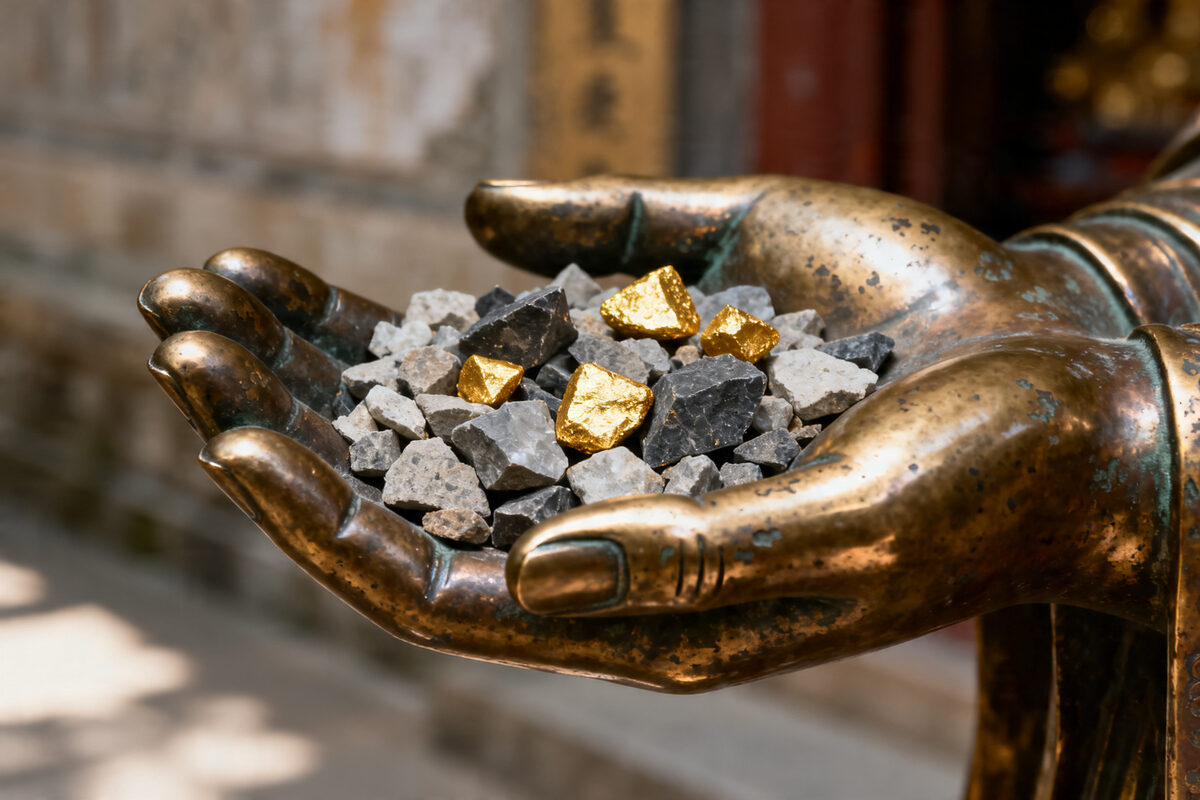
Gravel becomes gold not because gravel itself is precious, but because the nature of gold was never absent.
No Absolute Evil
This story reveals a profound truth:
In the Buddhist worldview, there is no absolutely evil person.
Everyone possesses Buddha-nature. Just as dark clouds can obscure the sun but can never destroy it, ignorance can shroud our nature but never erase it.
Devadatta's "evil," from another perspective, was precisely the "adverse condition for growth" on the Buddha's path. It was through such trials that the Buddha's compassion became complete.
Without darkness, how could there be light? Without evil, how could there be good?
Modern Insight: Don't Rush to Label
We are quick to label people.
"He's a bad person." "She's beyond help." "There's no hope for someone like that."
But Devadatta's story reminds us: If even a man who tried to kill the Buddha can become a Buddha, what right do we have to pass final judgment on anyone?
In our lives, every "Devadatta" we meet — those who hurt us, betray us, or cause us suffering — may be a mirror.
They reflect our own attachments and fears, and invisibly push us toward growth.
In the darkest night, dawn is always hidden.
One thought of delusion: a sentient being. One thought of awakening: a Buddha.
Questions for Reflection
1. Is there a "Devadatta" figure in your life? What have they taught you?
2. If even the greatest wrongdoer can attain Buddhahood, how should we rethink the boundary between "good" and "evil"?
3. Do you believe that deep within you, there is also a seed capable of becoming a Buddha?