Karma and Cause-Effect: The Buddhist Worldview
Karma is not fatalism but a natural law about actions and consequences. This article clarifies common misconceptions, explores the relationship between karma and free will, and how to apply this wisdom in daily life.
Karma and Cause-Effect: The Buddhist Worldview
"Good is rewarded with good, evil is rewarded with evil" — this saying is deeply rooted in Chinese culture. But is this really what Buddhism means by "karma and cause-effect"? Or is it an oversimplified form of fatalism? This article explores the true meaning of Karma, clarifies common misconceptions, and discusses how this wisdom applies to modern life.
What Is Karma?
The Sanskrit word "Karma" literally means "action" or "deed." In Buddhism, karma refers to all actions created through body, speech, and mind, along with their latent potential to produce results.
The key point: karma is not some mysterious external force, not divine reward or punishment, not predestination. Karma is simply action itself and the consequences that flow from it.
The Buddha summarized the workings of karma in one verse:
"Mind precedes all mental states. Mind is their chief; they are all mind-wrought. If with an impure mind a person speaks or acts, suffering follows him like the wheel that follows the foot of the ox. If with a pure mind a person speaks or acts, happiness follows him like his never-departing shadow." — Dhammapada
The Three Levels of Karma
1. Karma of Body
This includes physical actions like killing, stealing, and sexual misconduct, as well as virtuous acts like helping, giving, and protecting life.
2. Karma of Speech
This includes unwholesome speech like lying, harsh speech, divisive speech, and idle chatter, as well as virtuous speech that is truthful, gentle, harmonious, and meaningful.
3. Karma of Mind
This is the most fundamental. It includes unwholesome thoughts like greed, hatred, and delusion, as well as wholesome thoughts like compassion, joy, and wisdom.
Mental karma is primary — physical actions and speech are ultimately driven by intention.
The Law of Cause and Effect: How Karma Works
The Buddhist concept of cause and effect is not a simple linear relationship like "you reap what you sow." It is a complex system:
1. Dependent Origination
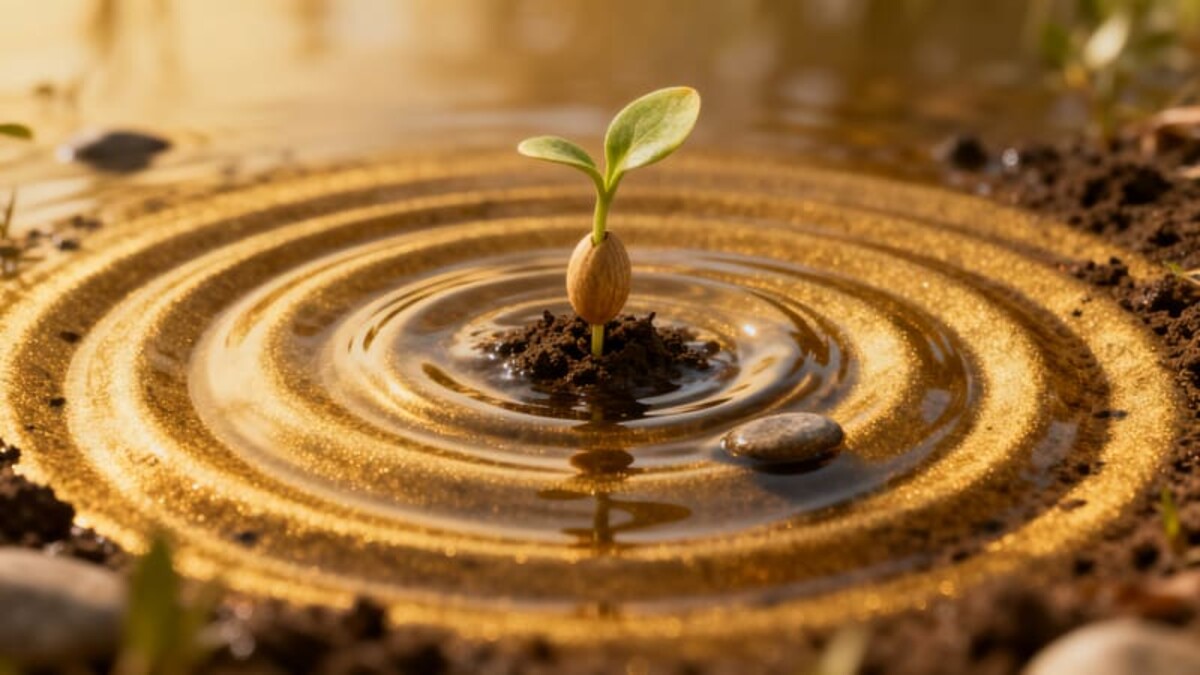
Any result requires the coming together of multiple causes and conditions. A seed needs soil, water, sunlight, and time to bear fruit. The maturation of karma works the same way.
2. Delayed Ripening
Karma takes time to mature. Some results manifest in this life, some in future lives, and some after many lifetimes. It is like planting a tree: some plants bear fruit in the same year, others take years.
3. Mutability of Karma
Karma is not destiny. Through practice, repentance, and virtuous action, negative karma can be transformed; conversely, unwholesome action can counteract positive karma.
"Even if it should take a hundred eons, karma that has been created does not perish. When the appropriate conditions gather, the results will be experienced." — Maharatnakuta Sutra
But this does not mean karma cannot be changed. The sutra continues by saying that karma can be transformed through spiritual practice.
Clarifying Common Misconceptions
Misconception 1: Karma is fate and cannot be changed
Truth: Karma is the power of action, not a sentence of fate. Buddhism emphasizes self-responsibility — we create our own karma and bear its results. But precisely because of this, changing our actions can change our destiny.
Misconception 2: Suffering is punishment for past misdeeds
Truth: Causality is complex. Present suffering may have many causes, not necessarily "past misdeeds." Moreover, Buddhism focuses on how to face suffering in the present moment, not on assigning blame.
Misconception 3: Good and bad karma cancel each other out
Truth: Good and bad karma each ripen in their own way; they do not simply cancel out. However, strong positive karma can overwhelm negative karma or change the conditions under which negative karma ripens.
Misconception 4: Karma is Buddhism's "reward and punishment system"
Truth: Karma is not someone punishing or rewarding — it is a natural law. Just like gravity: when you jump, you fall back down not because someone is punishing you, but because that is the law of physics.
Karma and Free Will
If karma exists, do we have free will?
The answer is: It is precisely because of karma that we have free will.
- If everything were determined by external forces, that would be true lack of freedom.
- The teaching of karma tells us: present choices shape the future. This is not destiny; this is freedom.
Every moment, we are creating new karma. Realizing this is true freedom — because we can choose what kind of karma to create.
Applying the View of Karma in Daily Life
1. Take Responsibility
Understanding that all actions have consequences makes us more mindful of our words and deeds. This is not born of fear but of wisdom.
2. Stop Blaming Others
When facing difficulties, instead of complaining "why me," we can ask "what can I learn from this" and "how can I improve the situation."
3. Believe in the Possibility of Change
Past karma can be transformed; future karma is created in the present. As long as we don't give up, hope always exists.
4. Practice Mindfulness
Since mental karma is fundamental, maintaining mindfulness and being aware of present thoughts is the most effective way to manage karma.
The Story of Maudgalyayana: A Lesson
Maudgalyayana, one of the Buddha's ten great disciples, had attained arahatship and possessed the foremost psychic powers. Yet he was once beaten by bandits while traveling.
The disciples were puzzled: "The Venerable has attained sainthood. Why would he suffer such misfortune?"
Maudgalyayana replied: "This is the result of negative karma I created in a past life. I once injured others; now I receive the result."
But the point of the story is not "karmic retribution." It is that:
- Even an arahat must bear the results of past karma
- But an arahat creates no new karma, so this is the final birth
- When facing results, an arahat's mind remains unshaken, watching like a spectator
This story teaches us: Karma is unavoidable, but how we face karma depends on our mind.
Conclusion
Karma is not superstition but profound wisdom:
- It tells us: The world is orderly, and actions have consequences
- It empowers us: The power to change, because we can choose in the present moment
- It reminds us: To take responsibility, because no one can bear our karma for us
Understanding karma is not for fortune-telling but for living better. When you truly understand cause and effect, you discover: Every present moment is an opportunity to create the future.
"We are the heirs of our karma, born of our karma, related to our karma, and take refuge in our karma. Whatever karma we create, whether wholesome or unwholesome, we will be its heir." — Majjhima Nikaya, Discourse on the Divine Messengers