What the Thief Left Behind: Ryōkan and the Moonlight at His Window
A man so poor he had nothing but moonlight, and a thief who found nothing worth stealing. The night Zen monk Ryōkan lost his last robe and saw the richest view in the world through his window.
What the Thief Left Behind: Ryōkan and the Moonlight at His Window
The moon is beautiful tonight.
It sounds a bit sentimental to say it, but there it is — I was looking at my phone, glanced up, and moonlight had already spread across half the room. And suddenly I thought of someone.
His name was Ryōkan.
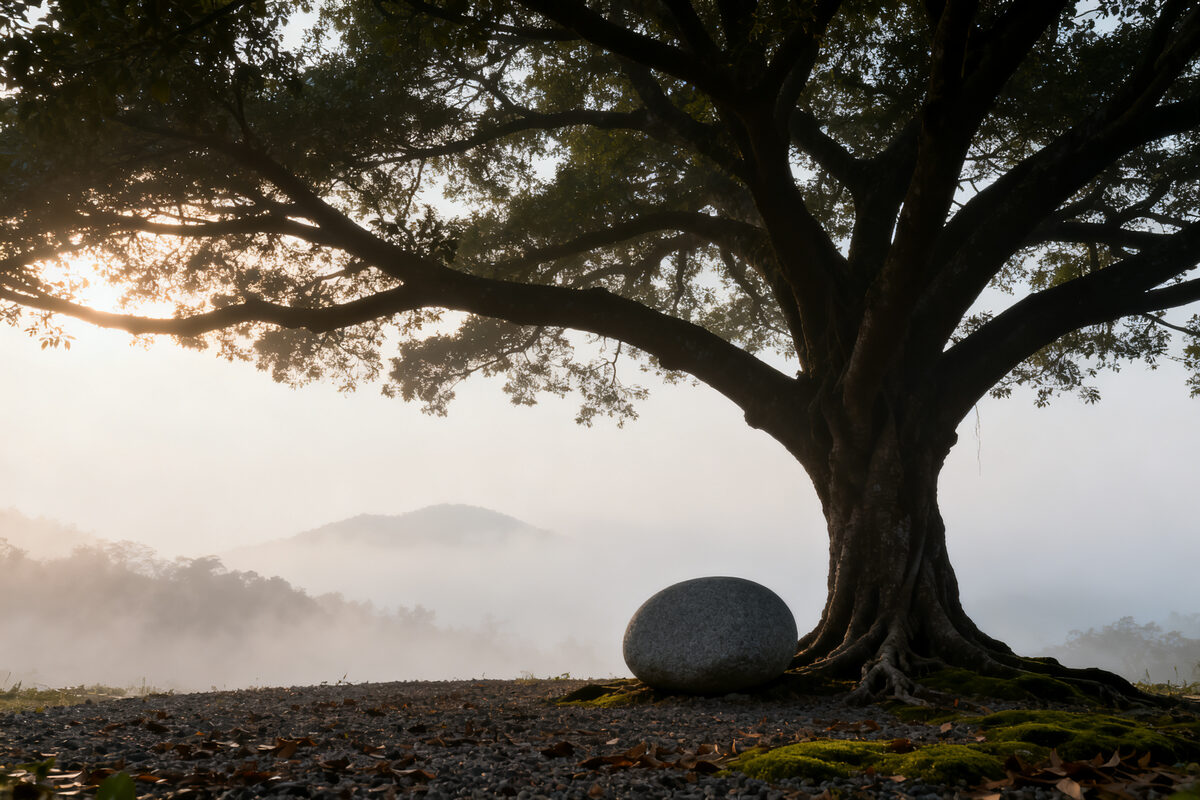
About two hundred years ago, in Echigo Province — what's now Niigata in northern Japan — there was a monk. "Monk" isn't quite right; he'd been ordained for decades. But where he lived didn't look like a proper temple at all. Just a small thatched hut at the foot of a mountain, drafty on all sides. His possessions amounted to an old straw mat, a chipped tea bowl, some patched clothes, and a pile of paper covered in handwriting.
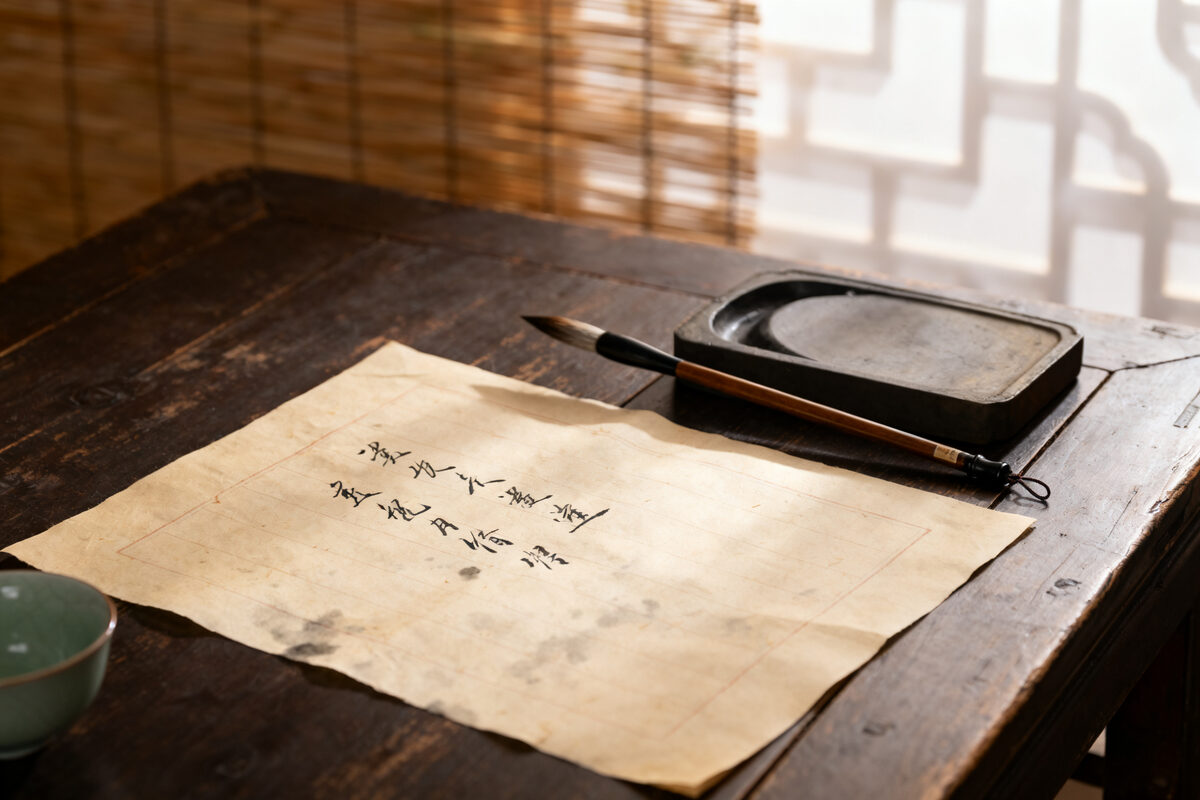
The papers held his poems.
Ryōkan is a peculiar figure in the history of Zen. Not a founder of any school, not a teacher with hundreds of disciples, not the abbot of some grand temple. His life, when you lay it out, is remarkably plain: he trained in monasteries when he was young, studied Zen, attained awakening, and then — left.
Not the kind of leaving where you travel the world spreading the dharma. He just found an empty mountainside, built himself a grass hut, and lived there alone.
What did he do? He played with children. Really, that was it. Ryōkan loved playing games with the village kids — kicking a ball, hide and seek, flying kites. When adults came asking him to teach them Zen, he didn't quite know what to say. Someone asked him about the profound mysteries of Zen, and he scratched his head and said the weather was nice today.
Not exactly what you'd expect from a "great Zen master."
But his poems survive, and when you read them, you find someone whose perception of the world is extraordinarily clean. He wrote about spring snow melting on the mountain, about hearing a distant bell at night, about looking at the moon with an empty stomach — not in the pose of "finding joy in hardship," but simply because the moon was beautiful.
I sometimes wonder what a person has to go through to think the moon is beautiful when they have nothing.
Now, the main story. The one about the thief.
One evening, Ryōkan was sitting in his hut. It was dark. No lamps nearby — the hut sat at the base of the mountain, a good distance from the nearest village. He was probably writing a poem, or maybe just sitting there doing nothing.
The door was pushed open.
Someone came in. Not a visitor. A thief.
The thief searched for a long time. And you can imagine — the hut didn't have much to begin with. A worn mat, an old tea bowl, some clothes with patches. Even the rice jar was empty. Ryōkan regularly didn't know where his next meal was coming from.
The thief grew frustrated. He turned the place upside down and found nothing worth taking.
Ryōkan just watched.
He wasn't angry, wasn't frightened, didn't even seem surprised. He sat there quietly, watching the thief rifle through his things, as though it were something happening to someone else.
The thief finally gave up and turned to leave.
Then Ryōkan spoke.
"Wait."
The thief probably jumped.
Ryōkan stood up, took off the outer robe he was wearing, and held it out.
"You came all this way. You shouldn't leave empty-handed. Take this."
The thief took the robe and left.
I don't know what expression the thief had — the story doesn't say. But I imagine he was confused. What was this poor monk playing at?
Ryōkan, now bare-chested, sat back down on his mat.
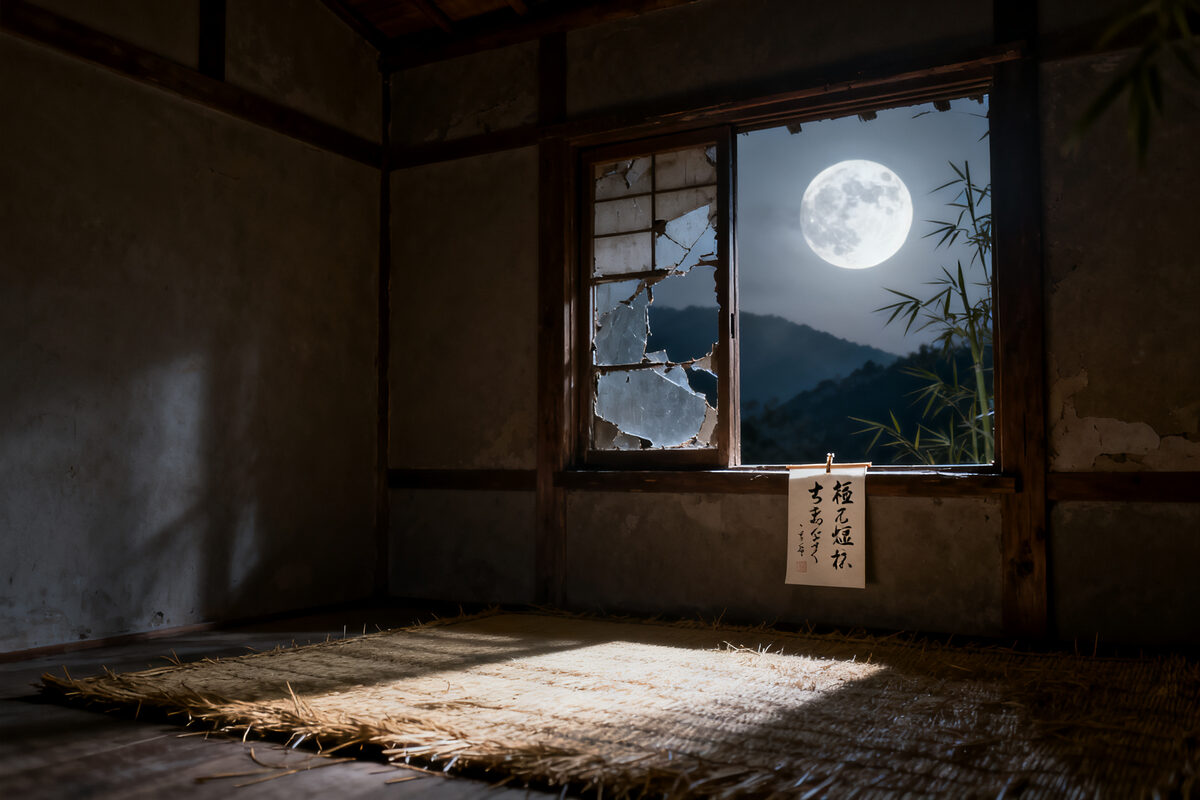
The moon had risen outside his window.
He wrote a poem.
It's very short. Translated into English, it goes something like this:
The thief goes
but leaves me —
the moon at the window
The first time I read this story, I sat there for a long while.
Not because of words like "magnanimity" or "compassion" — those words are too big, and putting them on Ryōkan actually makes him smaller.
What stopped me was this: he considered the moonlight something that was "left behind."
Think about it. The moon was there before the thief came. The moon was still there after the thief left. It hadn't been stolen. It didn't appear because the thief departed. It was always there.
But Ryōkan said "left."
As though, in his eyes, moonlight and clothing were both things he "possessed." The thief took the clothes but couldn't take the moonlight. So he still felt he had plenty.
This isn't simply "letting go" or "being detached." I think it's an entirely different way of seeing the world — when you don't limit "having" to material things, you discover that you actually have everything.
I read more of Ryōkan's poems and stories after that, and I noticed something particular about him: he was poor, and he was unapologetic about it.
Not in a "I'm poor but I have spiritual riches" kind of proud way. He wasn't proving anything. He was just poor, and he didn't think much of it.
People would bring him clothes, food, offerings. He'd accept them, then give them away to someone poorer. Not in the manner of performing charity — more like, "Ah, you need this more than I do."
Once, someone asked him, "You're so poor. How can you be so happy?"
Ryōkan said something I've turned over in my mind many times:
"Why should I be sad? The cherry blossoms open in spring, the moon is full in autumn. None of that costs anything."
Notice: if someone else said this with a different tone, it could sound like a motivational poster. But when Ryōkan said it, he was simply stating a fact, the way you might say it's nice weather today. No moral. No takeaway.
I have a set of prayer beads next to me. I keep them in my hand and idly roll them between my fingers. It's not formal practice, just a habit.
Rolling the beads, I sometimes wonder: what do I truly "own"?
The beads were bought with money — I could lose them someday, they could break. My phone holds countless photos that could disappear when the storage fills up. The number in my bank account is, at the end of the day, just a kind of agreement, not something I can hold in my hands.
So what is it that I really have?
Ryōkan would say: the moonlight at the window.
He didn't "own" the moon — the moon belongs to no one. But he saw the moon. On that night when everything had been stolen and he was left with nothing but his bare skin, he didn't feel he'd lost anything, because he saw the moon.
Seeing. That act might be the only thing a person can truly possess.
You saw the first flower open in spring — that moment is yours. You heard rain falling on roof tiles — that moment is yours. No one, no thief, can take that from your hands.
Sometimes I try to picture that night.
A thatched hut at the foot of a mountain, wind blowing through the gaps. A middle-aged man sitting bare-chested on a straw mat, surrounded by the mess of his ransacked "home." Footsteps fading in the distance outside.
He looks up.
The moon hangs in the sky. Moonlight pours through the window — there's no paper left on the frame — and falls across the mat, falls across his skin. The whole room glows.
And in this moment, he writes a poem.
Not about poverty. Not about suffering. Not about "I don't care." He writes — the moon is beautiful.
I don't really know how to end this.
Ryōkan probably wouldn't tell you what this story "means," either. He just lived. Wrote poems. Played with children. Ate when he was hungry, slept when he was tired, watched the moon when it was there.
If you happen to see the moon tonight, that's the best ending this piece could have.
Three questions for you:
-
Have you ever had a moment when everything seemed lost, and then you noticed something beautiful — and it felt like enough?
-
If someone took away everything you owned, what would be your "moonlight left behind"?
-
Ryōkan gave his robe to the thief — do you think that was kindness, or did he simply not feel he was "giving" anything at all?