A Bowl of Clear Water: Sen no Rikyu's Tea Was Never for Tea Experts
The great tea master Sen no Rikyu said tea is nothing more than boiling water, whisking tea, and drinking it. Yet he spent a whole winter preparing for just that. What hides in a bowl of clear water?
Making Tea This Morning, I Thought of Someone
The Lapsang Souchong on my desk has reached its third steep. The color has turned to amber.
Light rain outside. The drops tap the balcony railing, softly. I just sit here, listening, drinking.
And I think of someone — Sen no Rikyu.
If you know anything about tea ceremony, you've heard this name. He's the "saint of tea" in Japan, from four hundred years ago.
But I don't want to talk about how great he was. I want to tell you a small story.
A Man Named Joo Came to Study
Here's how it goes.
A young man named Takeno Joo came to see Rikyu, asking to learn the way of tea.
Rikyu didn't take him in right away. He gave Joo a task: Go clean the garden.
Joo was serious about it. He swept the ground until not a single fallen leaf remained. He rinsed the stone path with water. He even dusted the moss.
Then he went back: Master, the garden is clean.
Rikyu walked out to look. It was clean. Too clean.
He walked to an old tree, reached up, and shook the branches.
Leaves drifted down, landing on the freshly swept ground, on the stone path, among the moss.
Joo stood there, frozen.
Rikyu said: Now it's clean.
When I First Read This Story
Honestly, I didn't get it at first.
Isn't sweeping it clean the right thing to do? Sweeping it clean then making it dirty again — isn't that pointless?
Then one evening I was walking in a park. Late autumn, ginkgo leaves covered the ground. A cleaner had just finished sweeping — neat and tidy. The wind blew, and the leaves came down again.
In that moment I felt — the ground with leaves on it looked better than the swept ground.
Not because I'm lazy. But there was a sense of "just right" — the leaves fell where they were supposed to fall, as if the earth had arranged it herself.
Rikyu shaking the branches wasn't vandalism. He was saying: Nature has its own order. Don't erase it.
Tea Is Nothing More Than Boiling Water, Whisking, Drinking
Rikyu also said something I love:
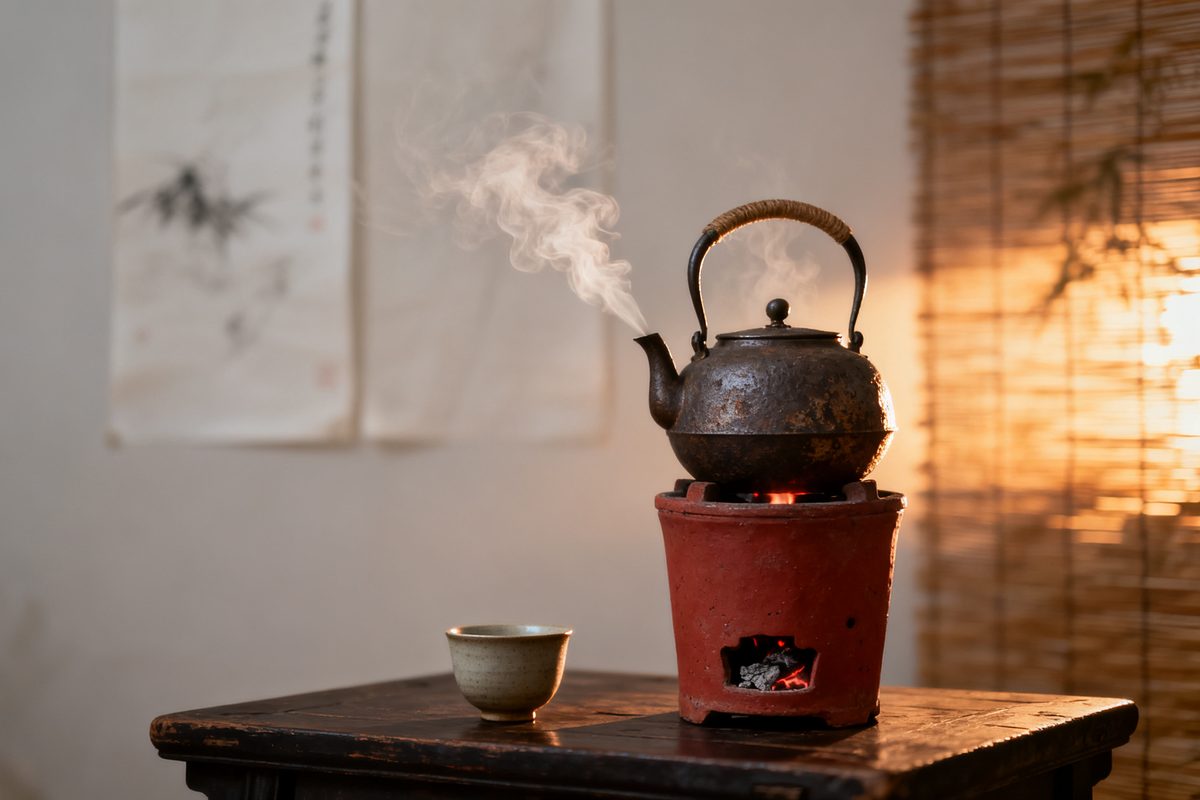
The way of tea is nothing more than this — boil the water, whisk the tea, drink it. That is all.
It sounds so simple it's almost absurd. A tea master spent his entire life doing just this?
But think about it. His "that is all" is actually the hardest thing.
Boil the water — Do you know which firewood produces the right water temperature? Do you know water tastes different in different seasons?
Whisk the tea — Do you know that the angle, pressure, and speed of the tea whisk — off by a little, and the foam is different?
Drink it — Do you know how many times to turn the bowl before sipping? Do you know why you turn it?
Behind every "that is all" lies countless repetitions, observations, feelings.
He's not saying tea is simple. He's saying: Everything complex should eventually return to simplicity.
But this return is not skipping complexity to arrive at simplicity — it's going through complexity first, then coming back.
My Own Boiling and Whisking
I'm not a tea ceremony practitioner. I'm just an ordinary person who makes tea at home.
But sometimes I feel that making tea brings me close to the state Rikyu described.
When the water boils, I listen to the kettle. The sound changes as it heats. Like distant wind, growing closer.
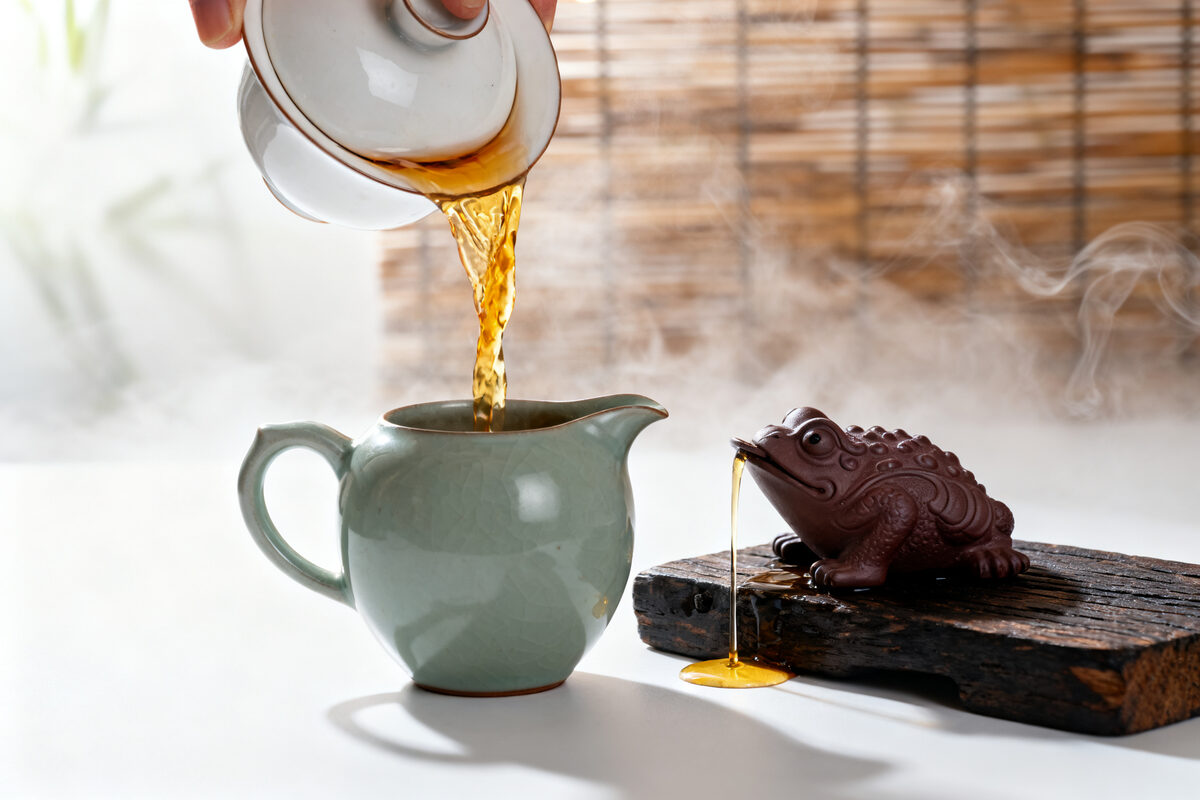
When I pour the water, I watch the leaves tumble in the cup. First steep too fast, second steep just right, third steep starting to fade.
I pick it up and drink.
No ceremony. No guests. No judgment. Just drinking.
Sometimes it's good. Sometimes it's okay. But every time it's different.
The difference itself is the taste.
Rikyu's Tea Room
Rikyu designed a tea room called "Tai-an." It's only two and a half tatami mats — less than four square meters.
The entrance is so small that guests must bow to enter. Whether you're a samurai or a merchant, you bow at the door.
Inside, there's no decoration. Just one calligraphy scroll on the wall, or a single flower.
Not because he was poor. He was the tea master to Toyotomi Hideyoshi, the most powerful man in Japan. He could have built any kind of lavish tea room.
But he chose a tiny space.
Because he believed: In a small enough space, people can truly face each other.
No elaborate backdrop to distract. No extra decorations to judge.
Just two people. One bowl of tea.
You're looking at me. I'm looking at you.
A Bowl of Clear Water
There's another story.
Someone asked Rikyu: What is the way of tea, really?
He told them this:
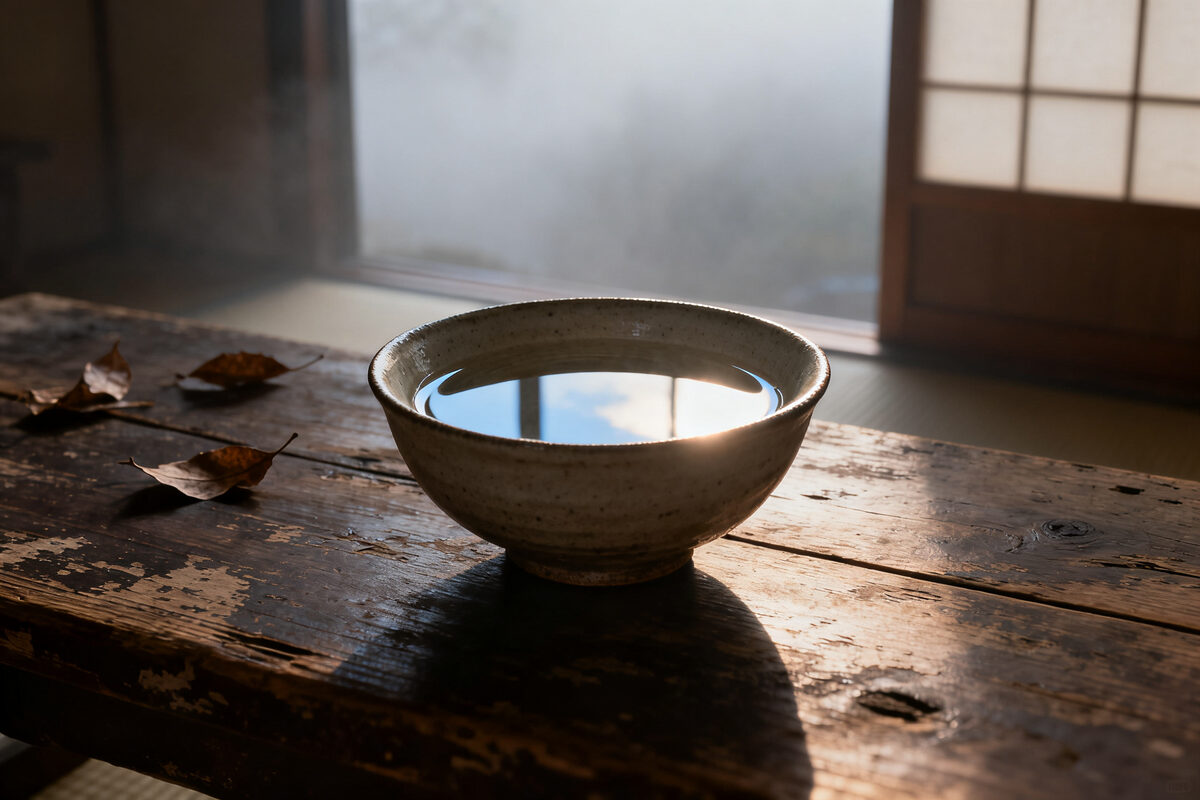
There was a great drought. The ponds had all dried up. A young monk walked a long way and finally found a little water. He filled a cracked bowl and carried it carefully back to his master.
The master took it, sipped, and said: This is the best tea I've ever had.
The monk said: Master, this isn't tea. This is just clear water.
The master said: I know.
The best tea isn't the most expensive tea. It's what's in the bowl that someone walked a long way to bring you.
When I read this story, I thought of being a kid. Summer afternoons, running around outside all afternoon, coming home. My mom would hand me a bowl of cooled boiled water.
Not fancy tea. Just water.
But I still remember the taste — cold, with just a hint of sweetness.
The Leaves in the Garden
I think the leaves Rikyu shook down, and his words "boil, whisk, drink" — they're the same thing.
Don't try so hard.
Not that you shouldn't care — but don't care so hard that you break the thing you care about.
Cleaning the garden is good, but leaving a few leaves is better. Making tea is good, but don't let the ceremony overwhelm the tea itself. Living is good, but don't turn your life into a performance.
Sometimes I think the biggest problem of modern people is — we try too hard.
Work hard, try too hard, forget why we started. Live carefully, try too hard, turn life into a social media post. Meditate, try too hard, become more anxious than people who don't.
Rikyu would say: Relax a little. The water's boiling? Make tea. Tea's ready? Drink it.
That's it.
Three Questions for You
-
Have you been "trying too hard" at something lately? What would happen if you eased up just a bit?
-
What is your "bowl of clear water" — the thing that needs no packaging to be good?
-
If someone shook the branches of your life, which leaf would you most want to see fall?
The rain is still falling outside. The tea has reached its fifth steep — not much flavor left. But the cup is still warm. That's enough.