"Is That So?" — Three Words I Learned from Zen Master Hakuin
Zen Master Hakuin was falsely accused of fathering a child. He didn't defend himself. He just said "Is that so?" — and these three words changed how I see blame and misunderstanding.
Whatever comes to mind. Sometimes a story I read, sometimes something that came to me while holding my mala beads.

Zen Master Hakuin was falsely accused of fathering a child. He didn't defend himself. He just said "Is that so?" — and these three words changed how I see blame and misunderstanding.

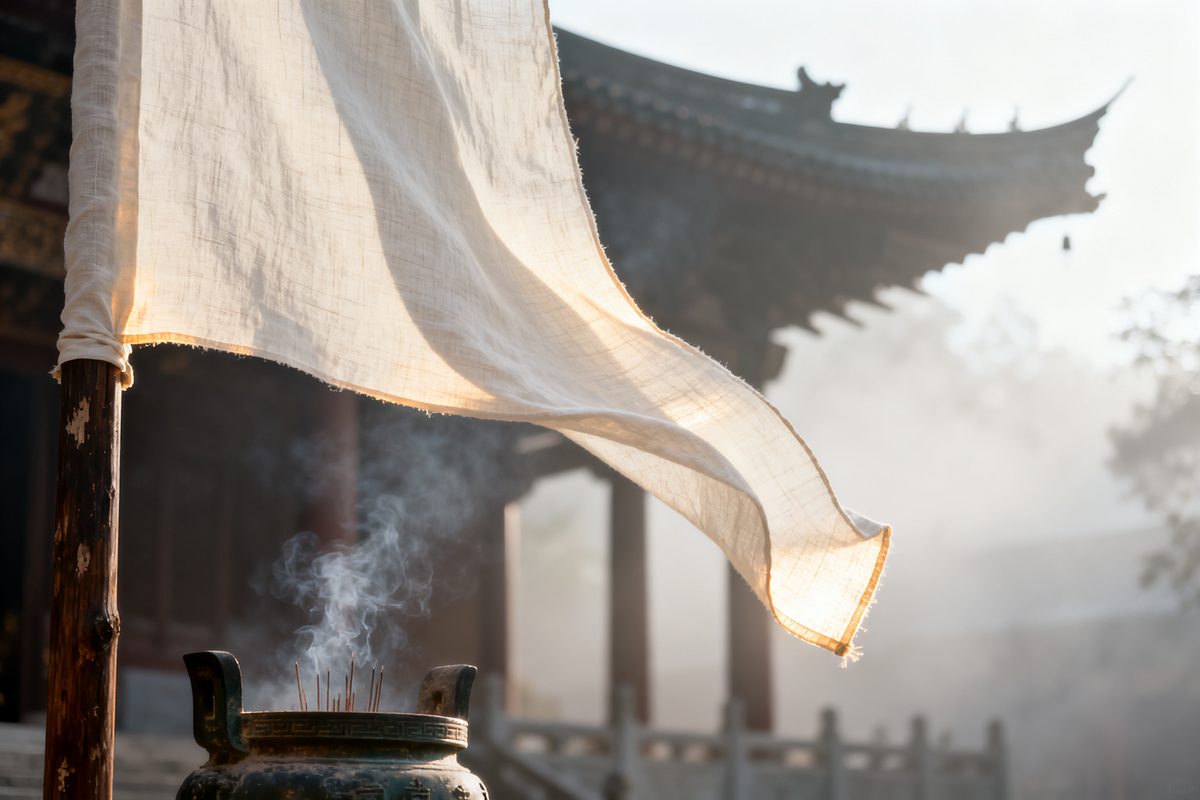
On a windy day in Guangzhou, a flag flapped outside my window. I stood there watching it and remembered a story from thirteen hundred years ago — two monks arguing about whether it was the wind or the flag that was moving. Huineng said: it's neither. It's your mind that moves. I used to think this was idealism. Now I think it's about something simpler — what makes you suffer isn't what happens outside, but how your mind responds.

This morning I was sweeping the courtyard when the sound of the bamboo broom made me stop. Then I remembered the story of Xiangyan — a monk who had read countless sutras but only understood everything when he heard a piece of tile strike bamboo. Maybe practice doesn't need grand narratives. Just one ordinary sound, one moment of quiet.

During the Tang Dynasty, an old monk named Huaihai lived on Baizhang Mountain. Every day he worked alongside younger monks. When his disciples hid his tools, he refused to eat. This story has been passed down for over a thousand years.


A young monk asked Zhaozhou how to practice. Zhaozhou simply said, "Go wash your bowl." One bowl of porridge, one alms bowl, one simple phrase — why did it bring sudden awakening? A deep exploration of this Zen koan's three layers of meaning.

On Vulture Peak, the Buddha held up a single flower. Thousands were bewildered. Only Mahākāśyapa smiled. Thus began the mind-to-mind transmission that would become Zen — a timeless teaching about direct awareness beyond words.

Dogen Zenji returned from China to Japan with a single teaching: Just sit. No seeking enlightenment, no seeking Buddhahood. Just sitting. This is the entirety of practice.

Someone asked Nanquan Puyuan: What is the Way? Nanquan said: Ordinary mind is the Way. The person pressed: Can I aim for it? Nanquan replied: Once you aim, you've already strayed.

Fifth Patriarch Hongren asked disciples to write verses to determine his successor. Shenxiu wrote "constantly wipe and polish." Huineng wrote "originally there is nothing." Two verses, two paths, a controversy lasting over a thousand years.

"My mind is uneasy. Please pacify my mind for me." Damo's response made the very mind Huike was desperately seeking completely vanish.

No matter who you are, no matter what you ask, Zen master Zhaozhou's answer is always the same: "Have some tea." Three simple words that contain the essence of Zen.