Feng Zikai: Compassion in Life-Protection Art
Feng Zikai recorded life
Feng Zikai: Compassion in Life-Protection Art
Editor's Note
Feng Zikai (1898-1975), renowned painter, essayist, and translator. He studied under Li Shutong (Master Hongyi) and became famous for his "Zikai Cartoons." He collaborated with Master Hongyi to create the Life-Protection Painting Collection, conveying compassion and peace through his brush. His paintings are simple and warm, his writing honest and moving, influencing countless people. This article is compiled from Feng Zikai's writings and life story.
I. My Teacher Master Hongyi
Q: Your relationship with Li Shutong (Master Hongyi) was deep?
Feng Zikai: Yes, he was my teacher for life.
The Student-Teacher Bond
When I studied at Zhejiang First Normal School, Mr. Li Shutong taught us art and music.
He taught me not just techniques, but how to be a person.
His character, his bearing, his spirit, deeply influenced me.
My Teacher's Qualities
Mr. Li had several qualities:
First: Earnestness
Whatever he did, he was earnest.
Teaching earnestly, painting earnestly, later practicing Buddhism earnestly.
He often said: "Carelessness in one thing leads to lifelong trouble."
Second: Humility
With such talent, he never showed off.
He was gentle with students, respectful with colleagues.
Third: Compassion
He was compassionate to all life.
An insect, an ant—he was careful not to harm them.
My Teacher's Influence
My whole life was influenced by him.
My paintings pursue the simplicity and depth he had. My character pursues the earnestness and compassion he had.
Meeting a good teacher is a lifetime's fortune.
II. Creating Life-Protection Paintings
Q: How did the Life-Protection Painting Collection come about?
Feng Zikai: This was a long promise fulfilled.
The Beginning of the Promise
In 1928, Master Hongyi turned fifty.
I wanted to give him a special gift.
I painted fifty life-protection paintings, accompanied by fifty poems.
The master was very happy when he saw them and vowed to continue until age one hundred.
He said: If I live to sixty, paint sixty; if I live to seventy, paint seventy... until one hundred.
Fulfilling the Promise
Later, war scattered us.
But I always remembered this promise.
In 1948, when the master was seventy, I painted seventy works and sent them to him.
In 1965, the master was still creating. By then I was sixty-eight.
In 1973, when the master was ninety, I completed the final one hundred paintings.
Though the master had already passed away, my promise was fulfilled.
The Meaning of Life Protection
Why paint life-protection art?
Because life deserves respect.
Not just human life, but animal life, plant life.
All life has the right to exist.
Protecting life is protecting the compassion in your heart.
Q: Why are life-protection paintings important?
Feng Zikai: Because this world needs compassion.
The Problem of Violence
This world is full of violence:
- Violence between people
- Violence between humans and animals
- Violence between humans and nature
Violence only brings more violence.
The Power of Compassion
Compassion can dissolve violence.
If you're compassionate to others, they'll be compassionate to you. If you're compassionate to all beings, all beings will respond in kind.
The Power of Art
Words have their power, paintings have theirs.
A life-protection painting might move someone more than a lecture.
Seeing the small animals in the painting, your heart softens. Seeing the harmony in the painting, you yearn for it.
Subtle transformation—this is art's power.
III. The Art of Cartoons
Q: Your cartoons have a unique style. How did it develop?
Feng Zikai: Simply put, I painted what I saw, what moved me.
The Birth of Cartoons
I started painting cartoons by chance.
In 1924, I saw Takehisa Yumeji's work in Japan—very simple, very poetic.
I thought: Chinese painting can be done this way too.
When I returned, I started painting these small works.
Characteristics of My Cartoons
My cartoons have several characteristics:
First: Simple
Simple lines, simple composition.
Understandable at a glance, but with deeper meaning upon reflection.
Second: Life-Oriented
What I painted was small matters in daily life:
- Children playing
- Adults chatting
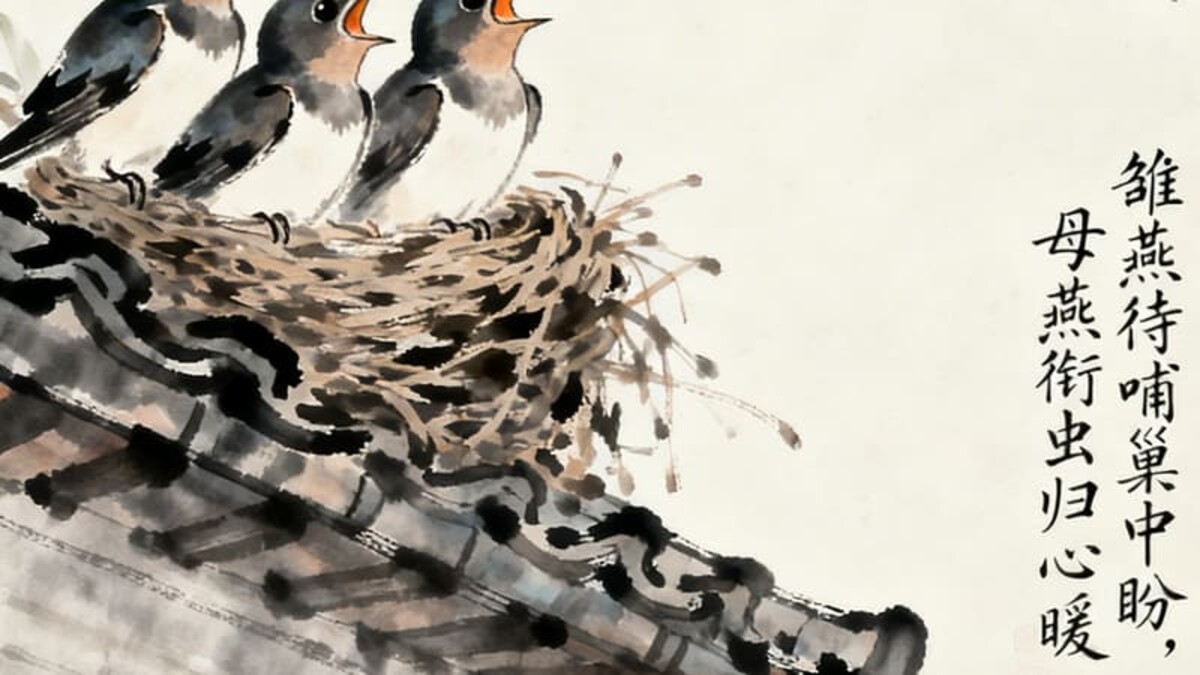
- Swallows flying past
- Willow trees sprouting
These small matters are the truest life.
Third: Poetic
Though cartoons, they should have poetry.
Painting isn't just recording—it's expressing.
Expressing your feelings about life, your reflections on existence.
Q: What's different between cartoons and traditional painting?
Feng Zikai: Cartoons are freer.
Not Bound by Form
Traditional painting has many rules.
Cartoons have fewer rules—paint however you want.
More Powerful
Cartoons are simple, therefore powerful.
You use minimal brushstrokes to express maximal content.
This is cartoon's charm.
Easier to Spread
Cartoons can be understood by anyone.
Whether old or young, educated or not, all can understand.
So cartoons can influence more people.
IV. A Childlike Heart Is Most Precious
Q: You often paint children. Why?
Feng Zikai: Because a childlike heart is most precious.
A Child's World
A child's world is pure.
They have no prejudice, no utilitarianism, no pretense.
Seeing what is, saying what they think.
This purity, adults have already lost.
A Child's Wisdom
Children have great wisdom.
Once, I saw a child take off new shoes and put them in water to "wash their feet."
Adults think: How can shoes wash feet?
But in a child's world, everything has life, everything is a friend.
This isn't foolishness—it's a pure heart.
Learning from Children
I paint children not to amuse, but to learn from them.
Learning their:
- Sincerity
- Curiosity
- Selflessness
- Joy
When you grow up, don't lose your childlike heart.
Q: How can adults maintain a childlike heart?
Feng Zikai: Several points:
First: Don't Be Worldly
Worldliness isn't maturity—it's pollution.
Don't think you've seen through everything—you've just become numb.
Maintain freshness, maintain curiosity.
Second: Don't Be Utilitarian
Don't think about usefulness in everything you do.
Some things have no use, but are beautiful.
Play a while, space out a while, watch clouds, watch flowers.
These "useless" things are life's nourishment.
Third: Don't Pretend
Adults are best at pretending.
Pretending to be mature, pretending to be profound, pretending to be learned.
Don't pretend—be what you are.
Authenticity is most lovable.
Fourth: Be with Children
Spend more time with children.
Watch how they play, how they laugh, how they see the world.
You'll be infected by them.
V. The Art of Living
Q: What is your attitude toward life?
Feng Zikai: Simple, free, flavorful.
Simple
Life doesn't need to be complex.
A small room, a few books, a cup of tea—very satisfying.
The fewer material needs, the larger the spiritual space.
Free
Don't be bound by rules.
If you want to paint, paint. If you want to write, write.
Don't care too much about others' eyes.
Living freely is the greatest success.
Flavorful
Life should have flavor.
Not the flavor of feasts, but the flavor of a steady stream:
- Watching clouds outside the window in the morning
- Brewing tea in the afternoon
- Reading a few pages in the evening
These small matters give life savor.
VI. Creating Essays
Q: Your essays are also famous. What's the relationship with painting?
Feng Zikai: Both painting and writing are expression.
What Can't Be Painted, Write
Some things can't be painted, so I write about them.
Writing has writing's advantages—can be more detailed, more penetrating.
Style of Writing
My writing, like my paintings:
- Simple
- Honest
- Flavorful
Not pursuing flowery language, pursuing authentic expression.
Combining Painting and Writing
Sometimes, I paint a picture and write a passage.
Painting and writing complement and illuminate each other.
This is more interesting.
VII. Facing Hardship
Q: You experienced many hardships. How did you face them?
Feng Zikai: When hardship comes, accept it.
Experience During the Cultural Revolution
During the Cultural Revolution, I was criticized, had my home searched, was sent down for labor.
My paintings were burned, my books destroyed.
But I didn't despair.
Persistence Amid Hardship
What did I do? I secretly painted, secretly wrote.
If I couldn't paint, I painted in my heart. If I couldn't write, I wrote in my heart.
What's in your heart, no one can take away.
The Meaning of Hardship
Hardship is part of life.
You can't choose whether to have hardship, but you can choose how to face it.
You can complain, or you can accept. You can fall down, or you can stand up.
Hardship can't defeat you. What can defeat you is only yourself.
VIII. Final Words
Q: What would you like to say to future generations?
Feng Zikai: A few words:
First: Maintain a Childlike Heart
Growing up is inevitable, aging is inevitable.
But a childlike heart can be maintained.
Don't let the world wear away your childlike heart.
Second: Have Compassion
Have compassion for all life.
Don't harm, don't kill—coexist peacefully.
This is the most important practice.
Third: Live Simply
The simpler life is, the happier it is.
Don't pursue too much, don't want too much.
Contentment brings joy.
Fourth: Do What You Love
In this life, do what you love.
Don't live for others—live for yourself.
Your happiness is the greatest contribution to the world.
Postscript
Feng Zikai passed away in 1975 in Shanghai, at the age of 77.
In his life, he painted countless warm small paintings, wrote countless moving words.
He called himself a "small painter," but his influence far exceeded many "great painters."
What he left behind wasn't just paintings, wasn't just writing, but an attitude toward life:
Simple, compassionate, with a childlike heart.
May all readers find in Feng Zikai's world the poetry of life and the compassion of being.
This article is compiled from Feng Zikai's writings and life story, preserving his gentle and honest speaking style to more authentically convey his spirit.
Carrying the Way through vessels · Transmitting the heart through things