Master Hsing Yun: Practitioner of Humanistic Buddhism
Master Hsing Yun pioneered Humanistic Buddhism, bringing the Dharma into daily life. He taught us: Buddhism is not about escaping the world, but engaging with it more fully.
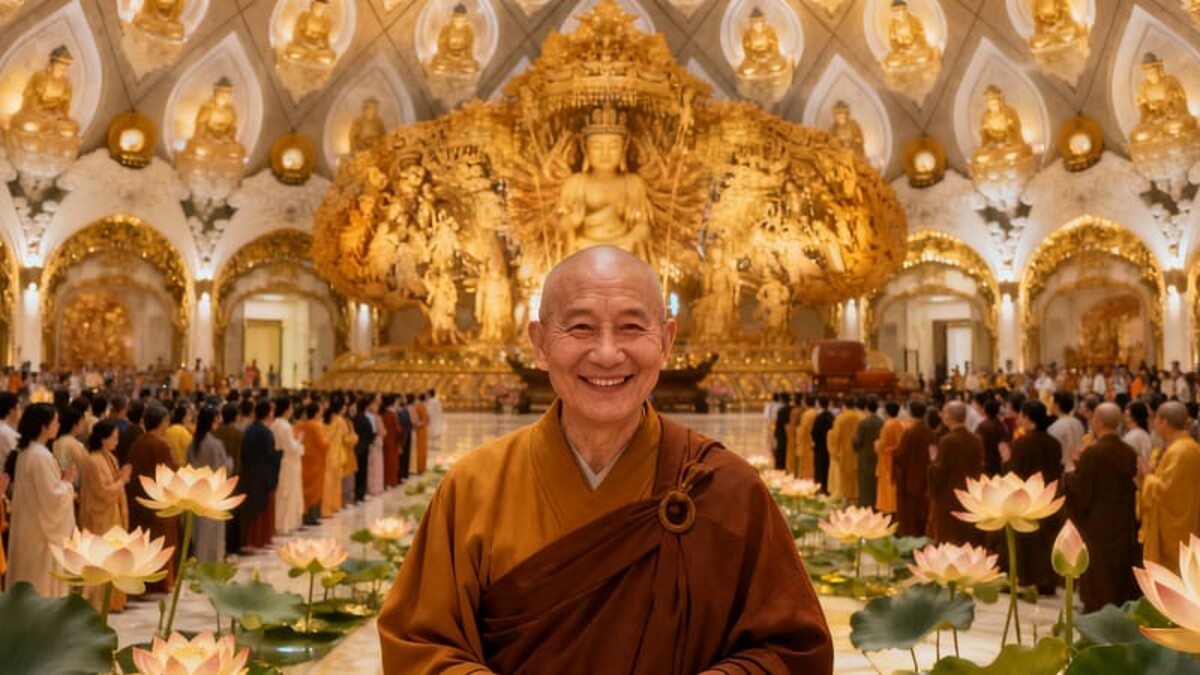
Master Hsing Yun: Practitioner of Humanistic Buddhism
Editor's Note
Master Hsing Yun (1927-2023) was the founding abbot of Fo Guang Shan Monastery and founder of the Buddha's Light International Association. Throughout his life, he dedicated himself to promoting "Humanistic Buddhism," advocating "living the Dharma in daily life, and bringing daily life into the Dharma." He established Fo Guang Shan and set up over three hundred temples across five continents, bringing Chinese Buddhism to the global stage. This article is compiled from Master Hsing Yun's numerous teachings and writings.
I. What is Humanistic Buddhism?
Q: Master, many people think Buddhism is about leaving the world. Why do you advocate "Humanistic Buddhism"?
Master Hsing Yun: Buddhism has always been about this human world.
Shakyamuni Buddha was born in the human world, practiced in the human world, attained enlightenment in the human world, taught in the human world, and entered parinirvana in the human world.
He never left the human realm.
What the Buddha taught was all about human concerns—how to end suffering and find happiness, how to handle relationships, how to face birth, old age, sickness, and death.
So I say: The Buddha was born among humans, and Buddhism should be practiced among humans.
The Dharma is Not Separate from Life
Some people think practicing Buddhism means hiding in the mountains, ignoring worldly affairs. This is a misunderstanding.
In the Buddha's time, disciples went into the city every morning to beg for alms, encountering all kinds of people. This wasn't escape—it was engagement.
Humanistic Buddhism means bringing the Dharma back into daily life:
When you eat, you can practice. When you work, you can practice. When you're with family, you can also practice.
The Dharma isn't about leaving the world—it's about living in it more skillfully.
Q: How is Humanistic Buddhism different from traditional Buddhism?
Master Hsing Yun: Fundamentally, there's no difference—both are the Buddha's teachings.
But in how it's shared, there are some adjustments:
Misconceptions in Traditional Buddhism
In the past, Buddhism was made mysterious:
- Teachings were in classical Chinese that ordinary people couldn't understand
- Rituals were complex, intimidating people
- Emphasis was on future lives, neglecting this life
- Focus was on personal practice, ignoring society
The Practice of Humanistic Buddhism
The Humanistic Buddhism I advocate:
- Teaching in plain language everyone can understand
- Simplifying rituals, emphasizing substance over form
- Valuing this life—benefits can be experienced now
- Caring for society—Buddhists should serve the community
Buddhism is not about passive withdrawal; it's about active engagement.
II. The Founding of Fo Guang Shan
Q: How did you build Fo Guang Shan?
Master Hsing Yun: It was a convergence of causes and conditions.
A Barren Mountain
In 1967, I came to Dashu Township in Kaohsiung and saw this hillside—overgrown with weeds, unwanted by anyone.
But I saw something in it. The elevation allowed you to see far into the distance. I thought: If I build a temple here, many people will be able to see the Dharma.
At that time, I only had a worn-out tape recorder and some books. I didn't even have money to buy the land.
Disciples asked me: "Master, do you have money?"
I said: "No, but I have intention."
The Convergence of Many Conditions
Building a temple requires money, people, and materials. I had none of these.
But I had one thing: vow.
I vowed to build a monastery, to let Buddhism take root in Taiwan, and then spread it throughout the world.
This vow attracted many people:
- Some donated money
- Some contributed labor
- Some brought bricks and tiles
- Some brought food
Bit by bit, Fo Guang Shan was built.
The Hardships
The process of building the mountain was difficult.
There was a time when we didn't have money to pay the workers. I moved bricks and mixed cement alongside them.
At night, I slept at the construction site. The mosquitoes were so thick I couldn't sleep, so I'd get up and write articles.
Someone asked me: "Master, don't you find it hard?"
I said: "When you have a vow in your heart, you don't feel the hardship."
Where there's a vow, there's power. The strength of your vow determines the magnitude of your achievement.
Q: Why is it called "Fo Guang" (Buddha's Light)?
Master Hsing Yun: "Fo Guang" has two meanings:
First: The Buddha's Light
The Buddha's wisdom is like light, illuminating the darkness of sentient beings.
When we study Buddhism, we're spreading this light further, benefiting more people.
Second: Shining on All Beings
Sunlight shines on everything, regardless of status or wealth.
Buddha's light is the same—regardless of race, nationality, or poverty.
Anyone willing to receive it can bathe in the Buddha's light.
So I hope Fo Guang Shan is an open place:
- Not just a temple for monastics
- But a spiritual home for lay practitioners
- Even non-Buddhists can come to enjoy the scenery and have tea
The Dharma is for all sentient beings, not just Buddhists.
III. The Three Acts of Goodness Movement
Q: You promote the "Three Acts of Goodness Movement." Can you explain?
Master Hsing Yun: The Three Acts of Goodness are simple:
- Speak good words
- Do good deeds
- Think good thoughts
These three things anyone can do, anytime, anywhere.
Speak Good Words
This doesn't mean flattery—it means:
- Sincere praise
- Warm encouragement
- Kind reminders
Sometimes, one good word from you might change someone's entire life.
Conversely, one harsh word might hurt someone for a long time.
A kind word warms three winter months; a harsh word hurts six summer weeks.
Do Good Deeds
Good deeds come in all sizes:
- Opening a door for someone
- Giving directions
- Picking up trash
- Offering your seat on the bus
Don't think these are small things. The power of goodness accumulates.
Do one good deed today, another tomorrow—that's over three hundred a year.
Don't neglect a good deed just because it seems small.
Think Good Thoughts
Good thoughts are the foundation of the three acts.
When your mind is good, your words naturally become good, your deeds naturally become good.
When your mind is not good, no matter how well you pretend, it won't last.
How to think good thoughts?
- Think more of others
- Worry less about gain and loss
- Be constantly grateful
- Be more tolerant
When the mind is good, everything is good.
Q: How do you spread the Three Acts of Goodness to society?
Master Hsing Yun: The most important thing is education, starting with children.
In Schools
Fo Guang Shan runs many schools globally, from kindergarten to university.
We teach children the Three Acts of Goodness not through preaching, but through practice:
- Every morning, say something kind to a classmate
- Every day, record one good deed you did
- Before sleep, reflect: Did I think good thoughts today?
In Families
Parents are children's best role models.
When mom and dad speak good words, do good deeds, and think good thoughts every day, children naturally learn.
Example teaches better than words.
In Society
I speak about the Three Acts of Goodness on various occasions and write articles to promote them, hoping they become a social consensus.
A society where people speak good words, do good deeds, and think good thoughts will surely be harmonious.
IV. The Dharma and Daily Life
Q: Modern people have a lot of stress. How can the Dharma help?
Master Hsing Yun: The Dharma can help modern people immensely.
First: Reducing Stress
Why are modern people so stressed? Because they want too much.
A bigger house, a better car, children in top schools, promotions and raises.
Desire is a bottomless pit, never to be filled.
The Dharma tells you: Contentment brings happiness.
This doesn't mean not striving—it means knowing what's truly important.
Is health important, or a big house? Is family harmony important, or a promotion?
When you're clear about this, stress naturally decreases.
Second: Peace of Mind
Modern minds are restless, always worrying about this and that.
The Dharma tells you: Cause and effect never fails.
Just do what you should do, and results will naturally follow.
It's like a farmer: you just plant, water, and fertilize—leave the harvest to heaven.
If you've done what you should, what's there to worry about?
Third: Transforming Thoughts
When encountering difficulties, the Dharma teaches you to transform your thinking.
When someone scolds you, think: They're burning off my negative karma—I should thank them.
When facing setbacks, think: This is here to mature me, to make me stronger.
Circumstances aren't good or bad—they're created by the mind. The same situation, depending on how you think, leads to completely different outcomes.
Q: How can busy people practice?
Master Hsing Yun: Work itself is practice.
Practicing in Work
Working earnestly is practice. Being kind to colleagues is practice. Doing things well is practice.
Don't set practice in opposition to work.
Some people say: "I need to work and make money. When I've earned enough, I'll practice."
I tell them: You can practice while working—no need to wait.
Simple Daily Practices
If you must have a method, I recommend a few simple ones:
Morning vow: Today I will speak good words, do good deeds, and think good thoughts.
Mindfulness during work: When doing something, focus on that thing—don't think of others.
Evening reflection: How did I do today? Where can I improve?
Chanting anytime: You don't need to chant out loud—silently chant "Namo Amituofo" in your heart to settle the mind.
These methods are simple but effective, and they don't interfere with work.
V. Advice for Young People
Q: Young people today are quite lost. What would you say to them?
Master Hsing Yun: Every generation of young people has its confusion. This is normal.
I was confused when I was young too.
I ordained at twelve, not knowing what the future held. In my twenties, I came to Taiwan with no connections, not knowing what to do.
But I didn't stay in confusion—I kept doing, learning, and moving forward.
First: Find Direction
Confusion comes from lacking direction.
Ask yourself: What do I want to do in this life? What's truly important to me?
You don't have to think too far ahead—just think closer: What kind of person do I want to be in three years?
With direction, you won't be confused.
Second: Be Grounded
With direction, you must also be grounded.
Many young people aim too high, wanting to reach the sky in one step. When they can't, they get discouraged and give up.
I often say: To do great things, start with small things.
Fo Guang Shan is huge, but it was built brick by brick, tile by tile.
No matter how big your dreams, start with today's small tasks.
Third: Don't Fear Failure
Young people's biggest problem is fear of failure.
Fear of failure means not daring to try. Not trying means never succeeding.
I've experienced many failures in my life:
- Magazines that couldn't continue
- Schools where I was driven away
- Difficulties in building temples
But I never took failure seriously. When I failed, I got up and continued.
Failure isn't可怕; giving up is.
Fourth: Build Good Connections
Young people should learn to get along with others and build good connections.
When you help others, others will help you. When you're kind to others, others will be kind to you.
The road of life is long—you need many friends to walk together.
You won't get far as a lone wolf.
Q: How should young people face the rat race and competition?
Master Hsing Yun: The rat race exists because everyone is crowding onto the same path.
Why not take a different path?
Don't Follow the Crowd
Others take graduate entrance exams, so you do too. Others take civil service exams, so you do too. Others join big tech companies, so you do too.
Have you asked yourself: Is this what I want?
A life of following the crowd is not your life.
Find Your Gift
Everyone has their own gifts.
Some are good at logical thinking, some at artistic creation, some at communicating with people.
Find your gift, develop your gift, and you won't be competing with others.
Because you're walking your own path—no one can replace you.
Don't Compare with Others
The biggest rat race is comparing with others.
Better than others? You get arrogant. Worse than others? You get insecure.
Why compare?
You just need to be better than your yesterday self. That's enough.
VI. On Life and Death
Q: How do you view life and death?
Master Hsing Yun: Life and death are natural laws—there's nothing to fear.
The Nature of Life and Death
Life and death are like day and night, like spring, summer, fall, and winter—cyclical.
The end of this life is the beginning of the next.
It's like changing clothes—when this one is old, put on a new one.
So Buddhism says: No birth, no death.
The real you won't die. Only this body dies.
Facing Death
I'm over ninety now. I can go anytime.
I'm not afraid of death because I've done what I needed to do.
Fo Guang Shan is built. Disciples can continue the work. The Dharma has spread around the world.
This life has not been in vain.
If you ask me if I have any regrets, I can't think of any.
Do things completely, leave freely.
Q: How should one face the moment of death?
Master Hsing Yun: At the moment of death, the most important thing is to have a peaceful mind.
Let Go of Attachments
Many people can't let go at death, worrying about this and that.
Actually, what's there to worry about?
When you were alive, you did your best. After you're gone, the world keeps turning, your family keeps living.
So let go. Pass on peacefully.
Chanting for Rebirth
The Pure Land school teaches chanting for rebirth in the Western Pure Land. At the moment of death, if your mind is focused on Amitabha Buddha, you can be reborn there.
This isn't superstition—it's the power of intention.
When your mind is constantly focused on something, that thing will come to pass.
Don't Be Afraid
Death is just walking through a door, from one room to another.
Maybe the other room is even better?
So don't be afraid. Just go peacefully.
VII. Buddhism and World Peace
Q: You've spread Buddhism globally your whole life. How do you view today's conflicts and wars?
Master Hsing Yun: The root of conflict lies in the human mind.
When the Mind is Pure, the Land is Pure
When one person's mind is pure, their world is pure. When one person's mind is chaotic, their world is chaotic.
World peace starts with each person's mind.
You say the world is chaotic—is your own mind chaotic?
If your own mind is chaotic, how can you expect world peace?
Oneness and Coexistence
Buddhism speaks of "oneness and coexistence"—all beings are one.
Your suffering is my suffering; your happiness is my happiness.
With this understanding, you won't harm others because harming others is harming yourself.
Respect and Tolerance
Conflict often arises from lack of respect and tolerance.
My religion is right, yours is wrong. My values are right, yours are wrong.
Actually, all paths lead to the same destination.
Christianity speaks of love; Buddhism speaks of compassion. They're essentially the same.
Why must we distinguish right from wrong?
Respect others' differences, tolerate others' diversity, and the world will be at peace.
Q: What can Buddhism do for world peace?
Master Hsing Yun: Buddhism can do many things:
First: Purify Minds
Buddhists first purify their own minds, becoming positive forces in society.
When one person is good, they influence their family. When a family is good, they influence a community.
A single spark can start a prairie fire.
Second: Interfaith Dialogue
Fo Guang Shan regularly dialogues with other religions, learning from each other, building understanding.
More understanding means less misunderstanding. Less misunderstanding means less conflict.
Third: Charitable Relief
Wherever there's disaster, there are Buddhists helping.
We don't discriminate by religion or race—if you need help, we help you.
This is Buddhism's spirit of compassion and a force for peace.
Fourth: Educational Outreach
Through education, more people understand the Dharma, understand compassion and wisdom.
When young people learn compassion and wisdom, there will be fewer conflicts in the future.
VIII. Final Words
Q: Please give us your final teaching.
Master Hsing Yun: I have no special teaching, just a few simple reminders:
First: Think Good Thoughts
When the mind is good, everything is good. When the mind is not good, nothing is good.
Whatever happens, maintain a good heart.
Second: Speak Good Words
Words have power.
One kind word from you might warm someone for a lifetime.
So speak more good words, fewer bad words.
Third: Do Good Deeds
Good deeds aren't measured by size—doing them is what matters.
Do one good deed a day, and a lifetime becomes countless good deeds.
Fourth: Have a Vow
Life needs goals, needs vows.
The magnitude of your vow determines the magnitude of your achievement.
When I vowed to build Fo Guang Shan and spread Buddhism worldwide, it basically came true.
Not because I'm so capable, but because of the power of vows.
Fifth: Live in the Present
The past is gone, the future hasn't arrived.
All you can grasp is now.
So live in the present, cherish the present.
Doing well in each present moment is the best account you can give to life.
Postscript
Master Hsing Yun passed away on February 5, 2023, at the age of 96.
In his life, he had no disciples, because he said: "All sentient beings are my disciples."
In his life, he had no savings, because he said: "Money should be used to spread the Dharma."
In his life, he had no leisure, because he said: "Using fragmented time, great things can be accomplished."
The Master often said: "Where there's the Dharma, there's a way."
This was not just his belief—it was the portrait of his life.
From nothing to Fo Guang Shan, from Taiwan to the world, from one person to millions.
He proved: With a vow, nothing is impossible.
May all readers find direction and strength in Master Hsing Yun's wisdom.
This article is compiled from Master Hsing Yun's numerous teachings and writings, preserving his warm and accessible speaking style to more authentically convey the essence of his thought.
Carrying the Way through vessels · Transmitting the heart through things