Master Ji Qun: A Modern Interpretation of Bodhicitta
Master Ji Qun interprets the Dharma in language modern people can understand. He teaches us: Learning Buddhism is not about escaping—it is about awakening; not about gaining something, but discovering what was always there.
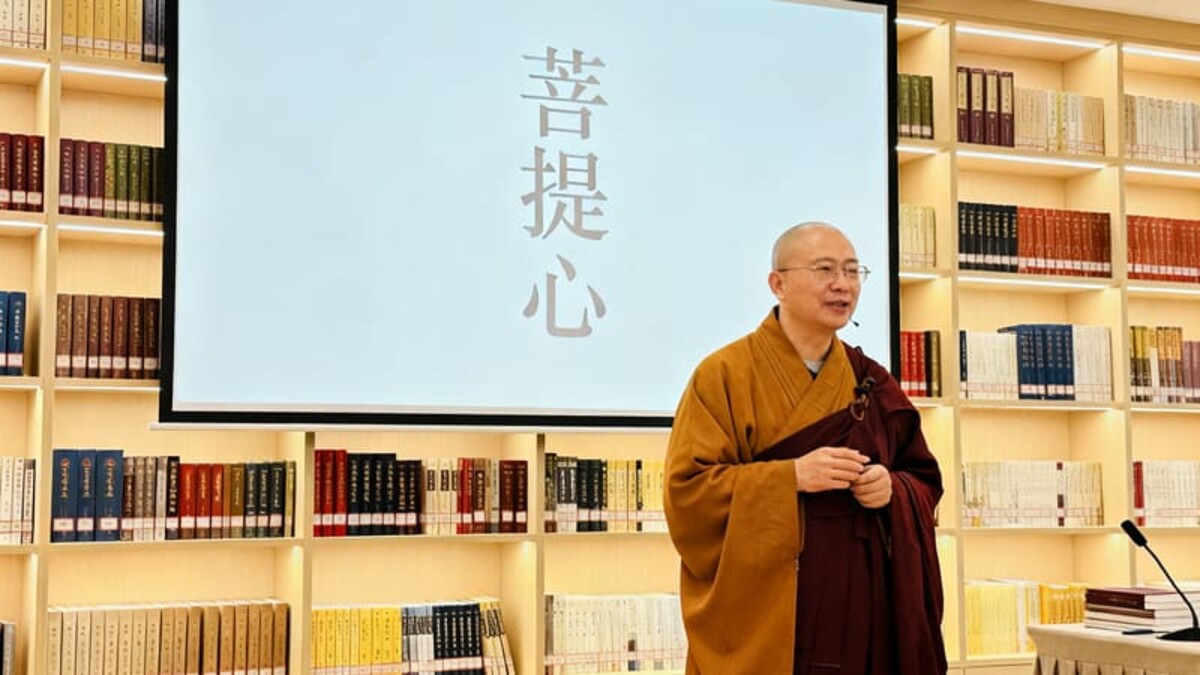
Master Ji Qun: A Modern Interpretation of Bodhicitta
Editor's Note
Master Ji Qun, renowned contemporary Buddhist teacher, Director of the Jiechuang Buddhist Studies Institute, and abbot of Xiyuan Temple in Suzhou. He has long been engaged in Consciousness-Only studies and Bodhicitta teaching, interpreting Buddhism in language modern people can understand, helping countless people embark on the path of practice. His teachings are profound yet accessible, combining academic rigor with practical intimacy. This article is compiled from Master Ji Qun's lectures and writings.
I. Why Learn Buddhism?
Q: Master, why do modern people need to learn Buddhism?
Master Ji Qun: Because modern people are lost.
Material Abundance, Spiritual Emptiness
Modern people possess more material goods than at any time in history.
But happiness hasn't increased.
On the contrary, more and more people are anxious and depressed.
Why? Because material things cannot satisfy spiritual needs.
You buy a big house, but still feel empty. You get a new car, but still feel unsatisfied.
Spiritual problems require spiritual solutions.
Unable to Find Life's Meaning
Many people ask: What is the purpose of living?
Making money? Buying a house? Getting married and having children? Then what?
Life seems like a cycle, nothing particularly meaningful.
This kind of confusion cannot be solved by material things.
Buddhism is about helping people find life's meaning.
Wanting True Happiness
Everyone wants happiness.
But many people pursue happiness in the wrong way:
Thinking more money means happiness, but finding the more money they have, the less satisfied they are. Thinking fame and fortune mean happiness, but finding once obtained, they fear losing them.
Buddhism tells you: True happiness comes from within, not from without.
Q: Does learning Buddhism require giving up a normal life?
Master Ji Qun: No.
Buddhism is Life Wisdom
Buddhism isn't about giving up work or family—it's about living with wisdom.
You still work, but without attachment. You still live, but without getting lost.
Lay People Can Also Practice
In the Buddha's time, there were many lay disciples.
They had jobs, families, but could still practice and attain enlightenment.
So it's not necessary to be in a temple, not necessary to ordain.
What matters isn't where you are, but where your mind is.
Buddhism Makes Life Better
After learning Buddhism, your life should be better:
- Handling problems with more wisdom
- Facing setbacks with more peace
- Treating others with more compassion
- Knowing more clearly what you want
If learning Buddhism makes your life worse, you're learning it wrong.
II. What is Bodhicitta?
Q: You often speak of Bodhicitta. What is Bodhicitta?
Master Ji Qun: Simply put, Bodhicitta is the mind that seeks enlightenment for the benefit of all beings.
Two Meanings
Bodhicitta has two levels:
Aspirational Bodhicitta: The resolve to attain Buddhahood and benefit all sentient beings. This is a wish, a commitment.
Practical Bodhicitta: Putting this wish into action. Not just thinking about it, but actually doing it.
Why Generate Bodhicitta?
You might ask: Isn't taking care of myself enough? Why benefit others?
Because:
- You and all beings are connected
- Helping others brings you happiness too
- The greater your mind's capacity, the greater your achievement
A single drop of water easily dries up; merged into the ocean, it never dries.
When your mind merges with all beings, you possess the power of all beings.
Bodhicitta Isn't Distant
Many people think Bodhicitta is something very lofty, only for great Bodhisattvas.
No.
You can generate Bodhicitta right now:
- Hoping you can grow
- Hoping to help more people
This is the seed of Bodhicitta.
Q: How can ordinary people generate Bodhicitta?
Master Ji Qun: You can start small.
First Step: Expand Your Capacity
Many people's minds are very small, thinking only of themselves, at most their families.
You need to gradually expand this capacity:
- Think of friends
- Think of colleagues
- Think of strangers
- Think of all living beings
The greater your mind's capacity, the larger your world.
Second Step: Cultivate Compassion
Compassion means: wishing others happiness, wishing others freedom from suffering.
You can make this vow daily:
"May all beings be free from suffering and attain happiness."
At first, you might just be saying it, not really feeling anything.
But over time, your heart will truly soften, and compassion will truly arise.
Third Step: Take Action
With the wish, you need action.
Help one person today, another tomorrow.
Do what you can, help as much as you're able.
What matters is the heart, not the amount.
III. Consciousness-Only and Mind
Q: You're an expert in Consciousness-Only studies. Can you briefly explain what Consciousness-Only is?
Master Ji Qun: Consciousness-Only is Buddhism's most precise psychology.
What is Consciousness-Only
"Consciousness-Only" means: All experiences are manifestations of mind.
What you see, hear, and feel are all transformations of your mind.
This doesn't mean external things don't exist—it means your cognition and feeling about them are all functions of mind.
Eight Consciousnesses
Consciousness-Only divides mind into eight levels:
First Five Consciousnesses: Eye, ear, nose, tongue, body—the five senses.
Sixth Consciousness (Mano-vijnana): Thinking, judging, remembering.
Seventh Consciousness (Manas): Deep self-awareness, attached to the existence of "self."
Eighth Consciousness (Alaya): The storehouse, holding all experiences (seeds).
Understanding Mind to Change Mind
Consciousness-Only tells you how mind operates:
- Why you get angry
- Why you have craving
- Why you have afflictions
Once you understand, you can change.
Q: How does Consciousness-Only help with practice?
Master Ji Qun: It helps greatly.
Know Where the Problem Is
Your mind has problems, but you don't know where they are.
Consciousness-Only is like a mirror, letting you see your own mind clearly:
- Which seeds are wholesome
- Which seeds are unwholesome
- Which seeds are active
Once you see clearly, you know how to practice.
Know How to Change
Consciousness-Only tells you:
- Impure seeds need purification
- Wholesome seeds need cultivation
- Every thought plants a seed
So you need to watch your thoughts:
- More wholesome thoughts means cultivating wholesome seeds
- Fewer unwholesome thoughts means reducing unwholesome seeds
Practice is cultivating the field of the mind.
Understand Cause and Effect
Every thought and action leaves a seed in the Alaya consciousness.
When conditions ripen, these seeds produce results.
This is cause and effect.
Understanding this principle, you become more careful with your thoughts and actions.
IV. How to Practice?
Q: How can ordinary people begin practice?
Master Ji Qun: Three steps: Hearing, Reflection, Practice.
Hearing: Listening to Right Dharma
First, listen to correct Buddhist teachings.
Read scriptures, listen to teachings, read books.
But choose reliable sources—don't believe everything.
Reflection: Contemplating Reasonably
What you hear, you must reflect on:
- What does this mean?
- Does it make sense?
- How do I apply this in my life?
Reflection makes the principles your own.
Practice: Following the Teachings
Finally, practice.
Knowing isn't the same as doing.
Only through doing can you truly benefit.
Q: What's the biggest obstacle in practice?
Master Ji Qun: The biggest obstacles are laziness and doubt.
Laziness
Many people know practice is good, but don't want to move.
Today pushed to tomorrow, tomorrow pushed to the day after.
Result: A lifetime passes, nothing accomplished.
The root of laziness is: not knowing the benefits of practice well enough.
If you truly knew how much benefit practice brings, you wouldn't be lazy.
Doubt
Another type is doubt:
- Is the Dharma really useful?
- Can I succeed in practice?
- Is this all fake?
Moderate doubt is good—it can make you investigate more deeply.
But excessive doubt keeps you from ever taking the first step.
The best method is: Try it first.
Try it, and you'll naturally know if it's useful.
V. Facing Afflictions
Q: After years of practice, I still have afflictions. What to do?
Master Ji Qun: Having afflictions is normal—don't be discouraged.
Root of Afflictions
The root of afflictions is: attachment.
You're attached to something, someone, some state.
When it changes, you're uncomfortable; when it's lost, you suffer.
Not No Afflictions, But Not Controlled by Them
Practice isn't having no afflictions at all—it's:
- When afflictions come, you can see them
- You're not controlled by them
- You can transform them
Like a mature adult seeing a child throw a tantrum—not getting carried away, but able to soothe them.
A practitioner treats afflictions the same way.
Methods for Working with Afflictions
Observe the affliction: When it comes, don't run with it. Watch it—see where it comes from, where it goes.
Analyze the affliction: Is this affliction reasonable? Is it true? Or is it something I made up?
Let go of the affliction: Once you see clearly, you find many afflictions are self-created, and you can let them go.
Q: How to handle negative emotions?
Master Ji Qun: Negative emotions come in several types, and handling methods differ.
Anger
When angry:
- First stop—don't speak, don't act
- Take a few deep breaths
- Ask yourself: Is this worth being so angry about?
Most of the time, the answer is no.
Anxiety
When anxious:
- Ask yourself: Will the thing I worry about definitely happen?
- Most worries won't happen
- Even if they do, what can I do?
Shift attention from "worrying" to "acting."
Depression
When depressed:
- Accept this state—don't blame yourself
- Do small things, find small achievements
- Talk with friends—don't carry it alone
Depression comes, and depression goes—don't let it trap you.
VI. Buddhism and Science
Q: Does Buddhism contradict science?
Master Ji Qun: No.
Buddhism Also Explores Truth
Science explores the world through experiment and observation.
Buddhism explores the mind through practice and experience.
Both are exploring truth—just different objects.
Many Scientists Are Interested in Buddhism
Modern physics and Buddhism have many resonances:
- Quantum mechanics' "observer effect" is similar to Buddhism's "all phenomena are mind-only"
- Einstein said if there's a religion compatible with science, it's Buddhism
No Need to Oppose Buddhism and Science
Some people oppose Buddhism and science, thinking believing in science means not believing in Buddhism, or believing in Buddhism means denying science.
This is wrong.
Buddhism doesn't reject any method of exploring truth.
Truth is one—different paths can all lead to it.
VII. Life Wisdom
Q: What advice do you have for life?
Master Ji Qun: A few points:
First: Find Direction
Life needs direction.
If you don't know where you're going, you won't get anywhere.
Direction doesn't need to be grand—it can be a small goal:
- I want to become a kind person
- I want to contribute to society
- I want my family to be happy
With direction, your days have meaning.
Second: Keep Learning
Learn throughout your life.
Not just learning knowledge, but learning how to be a person, how to do things, how to practice.
Learning makes your life increasingly rich.
Third: Be Kind to Others
How you treat others eventually returns to you.
You're kind to others, they're kind to you. You're unkind to others, they're unkind to you.
This isn't metaphysics—it's cause and effect.
Fourth: Find Contentment in Happiness
Desire is a bottomless pit, never to be filled.
You have ten thousand, you want a hundred thousand. You have a hundred thousand, you want a million.
Where does it end?
Contentment isn't not striving—it's cherishing what you have while continuing to strive.
Those who are content are happy right now.
VIII. Final Words
Q: Please give us your final teaching.
Master Ji Qun: What I say is very ordinary, but if you do it, it's extraordinary.
Hearing, Reflection, Practice
Listen to right Dharma, contemplate reasonably, practice according to teachings.
These three steps are the foundation of practice.
Generate Bodhicitta
Resolve to attain Buddhahood, to liberate all beings.
When your capacity expands, afflictions shrink.
Diligence Without Laziness
Practice is a lifetime's work—don't slack off.
Do a little every day—small amounts accumulate.
Maintain Right Mindfulness
Maintain awareness at all times.
You know what you're doing when you're doing it.
You know where your mind is when it's there.
Postscript
Master Ji Qun is a modern Buddhist teacher with both academic depth and practical experience.
His teachings have both the precision of Consciousness-Only studies and the direct pointing of Chan.
He uses language modern people can understand to make profound Buddhism clear and simple.
He often says: "Learning Buddhism isn't about gaining something—it's about discovering what was always there."
This may be Buddhism's essence—not seeking outwardly, but discovering inwardly.
May all readers find in Master Ji Qun's wisdom the direction and method for their practice.
This article is compiled from Master Ji Qun's lectures and writings, preserving his clear, precise, yet warm and intimate speaking style to more authentically convey the essence of his thought.
Carrying the Way through vessels · Transmitting the heart through things