Ji Xianlin: Life Wisdom of an Oriental Studies Master
Ji Xianlin devoted his life to researching Eastern culture, with countless publications. He taught us: True scholarship requires sitting on a cold bench; be sincere in life; the meaning of life lies in contribution.
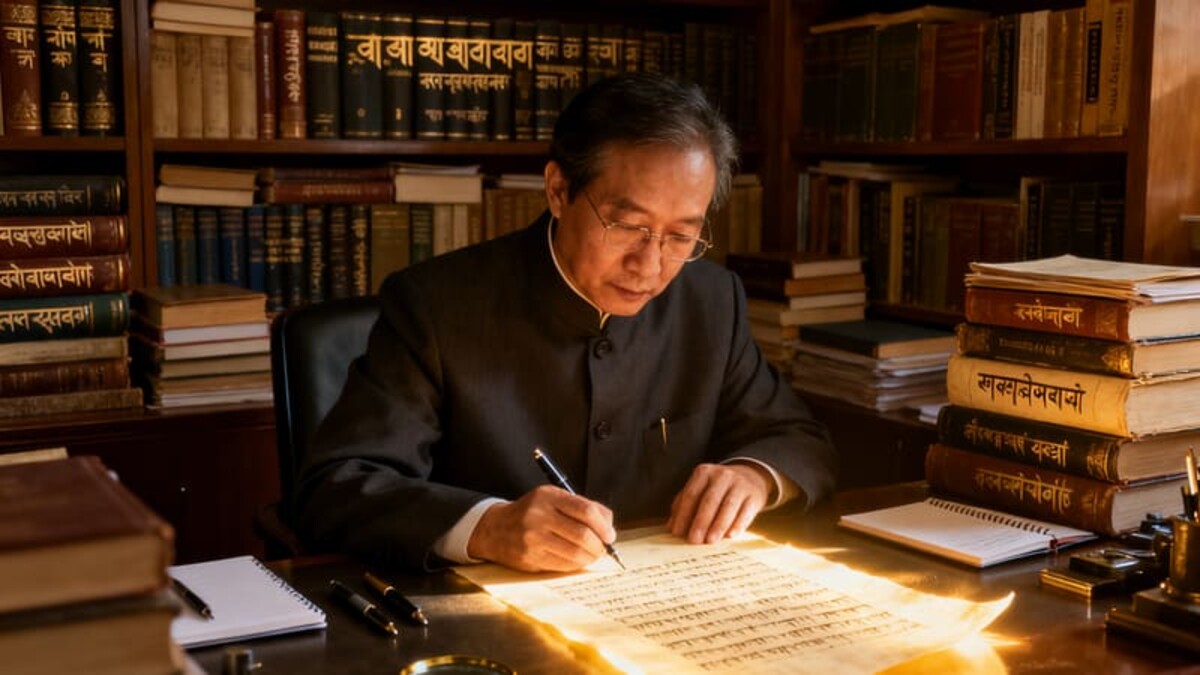
Ji Xianlin: Life Wisdom of an Oriental Studies Master
Editor's Note
Ji Xianlin (1911-2009), renowned Orientalist, linguist, and man of letters, mastered more than ten languages including Sanskrit and Pali. A lifetime professor at Peking University, he was honored as a "national treasure." He dedicated his life to researching Eastern culture, with works including Collected Papers on Sino-Indian Cultural Relations and Modern Translation of the Great Tang Records of the Western Regions, serving as a bridge between Chinese and Western cultures. This article is compiled from Ji Xianlin's writings and interviews.
I. The Path of Scholarship
Q: How did you embark on the path of scholarship?
Ji Xianlin: Quite accidental, yet quite natural.
Humble Beginnings
I was born into a poor peasant family in Qingping, Shandong.
We were so poor that I only started school at six, when I went with my uncle to Jinan.
My uncle had no children, so he placed all his hopes on me.
I studied hard because I knew only education could change my fate.
Studying in Germany
In 1935, I passed the examination for Tsinghua University's state-funded students and went to Germany to study Sanskrit.
Why Sanskrit? Because I felt Sino-Indian cultural exchange was important, and at that time no one in China knew Sanskrit.
I stayed in Germany for ten years, including six years during World War II.
During those six years, I studied amid the fires of war, wrote amid the bombing, laying the foundation for my academic career.
Persistence After Returning
I returned in 1946 to teach at Peking University.
Conditions were poor, and the library had few books.
But I didn't give up—I accumulated bit by bit, researched year after year.
In scholarship, what matters most is persistence.
Q: What insights do you have about scholarship?
Ji Xianlin: Several points:
First: Sit on the Cold Bench
True scholarship requires sitting on a cold bench.
Not for a day or two—for ten or twenty years.
Without this patience, you can't do scholarship.
Many ask me: How can you learn so many languages?
I say: Memorize word by word, read text by text—there are no shortcuts.
Second: Don't Chase Trends
Academia has trends too, but I never chase them.
What I studied was often unpopular.
But I believed that as long as it's true scholarship, it will be recognized someday.
Third: Seek Truth from Facts
Scholarship requires seeking truth from facts.
If you don't understand, say you don't understand—don't pretend.
Know one part, say one part; know ten parts, say ten parts.
Better to be slow than to be inaccurate.
II. The Value of Eastern Culture
Q: You've researched Eastern culture your whole life. What is its value?
Ji Xianlin: The value of Eastern culture is seriously underestimated.
Characteristics of Eastern Culture
Eastern culture, especially Chinese culture, has several characteristics:
First: Holistic Thinking
The West uses analytical thinking, taking things apart to study them. The East uses holistic thinking, looking at the connections between things.
Both have value—neither should be neglected.
Second: The Concept of Harmony
Eastern culture emphasizes harmony: harmony between humanity and nature, between people, between body and mind.
This concept is especially important for the modern world.
Third: Humanistic Spirit
Eastern culture focuses on people, on life's meaning and value.
Not cold science, but warm humanistic care.
Eastern Culture's Contribution to the World
I believe Eastern culture can provide wisdom for solving modern world problems:
- Environmental issues—Eastern philosophy of unity of heaven and humanity
- Social issues—Eastern philosophy of harmony
- Psychological issues—Eastern philosophy of self-cultivation
Not East replacing West, but East and West merging.
Q: What is the significance of Sino-Indian cultural exchange?
Ji Xianlin: Sino-Indian cultural exchange is a model of human cultural exchange.
Two Great Civilizations
China and India are both great civilizations.
When two civilizations meet and learn from each other, brilliant results are produced.
Buddhism entered China, influencing Chinese philosophy, literature, and art.
China's papermaking, printing, and gunpowder also reached India.
Mutual Respect
The greatest characteristic of Sino-Indian cultural exchange is mutual respect.
Not one conquering the other, but equal exchange.
This spirit is still needed today.
Inspiration for the Future
Many conflicts in the world today are due to lack of exchange and understanding.
Sino-Indian cultural exchange teaches us: Different civilizations can coexist peacefully and learn from each other.
III. Life Insights
Q: What insights do you have about life?
Ji Xianlin: Several points:
First: The Meaning of Life Lies in Contribution
Many ask: What is the meaning of life?
I say: The meaning of life lies in contribution.
What have you done for others? What have you given to society? This is your life's value.
Those who take are never satisfied. Those who give always have joy.
Second: Find Contentment in Happiness
Human desire is endless.
You have ten thousand, you want a hundred thousand. You have a hundred thousand, you want a million.
Where does it end?
Contentment isn't not striving—it's cherishing what you already have.
Those who are content are happy right now.
Third: Maintain a Child's Heart
I still maintain a child's heart.
Curious about the world, hungry for knowledge, loving life.
Don't be old before your time, don't be self-righteous.
A child's heart keeps life young.
Fourth: Be Kind to Others
In dealing with others, be kind.
If you treat others well, they'll treat you well.
This isn't a transaction—it's a law of humanity.
Q: You experienced many hardships. How did you face them?
Ji Xianlin: Hardships are life's wealth.
Experience During the Cultural Revolution
During the Cultural Revolution, I was labeled a "reaction's academic authority."
I was struggled against, had my home searched, was sent down for labor.
During that time, I almost wanted to die.
But I survived.
How I Got Through
How did I get through?
First: Believe It Would Pass
There's no eternal night—dawn always comes.
I told myself: This is only temporary.
Second: Find Things to Do
I secretly translated the Ramayana while in the cowshed.
With something to do, my heart had an anchor.
Third: Maintain Dignity
No matter how others humiliated me, I couldn't humiliate myself.
I was a scholar—I had my dignity.
The Meaning of Hardship
Hardship made me stronger and more compassionate.
I understood others' suffering and could better help them.
Those who haven't experienced hardship find it hard to truly mature.
IV. Methods of Reading
Q: You've read many books. What are your reading methods?
Ji Xianlin: Several points:
First: Read Classics
There are so many books—you can't read them all.
Read classics—books that have withstood the test of time.
Classic books give new gains with each reading.
Second: Take Notes
I always take notes when reading.
Good words and sentences—write them down. Insights and reflections—write them down.
Notes are your own wealth.
Third: Apply What You Learn
Reading isn't the goal—application is.
After reading a book, think: How is this useful to me? Can I apply it in my life?
Knowledge not applied is just decoration.
Fourth: Read Throughout Your Life
Reading isn't something for school—it's for a lifetime.
I still read every day.
A day without reading feels like something's missing.
Q: What should young people read?
Ji Xianlin: Several categories:
First: Chinese Classics
The Analects, Mencius, Laozi, Zhuangzi—these are the foundation.
You don't have to understand everything, but you should have an impression.
Reading them again when you're older brings different understanding.
Second: History
Reading history makes people wise.
Chinese history, world history—both should be understood.
Knowing the past helps understand the present.
Third: Literature
Poetry, essays, novels—all should be read.
Literature cultivates imagination and empathy.
Fourth: Professional Books
Whatever you do, read professional books in your field.
Professional books give you depth.
V. On Language Learning
Q: You mastered so many languages. How did you learn them?
Ji Xianlin: No shortcuts—just hard work.
Language Is a Tool
I learned languages not to show off, but to research.
I researched Indian culture, so I needed Sanskrit and Pali.
Language is a tool, not the goal.
Learning Methods
First: Memorize Vocabulary
Without vocabulary, nothing can happen.
I memorized words every day, without fail.
Second: Read Original Texts
Don't only read translations—read originals.
Originals have flavors translations can't convey.
Third: Use It
Once learned, use it.
Use it or lose it—if you don't use it, you forget it.
The Value of Language Learning
Learning a language adds another world.
If you know Chinese, you can understand the Chinese world. If you know English, you can understand the Anglo-American world.
Know more languages, and your world is larger.
VI. Words for Young People
Q: What would you like to say to young people?
Ji Xianlin: Several points:
First: Have Ideals
In living, you need ideals.
Not for making money, not for becoming famous, but for doing meaningful things.
With ideals, your life has direction.
Second: Be Grounded
Young people are easily restless, wanting to reach the sky in one step.
But there are no shortcuts in the world.
Step by step, walking solidly, is the only way to go far.
Third: Be Kind
No matter how society changes, kindness cannot change.
If you're kind, the world gains one more measure of warmth.
Fourth: Be Healthy
Health is the capital of revolution.
Don't deplete yourself when young—you'll regret it when old.
Early to bed, early to rise, exercise more, stay up late less.
VII. Final Words
Q: Please give us your final advice.
Ji Xianlin: A few words:
First: Read
Develop the habit of reading—you'll benefit for a lifetime.
Second: Think
Don't just follow others—have your own thoughts.
Third: Write
Write down your thoughts—writing is a good way to organize thinking.
Fourth: Live
Don't forget life for the sake of scholarship.
Scholarship is important, but so is life.
Living fully, living happily—this too is scholarship.
Postscript
Ji Xianlin passed away in 2009 in Beijing, at the age of 98.
He lived his life poor and simple, his life diligent and cultivated.
He called himself an "ordinary intellectual," but his contributions far exceeded the ordinary.
What he left behind was not just academic works, but a model for being human.
May all readers find in Ji Xianlin's wisdom direction for scholarship and life.
This article is compiled from Ji Xianlin's writings and interviews, preserving his honest and sincere speaking style to more authentically convey the essence of his thought.
Carrying the Way through vessels · Transmitting the heart through things