Jiang Xun: The Awakening of Aesthetics
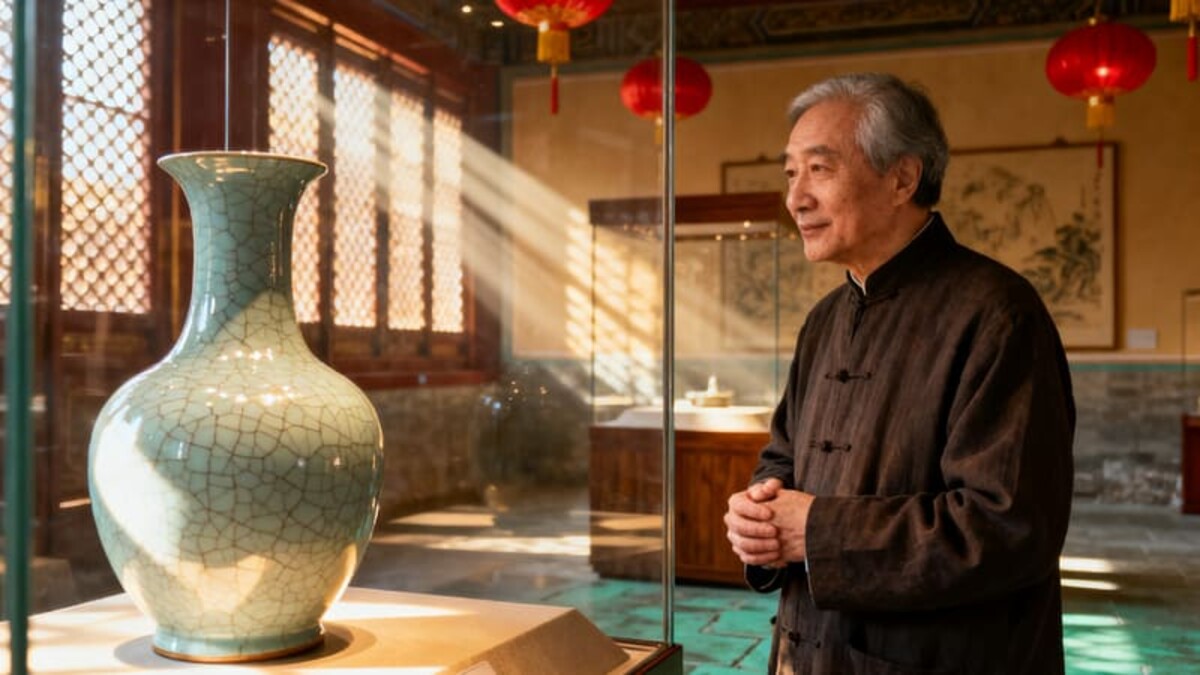
Jiang Xun speaks of Eastern aesthetics in the gentlest voice. He tells us: Beauty is not knowledge, it is feeling; it is not far away, it is in the details of life.
Jiang Xun: The Awakening of Aesthetics
Editor's Note
Jiang Xun (1947-), a renowned Taiwanese aesthetician, writer, and painter. With his warm voice and poetic words, he brings Eastern aesthetics to the general public. His representative works include Six Lectures on Loneliness, Ten Lectures on Life, The Awakening of Beauty, and The Beauty of Chinese Calligraphy. He believes that beauty is a form of redemption, helping people find stability in the fast-paced modern life. This article is compiled from Jiang Xun's writings and lectures.
I. What is Beauty?
Q: Teacher Jiang Xun, what is beauty?
Jiang Xun: Beauty is hard to define, but you know it when it's there.
Beauty is Feeling, Not Knowledge
Many people ask: What is beauty? How do you define beauty?
I say: Beauty isn't for defining—it's for feeling.
You see a flower, and something in you is moved. That is beauty. You see the sunset, and you feel a warmth inside. That is beauty.
Beauty is not a concept—it's an experience.
Beauty is a Need of Life
Many people think beauty is a luxury—you only think about beautiful things after you're well-fed.
No.
Beauty is a necessity of life, like air and water.
A person living needs not only to be fed and clothed, but also needs spiritual nourishment.
Beauty is food for the soul.
Beauty is in Life
Many people think beauty is in museums, in art galleries, in faraway places.
I say: Beauty is right in your life.
- The steam rising from a bowl of porridge
- A clean white shirt
- The way sunlight comes through the curtains
These, too, are beauty.
Q: Why can't modern people feel beauty?
Jiang Xun: Because they're too fast.
Too Fast, and You Can't See
Modern people's lives are too fast.
Eating must be fast, walking must be fast—everything must be fast.
When you're fast, you can't see anything.
A flower blooming takes time; if you're too fast, you miss it.
Too Busy, and You Can't Feel
People who are too busy have no heart to feel.
Your heart is stuffed with all kinds of things, leaving no space for beauty.
Beauty needs slowness, needs emptiness, needs stillness.
Too Utilitarian, and You Don't Understand Beauty
Modern people are too utilitarian.
Doing something, they first ask: What's the use? Can it make money?
Beauty has no use—beauty is just beauty.
But useless things are often the most important things.
Is air useful? You can't live without it. Is love useful? You can't live without it. Is beauty useful? You can't live without it either.
II. Eastern Aesthetics
Q: What are the characteristics of Eastern aesthetics?
Jiang Xun: Eastern aesthetics has several keywords.
Negative Space (Liu Bai)
Western paintings like to fill the canvas; Eastern paintings like to leave empty space.
Negative space isn't emptiness—it's giving you room to imagine.
A painting that shows everything leaves you no room for imagination.
Leave some white space, and you can put your own story there.
Life also needs negative space.
Fill every day completely, and you have no room in your life.
Leave some white space—give life room to breathe.
Implicitness (Han Xu)
Easterners don't say everything, don't express everything fully.
The beauty of implicitness is letting you experience, rather than giving it to you directly.
"About to speak, but stopping—about to speak, but stopping—yet saying 'What a cool autumn day.'"
This implicitness is more moving than being direct.
Nature
Eastern aesthetics reveres nature—not conquering it, but harmonizing with it.
Look at Chinese gardens: we don't cut down trees to build houses; we build houses among the trees.
The house is part of nature, not its opposite.
Q: How can we practice Eastern aesthetics in daily life?
Jiang Xun: Start with details.
Drink a Cup of Tea
Don't rush. Drink slowly.
Feel the tea's color, aroma, temperature.
This isn't wasting time—it's giving life texture.
Look at a Flower
Don't just say "this is a flower."
See its color, its shape, its posture.
Every flower is unique. If you see it, it has bloomed for you.
Tidy a Corner
Your home doesn't need everything to be expensive, but it can be clean and orderly.
A clean corner is itself beauty.
Wear Comfortable Clothes
Clothes don't have to be name brands, but they should be comfortable and suit you.
When you're comfortable, your movements are natural. Natural is beautiful.
III. Loneliness and Beauty
Q: You wrote Six Lectures on Loneliness. What's the relationship between loneliness and beauty?
Jiang Xun: Loneliness is an important source of beauty.
Modern People Fear Loneliness
Modern people are very afraid of loneliness.
When alone, they must look at their phones, must find something to do—can't be still.
But beauty is often born in loneliness.
Loneliness Lets You Be with Yourself
When you're lonely, you can truly be with yourself.
No need to cater to others, no need to pretend.
You can hear your own heartbeat, see your own heart.
Loneliness Makes Perception More Acute
When lonely, your senses open up.
You hear sounds you normally don't hear, you see beauty you normally don't see.
Many artists' works are completed in loneliness.
Q: How can we enjoy loneliness?
Jiang Xun: Don't fear it—accept it.
Treat Loneliness as a Friend
Loneliness isn't an enemy—it's a friend.
It gives you time to be with yourself, time to think, time to create.
Do Things Alone
Take a walk alone, read a book alone, space out alone.
These seemingly meaningless things are actually very meaningful.
They give life depth.
Don't Rush to Fill the Gaps
Modern people, as soon as there's a gap, rush to fill it—looking at phones, scrolling videos.
Don't do that.
Let the gaps exist. In the gaps, you'll meet beauty.
IV. The Beauty of Slowness
Q: You often speak of "slowness." Why is slow so important?
Jiang Xun: Because beauty needs slowness.
Fast is the Enemy
Fast makes you unable to see anything.
If you drive too fast, the scenery by the road becomes blurred. If you eat too fast, you can't taste the food.
Fast is beauty's enemy.
Slow Down, and You Can See
Slow down, and you can see:
- How the colors of the sky change
- How tea leaves unfurl in water
- How a smile appears on a child's face
This beauty is always there—you're just too fast and miss it.
Slow is Not Laziness
Slow isn't laziness—it's having quality.
When you do something earnestly, no matter how small, it has quality. When you do something perfunctorily, no matter how big, it has no quality.
The quality of life comes from slowness.
Q: How can we slow down in a fast-paced life?
Jiang Xun: Start with small things.
Eat a Little Slower
When eating, don't look at your phone, don't watch TV.
Eat mindfully, chew slowly.
This respects the food and respects yourself.
Walk a Little Slower
Don't always rush.
Occasionally slow down and look at the trees, flowers, and people around you.
You'll discover: the place you live is actually quite beautiful.
Speak a Little Slower
Don't talk too fast.
Think slowly, speak slowly.
Your words will have weight, and others will be more willing to listen.
Leave Some Blank Time
Every day, leave some time to do nothing.
Not sleeping—awake, but doing nothing.
This seems like wasting time, but it's actually recharging life.
V. The Beauty of Chinese Characters
Q: You've spoken extensively about the beauty of Chinese calligraphy. Where does the beauty of Chinese characters lie?
Jiang Xun: Chinese characters are the only ancient writing system still in use today—they carry beauty within themselves.
Chinese Characters are Pictures
Every Chinese character was originally a picture.
"Mountain" (山) is the shape of a mountain; "Water" (水) is the flow of water.
When you look at Chinese characters, you're actually looking at a picture.
Chinese Characters Have Structure
The structure of Chinese characters has balance, symmetry, and variation.
Writing characters is practicing balance and aesthetics.
Calligraphy is Practice
Ancient scholars wrote every day.
Writing wasn't just recording—it was practice.
When writing, your mind must be calm, your breath smooth, your hand steady.
This is a process of unifying body and mind.
Q: Do modern people still need to write by hand?
Jiang Xun: Yes.
Writing Calms the Mind
You type every day, but how long has it been since you wrote by hand?
Find a pen, a piece of paper, and write a few characters.
You'll find your mind gradually calming down.
Writing is Dialogue with Yourself
You can keep a diary, write what you want to say.
Not for others to see—for yourself to see.
This is a way of dialoguing with yourself.
Writing Gives Life Warmth
Typing is fast but has no temperature.
Handwritten words carry your body warmth, your emotions.
Receiving a handwritten letter, you feel the warmth.
VI. Art and Life
Q: What does art mean for ordinary people?
Jiang Xun: Art isn't high above—art is life.
Everyone is an Artist
I often say: Everyone is an artist.
Cooking a dish is art; Growing a plant is art; Tidying a room is art.
Art isn't a profession—it's an attitude toward life.
Art Gives Life Texture
Life without art is merely existing. Life with art is truly living.
Art gives ordinary days texture.
Art is Redemption
I believe art is a form of redemption.
When you're sad, listen to a song; When you're lost, look at a painting.
Art can lead you out; it can give you strength.
Q: How can we bring art into life?
Jiang Xun: Start with simple things.
Read a Poem
Read a poem every day—not too many, just one.
Poetry is concentrated language; one line can make you think for a long time.
Listen to a Piece of Music
Don't treat music as background—listen earnestly.
Listen to its melody, its rhythm, what it wants to say.
Look at a Painting
Go to an art museum, or look at paintings online.
Don't rush to understand—just look, just feel.
Create with Your Own Hands
You can also create yourself.
Paint a picture, write a poem, cook a dish.
The joy of creation cannot be replaced by anything.
VII. Words for Young People
Q: What would you like to say to young people?
Jiang Xun: A few things.
Don't Be Too Fast
Young people always think about speed:
Graduate quickly, make money quickly, succeed quickly.
But good things take time.
Don't rush—take it slow.
You have a whole lifetime—what's the hurry?
Keep Your Sensitivity
Don't let your heart harden.
Maintain wonder at the world, maintain sensitivity to beauty.
The stronger your sensitivity, the richer your life.
Read the Classics
The classics are classics because they've withstood the test of time.
Dream of the Red Chamber, the Analects, the Zhuangzi—these books are worth reading again and again.
Reading them young is different from reading them in middle age.
Accept Loneliness
Don't fear loneliness—loneliness is a friend.
In loneliness, you'll understand yourself better, you'll discover beauty.
VIII. Final Words
Q: Please give us your final sharing.
Jiang Xun: I have no special admonition—just want to remind everyone:
Beauty is Always There
No matter how busy you are, no matter how tired you are, beauty is always there.
It's on the leaves outside your window, in the teacup on your desk, in your beloved's eyes.
You just need to slow down to see it, to feel it.
Life Can Be Poetry
Your life can be a poem.
You don't need to do anything special—just live ordinary days with a poetic heart.
Let Your Heart Stay Soft
The world is sometimes hard, but your heart can stay soft.
A soft heart can feel beauty; a soft heart can be healed by beauty.
Postscript
Jiang Xun is called "the evangelist of beauty."
With the gentlest voice, he speaks of the essence of Eastern aesthetics.
He's not a high-up scholar, but a friend sharing life's beauty with you.
He often says: "Beauty is a form of redemption."
In fast-paced, high-pressure modern life, beauty makes us slow down and feel the meaning of being alive.
May all readers learn from Jiang Xun's words to see the world with aesthetic eyes, making ordinary life poetic.
This article is compiled from Jiang Xun's writings and lectures, preserving his poetic and warm speaking style to more authentically convey the essence of his thought.
Carrying the Way through vessels · Transmitting the heart through things