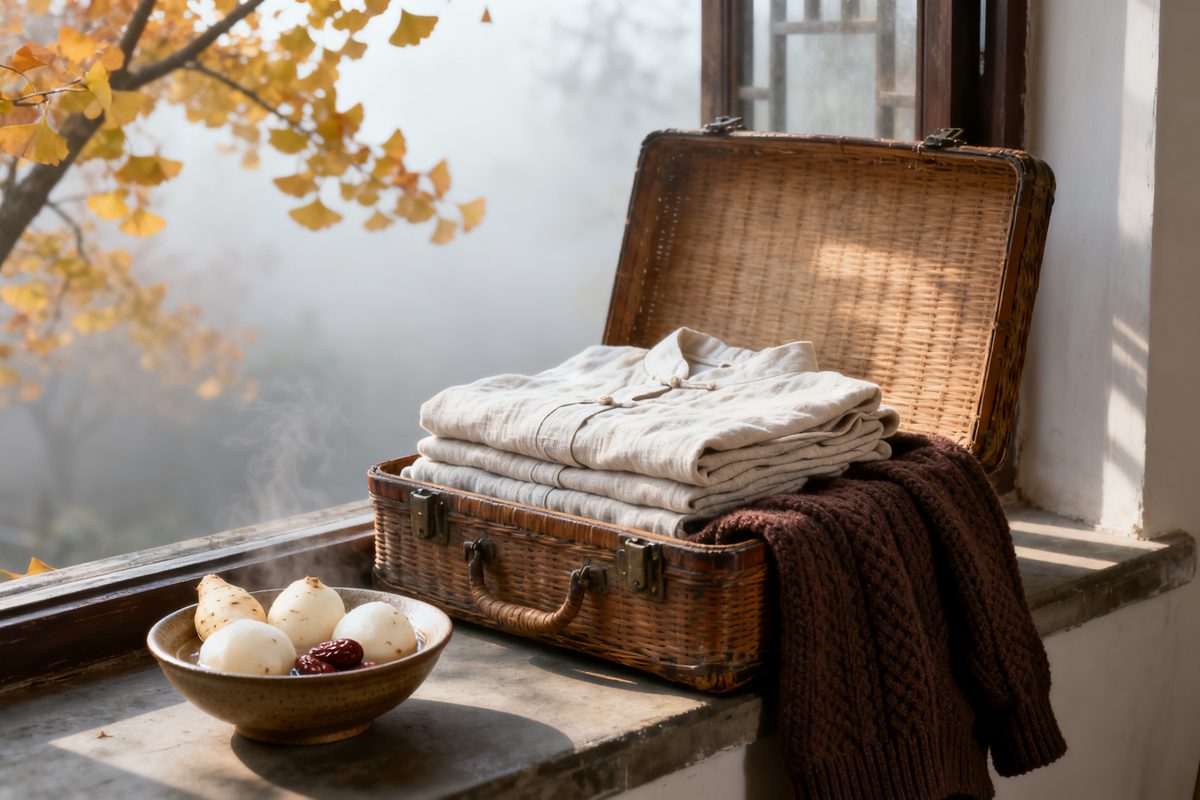
My Coworker Takes Melatonin Gummies. My Mother Sent Me a Foot-Soak Basin.
A bottle of melatonin gummies from a business trip, a wooden foot-soak basin from my mother — two civilizations answering the same sleepless night. Melatonin shouts "it's dark!" on behalf of the body. Foot soaking invites a mind that has been sprinting all day to finally stop. Insomnia is often not a sleep problem; it's the day's unpaid bill, collected at night. Settle the heart first, then the eyes.
My coworker came back from a business trip and tossed me a bottle of gummies. "Bought them at the airport in the States. Melatonin. Jet lag miracle," she said. "Try it — aren't you always complaining about insomnia?"
I took the bottle home. White plastic, pale purple gummies, one small word on the label: melatonin. Honestly, it looked like candy. Not medicine.
That night I took half a gummy. I did fall asleep a little faster, but I still woke up at 3 a.m. And I had an unusually vivid dream — I was in a meeting, my boss's face was blurry, but I knew for certain that I was late. When I woke up, my chest felt tight.
I put the rest of the bottle in a drawer.
My Mother's Method
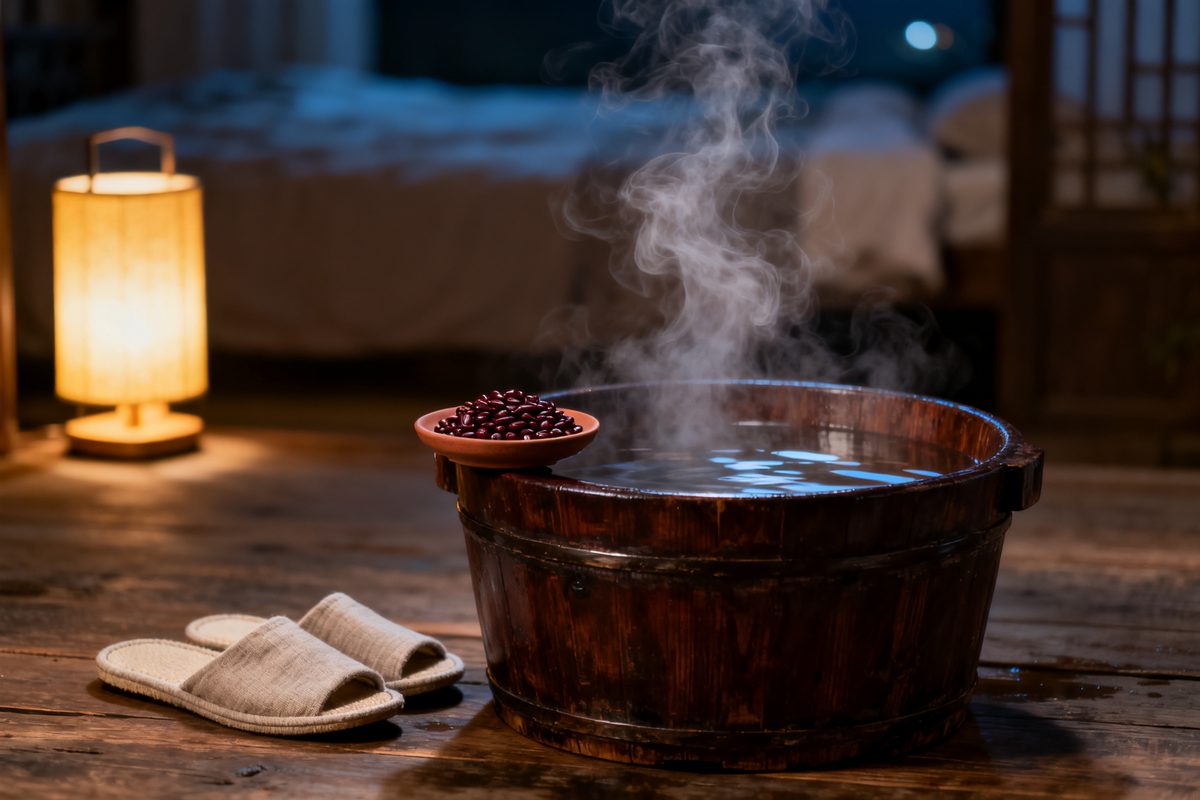
Around the same time, my mother sent a package from my hometown. Inside was a dark wooden basin, with a note: soak your feet at night, add mugwort leaves to the water. The water should be hot. Soak until you break a light sweat. Don't soak too long.
On the back of the note she'd added one more line: settle the heart first, then the eyes.
I laughed at her on the phone. "It's the 21st century, Mom. Who soaks their feet in a wooden basin anymore?" She answered without hurrying: "Your grandmother did it her whole life. She lived to ninety-three. Those gummies of yours — can you take them for a lifetime?"
I didn't have an answer.
That night I boiled a kettle of water and set the basin by my bed. The mugwort had been steeping; the water had a smell I couldn't quite name — a little like dried grass, a little like my grandmother's kitchen when I was small. The moment my feet went in, I gasped from the heat. Then, slowly, I got used to it.
After about fifteen minutes, a thin layer of sweat on my back. I toweled off, got into bed, and didn't look at my phone — I don't know why. I just didn't want to.
How did I sleep that night? Honestly, I don't remember. But I remember that before I got into bed, something in me had loosened.
Two Different Systems
Later I went and actually looked into both of these things.
Melatonin is a hormone your body makes on its own. A tiny gland in the brain starts secreting it when it gets dark, telling the body: time for sleep. Taking melatonin is like shouting "it's dark!" on behalf of the body. It genuinely works for jet lag — because with jet lag, your clock is in the wrong timezone and needs resetting.
But my insomnia isn't that. My clock isn't broken. My heart just refuses to stop. I lie in bed while my brain replays tomorrow's tasks, last week's conversations, next month's plans. The body has already lain down; the mind is still out running.
No amount of melatonin helps with that. It's like shouting "you're already home!" at someone who is still jogging. They can't hear you. Or they hear you and don't believe it.
Traditional Chinese medicine looks at insomnia differently. It doesn't ask "what time did you fall asleep" — it sees in layers. Trouble falling asleep is one kind. Waking easily and lying awake is another. Sleeping all night but dreaming nonstop, then waking more tired than before — that's a third. Each has its own name in TCM, its own origin. One is described as "the heart and kidneys not communicating." Another: "when the stomach is unsettled, sleep is unsettled." Another: "liver constraint turning into fire."
In plain words: very often, the problem isn't your sleep. It's the unfinished business of your day, coming to collect at night.
Foot soaking looks rustic, but the logic is plain. During the day, your body's energy gathers upward — into the head, the eyes, the hands. Hot water draws it back down, and the top goes quiet. Draw the fire downward; let a mind that has been sprinting all day cool off. Like a pot at full boil: you don't add more flame, you pull the firewood out and let it settle on its own.
An Old Line from the Huangdi Neijing
While reading up, I found a line in the Huangdi Neijing, the Yellow Emperor's Inner Classic: "When yang energy is spent, one lies down; when yin energy is spent, one wakes."
Sleep, in other words, is not "shutting down." It's the day's yang energy returning to yin to rest and mend, so it can go back out tomorrow.
By this account, insomnia is yang energy that refuses to come home. Still wandering. Still running. Still managing the endless affairs of the day.
When I first read that line, I didn't think of medicine. I thought of myself every night: the body in bed, the yang still at its desk.
A little funny. A little sad, too.
One Westerner's Experiment
Then I came across a video by an American blogger who calls herself a chronic insomniac. She had tried everything: melatonin, white noise, weighted blankets, CBD, meditation apps. She wrote a long summary titled something like "What Actually Worked for Me."
The top comment under it was from a Chinese user. One line:
"Try foot soaking. Chinese people have done it for a thousand years. Settle the heart first, then the eyes."
Below it, a stream of earnest replies from foreigners: "Does it really work?" "What temperature?" "How long?" "Where do I buy a wooden bucket?"
Reading that thread, something tightened in my chest. On our side, foot soaking is becoming a punchline — "it's the 21st century" — while over there, people are seriously asking where to buy a wooden bucket.
Maybe every culture works this way: its own old things have to travel around the world and come back before they can be seen again at home.
Suan Zao Ren: The Chinese "Sleep Aid"
Any talk of Chinese calming methods eventually arrives at one herb: suan zao ren — sour jujube seed.
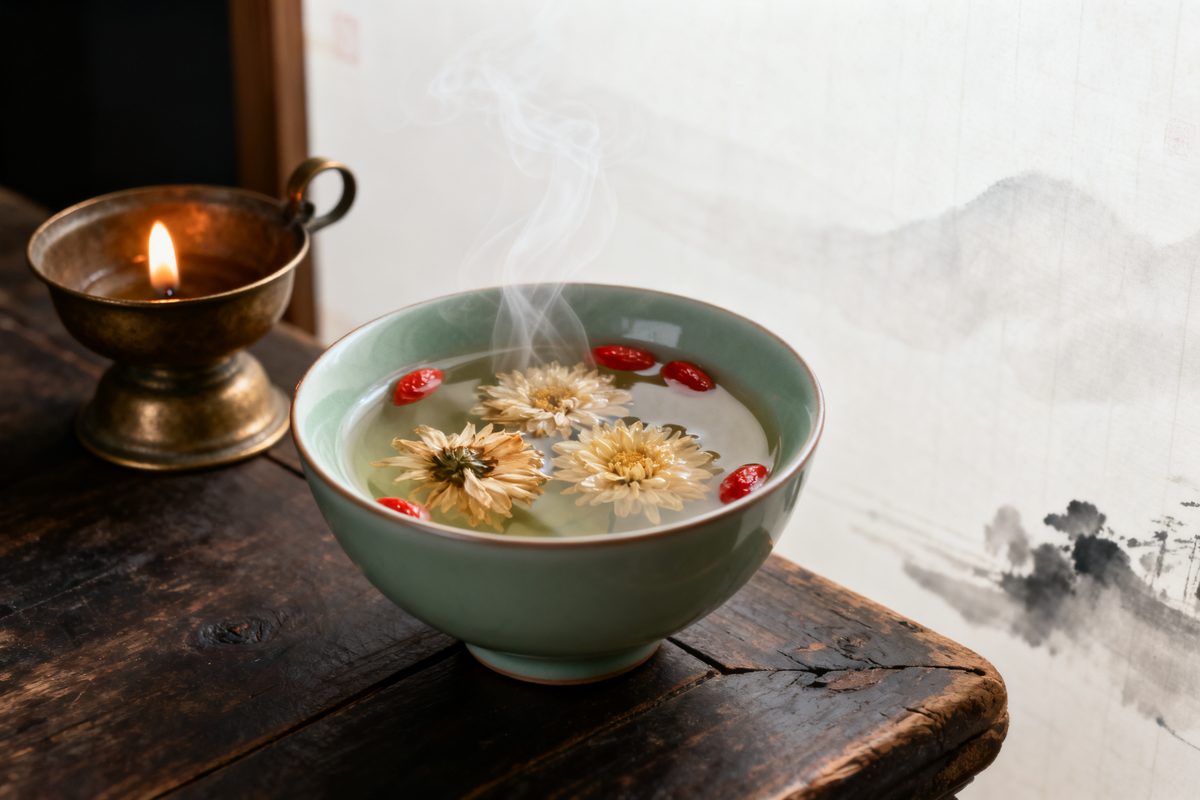
Zhang Zhongjing, the physician the tradition calls its sage, recorded a formula in the Jingui Yaolue nearly two thousand years ago: suan zao ren decoction, for "exhaustion and restless vexation that will not let one sleep." Tired, but wound up, and unable to rest. The chief ingredient is jujube seed — stir-fried, crushed, simmered in water.
My mother later mailed me a bag of it. When you can't sleep, she said, simmer a handful in water. Add a little rock sugar.
I've done it a few times. The taste is faint, slightly sour, like a mild fruit tea. It doesn't make you drowsy on the spot — it doesn't follow the "works in thirty minutes" logic of a gummy — but after a few days in a row, falling asleep gets smoother, and I wake fewer times in the night.
I later learned that modern pharmacology does study the jujube seed saponins and their effect on sleep; pharmacies in China sell jujube seed syrups and pastes, all tracing back to that old formula. The old method isn't mystical. It's just slow.
It doesn't promise sleep in thirty minutes. It nudges the body back toward balance, gradually. There's an attitude inside that: sleep is not something to be "solved." It's something to be nursed back.
So Which Is Better?
By now you may be asking: so which is better, melatonin or foot soaking?
My answer: it depends on what kind of insomnia you have.
If it's jet lag, a displaced clock — melatonin fits. Short-term use is fine. That's exactly what it's for: resetting the watch.
But if you're like me — wound tight all day, mind that won't stop at night, waking anxiously, sleeping poorly out of worry — then the problem isn't the watch. It's the runner. What you need isn't someone shouting "it's dark." You need the runner to actually stop.
Foot soaking, jujube seed tea, no phone before bed, sunlight in the morning, dinner not too late — taken one by one, these are slow, unremarkable things. But they all serve the same purpose: giving the day's heart a chance to set itself down at night.
The Huangdi Neijing has an even shorter line: "When the stomach is unsettled, sleep is unsettled." Eat too late, eat too much, and the stomach works the night shift while you try to rest. A book two thousand years old, saying the same thing: a bad night's bill is usually charged to the day.
Now
The wooden basin still sits by my bed. I don't soak every night — some evenings I get home too late and just collapse. But three or four nights a week, I boil a kettle and soak for fifteen minutes.
The melatonin bottle is still in the drawer, more than half full. On trips, crossing time zones, I'll still take half a gummy. It has its use. I've stopped fighting it.
What I've slowly come to understand is this: in my mother's line — settle the heart first, then the eyes — the point was never the foot soak, never the jujube seed. Those are just gestures. The point is the order. The heart first.
If the heart won't sleep, you can soak your feet a hundred times for nothing. Once the heart sleeps, some nights you don't even need the basin. You lie down, and you're gone.
A few days ago the weather turned cold. Carrying the basin to my bedside, I suddenly remembered winter as a child: my mother boiling water in the kitchen, soaking my grandmother's feet. Grandma sitting in her chair, feet in the wooden basin, eyes closed, saying nothing. My mother crouched beside her, adding hot water.
I didn't understand what that was back then. Now I think that might be what a "settled heart" looks like — not a technique, but a person willing, before sleep, to hand themselves over to a stretch of quiet.
When the water cools, go to sleep. Tomorrow's business belongs to tomorrow.
Three Questions for You
- When was the last time you went to bed because you were sleepy — not because it was "time to sleep"?
- If you gave yourself fifteen minutes tonight that solves nothing — just soaking your feet, or sitting — would you try it?
- What does your "heart" keep busy with at night? And will those things actually get solved tomorrow?