The Phantom City: When You Can't Walk Anymore, It's Okay to Stop
I was reading the Lotus Sutra recently and came across the Parable of the Phantom City. I put the book down and sat by the window for a long time. Not because the story was so dramatic, but because I suddenly felt it was about me.
The Phantom City: When You Can't Walk Anymore, It's Okay to Stop
A few days ago I was reading the Lotus Sutra, and I came across the "Phantom City" chapter. I put the book down and sat by the window for a long time.
Not because the story was so remarkable. But because it felt like it was talking about me.
No — not just me. Maybe a lot of us.
The story goes like this.
There was a group of people on a long journey, heading to a distant place to find treasure. The road was brutal. They had been walking for a very long time. The wilderness stretched on forever, the sun beat down, and their shoes had long since fallen apart.
Someone started complaining: "How much further? I really can't walk anymore."
Someone sat down on the ground and refused to get up.
Someone said: "Maybe there is no treasure. Maybe we've been lied to."
People in the group started talking about turning back.
The guide saw all of this. He knew the treasure was real. He knew the road ahead was still long. If he told them the truth — that they had just as far to go again — he knew not a single one of them could bear it.
So he did something.
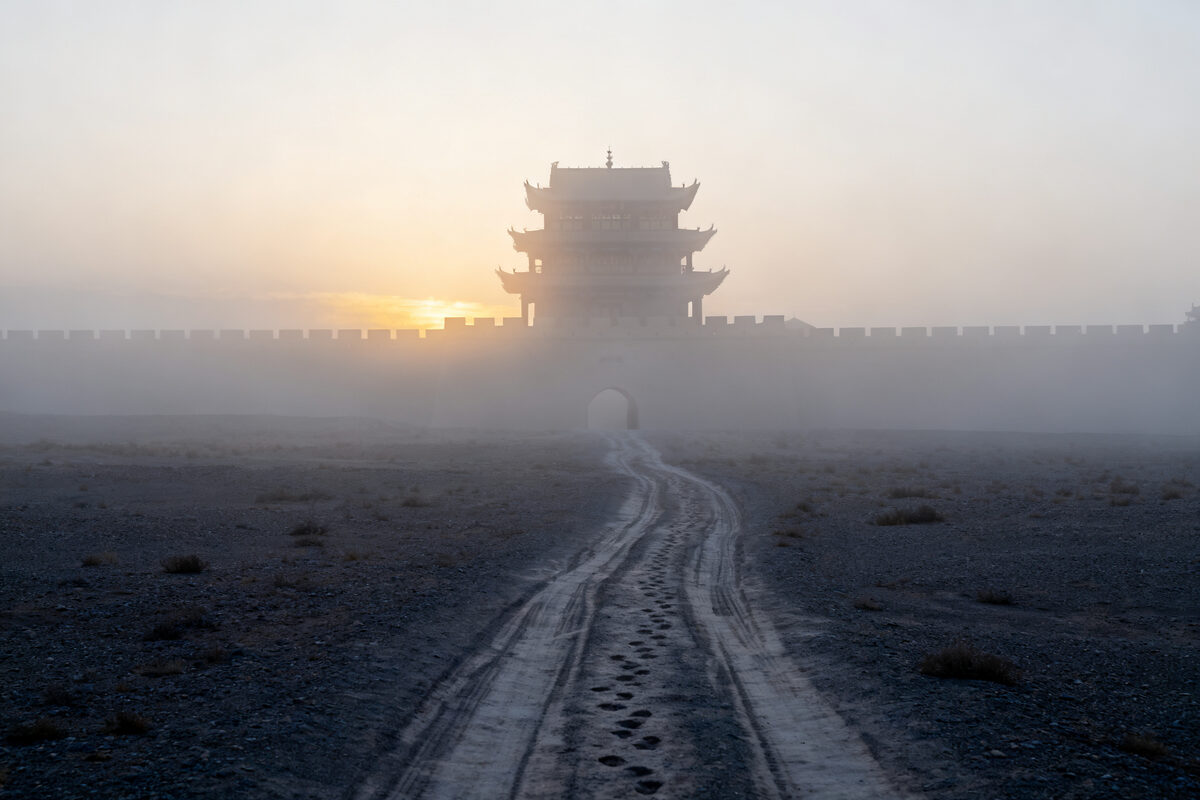
He used his powers to conjure a city ahead of them.
Walls, gates, streets, pavilions, gardens, flowing water — everything. From a distance, it looked real. Lights glowing, smoke rising from chimneys.
"Look!" he called out. "There's a city ahead! We're almost there! Once we're inside, we can rest!"
The people looked up, and their eyes lit up.
"We're almost there!" "Come on!" "Just a little more!"
They gritted their teeth and kept walking. Finally, they entered the city.
The city had everything. Soft beds. Cool water. Food ready and waiting. They washed their feet, lay down, and for the first time in a long while, slept peacefully.
The next morning, the guide made the city vanish.
It dissolved like a dream.
The people woke up and found nothing but wilderness in front of them.
But the guide said: "You've rested well, haven't you? Now you know — if you just keep walking, you will get there. Because you've already come this far. Come. The treasure is ahead. It's not far now."
This time, nobody wanted to turn back.
When I read this story, I was in the middle of a stretch of days where I felt particularly tired.
Not physically tired. Heart tired. That kind of tired where you wonder whether anything you're doing has any meaning.
Every day I'd get up early, sit at my desk, chant sutras, copy sutras, clean, cook. Sometimes I'd write a little. From the outside, the days looked calm. But inside there was always a voice asking: What are you really doing? Is any of this useful? Are you really "practicing"? Or did you just find a way to pass the time?
During that period I'd often zone out while walking. I'd be walking and then just stop, standing by the side of the road, staring at nothing. I didn't know what I was thinking about. I just couldn't walk anymore.
Reading the Phantom City parable, a question came to me: after those travelers found out the city was fake, were they angry?
The guide had deceived them. The city never existed. What they thought was "arriving" was really "not yet." The safety and warmth they felt — it was just a phantom.
If it were me, would I feel like I'd been played?
But when the Buddha tells this story, the point isn't the deception. The point is — the guide knew their limits.
He knew what they needed most right then was not the truth. It was a moment to breathe.
Sometimes I think about how genuinely hard this practice is.
Not hard in the sense of how many sutras to read or how many hours to sit. Hard in the sense that you never know where you are.
There's no progress bar. Nobody tells you: "Congratulations, you are 30% of the way there. Please continue." You don't even know what the endpoint looks like.
What is nirvana? What is enlightenment? I've heard these words countless times. I've read many descriptions in the sutras. But do I actually know? If I'm honest, I don't.
Just like those treasure seekers. They'd never seen the treasure either. They'd only heard about it, and then they set out.
When you're on the road, the hardest part isn't the effort. It's not knowing how far you've come, or how far is left.
So when the guide conjured that phantom city, it wasn't a trick. It was compassion.
He didn't give them the destination. He gave them the strength to keep going.
I started thinking about the "phantom cities" in my own life.
Sometimes, after chanting in the morning, a deep quiet settles in my chest. Everything feels fine. The practice feels right. Being alive feels right. Then the next day, I'm back in that tiredness I can't quite name.
Was that feeling of peace a phantom city?
Sometimes I read a passage in a sutra and everything opens up. I feel like I finally understand something. But a few days later I think about it again, and it feels like I never understood anything at all.
Was that moment of clarity a phantom city too?
Sometimes I clean the house until it's spotless, brew a pot of tea, sit by the window and watch the rain, and think: this is enough. But the rain stops, and the feeling of "enough" stops with it.
Was that "enough" also a phantom city?
I used to think that if a feeling was temporary, it wasn't real. It didn't count. As if practice had to be some constant, steady, unchanging state to be valid.
But the Phantom City parable taught me something different: temporary doesn't mean useless.
The city was conjured. But the rest it gave was real. The sleep was real. The strength to get back on the road the next morning — that was real.
I used to have this fixation. I thought practice had to be about "arriving." Arriving where? I didn't know. But I had to arrive.
As if walking only counts when you reach the destination. Everything in between doesn't matter.
But the parable says: no.
The guide didn't say "the road is still long, just keep going." He let them rest first. What he cared about wasn't when they'd arrive. He cared that they didn't give up.
This made me reconsider what "expedient means" really means.
In Buddhism people often talk about "expedient means." I used to think it meant "casual" or "not the real thing." I don't think that anymore.
Expedient means is — knowing you can't carry something that heavy right now, so giving you something lighter.
Knowing you can't walk that far right now, so leading you somewhere you can rest.
Knowing you can't grasp that deep a truth yet, so telling you a story you can understand.
The phantom city — that is the greatest expedient means.
I have a friend who started studying Buddhism a few years ago. He was intense. Up at four every morning to meditate. At least two hours of sutra reading. His social media was nothing but Buddhist teachings. I watched him and sometimes felt envious, sometimes ashamed — like I wasn't trying hard enough.
Then one day he just stopped. Cleared everything related to Buddhism from his feeds. Didn't bring it up when we met. I asked him what happened. He said: "Nothing. I just don't think it suits me."
At the time I had this quiet judgment. I thought he had "fallen away."
Looking back now, maybe he just never found his phantom city.
He was in too much of a hurry. From the very beginning he was sprinting toward the finish line, never giving himself room to breathe. Four a.m. wake-ups, two hours of sutras — that wasn't practice. That was pushing himself to the breaking point. And pushing yourself to the breaking point is the exact opposite of practice.
If you never give yourself permission to stop, eventually you stop completely.
The tenderness of the phantom city parable is this: it acknowledges that people have limits. It's not that you're not good enough. Not that you're not sincere enough. It's that you're a human being, you've been walking a long time, and you need to rest. There's no shame in that.
I've developed a new habit recently. In the evening, I do nothing. I just sit on the balcony and watch the sky.
Sometimes there are clouds. Sometimes there aren't. Sometimes there's a sunset. Sometimes the sky just goes gray and dark.
When I do this, a voice sometimes pops up in my head: "You're wasting time."
What counts as wasting time? Chanting isn't wasting time. Meditation isn't wasting time. Reading sutras isn't wasting time. But sitting and watching the sky — that's wasting time?
Whose voice is that?
If I think about it, it seems like mine. But not entirely. It's more like some standard I've been handed — you have to be doing something "useful," or else you're wasting time.
But what is useful?
Was the guide's phantom city useful? Looking at the result — it got a group of people who were about to quit back on the road. It was a fake city, but its effect was real.
So is sitting on my balcony watching the sky useful?
It quiets my heart. It makes me feel like the day wasn't wasted. Even though I did nothing, thought nothing — that moment was quiet.
Maybe this is my phantom city.
It doesn't have to be a city. It can be an evening. A cup of tea. Sitting for a while and thinking about nothing.
It's not the destination. But it makes my steps a little lighter. And that's enough.
Sometimes I wonder: how many phantom cities has the Buddha conjured?
Is the Pure Land a phantom city? Maybe. Whether it's the final destination, I don't know. But it has given countless people somewhere to go in their darkest moments.
Is the Bodhisattva path a phantom city? Maybe. "I will save all beings before I attain buddhahood." That vow itself may be an enormous phantom city. It gives practitioners a direction, a sense of purpose, a reason not to give up.
And the word "buddhahood" itself — could that also be a phantom city?
I don't know.
But what moves me most about the parable is this: after the phantom city disappeared, the guide didn't say "you were fooled." He said: "You've already come this far. It's not much further now. Let's go."
He validated every step they had taken. Every exhausted step. Every complaining step. Every step where they wanted to turn back.
Every step counted.
That's all for today.
The sky outside is getting dark again. I'm going to make a cup of tea and sit for a while, thinking about nothing.
Not being lazy. Just resting in my phantom city for a bit.
I'll walk again tomorrow.
Three questions for you:
What road are you walking right now? How far along do you think you are?
Has a "phantom city" ever appeared in your life — and did it later disappear? What happened to you after it was gone?
When you can't walk anymore, do you let yourself stop?