The Wenchang Spot: From My Grandfather''s Desk to Silicon Valley''s
A reader overseas asked me what the "Wenchang position" is. I remembered how my grandfather once moved my chair a little: a person who writes needs something solid at his back. Seventy years later, Silicon Valley engineers say the same thing in a different vocabulary.
The Wenchang Spot: From My Grandfather's Desk to Silicon Valley's
Today I want to write about something old.
It started last night. A reader — overseas, judging by the English name and the one line of machine-translated Chinese in her email — asked me: what exactly is this "Wenchang position" you Chinese keep mentioning? She'd seen a video of an old gentleman explaining the "Wenchang pagoda" — put it in a certain corner of the desk, he said, and children focus better on their studies. She was skeptical, but the comments were full of "it really works." Her question: is this just another lucky charm?
I stared at that email for a long time.
Not because it was hard. Because it was a question I once asked my grandfather.
My Grandfather's Desk
My grandfather was a reading man — not a great scholar, just a primary school teacher for his whole life. I remember his desk clearly: an old elm table set against the wall, a full wall of books behind it. A slab of bluestone held down the paper, a brush pot held a few worn-out brushes. There was always a lamp on that desk. Yellow light.
As a kid I did my homework there and could never sit still. He never scolded me. But once, he moved my chair a little, so that my back faced the wall and I looked out at the door. A person who writes, he said, needs something solid at his back, and needs to see who comes in. Then the heart settles.
I didn't understand it then. I only knew that after he moved the chair, I somehow could sit still.
Much later I learned that his words have a name in feng shui: "solid behind, open in front." Later still I learned more terms — backing mountain, Wenchang spot, the star of literature. But I've always felt that all those terms put together are less accurate than my grandfather's four words: the heart settles.
What Wenchang Actually Is
So today I want to answer that reader properly.
Wenchang was not originally a feng shui word at all. It's the name of a star — a cluster of six stars in the northern sky. The ancients called it the Wenchang Palace and said it governed the fate of writing in the human world: examinations, essays, official rank. In a farming civilization, the most respectable way up was to study and pass exams, so the star in charge of studying naturally ranked high. Later, Daoism turned it into a deity — Wenchang Dijun, the Emperor of Flourishing Culture. Scholars bowed to him the way merchants bow to the God of Wealth. They weren't bowing to a god. They were bowing to the road they hoped to walk.
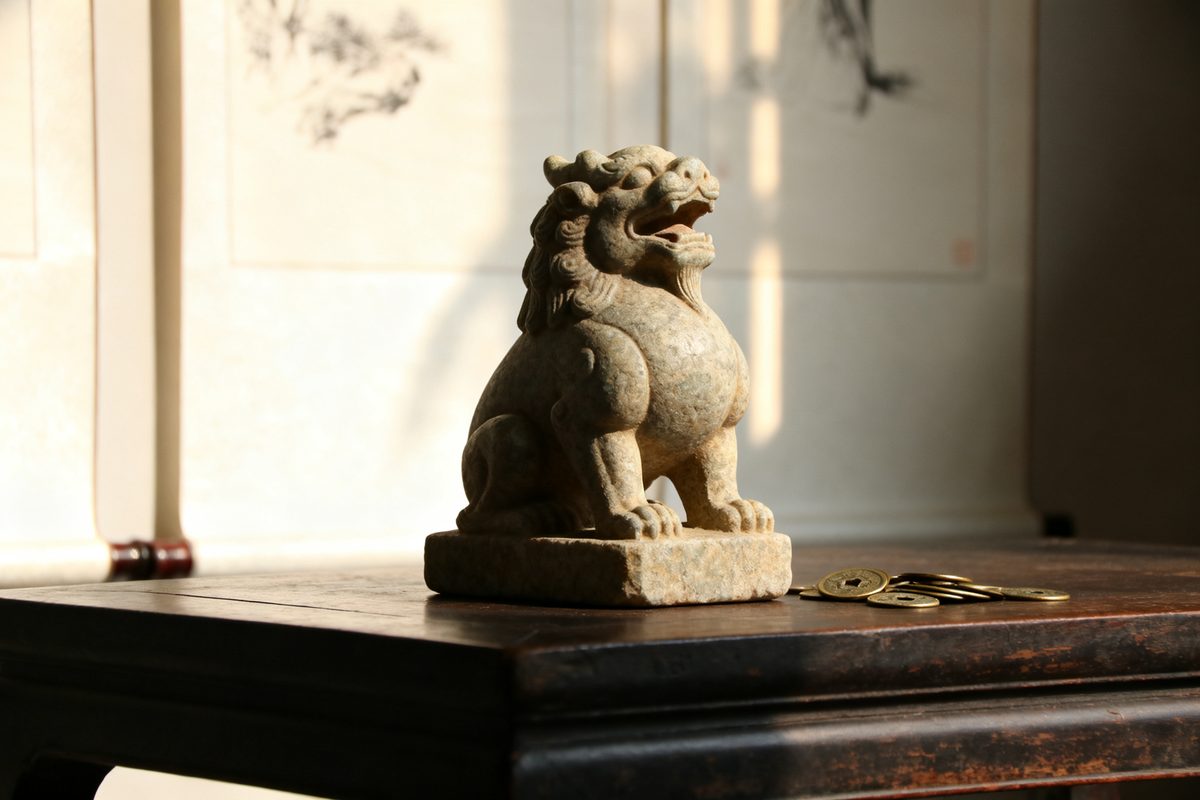
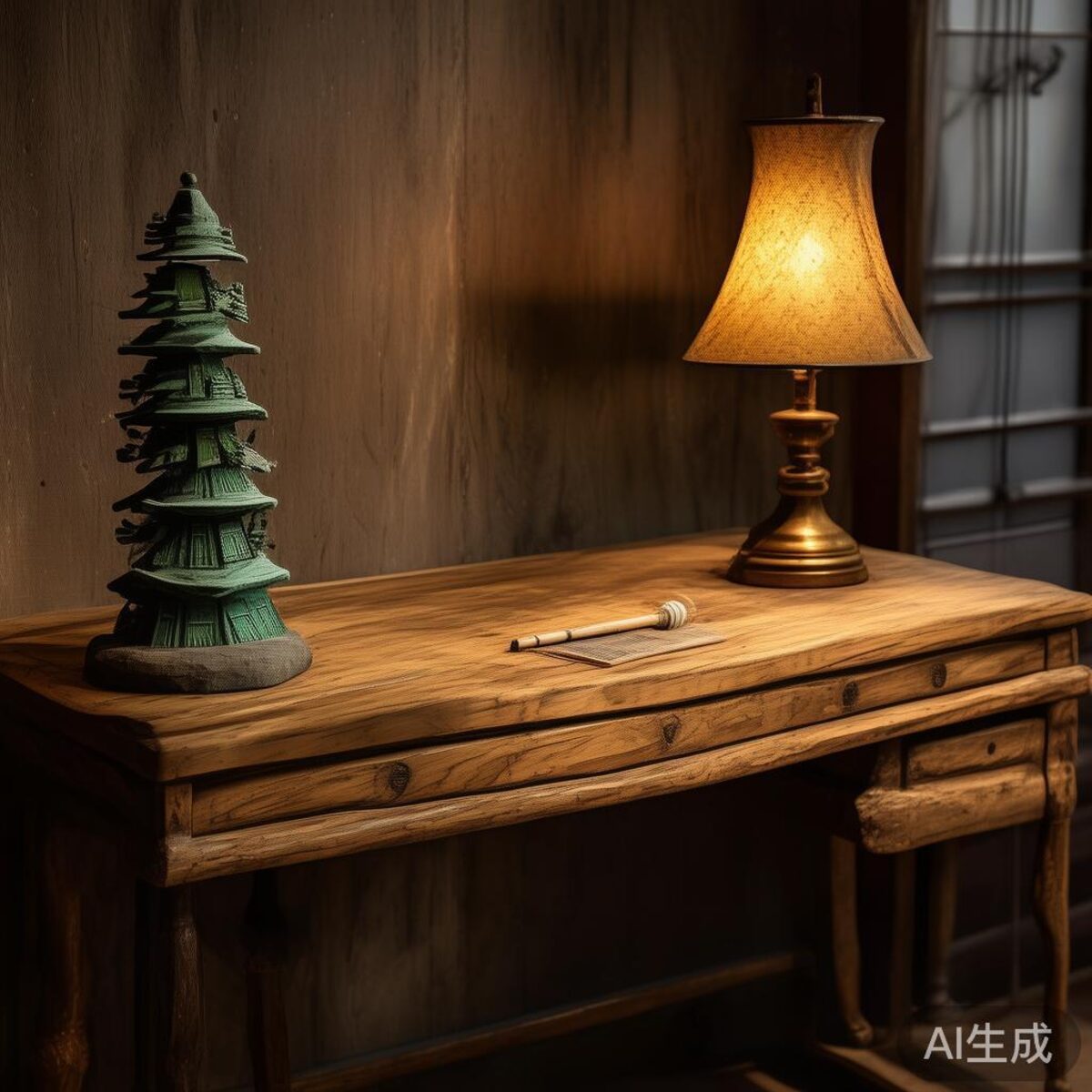
Later, "Wenchang" came down from the sky and into the house. A feng shui master reading a home will locate its Wenchang spot — there are several ways to calculate it, some by the house's orientation, some by your birth year. Put the desk there, they say, and study goes better. Set a little Wenchang pagoda there, like a signal tower for the room's "energy of letters."
It sounds mystical. It sounded mystical to me too.
But something happened last year that made me think about it again.
Silicon Valley's Wenchang Spot
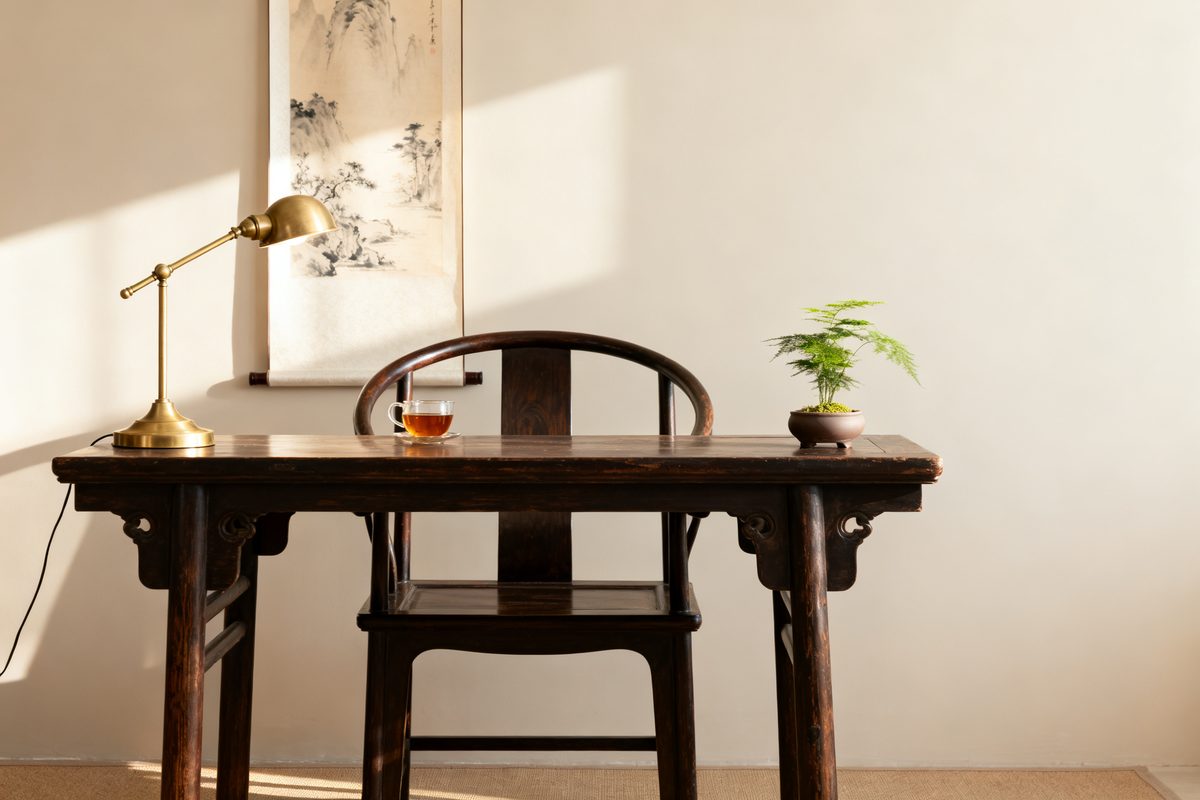
Last year I read an article about how Silicon Valley engineers set up their home office desks. Dead serious about it: the monitor's center line must align with the desk's axis, cables hidden underneath, light coming from the upper side — the stated reason being "reduce visual noise, lower cognitive load." There's a popular book that teaches you to design your "deep work corner": a chair used only for work, a cup that always sits in the same place, even the notebook always at the same angle.
Halfway through, I laughed out loud.
This is exactly my grandfather's desk. Solid at the back, light in front, everything always in its place. Silicon Valley calls it environment design and decision fatigue. My grandfather called it the heart settles. Seventy years apart, an ocean apart, two completely different vocabularies saying the same thing:
A person needs a desk where the mind can settle.
The only difference is the explanation. Silicon Valley's is psychological: less visual noise, better focus. Feng shui's is energetic: when qi gathers and doesn't scatter, the spirit settles. Which one is right? Years of Buddhist practice taught me one thing: when the same thing keeps appearing in two different civilizations, what matters is usually not which explanation is correct, but the real need it points to — the wish to nail down one stable corner for yourself in an unsteady life.
A Wenchang pagoda doesn't guard the house. It guards the mind.
When the Sky Moves into the Study
There's one more detail I really want to mention.
The six Wenchang stars are real. On a winter evening, looking southwest — if the city light pollution is kind — you can still find them. The ancients had no exam boards, no résumés, no algorithm deciding who gets seen. They only had the sky. They looked up and hung a wish as specific as let my child get through his books onto a cluster of stars.
That, by itself, is moving. Fishermen hung their safety on Mazu. Travelers hung theirs on the roadside shrines. Wenchang is how the parents of a farming civilization hung the words "I hope my child makes it" onto the sky itself.
So when that reader asks whether it's a lucky charm — in a sense, yes. Just like when you wear a bracelet given by a friend: you know perfectly well a string of beads changes nothing, yet while you wear it, there is one extra layer of calm in the heart. Is that layer fake? I don't think so. It isn't magic. It's a reminder: every time your fingers touch it, you remember the person you're trying to become.
Same with the pagoda. It stands on the desk and emits no energy at all. It simply reminds the person sitting there, every day: you came here to write, not to scroll.
My Own Desk
Writing this, I got up and looked at my own desk.
Embarrassing confession: my desk follows none of the rules. My back is to a window; a door sits to my right. In feng shui terms, this is "hollow behind" — a seat where no one can settle. Yet this is where I've written for more than two years. Hundreds of pieces, including this one.
So I'm not here to teach you where to put your desk. I can't even get mine right.
I have only one rule, and it beats any direction: on this desk, keep only the things of one work. A computer, a cup of tea, a string of prayer beads. The phone stays in another room. That single rule has outperformed every Wenchang spot, every deep-work method, every methodology I've tried in years.
Desks get messy. Days get messy. But if the desktop is clean when you sit down, that one place in the heart stays clean too.
Ending
At the end of her email, that reader asked one more thing: if I don't believe in any of this, does it stop working?
I think of my grandfather. He probably didn't believe that much either — he taught school, and had seen too many students with perfectly placed Wenchang desks and completely failing grades. But every new term, he still wiped down his grandchildren's desks and adjusted their chairs. What he wiped was not feng shui. It was: a new term is beginning, and I hope you can sit still.
Belief is secondary. The act of wiping the desk is itself love.
Under the lamp, I wrote back to her. In my clumsy English, one sentence: It is not the tower that makes you focus. It is you, coming back to the same desk, every day.
I don't know if she'll understand. It's fine if she doesn't. Feng shui never needed to be understood — the same way the stars never needed to be recognized to keep shining there.
Three questions, left for you:
- What is the most abundant thing on your desk? When was the last time you moved a piece of furniture just so you could "sit still"?
- Did your elders have any "superstitious" little habits that only made sense to you years later?
- If you had to reserve one corner of your room for the one thing you truly want to do — which corner would you choose?