Why Chinese People Believe Jade Can Nourish You: That Stone on Your Wrist Is More Than Just Pretty
A foreign friend asked why Chinese grandmothers all wear jade bangles. The answer turned out to be about comfort, companionship, and two thousand years of quiet faith.
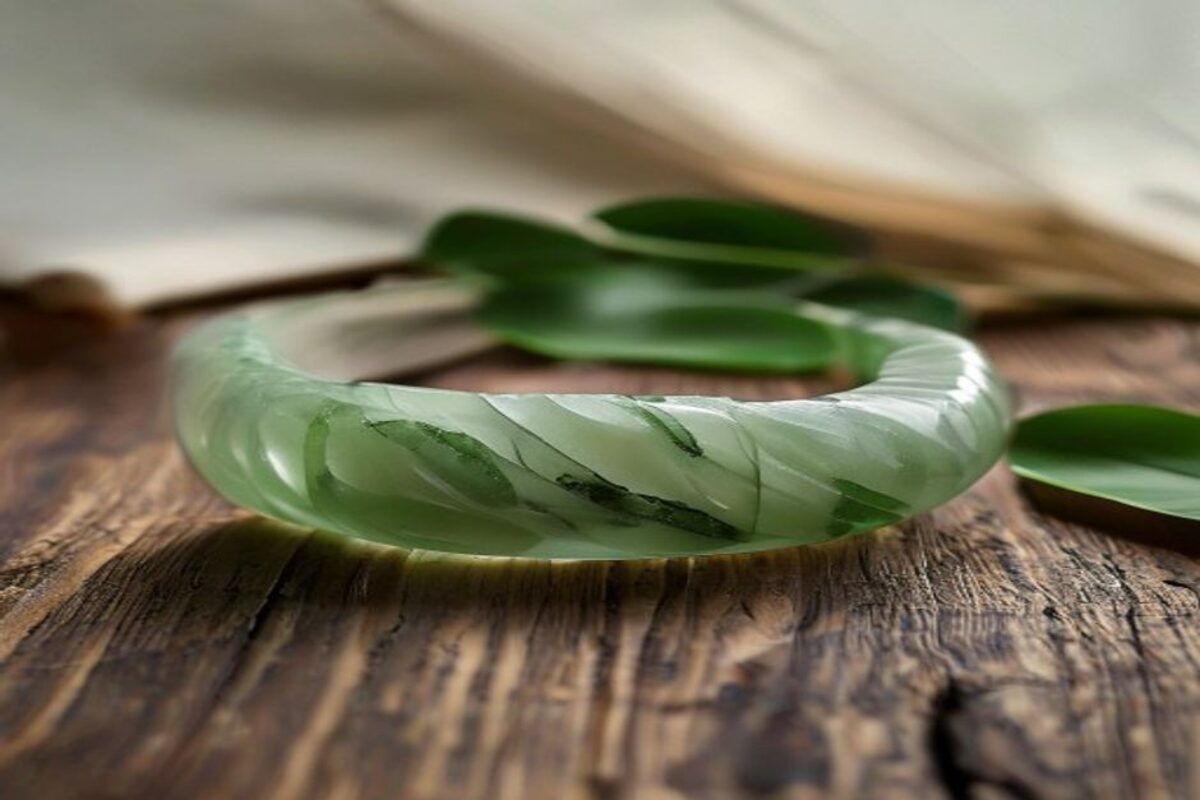
A foreign friend asked me the other day why old Chinese women all wear jade bangles on their wrists.
I thought about it and said: probably because... they look nice.
But even as I said it, I felt it wasn't quite right. Because if it's just about looking nice, why not wear something else? Gold is shiny. Diamonds shine more. Why jade, of all things — a stone that looks grayish and plain, nothing special?
My mom has one on her wrist. Deep green. The inside of the bangle has been worn smooth by her wrist over the years, and when you hold it up to the light, it looks like a piece of frozen stream. When I was little, I asked her why she wore it every day. She said: "Jade nourishes people."
I asked: How?
She thought for a moment and said: "It just... does."
"People Nourish Jade, and Jade Nourishes People"
Most Chinese people have heard this saying.
The first half is easy to understand — people nourish jade. You wear it every day, and the warmth of your body and the oils from your skin slowly seep into the tiny pores of the jade. Over time, it becomes more translucent, more lustrous. The experts call it "developing a patina" or "waking it up." A new bangle straight from the shop might look a little dry. Wear it for a year or two, and you can see the difference yourself.
I've seen it with my own eyes. Once at a jade market, the owner placed a bangle that had been worn for over ten years next to a newly made one. The old bangle had a warmth to it that's hard to describe, like a river pebble that's been held in warm hands on a winter day. The new one was bright, but it was a cold kind of bright. The old one wasn't bright, but it felt alive.
That's what it means — people nourish jade.
The second half — jade nourishes people — is where it gets fuzzy.
Some people say it's about trace minerals. Jade contains zinc, magnesium, iron, that sort of thing. Worn against the skin long enough, they get absorbed. I looked this up online. Some traditional Chinese medicine doctors say it makes sense. Others say it's complete nonsense. I can't tell who's right. But I do know one thing: my mom has worn jade for decades. She's almost seventy now, and the skin on her hands does look better than most women her age.
It could also be because she doesn't do much housework. I'm not sure.
How Confucius Talked About Jade
Later I read some books and realized the Chinese obsession with jade isn't new.
Over two thousand years ago, Confucius talked about it. Someone asked him: "Why does the noble man value jade? Is it because jade is rare?"
Confucius said no. He said jade has "eleven virtues" — eleven qualities of a good person.
He said jade is warm and lustrous, like benevolence. Its grain is clear and orderly, like righteousness. The sound it makes when struck is clear and far-reaching, like wisdom. Its edges are defined but not sharp enough to cut you, like good humor...
He went through eleven of them.
You see, to Confucius, jade wasn't a stone. It was a mirror. When a noble man held jade, he saw the kind of person he ought to be. Warm. Having edges but not hurting anyone. Clear and upright in sound. The same inside and out.
Honestly, the first time I read this passage, I thought it was a bit much. It's just a stone. Really?
But thinking about it later, maybe it's not all nonsense.
Jade Breaks to Take the Blow for You
There's another saying Chinese people have: when jade breaks, it has taken a disaster in place of its owner.
I used to think this was made up, something jade sellers invented to get you to buy another one.
Until one winter. My mom slipped in the kitchen. Her jade bangle hit the corner of the stove and cracked clean in two with a sharp sound. She was startled, but her first reaction wasn't to check if her wrist hurt. She picked up the broken pieces, looked at them, and said: "It took a hit for me."
Later I went with her to the hospital for a checkup. The doctor said her wrist was fine. The bones were good.
It really was fine. Given where it hit and how hard, if the bangle hadn't shattered, all that force would have gone straight into her wrist bone. It could easily have been a fracture. The bangle broke, and the force was dispersed.
Does that count as "taking a disaster"? I don't know. Maybe it's just physics, a bit of cushioning. But in my mom's way of seeing things, that bangle broke for her. And it made her feel safe.
After that, she buried the broken jade in a flowerpot. She said you can't just throw it away. After so many years, it has a spirit.
You can call it superstition. You can call it a psychological comfort. But it did make my mom less afraid after her fall. She felt protected. Is that a kind of "nourishing"? Maybe.
Why Foreigners Suddenly Got Interested in Jade
Last year, there was a wave of people on TikTok showing off Chinese jade. The captions were mostly things like "I bought a jade bangle in China and I get it now."
One girl said she bought a cheap bangle while traveling in China, made of Xiuyan jade, about a hundred-something yuan. After wearing it for half a year, she noticed that when she felt anxious, touching the bangle would calm her down.
A lot of people in the comments said the same thing.
I don't know if that's psychological. But thinking about it, having something to touch in your hand does seem to quiet things down. Western people worry beads, spin fidget spinners, click pens. Chinese people — they work jade in their hands.
You might think working jade and clicking a pen are the same thing. Your hand has something to do, and your mind settles down.
But jade is a little different.
Jade is cool. When you first put it on, it's cool. After a while, your body warms it up, and that warm, smooth feeling travels up from your wrist. Some people say it feels like someone gently holding your hand.
That's a kind of touch that plastic and metal can't give you.
There Are Many Kinds of Jade. I Found Out Later
I used to think jade was just jade. Turns out that's not how it works at all.
In China, "jade" is a big category. The most expensive is jadeite (hard jade), from Myanmar. Then there's Hetian jade (soft jade), from Xinjiang. Below that, Xiuyan jade, Dushan jade, Lantian jade, agate... a whole pile of them.
The price range is huge. A jadeite bangle can be several million if it's good, or just a few dozen yuan if it's not. Hetian jade is similar.
My mom's green one is jadeite, but not a good grade. My dad bought it twenty years ago near the Myanmar border for eight hundred yuan. At today's prices, it's worth maybe two or three thousand. But for my mom, how much it's worth doesn't matter. What matters is she's worn it for twenty years.
I have a friend who sells jade. He said something I think is exactly right: "When Chinese people buy jade, they're thirty percent buying the stone, seventy percent buying the connection."
Whether you have a connection with a jade bangle, honestly, just comes down to whether you like the look of it and whether you can bring yourself to take it off once it's on.
That sounds mystical, but I think it makes sense. Jade isn't the kind of beautiful that stuns you at first glance. It's the kind that grows on you, that looks better the more you wear it. Like some people. Ordinary at first, and then you spend time with them and realize how good they are.
Why They Say "The Noble Man Never Removes His Jade Without Reason"
There's an old saying: the noble man never removes his jade without reason.
It means, unless you have a special reason, don't take the jade off your body.
It sounds a little strange now — it's just a stone, take it off if you want.
But in ancient times, jade was a mark of status and a reminder of how to live. Wearing jade on your body was a way of reminding yourself: be a warm person, a person with edges who doesn't hurt others, a person who's the same inside and out.
You hear that now and think it's just ritual and formality. But think about it. We modern people carry all kinds of "reminders" too — a motto on your phone wallpaper, a charity bracelet on your wrist, a cross around your neck.
It's all the same. You wear it to remember something.
My mom doesn't wear jade to remember any big principle. She's probably just used to it. If her wrist is bare, she feels like something is missing. Like how some people keep checking their wrist when they forget to wear a watch.
"Jade Must Be Carved to Become Something"
One more.
"Jade must be carved to become something" — everyone memorized this one. It's from the primary school textbook.
It means: a rough piece of jade, if never carved, stays just a stone forever. Only when a craftsman polishes it, cuts it, carves it, does it become an object of use.
The metaphor is so perfect it barely needs explaining.
But I want to talk about the other side.
A real jade carver will tell you that you can't just carve jade into whatever you want. You have to look at the jade first. Read its grain, its color patterns, the direction of its cracks. Sometimes there's a hidden fracture inside, and your whole design has to work around it.
You can't fight the jade. You have to listen to it.
An old master once told me: "It's not that I carve the jade. The jade tells me what it wants to become."
It sounds like a Zen koan. But I think he meant it. A good craftsman really is in conversation with the material, not giving it orders.
Back to That Stone on Your Wrist
So why do Chinese people believe jade can nourish you?
If I'm being honest, I don't fully believe jade can improve your health on a physical level. That trace minerals stuff — I have my doubts.
But "nourishing" was never just about the physical.
My mom has worn jade for twenty years. The first thing she does every morning when she wakes up is touch her wrist to make sure the bangle is still there. That bangle has been with her while she cooked, did laundry, took walks, stared into space, couldn't sleep. Every bit of warmth in its surface is time.
Jade nourishes people — maybe what it nourishes is a sense of peace. Having something on your wrist, and your heart doesn't drift so much.
It's like how some people need a string of prayer beads to settle into meditation, or need a pen to spin before they can think. What jade does is turn that sense of steadiness into something you can wear.
And it really does look better the more you wear it.
I bought one a while back too. Not jadeite — white Hetian jade. Not expensive, a little over a thousand yuan.
After two months, it did change. When I first got it, it felt a little dry. Now when I touch it, there's a softness to it, almost like touching powder — the experts call it "oiliness." I'm still not sure if it's really opened up or if it's all in my head.
But it doesn't matter.
What mattered was that my mom saw it and said: "You've started wearing jade too."
The way she said it, it was like something had been passed down.
A few questions to leave with you. They may not have answers:
1. Is there something you carry with you all the time — not because it's valuable, but just because? 2. What do you think the word "nourish" really means? 3. If jade is only a psychological suggestion, does it still mean something?