My Friend Couldn't Sleep for Three Months After Moving: On the Invisible Things in Your Bedroom
Where your bed faces, which way the mirror points, what's above your head — these little things you thought didn't matter might be quietly stealing your sleep. It's not superstition. It's your body being honest.
A friend moved into a new apartment. Then he couldn't sleep for three months.
He came over for tea yesterday. Dark circles under his eyes like bruises. Said since the move, he hasn't had a single decent night. He tried melatonin, bought a new mattress, even stopped bringing his phone into the bedroom. Nothing worked.
I asked him: "Is your bed directly facing the door?"
He froze. "How did you know?"
I said, "Go home and move it. Put the headboard against a solid wall. Don't face the door. Don't face the mirror. Just try it."
He laughed. "You believe in that stuff?"
I said, "It's not about believing. Just try it first."
How does a bed's position keep you awake?
I'm no feng shui master. Honestly, I can't even read a luopan compass.
But some things, your body tells you after you've lived in enough rooms.
The ancients talked about bedroom feng shui, and it comes down to four words: store wind, gather energy. A room that lets you settle down needs slow-moving air, soft light, and a sense of stillness when you lie down.
Let's start with the basics.
The head of your bed shouldn't face the door.
This is probably the most mentioned feng shui rule. Why? Think about it. When you're asleep, you're completely undefended. The door opens, and air rushes straight at you. Your body tenses up instinctively — even if you're fast asleep, your nervous system isn't.
That's what happened to my friend. His bed faced the bedroom door. Beyond the door was the living room, which connected to a balcony. The wind came straight through to his face.
No wonder he couldn't sleep.
No exposed beams above the bed.
I've experienced this one personally. I once rented an old apartment where a beam ran right across above the bed. The first week I was there, I woke up every single night around 3am. I'd feel heavy, like something was pressing on my chest.
Later I moved the bed out from under the beam. That very night, I slept like a rock.
Call it psychology, call it energy. I slept well. That was enough.
Mirrors shouldn't face the bed.
My grandmother used to say: you wake up groggy in the middle of the night, open your eyes and see a figure in the mirror — it startles you awake. How are you supposed to get back to sleep?
Fair point. But there's a deeper layer. In feng shui, mirrors belong to yin energy. Facing the bed, they can make your spirit restless. Restless sleep, lots of dreams, even nightmares — a lot of times, the mirror is the culprit.
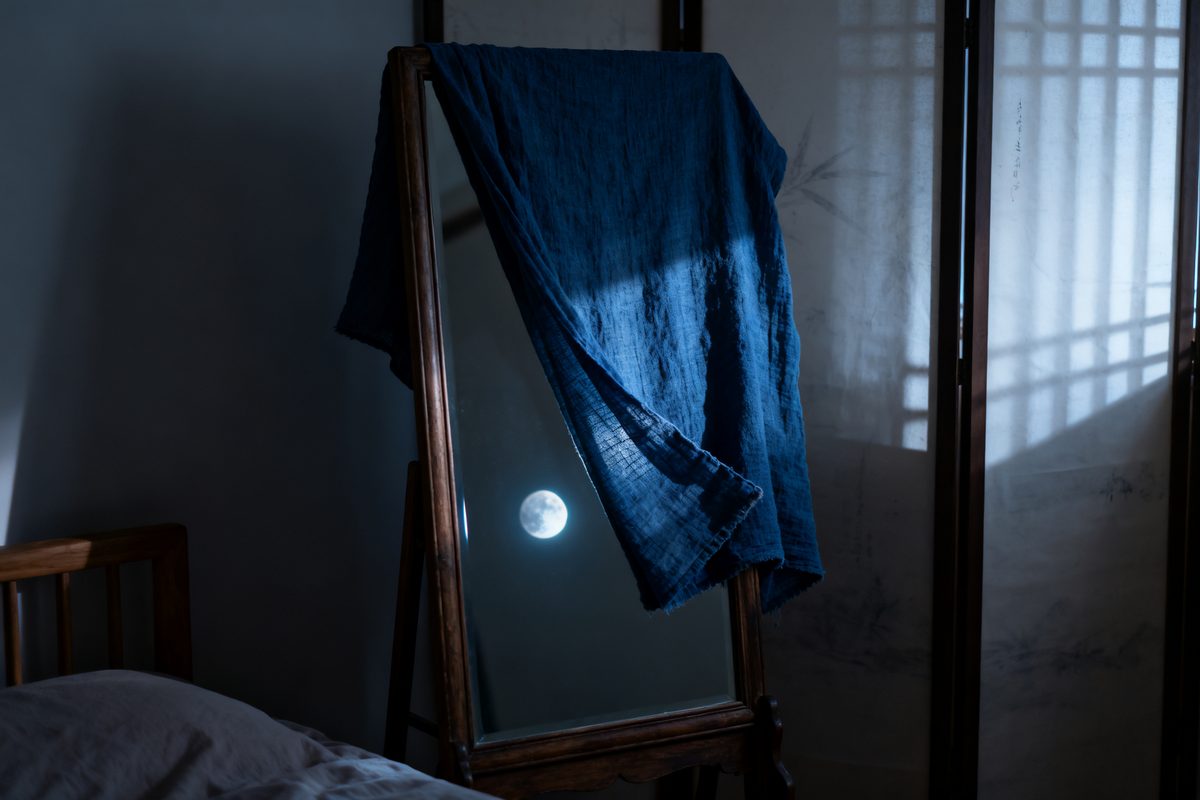
If you can't move it because of limited space, just drape a cloth over it before bed. No need to overthink it.
Bedroom color matters more than you think
I had a friend who painted one bedroom wall deep red. He said it felt passionate and energizing.
During that period, his temper was terrible. He'd fight with anyone over anything.
Bedroom colors should be quiet. Off-white, light gray, soft blue, dusty pink, pale green — these don't stimulate your nerves. They let your body naturally relax.
Bright red, deep black, dark purple — in feng shui, these are all too heavy. A bedroom is for rest, not for excitement.
If you've already painted the walls dark and don't want to redo it, hanging a light-colored fabric drape or sheer curtain can soften the effect.
Those little things are affecting you too
A few things people easily overlook.
Don't put too many electronics near your bed. Phone chargers, small speakers, space heaters — they all create electromagnetic fields. In feng shui, this is called "electromagnetic sha." Whether you believe in sha or not, sleeping too close to electronics really does affect your rest. I've tested the difference between charging my phone on the nightstand versus in the living room. The latter, I always sleep deeper.
Don't clutter stuff under the bed. The ancients said "keep it clear under the bed." Air needs to flow. Pile it full of boxes, and the energy stagnates. Sleep above that long enough, and you'll feel suffocated. If you live in a small space and must store things there, at least keep it tidy. Don't stuff random things under there.
The bedroom door shouldn't face the bathroom door. This layout is super common in modern apartments. Bathrooms hold moisture and mixed odors. Rushing straight into the bedroom, over time it affects your respiratory system and your sleep. If you can't change the layout, keep the bathroom door closed and put some coarse salt or activated charcoal inside to absorb moisture.
Curtains and light
I once stayed a few days at a Buddhist temple. The meditation room windows were small, hung with thick cotton curtains. The master said: "Light coming in should be controlled."
Too bright, you can't sleep. Too dark, it feels stifling.
The best bedroom curtains have two layers — a sheer layer to soften the light, and a blackout layer for when you need complete darkness. In the morning, let natural light filter in gently. Your body wakes naturally. At night, pull the blackout curtains and settle into sleep in peace.
Curtain color matters too. Nothing too loud. Solid, calm colors are best. In feng shui, you want to avoid fierce animal patterns or too many sharp geometric shapes — lying in bed looking up at a tiger or sharp angles, who can sleep peacefully?
What my bedroom looks like
Since I've been talking so much, I might as well share my own.
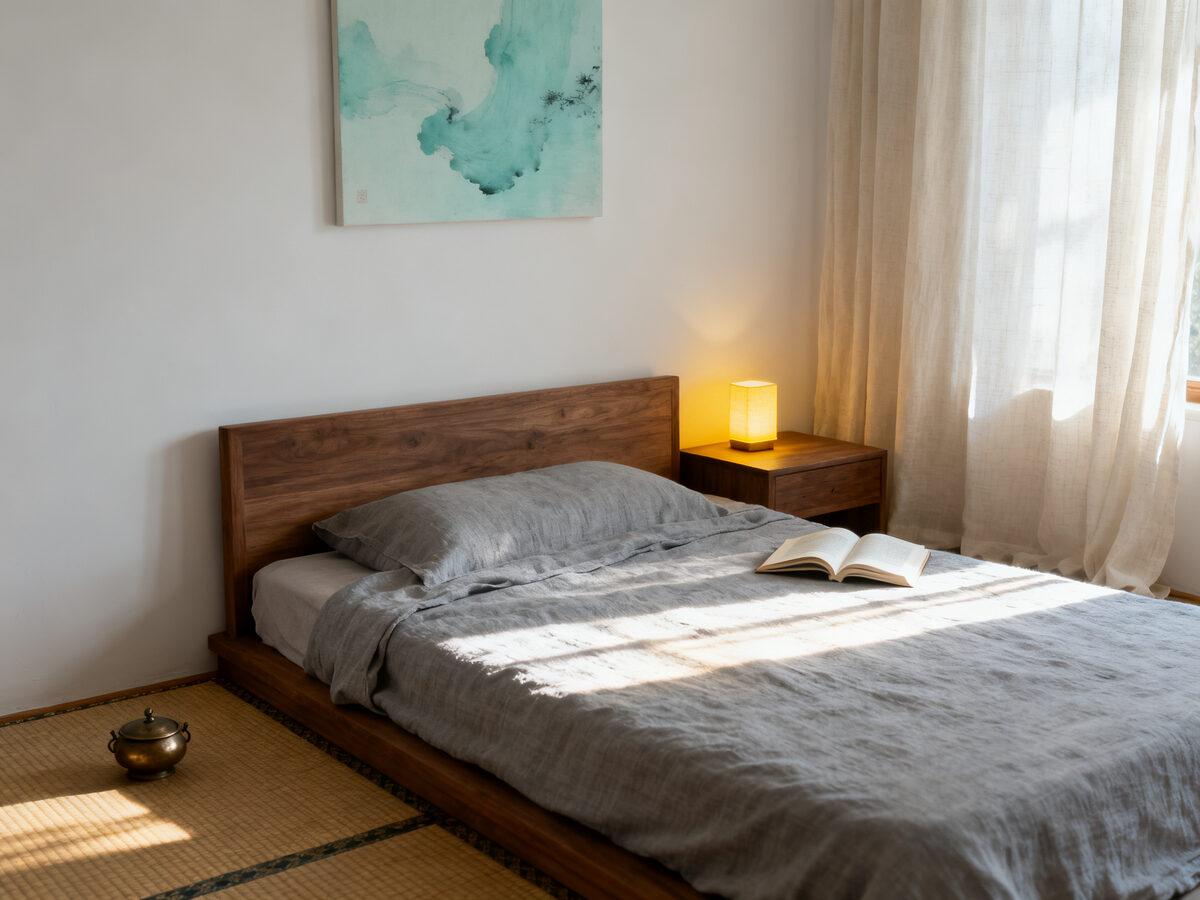
My bedroom is simple. A wooden bed, headboard against the south wall. Light gray cotton bedsheets. Curtains are off-white linen — one layer blackout, one layer sheer. On the nightstand, just a warm yellow lamp and whatever book I'm reading.
In the corner, a small bronze incense burner. Sometimes I light a stick of sandalwood before sleep.
No TV, no computer. Phone charges in the living room.
On the windowsill, a pot of pothos, quietly growing.
It's been almost two years since I moved in. I've always slept well.
One last thing
After all this, it really comes down to one sentence: A bedroom is for sleeping. Keep it simple.
People today make their bedrooms more and more complicated — TV, computer, gym equipment, work desk. As if every inch of space must be put to use or it's wasted.
But the logic of feng shui is simple: a room has one purpose. Stuff too many functions into it, and its energy gets chaotic. Your body follows.
You don't need to spend a fortune on renovation. You don't need to hire a master.
Move the bed to the right spot. Take out the extra stuff. Let the room be quiet.
Then get a good night's sleep.
Sometimes, a shift in fortune starts with just that — one good night's sleep.
Three questions for you:
- When was the last time you slept all the way through to morning?
- Look around your bedroom. What's one thing you could move out today?
- If you could only do one thing tonight to improve your sleep environment, what would it be?