They Charge Crystals Under the Full Moon. I Wear My Beads Old.
A colleague resets his crystals in moonlight every month. I looked down at the prayer beads I've rolled for four years — the Chinese way is almost the opposite: don't reset it back to clean. Pile time onto it. It took me ten minutes to explain the word "baojiang."
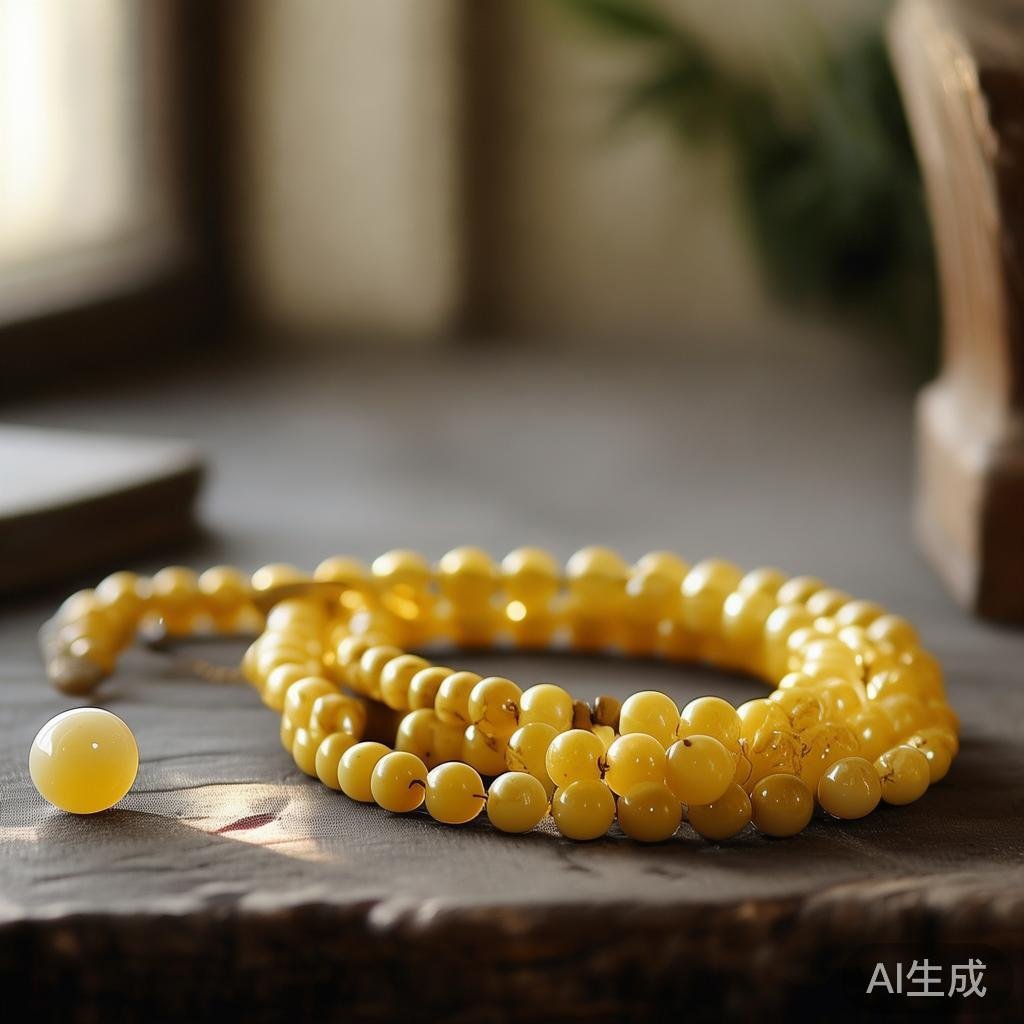
Last week I was on a video call, half my attention on the meeting notes, the other half — under the desk — on a strand of prayer beads I was rolling between my fingers.
This strand has been with me for four years. After the call, a foreign colleague messaged me privately: "I saw you kept turning it. Is it like a fidget thing? Or... you are charging it?"
I laughed. Because in his world, "charging" is a real thing.
Their crystals need a "reset" every month
This colleague takes it seriously. He showed me his shelf: a dozen crystals — amethyst, clear quartz, rose quartz, obsidian. Each one has a name, a story, and its own care routine.
He explained it to me with complete sincerity. Crystals "absorb" the negative energy from your life, like a sponge soaking up water. Once full, they go "dull." Inert. So on every full moon, you put them on the windowsill and let them sit in moonlight all night — the moonlight empties them, returns them to a clean state. Some crystals should be rinsed in running water, some buried in sea salt, some placed on a larger selenite slab to "recharge overnight."
Listening to him, I found the logic strangely familiar, and strangely foreign.
Familiar: objects have a "state," and they need human care. Chinese people have believed this for thousands of years.
Foreign: the direction. In his worldview, a stone is a tool. It gets dirty, it gets full, it stops working, so you restore it to factory settings regularly. Moonlight is the cleanser; the full moon is maintenance day. The crystal and the person are user and used.
He wasn't embarrassed at all telling me this. That's just how it is in the West these days — crystals went from "hippie niche" to a regular item on the wellness shelf. TikTok videos about crystal cleansing rack up tens of millions of views. The people buying them don't necessarily believe in anything. But they need something they can hold in their hand — and this I've written about before: human beings are born wanting to be blessed.
I said: we do it the other way — we wear it old
I told him the Chinese approach is almost the opposite.
We don't reset an object back to "clean." We pile time onto it until it grows old — and old, here, is a good thing.
I held out my wrist and showed him the strand of star-moon bodhi seeds. Four years ago they were white: new, hard, faintly bright. Now they're the color of milky tea, and the surface of each bead holds a very thin layer of light — not a shine, a warmth. Like a small, round piece of jade that has been touched a few thousand times.
The word for this is baojiang — the "skin" or "patina" an object grows.
It's almost impossible to translate. Literally it's something like "a wrapped layer of syrup," which sounds like food processing. What it really means: a glow that is "raised" out of an object by human hands, body heat, and time. Layer by layer. This light is not polished on — polish is given by machines. Baojiang is given by days.
In the collecting world, the act is called "pan" — rolling a walnut, a gourd, a strand of beads in your hand. There are rules: not too sweaty, not too oily, wash your hands first, and after a while you set it aside for a few days to let it "rest." It sounds mystical, but it's really like keeping a plant — you can't rush it. You can only show up, every day.
Jade works the same way. In China we say: you nurture the jade for three years, and the jade nurtures you for a lifetime. For the first three years, your warmth and oils slowly sink into it, and its color comes alive, turns gentle. After that, this "grown" jade sits against your skin like a quiet old friend. The Book of Songs praises a gentleman as "warm as jade" — notice, that's a compliment for a person, but the standard is an object. In China, jade has never been just a stone.
My colleague asked: "So you never cleanse it?"
No, I said. We don't wipe away its memory. We are after its memory. Every bit of that thin glow on the beads is the warmth of my hand from some season of these four years. Is it dirty? No — it's full.
What prayer beads were originally for: one bead, one recitation
There's a deeper layer.
The strand on a Chinese wrist was never originally about looking good. It's a mala — a counting tool for practice. One hundred and eight beads. You recite one line, one mantra, and your thumb rolls one bead across. A full circle: one hundred and eight recitations.
Why one hundred and eight? One traditional reading: it stands for the hundred and eight kinds of afflictions a person carries. Rolling bead by bead is counting through your troubles, one by one, and setting each one down.
So this hand-motion was never maintenance. It was the practice itself. The hand moves, the mouth recites, and the mind walks along the beads, notch by notch. And somewhere along the way, the mind goes quiet. It's the plainest form of settling the heart — no cushion, no closed eyes. You can do it walking, waiting, lying awake at night.
A Tibetan practitioner who has rolled his mala for decades will have wooden beads worn into a deep, warm glow. Put that strand next to a new one, ignore the craftsmanship, and you can tell at a glance which one has been prayed with.
What is that glow? Tens of thousands of repetitions. A person rubbing a small stretch of his life into a piece of wood.
When I roll my beads in meetings, honestly, I stopped counting long ago. It's just that when the hands have something to do, the heart slows down. It's my small quiet corner, hanging on my wrist.
One wants it new. One wants it old.
I've thought about that conversation many times since. Same gesture — a hand around a stone — two civilizations, two directions.
Theirs points back to "clean." Negative energy accumulates, so empty it. Tools go dull, so reset them. The crystal should stay transparent, new, empty. It's a very modern, very reasonable, almost scientific idea — like clearing the background apps on a phone.
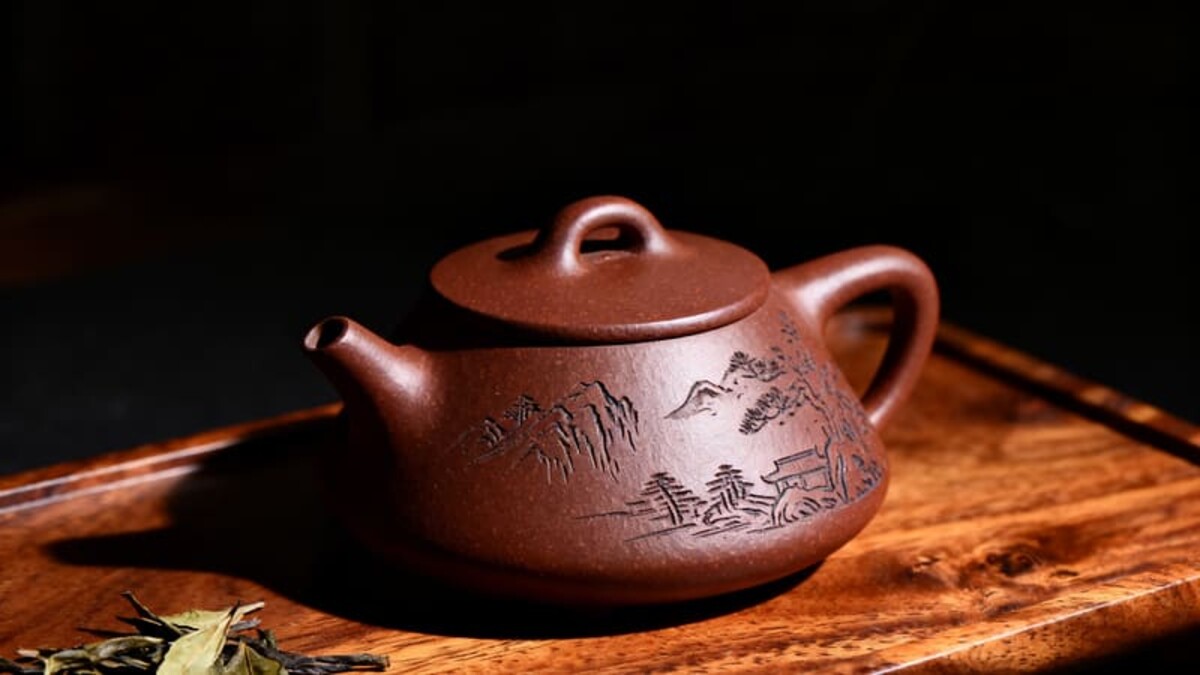
Ours points toward "growing old together." An object, like a person, isn't trying to return to factory condition. It slowly changes inside time, until it becomes the one shape only you would recognize. A Yixing teapot must be raised. A tea tray must be raised. Jade, beads, calligraphy, paintings — all raised, all nurtured. Until, eventually, the object is "wrong" without you — the pot knows its owner; the beads know their wrist.
I don't think one is wiser than the other. Honestly, I believe in both a little.
On the night of the full moon, I really do open the window and leave my beads on the sill until morning. Not for cleansing. It's just — they've been with me four years. They should see the moon too.
One last thing
Before that video call ended, my colleague said he wanted to try "pan." Asked what he'd roll, he said he didn't know — maybe a stone he picked up from the beach once.
I said that's the best kind. From the very beginning, it was already yours.
Three questions, to leave with you:
- Is there something you own that time has "raised" for you? What does it look like now?
- Do you believe objects can "remember" people?
- If you gave your beads away someday — would they still, in some way, be yours?