My Coworker Moved His Cactus: A Real Talk About Desk Feng Shui
My coworker suddenly moved his cactus from the left to the right side of his desk. I wanted to laugh — but after thinking about it, some things really do affect your state of mind without you understanding why. Today: the four directions of your desk, the objects people overlook, and what colors mean.

This afternoon, my coworker Lin suddenly moved his cactus from the left side of his monitor to the right.
I asked him why. He said, "My cousin told me the left side is the Green Dragon position. Having something thorny there will drive away your benefactors."
I almost laughed. But after I laughed, I thought about it — actually, it kind of makes sense. At the very least, his desk looks much tidier now.
Honestly, I used to be skeptical about feng shui. When I was a kid, my mom hung a mirror above the front door and placed a gourd on the shoe cabinet. I always thought it was just old-fashioned superstition. But after living on my own for a few years, moving apartments a few times, switching desks at work — I started to feel that some things, I can't explain why, but they really do affect your state of mind.
For example, looking back now, there was one desk I had that faced away from the hallway. People were always walking behind me. During that period, I felt constantly tired, couldn't focus, always felt a chill on my back. Later I moved to a spot against the wall, and I just felt... settled.
Is that feng shui, or psychology? I think it might be both. Feng shui says don't leave your back exposed. Psychology also says you need a sense of "backing" to feel safe. Ancient people didn't have these terms, but they observed for thousands of years and turned their observations into rules.
So today I want to talk seriously about the office desk. After all, we spend eight or nine hours a day sitting here. The energy of this space — or you could call it atmosphere, environmental psychology, whatever word you prefer — is genuinely worth paying attention to.
The Four Directions of Your Desk
When feng shui looks at a desk, the most basic principle is dividing left and right. Sitting in your chair, facing forward:
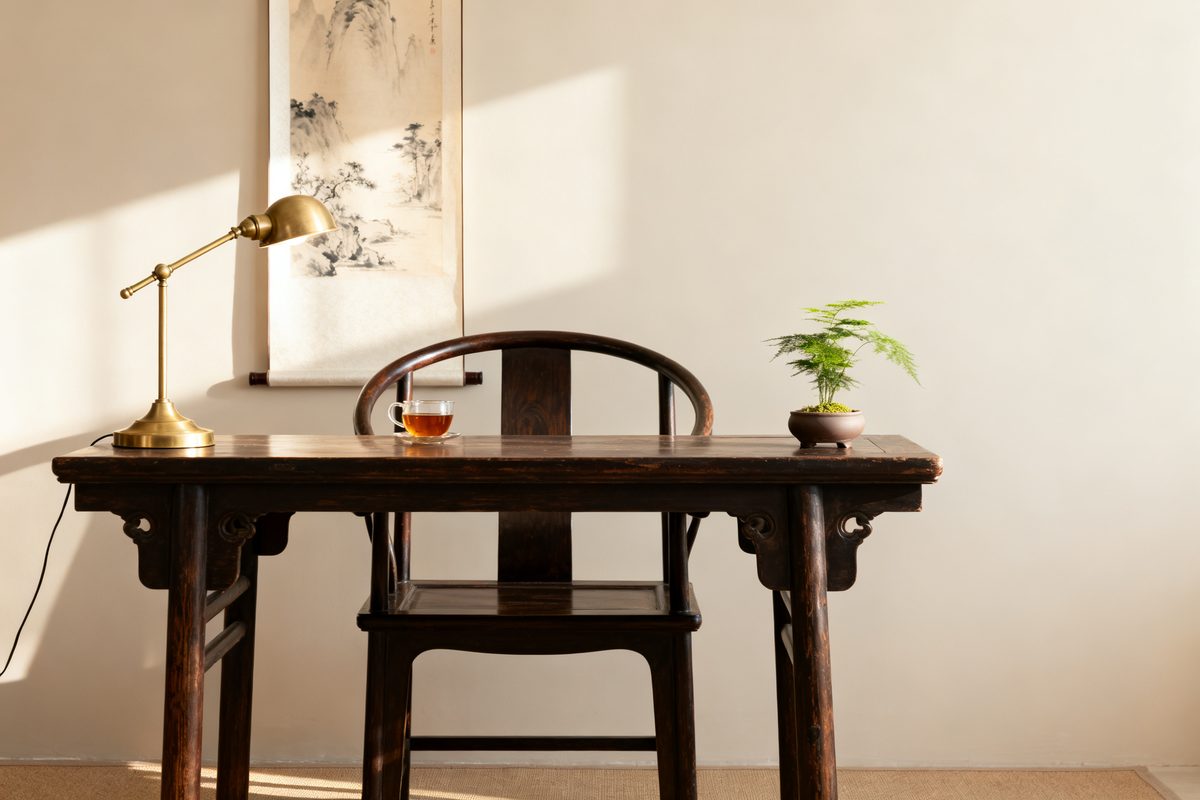
Your left hand side is the Green Dragon position. It represents career luck, benefactors, and yang energy. The Green Dragon likes movement, so the left side is suited for taller items — a desk lamp, a file rack, a plant (but not a thorny one).
Your right hand side is the White Tiger position. It represents petty conflicts, disputes, and yin energy. The White Tiger prefers stillness, so the right side should have lower items — your water cup, pen holder, miscellaneous things. The right shouldn't be too tall or too messy, or it easily invites gossip and arguments.
This actually makes practical sense. Most people are right-handed, so piling things up high on the right is genuinely inconvenient. And having taller items on the left creates a natural visual arc from left to right that just feels more comfortable.
The front is the Bright Hall — the desk space in front of you. The Bright Hall should be open and spacious, not piled with clutter. When the space in front of you is messy, your mind gets messy too. I know this from experience — every time my desk gets buried under documents, I feel incredibly anxious and can't absorb anything. After clearing the desk, my thoughts clear up too.
The back is your Mountain of Support. Behind your chair, ideally there's a solid wall — not a hallway, not a window, not empty space. With support behind you, you feel grounded. If you truly can't sit against a wall — like if your desk is in the middle of an open office — you can drape a dark jacket over the back of your chair, or place a cushion, to artificially create a sense of "backing."
The Little Things People Overlook
Now let's talk about objects on the desk.
Cacti and thorny plants — this is the most asked-about topic. Many people say computer radiation is bad, so they put a cactus to block it. But from a feng shui perspective, thorny plants on your desk create "poison arrow energy" — those thorns are like hidden arrows pointing at you. Especially on the left side (Green Dragon position), it's said to affect your relationships.
My suggestion: if you really love cacti, put them on the right side in a corner, or simply on the windowsill. For your desk, grow some smooth, round plants — succulents (round-leafed ones), moneywort, a small pothos. Round leaves growing upward symbolize vitality and prosperity.
The position of your water cup — Water represents wealth in feng shui. Your cup is best placed on the right side. The White Tiger position is yin in nature and likes water. Plus, reaching for your cup with your right hand is convenient and less likely to knock it over. Never put your water cup directly in front of you — water blocking the Bright Hall is like water blocking your future path.
Photos and ornaments — If you want to display family photos, place them on the left side (Green Dragon position), which represents family and benefactors. For ornaments, choose smooth, meaningful pieces. Many people like to keep a small gourd on their desk — "gourd" sounds like "fortune and prosperity" in Chinese, and its shape (small mouth, big belly) symbolizes gathering and holding energy. I have a small brass gourd on my desk, bought for ten yuan at a temple gate last year. Every time I see it, I feel grounded.
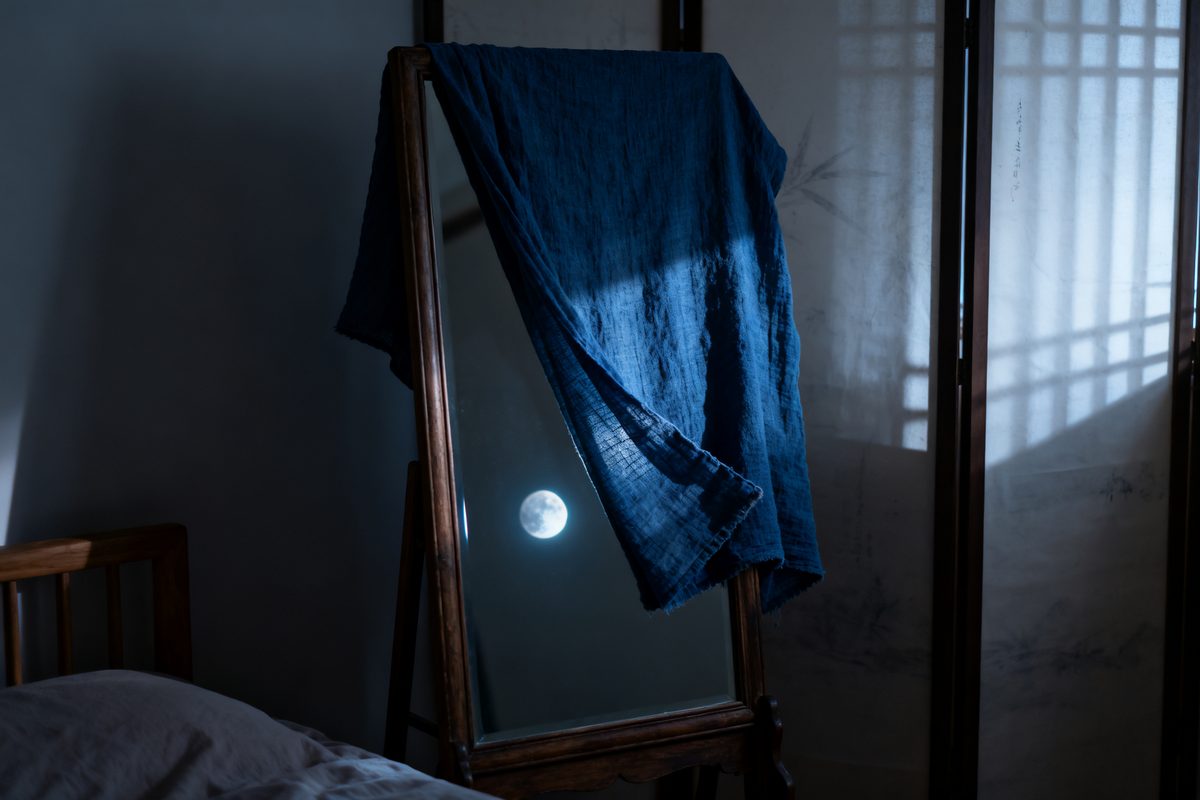
Mirrors — Never put a mirror on your desk facing you. In feng shui, mirrors deflect energy. Facing your seat, a mirror will bounce your energy away. And honestly, catching a glimpse of your own face while working is just distracting.
Colors Matter Too
This is something many people don't notice. The color of your desk, your desk pad, even the folders you use most often — they all subtly affect your state of mind.
If you feel like your career hasn't been going smoothly this year, try adding a touch of green or blue on your left side — green belongs to the Wood element, favoring growth; blue belongs to Water, favoring flow. A small plant, a blue coaster — that's enough.
If you keep feeling like you're dealing with difficult people, place something red on your right side — red is a protective, warding-off color in Chinese tradition. A red pen, a red folder. Not flashy, but sufficient.
If you want to attract wealth — this is what everyone asks about most — you can place something gold or yellow in the top-left corner of your desk. Gold and yellow belong to the Earth element producing Metal, symbolizing wealth. A golden bookmark, a small yellow ornament — anything works.
But I need to say this: don't overdo it. The office desk is a place for work, not a feng shui altar. One or two meaningful items are fine. Too many just creates clutter, and clutter itself is the worst kind of "negative energy."
A Few Real Stories
After all that theory, let me share a few things from real life.
My cousin worked at a company for three years and never got promoted. One New Year, my mom visited his place and saw his home office setup. His chair had a big window behind it, with streetlamps from the apartment complex shining through. My mom said: "Your back is to the light. You can't sit steady." He didn't believe it at the time, but later he put a low cabinet between the window and his chair, leaning against the wall. After returning to work post-holiday, he got promoted to manager within three months.
Was that feng shui, or did he just work better after sitting more solidly? I can't tell. But the result was good.
Another friend kept clashing with coworkers. Once I visited her desk and saw her right side piled with files stacked taller than a person — the White Tiger position was way too high. I said, "Maybe tidy that up." After she cleaned it, she told me: "I don't know why, but I feel like I can breathe more easily." And during that period, her relationships with colleagues genuinely improved.
Of course, these might all be coincidences. But here's what I want to say: the act of organizing your environment is itself a positive psychological signal. You're telling yourself that you care about this space, that you care about your own state. Just that alone makes it worthwhile.
The Most Important Thing
After all this feng shui advice, I want to say one genuine thing.
No matter how good your desk feng shui is, if you sit there every day doing work you don't like, dealing with people you don't like, unable to see any future direction — no feng shui can save you.
Feng shui is the icing on the cake, not the cake itself.
It can improve your state a little, but it can't make decisions for you. It can give you a bit more peace of mind, but it can't give you courage.
The best feng shui is this: you sit there, knowing what you need to do, and then you do it, steadily, honestly.
Right now on my desk: a cup of tea, a small desk lamp, a brass gourd, a pot of moneywort. Clean, simple. Every time I sit down, I take one deep breath, flip my phone face-down, and start working.
That's probably the best feng shui I can manage.
A few questions for you:
- What does your desk look like right now? Is there one side that's piled especially high or especially messy?
- Sitting where you are now, do you feel grounded, or do you feel restless? Do you have support behind you?
- If you could make just one small change, where would you start?