The Phone Call That Comes Every October: Time to Put Summer Away
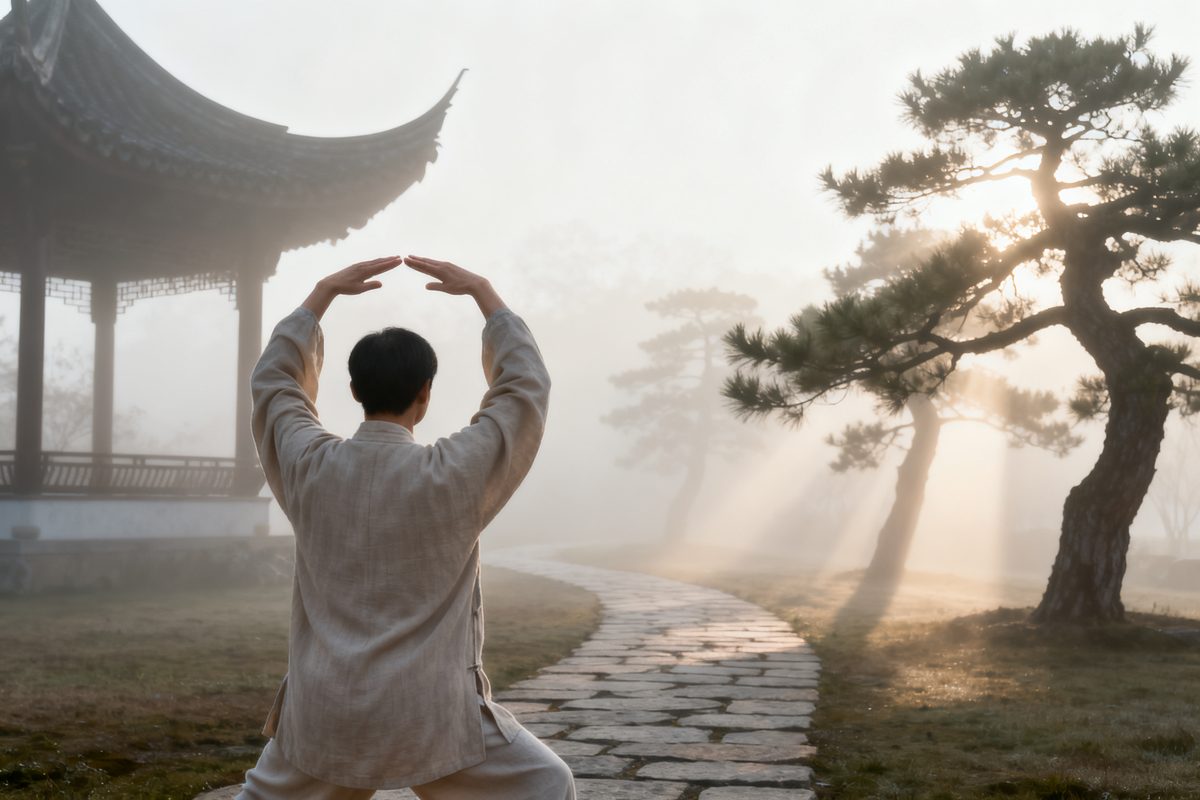
Cold Dew is the first of China's 24 solar terms with the word "cold" in it. The old rule for this season is one word: gather in. Pack the summer clothes, sleep earlier, shift the table from "cooling" to "moistening" — and let the unfinished things become next year's fertilizer.
The Phone Call That Comes Every October
National Day holiday wasn't even over when my mom called. Around Cold Dew, she said — put away the bamboo mat, pack up the summer clothes. After hanging up, I stood in front of my closet for a while.
What was I doing last year at this time? Nothing, apparently. The mat stayed on the bed until it snowed. Summer just dragged itself into winter.
Later, in an old book about solar terms, I found a word: shoulian — to gather in. To converge.
Our ancestors had no central heating, no down jackets. They lived by the sky, slept by the sky. So they noticed things we've stopped noticing — the wind turning hard, the insects going quiet, dew forming on the tips of grass. And they knew: time to gather in.
This isn't superstition. It's a precise system for living. And it starts with Cold Dew.
The Days Are Getting Shorter. That's Not Your Imagination
Cold Dew is the first of the twenty-four solar terms with the word "cold" in it. The dew at White Dew is cool; by Cold Dew it's cold — almost frost.
The ancients divided Cold Dew into three phases, five days each:
First phase: the last wild geese arrive. The final skeins fly south in their V formations. The earlier ones are the hosts, the later ones the guests — the ancients even had etiquette for geese. That was their courtesy toward time.
Second phase: sparrows vanish into the sea and become clams. The sparrows disappear, the clams multiply, and their shells have streaks like feathers. The ancients didn't know about migration, so they decided the sparrows had transformed. A sweet misunderstanding — but underneath it sits the same observation: it's cold, and the lively things are hiding.
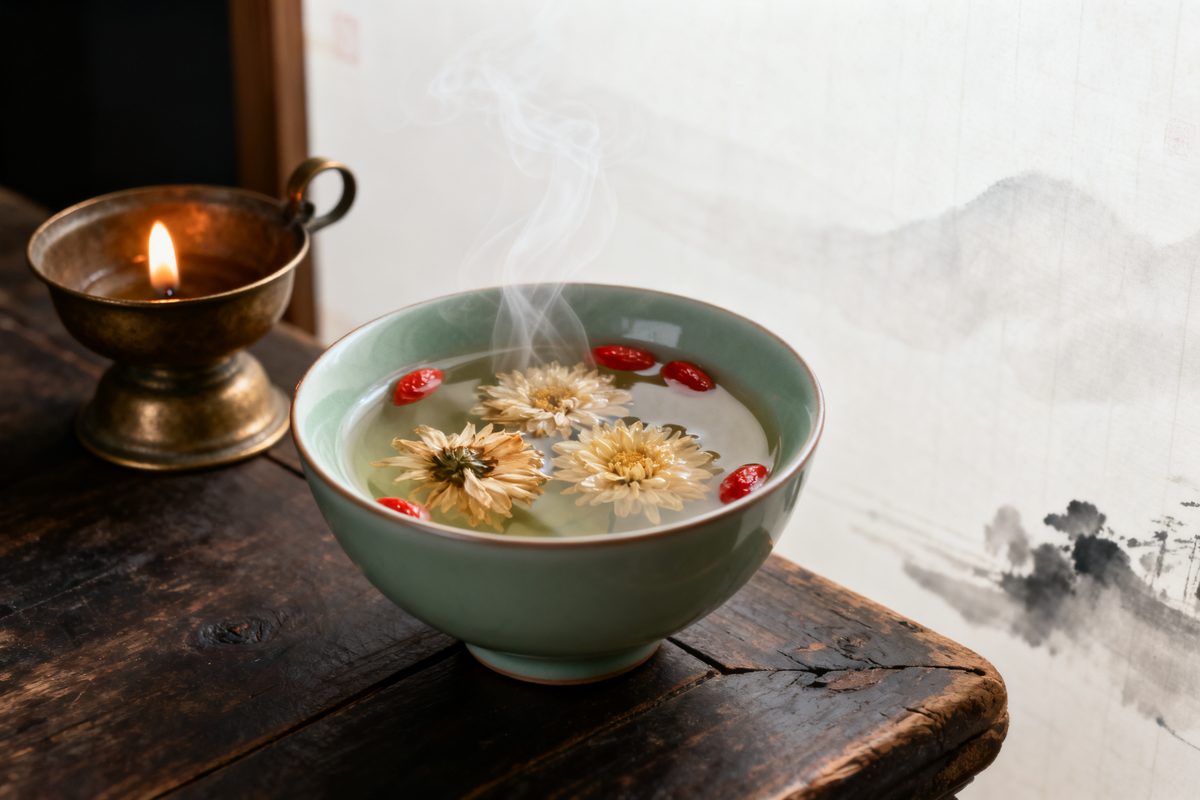
Third phase: the chrysanthemums bloom. Every other flower waits for spring. Only the chrysanthemum opens while everything else withers. That's why the ancients respected it.
Three phases, one message from three angles: the world is drawing in, storing, sending its energy down to the roots.
And us?
We Are the Only Animals That Refuse
The bear eats everything in autumn, then sleeps the winter away. The tree drops every leaf and pulls its sugar back into its roots. Even the stray cats in my neighborhood are more honest than we are — the moment October arrives, they find a wall out of the wind and curl themselves into circles.
Only humans are still drinking iced coffee in October, still scrolling at midnight, still running their calendars from seven in the morning to eleven at night.
I'm not judging anyone. I was the one with the bamboo mat in the snow. I just slowly noticed something: my October exhaustion, my November irritability, my December low moods — maybe they were never "psychological problems." Maybe my body was living a season I refused to admit existed.
There's a line in Chinese medicine: autumn corresponds to the lungs, and the lungs govern grief. Feeling blue in autumn isn't you being dramatic — the weather is genuinely working on you. And the way through isn't gritting your teeth. It's going along with it. The sky is gathering in. You gather in too.
What Exactly Are We Gathering In?
I think of it as four layers, each deeper than the last.
Layer one: gather your things
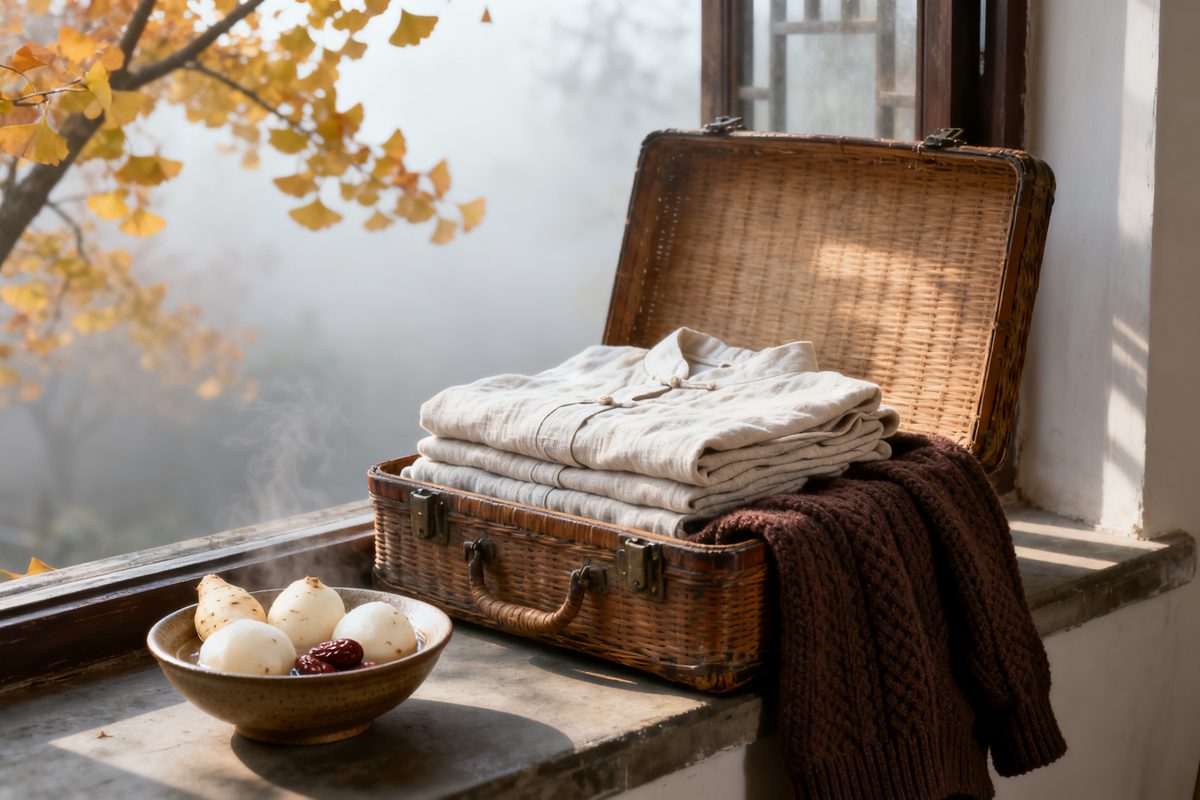
I finally did what my mom told me. Summer clothes washed and folded into a box. The mat wiped dry and rolled up. Plastic sandals swapped for cotton slippers.
It sounds trivial, but doing it has a strange ceremonial feeling — you're saying goodbye to a season. There's a practical bonus too: with only this season's clothes left in the closet, the burden of choosing shrinks. No more standing there in the morning deciding between a T-shirt and a sweater. A winter closet is just winter.
By the way, decluttering has swept the West for a decade — Marie Kondo's book sold tens of millions of copies. But open a Chinese almanac and the logic has been written into the solar terms all along. We never called it decluttering. We called it living with the season. The home changes with each term, twenty-four times a year, and the body changes with the home.
Layer two: gather your schedule
The Yellow Emperor's Classic of Internal Medicine says that in the three months of autumn, one should "lie down early and rise early, keeping with the roosters." Plain translation: the sky darkens earlier, so sleep earlier.
After Cold Dew, the energy of the world after nine at night is gathering energy. Intense exercise at that hour, sweating hard — that's working directly against the season. Sweat is yang; autumn wants you to keep your yang, and you insist on spilling it.
So I moved my night runs to the morning (I've managed about half the days), and evenings became walks. Walking barely registers on a fitness tracker, but it might be the most underrated autumn exercise there is: slow, but not stagnant. Gathered, but not dead.
Layer three: gather your plate
"Sticking on autumn fat" is often read as an invitation to eat unlimited meat. The more precise version: the direction of eating turns from "clearing" to "moistening."
Summer meant mung beans, winter melon, bitter melon — all to beat the heat. Past Cold Dew, that's picking a fight with your own body. What takes over:
- Chinese yam. So mild it has no personality, which is its personality. Steamed, or in congee. An old friend of weak stomachs.
- Lily bulbs and snow fungus. They moisten the lungs. Autumn is dry, and the lungs feel it first.
- Lotus seeds. They settle the heart. In a season of gathering, even the heart gathers a little.
- Pears. Stewed with rock sugar — a northern folk remedy passed down generations.
- Eat less: chili (it disperses — the opposite of gathering) and anything iced (your stomach keeps score).
My mom's version is simpler: after Cold Dew, the mung bean soup vanishes from the kitchen and yams and dates start appearing in the congee. Nobody announces it. The menu just changes. That's what a solar term is — you don't have to understand it. You just follow.
Layer three and a half: gather your mind
The hardest layer.
Plans made in spring are pretty much decided by October. With three months left in the year, a lot of people start to panic: so much left undone.
But watch the farmers in October. They don't panic. Not because they're zen — because they know this season's harvest is already settled, and the next task is letting the land rest. In northeast China they call it "catting the winter" — curling up like a cat until spring.
I think these four characters are wildly underrated: every grain into the barn. The harvest is in, the barn is closed, the season is finished. Whatever didn't ripen, whatever rotted in the field — turn it under. It becomes next year's fertilizer. Every year the same. Nobody argues with the land.
Turning your unfinished things under as fertilizer — that's what I most want to learn this October.
A Summer, Folded Into a Box
That night I folded my summer clothes, one by one. Some were very old — T-shirts with loose collars, shorts washed nearly white. Throw them out? Keep them?
In the end, all of them went into the box, up on the top shelf of the closet.
When I got to the white linen shirt I wore to the beach, I remembered the afternoon I wore it — the strong sun, the warm wind, a friend laughing beside me. That moment won't come again, but the shirt is still here. Next June I'll open the box, and it will still carry the faint camphor smell of this October.
I remembered how, when I was little, my grandmother would sun the quilts, roll up the mats, and pickle a jar of potherb mustard at exactly this time every year. She couldn't read. She couldn't have written the word "converge." But every year she performed it, precisely.
I've read a lot of books since, gone a lot of places, learned to check the weather app to tell me tomorrow's temperature. But "tomorrow's high" and "time to gather in" are two different kinds of knowledge. One is information. The other is rhythm.
Everyone has a forecast. Rhythm has to be handed to you by someone.
Cold Dew. The cold is truly coming. May you gather in what needs gathering — and if you can't manage all of it, manage one thing. Tonight, for example: half an hour earlier to bed.
Three questions for you:
- How many summer things are still hanging in your closet right now?
- That thing you started in spring — how is it going? If it didn't work out, can you let it go into the barn?
- When was the last time you went to sleep at 9:30?