Summer Solstice: My Mom Said Your Fire Is Trapped Inside
Blisters in my mouth, can't sleep at night, irritable all day. My mom said it's "heart fire." An ordinary person tries living by the seasons for a few days and discovers the ancient wisdom isn't mysticism at all.
Today is the Summer Solstice.
When I woke up this morning, it was already bright outside. My phone calendar told me: Summer Solstice today. The longest day, the shortest night.
I stayed in bed scrolling for a while and saw someone post about how the Summer Solstice is the time to "nourish the heart." Nourish the heart? I looked into it. They said summer belongs to fire, which corresponds to the heart among the five organs. The solstice is when yang energy peaks, and if you don't take care of it now, you'll have problems by autumn.
Honestly, I used to scroll right past this kind of thing. But lately I haven't been feeling great — can't sleep at night, irritable during the day, dry lips, two blisters in my mouth.
When I video-called my mom, I mentioned it. She said, "You've got internal heat. Heart fire."
My mom isn't a doctor. But she grew up in the countryside and has a kind of folk intuition about these things. She said, "Around the solstice, don't drink anything iced. Don't blast the AC too much. Drink some sour plum soup. Go to bed early."
I didn't take her seriously at first. Later I realized that what she was saying was almost word for word what the Huangdi Neijing — the ancient medical text — says. Wisdom from thousands of years ago, boiled down by my mom into plain, simple sentences.
A Story About "Heart Fire"
I looked into it, and the Chinese medicine concept of "heart fire" isn't nonsense at all.
The Huangdi Neijing says: "The three months of summer are called the season of flourishing. Heaven and earth mingle, all things bloom and bear fruit." It means summer is when the energies of heaven and earth intermingle and everything grows abundantly. Your body's yang energy is also at its peak, pushing outward, which is why you feel hot, sweat easily, and get irritable.
But here's the problem: our lifestyle is completely different from ancient people's.
In the old days, no AC. They used fans, well water, bamboo mats, ventilation — all natural cooling. The body was hot, but the heat could dissipate freely.
Now? It's 35°C outside, AC at 22°C inside. Going in and out, your body's temperature regulation gets confused. Your pores are supposed to be open, but they get frozen shut. The heat can't get out, so it gets trapped — Chinese medicine calls this "cold wrapping fire."
A friend of mine spent almost every day last summer in air-conditioned rooms with an iced coffee permanently in hand. By August: sore throat, then mouth ulcers, then her whole system just crashed. She went to see a Chinese medicine doctor. He took her pulse and said: "All your fire is trapped inside. It can't get out."
He gave her a simple suggestion: a cup of ginger-date tea in the morning, a cup of sour plum soup in the afternoon. Warm the stomach in the morning, gather the fire back in the afternoon. She did this for two weeks. The ulcers healed. She wasn't so irritable anymore.
She told me later: "The craziest part is, I used to think drinking warm things in summer was insane. But after I started, I actually felt better."
What Should You Actually Do at the Solstice?
I looked up some information, asked my mom, and pieced together a few things:
First: don't drink iced things.
This is probably the hardest one. Who doesn't want ice-cold cola, iced beer, iced milk tea in summer? But Chinese medicine says that in summer, your yang energy is at the surface of your body, which means your spleen and stomach are actually weak and cold inside. Drinking iced things is like pouring cold water on an already fragile digestive system.
My mom said when she was a kid, they drank cooled boiled water, or sour plum soup served at room temperature — never iced. Mung bean soup was room temperature too.
I tried it for three days. Switched to room-temperature water. Honestly, at first I really wasn't used to it. It felt like it "wasn't refreshing enough." But after three days, the blisters in my mouth actually disappeared. I don't know if it was a coincidence. I kept going for another week, and I wasn't so restless at night. Fell asleep faster, too.
I can't say all of this was because I stopped drinking ice water. But my body was definitely moving in the right direction.
Second: take a nap.
Around the solstice, the days are long and nights short, so your sleep naturally decreases. Chinese medicine talks about "zi-wu sleep" — sleeping during the zi hour (midnight) and the wu hour (noon). Noon is when the heart meridian is active. A short rest at noon is genuinely good for your heart.
I never used to nap. Felt like a waste of time. Then I tried resting my head on my desk for fifteen minutes at noon — didn't need to actually fall asleep, just close my eyes — and my afternoons were noticeably better.
I once talked about this with an older practitioner who's been studying these things for years. He said noon is when yang energy reaches its daily peak, and after noon it starts to recede. "Being still at the peak of yang is like steadying yourself at the crest of a wave — so you don't get swept away."
I think he makes a good point, even if I'm not entirely sure what he means by "yang energy."
Third: eat bitter things.
There's a saying: "Bitter in summer beats any tonic." Bitter melon, lotus plumule, green tea — these are cooling and bitter, which clears heart fire.
My mom makes bitter melon soup every summer. As a kid I resisted it fiercely. It was so bitter. Now I'm used to it. I even kind of like that taste where the bitterness gives way to sweetness.
A friend once said, "Bitterness is the only taste you have to learn." Sweet, sour, salty — those come naturally. Bitter takes time. Like a lot of truths in life. You don't understand them as a child. They come to you later.
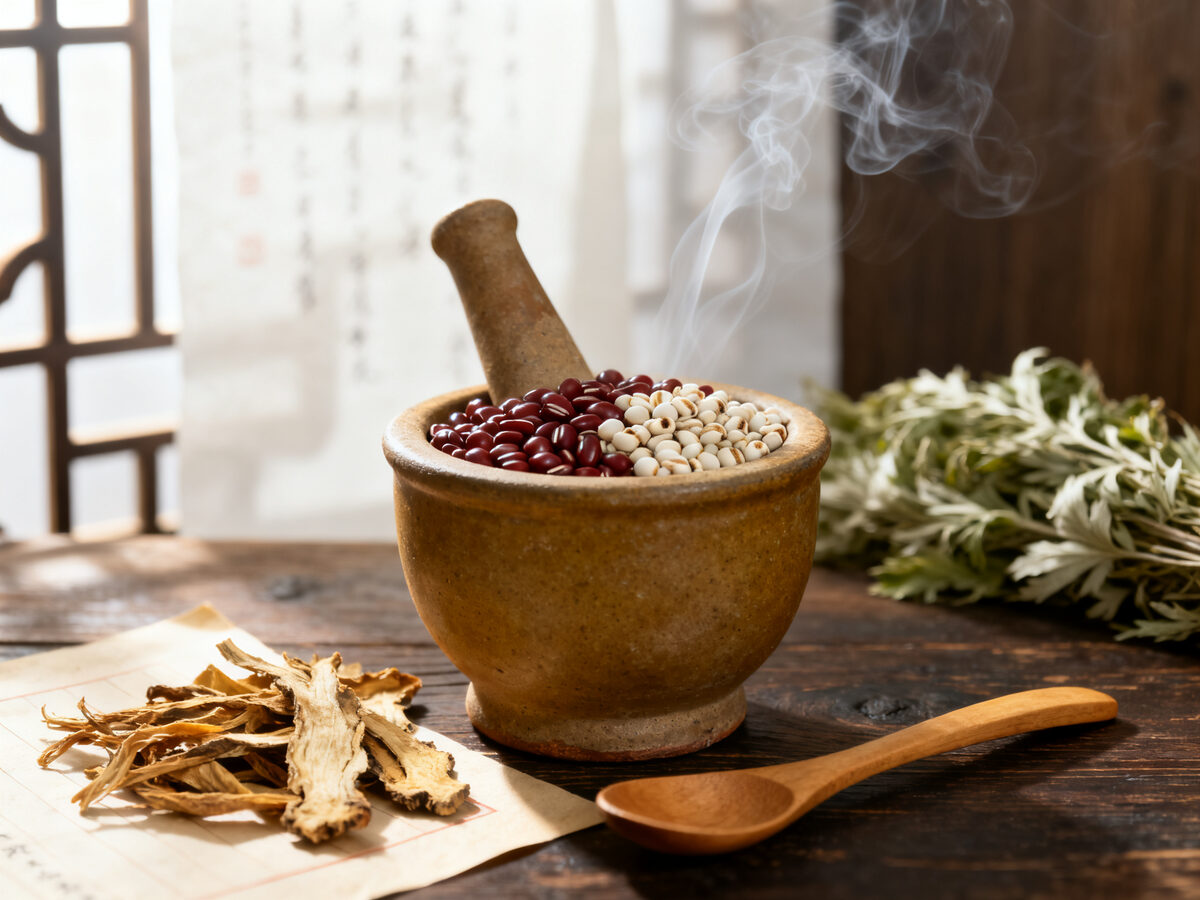
Lotus plumule tea is good too. It's that tiny green sprout in the center of a lotus seed. Very small. Steeped in hot water, it tastes slightly bitter, but after you swallow, there's a sweet aftertaste that lingers. My mom says it "enters the heart meridian" and specifically clears heart fire.
Fourth: don't overdo the cooling.
You can use AC, just don't set it too low, and don't point it directly at yourself. Don't jump into a cold shower right after sweating. These are all common sense. But they're hard to follow because summer is just so hot.
The Summer Solstice Sour Plum Soup
Back to the sour plum soup.
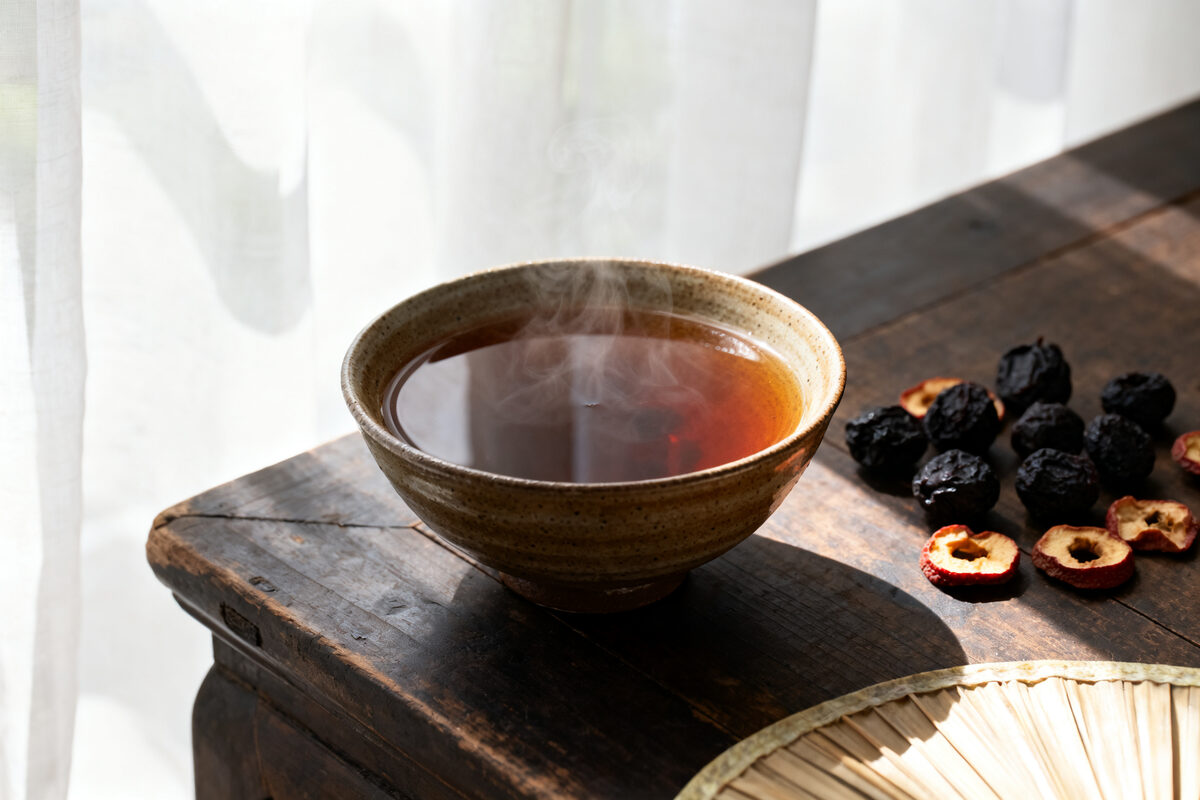
My mom taught me a simple recipe: smoked plum, hawthorn, licorice root, rock sugar, boiled in water for forty minutes. The plum generates fluids and quenches thirst, the hawthorn aids digestion, the licorice harmonizes.
It's not a secret recipe — you can find it everywhere online. But homemade sour plum soup tastes completely different from the bottled stuff at the supermarket. Homemade is softer, gentler. The sourness carries a hint of sweetness, and after you drink it, your mouth keeps producing saliva.
On the day of the solstice, I made a pot. Set it on the table to cool. No ice.
I also looked into it and found that the ancients had their own solstice traditions. Not "wellness packages" or anything like that — they ate noodles. There's a northern saying: "Dumplings at the Winter Solstice, noodles at the Summer Solstice." Around the solstice, the new wheat is just harvested. Eating a bowl of fresh noodles is a way of following the season.
My mom said when she was a kid, they'd have cold noodles on the solstice. The noodles are boiled, rinsed in cool water, then topped with cucumber shreds, sesame paste, and vinegar. Not chilled noodles — just naturally cool ones.
"It's nothing fancy," she said. "It's just eating what's in season."
In season. Those two words sound almost luxurious now. We can buy anything, eat anything, any time of year. We've forgotten what "in season" means.
I'm Not Writing a Health Blog
Honestly, I've been hesitating while writing this.
I'm afraid it'll read like one of those wellness blogs with "10 Summer Health Tips You Didn't Know." That's not what I want to do.
I just think the ancient Chinese had a kind of wisdom about "living with the seasons" that we've lost.
The Summer Solstice is the Summer Solstice. It's not a holiday to "check off." It's a marker — a point in the rhythm of the heavens and earth — reminding you: you are part of nature. Your body is changing with the seasons too.
The biggest problem modern people have, maybe, is thinking we can separate ourselves from nature. AC keeps the room at 20°C forever. The fridge gives you ice anytime. Electric lights turn night into day.
But your body remembers. It knows what season it is. It knows when to sweat, when to rest, when to be still.
We just stopped listening.
I once read that ancient practitioners nourished the liver in spring, the heart in summer, the lungs in autumn, the kidneys in winter. Not because they believed in esoteric theories, but because they carefully observed their bodies and noticed that each season really does feel different.
If "wellness" has one simplest principle, maybe it's this: don't fight your own body.
Written at Sunset
In the evening, I went for a walk downstairs.
The Summer Solstice sun sets late. It was nearly seven and still bright. The old people in my neighborhood were sitting in the shade, fanning themselves. One old man sat on a stone bench with a thermos of tea, doing absolutely nothing, just watching people come and go.
I suddenly felt like he understood life better than I did.
Every day I'm at my computer, worrying about this and that, planning tomorrow, the day after. He plans nothing. He just sits there, drinks tea, enjoys the cool shade.
The Summer Solstice. The day when yang energy is at its strongest. A good day to think about nothing. To just sit and feel the breeze.
Today has the longest daylight of the year. Maybe we should save a little more time for the things that don't seem important.
Like a bowl of cooled sour plum soup. Like taking a walk before the sun goes down. Like doing nothing, just sitting.
The ancients said, "A calm heart naturally cools the body." As a kid, I thought that was just a saying. Now I think it might actually be true.
Three questions for you:
- In summer, are you an AC person, or do you prefer the natural breeze?
- Have you ever felt "not sick but just not right"? What did you do about it?
- When was the last time you sat and did absolutely nothing?