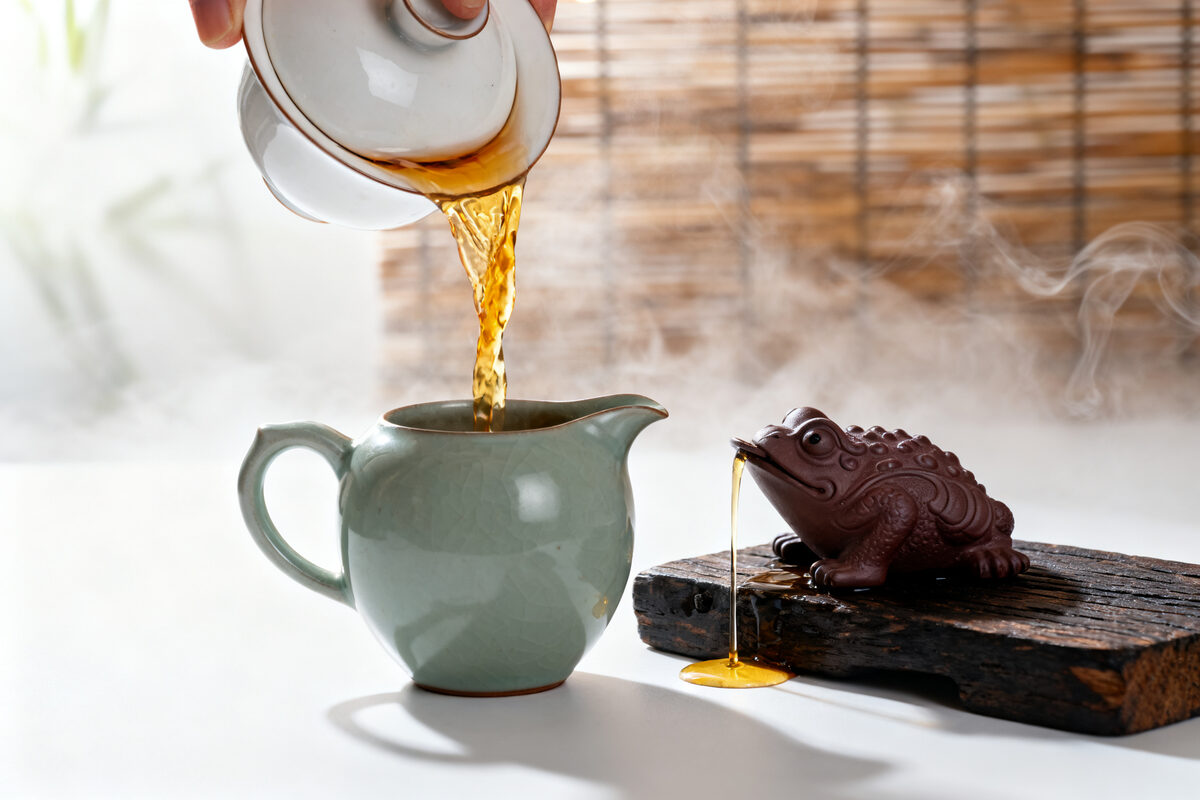
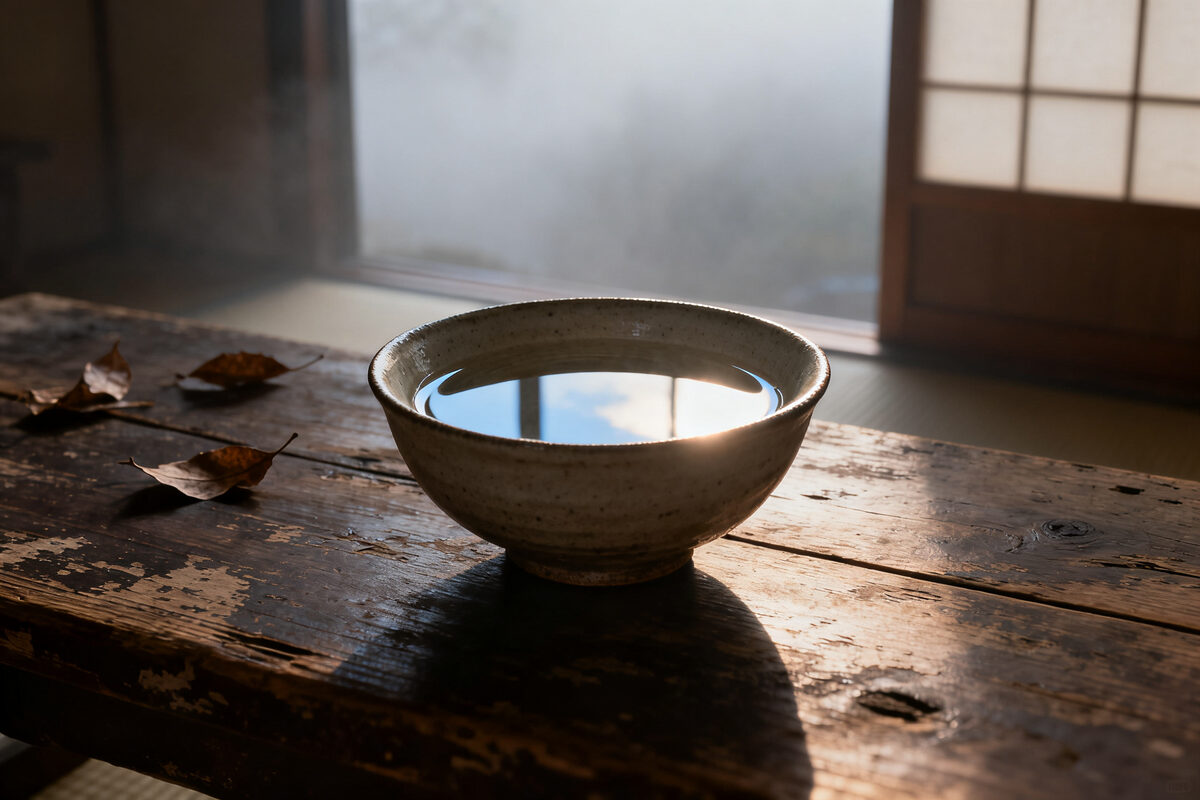
Foreigners Pay $200 to Learn Tea Ceremony. The First Lesson Is Waiting for the Water
A tea workshop in New York, two hundred dollars for two hours, and the first lesson is watching a kettle boil — ten minutes, no phones. It reminded me of grandpa's enamel mug, and the sound Su Dongpo listened for a thousand years ago. What $200 buys has been on the stove all along.
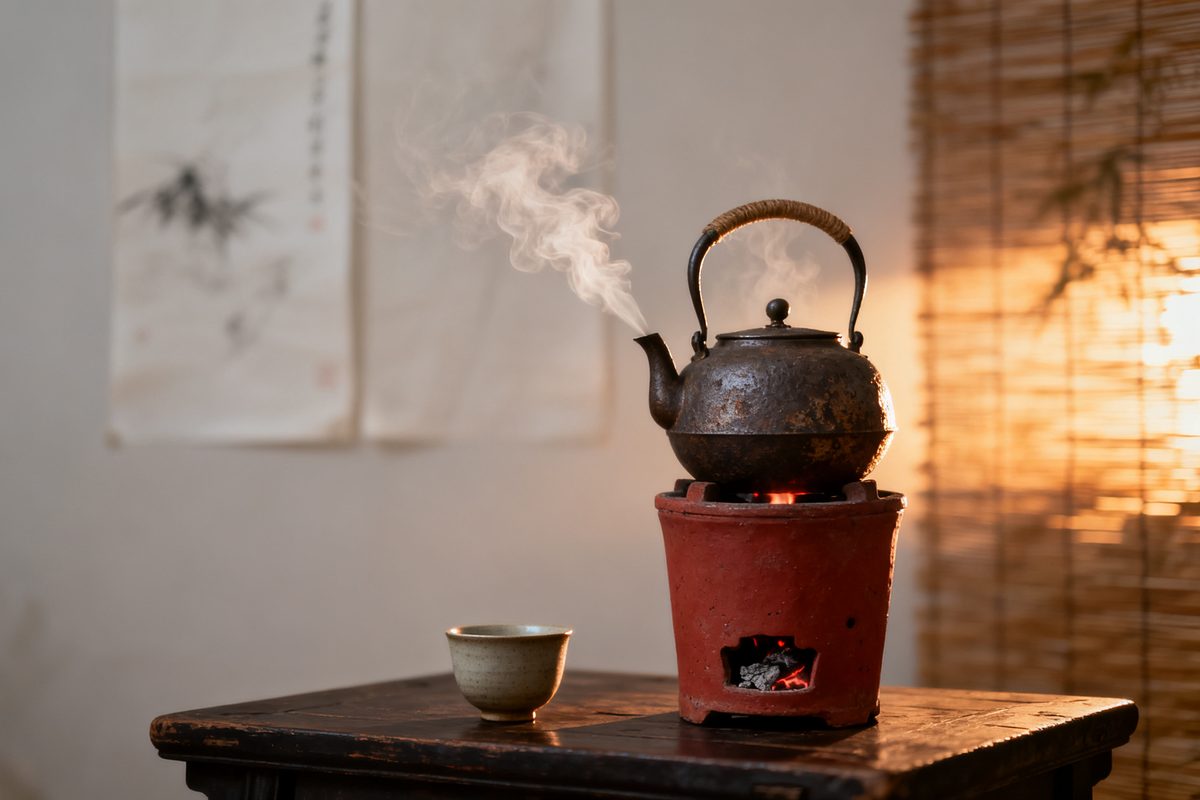
Foreigners Pay $200 to Learn Tea Ceremony. The First Lesson Is Waiting for Water to Boil
A few nights ago I was scrolling through videos and landed on one filmed in New York. A tea ceremony workshop, two hours, two hundred dollars. Seven or eight people in the room, every skin color, one pot and one cup in front of each.
I assumed the teacher would start with the history of tea, or how to hold the tea scoop. Neither.
The first lesson was this: wait for the water to boil.
For the next ten minutes, the teacher said, you do nothing. No phones, no talking. Just watch the water.
The camera moved across their faces. One person squirmed. Someone sneaked a hand toward a pocket. A man in a suit sighed at minute three, like a deflated kid.
The top comment was from a Chinese viewer: "When I boil water at home I never wait. Three minutes in the microwave." Someone replied: "Then what you're drinking isn't tea. It's hot water."
I laughed at my screen. Then the laugh slowly went somewhere else.
Grandpa's Enamel Mug
I thought of my grandfather.
He had a white enamel mug, the red characters for "Labor Is Most Glorious" half chipped away. Inside, jasmine tea, always, brewed so strong it was bitter, leaves filling half the mug. He sat on a small stool by the door, mug in hand, and an afternoon would pass.
Nobody would say my grandfather was "practicing the way of tea." He would never say it himself. But picture it: one person, one mug of tea, one afternoon, looking at nothing, needing nothing to look at.
Isn't that exactly what the two hundred dollars buys?
And my father. Thermos with goji berries and chrysanthemum, the lid twisting open with a little "pop," steam fogging his glasses. He doesn't think of it as culture either. It's just water. It's just the day.
The Chinese never enshrined tea. But tea never left. Then it crossed the ocean, and someone else enshrined it.
Waiting for the Water Is the Hardest Part
Later I looked it up. The ancients treated "waiting for the water" as the hardest step of all.
It has a name: hou tang — tending the boil.
A Ming dynasty book on tea, Chashu by Xu Cishu, says it plainly: tending the boil is the hardest part. If the water isn't hot enough, the tea floats and gives nothing. Boil it too long and it's "old," dead. There is no number for this. It lives in your hands, your eyes, your ears.
Su Dongpo wrote about boiling water:
The crab eyes have passed, fish eyes rise, a pine-wind whistles faintly at the rim.
No thermometers then. You watched, you listened. The first tiny bubbles at the bottom, dense and small — "crab eyes." They grow — "fish eyes." Then the sound at the surface changes, like wind moving through a distant pine forest — "pine wind."
At the sound of pine wind, the water is exactly right.
The first time I understood that line, I sat still for a long while. So waiting for a kettle could be this: your whole attention called out, tracking one sound as it changes. In that moment you are not "waiting." You are present.
People a thousand years ago didn't know the word dopamine. But they knew where to put their attention.
What the $200 Buys
There's an interview line from that video I keep thinking about.
A woman who took the class said: "That was the first fifteen minutes all week I didn't look at my phone."
She said it calmly. Not moved, not profound. Like saying the subway was crowded.
Two hundred dollars, two hours, and what you buy isn't tea knowledge. It's permission — fifteen minutes without your phone, without guilt.
What our generation lost isn't tea. It's the ability to wait. Wait for water, wait for soup, wait two weeks for a letter, wait for someone to appear downstairs. Now everything is instant: delivery in thirty minutes, videos fifteen seconds, replies in seconds. Until "waiting" became a skill you have to pay a class to relearn.
So they go learn tea ceremony, baduanjin, sitting meditation. They call it Chinamaxxing — chasing after the life Chinese people live. While we ourselves lost that life, and watch strangers pick it back up on our screens.
There's a strange taste in this. Not quite irony. Something more like coming home.
Ichi-go Ichi-e Came From Here
Many people know the Japanese tea phrase ichi-go ichi-e — one time, one meeting. Every tea gathering happens once in a lifetime, so give it your whole heart.
A beautiful idea. But few know what's pressed underneath it: Song dynasty whisked tea, matcha, the tea whisk — all of it came from China. The Song people ground tea to powder, poured, whisked. That ritual traveled east in the luggage of monks, and in Japan it was polished by generations until it shone, until it became "the Way."
In China, the line broke. Dynasties changed, loose-leaf steeping replaced whisked tea — faster, and looser. Later still, it became grandpa's enamel mug and dad's thermos.
Sometimes I wonder: the thing leaves, gets enshrined elsewhere, and the people who stayed got casual about it — which is better?
I honestly don't know. The enshrined version can survive seven hundred years, but risks becoming a specimen. The casual version stays alive, but can scatter — until it's only about quenching thirst.
Maybe the best spot is in between: like grandpa — not a "Way," but a day. Ritual isn't a performance for others. It's a way to make an ordinary stretch of time worth taking seriously.
One Rule I Set for Myself
This year I made a rule: one evening a week, I brew tea.
Not practice — I don't dare use that word. Just a standing appointment with waiting.
The water takes its time; rush it and it goes "old." The leaves need a moment to unfurl — the first two steeps are the tea waking up. The cup is too hot to drink. More waiting.
In thirty minutes you can't do much. But for those thirty minutes I belong to no app. My fingers have nowhere to go, so they come back and hold the cup.
Honestly, it was hard at first. My hand kept drifting toward the phone. It would find the cold glass and remember: not tonight. It took three or four evenings before I settled.
And after I settled, I heard the pine wind.
A very faint sound, right before the boil, like rain falling into a distant forest. The room has to be quiet enough, and you too, to hear it.
The sound Su Dongpo heard a thousand years ago, and the one I heard tonight — the same sound.
Tonight
Before writing this, I boiled another kettle.
I tried to do nothing. No phone, no pacing. Just standing by the stove, watching water.
At first my mind was loud — unanswered messages, Monday's errands. The water sat perfectly still, so I sat still too. After a while, the first chain of small bubbles rose.
Crab eyes.
I stood a little longer. The bubbles grew, and the sound arrived.
For one moment my mind was quiet. Not empty-quiet — full-quiet. Full of attention, with no room left for anything else.
It turns out what two hundred dollars buys has been on the stove all along.
Three questions, for you, and for me:
- When was the last time you did nothing but wait for one thing?
- Is there something "slow" in your home — something that forces you to slow down?
- If you had thirty minutes and no phone, what would you do with them?