Paving the Ground with Gold: How Far One Man Went to Invite the Buddha to Stay
Anathapindika, the wealthy merchant who paved an entire garden with gold bricks to invite the Buddha to stay. A story about sincerity, persistence, and what it truly means to give.
I was flipping through some sutras today and came across the story of Anathapindika again.
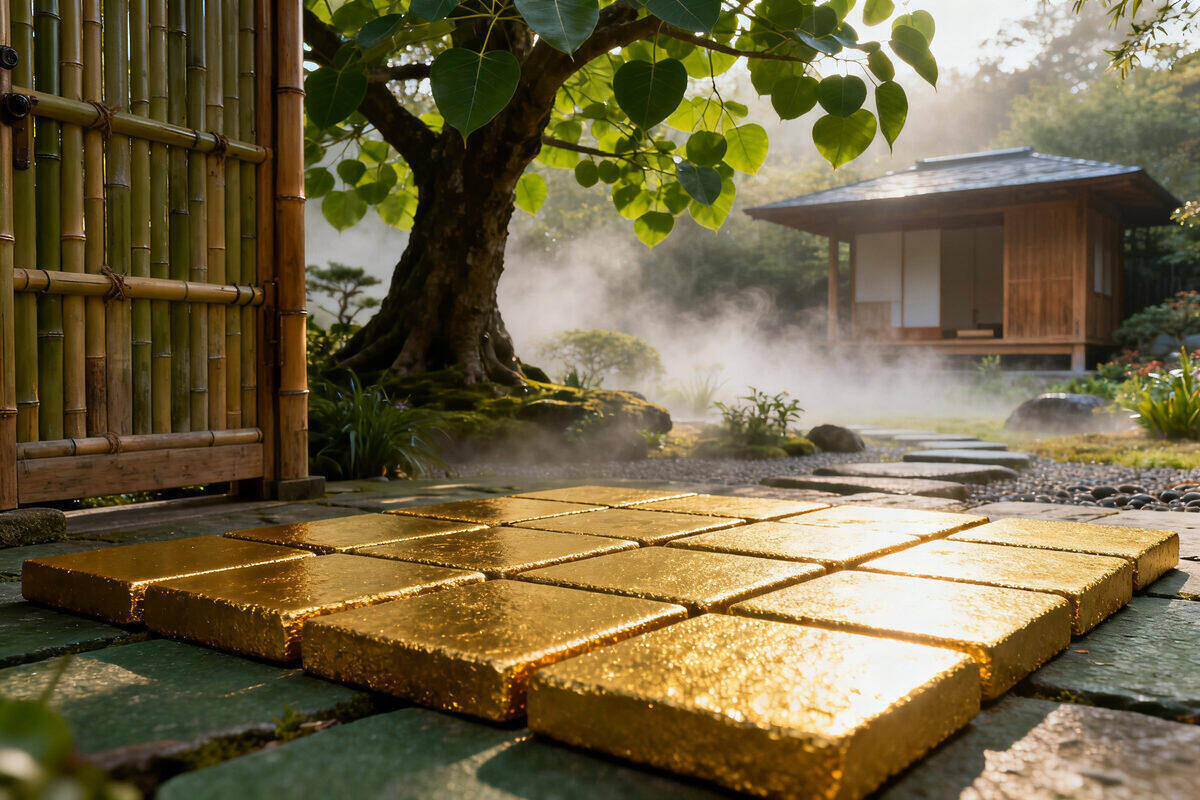
It's funny — I've read this story many times, but every time, something about it catches me. Maybe it's the image: a white-haired old man, having his servants cart in gold bricks, one load after another, spreading them across a prince's garden. Brick by brick, covering the entire ground.
His name was Sudatta. People called him Anathapindika — "feeder of the orphaned and helpless" — because he had this habit. Whenever he saw someone in need, someone with no one to turn to, he couldn't help but step in. He was one of the wealthiest merchants in Sravasti, but unlike most wealthy people, he didn't like hoarding. He liked giving.
A Seed
The story really begins with a visit.
Sudatta was in Rajagaha on business and stayed at a friend's house. He noticed everyone was busy — sweeping the courtyard, arranging flowers, laying out fresh bedding. He asked his friend: Are you preparing for a wedding? Is the king coming?
His friend said no. The Buddha was coming tomorrow.
Sudatta had never met the Buddha. He hadn't heard much about the Dharma. But that night, he couldn't sleep. In the middle of the night, he got up and went outside for a walk. It was quiet. Moonlight on the road. Without thinking about it, he found himself walking toward the bamboo grove on the edge of town — the place where the Buddha stayed.
The sutras say that when he reached the entrance, he saw a figure walking slowly in meditation under the moonlight. There was something unexplainably peaceful about that person. Sudatta later recalled that he just stood there watching, and suddenly his heart felt very still.
That person was the Buddha.
When I read this part, I often wonder — have I ever felt something like that? Where no words have been exchanged yet, but just seeing someone, or stepping into a certain place, your heart goes quiet. Maybe it was the first time I walked into a temple as a child. Maybe it was some early morning on a mountain path, walking and walking, and suddenly feeling like everything could be let go.
Sudatta and the Buddha talked through the night. The sutras don't say exactly what they discussed. We only know that by morning, Sudatta had made a decision: I will build a place for the Buddha in my hometown.
Gold Bricks on the Ground
Back in Sravasti, Sudatta started looking for land.
He needed something big enough, quiet enough, not too far from the city. After searching around, he settled on Prince Jeta's garden. Lush with trees, with water and pavilions — a beautiful spot.
He went to negotiate with the prince.
The prince didn't really want to sell. A garden is a garden — there's sentiment attached. But Sudatta persisted, and the prince, growing tired of the pestering, half-jokingly said: Cover the entire garden with gold bricks, and it's yours.
The prince's meaning was clear — it was impossible. The garden was enormous. Gold bricks covering all of it? How much money would that take?
But Sudatta took him seriously.
He really had gold bricks carted over, spreading them across the garden, one by one. The prince stood watching. At first he found it amusing. Then he stopped smiling. He watched this white-haired old merchant bending over to direct the work himself, sweating, his eyes shining with a bright, steady light.
The prince asked him: Why do you have to buy this land?
Sudatta said: I want to invite the Buddha to stay. I want more people to hear what he has to say.
The prince was silent for a long time.
Finally he said: Enough. No need to buy the land. The parts you've already covered with gold — those are yours. The parts you haven't reached, those trees — I offer them. This garden belongs to both of us.
This place came to be known as "Jeta's Grove and Anathapindika's Monastery." Jeta's trees, Anathapindika's garden.
That opening line in the Diamond Sutra — "Thus have I heard. At one time the Buddha was staying in the Jeta Grove in Sravasti" — this is that place.
A Conversation About "Worth It"
Building the monastery wasn't smooth sailing.
The sutras record that halfway through construction, many people didn't understand. Some said: You're spending all this money building a temple — wouldn't it be better to give it to the poor? Others said: You've been brainwashed by that ascetic. Even: You've gone senile.
Sudatta didn't argue. He just kept building.
One day, his accountant couldn't hold back anymore: Master, how much have you spent on this monastery so far?
Sudatta thought for a moment and said something that stayed with me:
"If you ask me how much I've spent, I've lost count. But if you ask me whether it's worth it — even if I lost everything, it would be worth it."
I stopped reading at that line for a long time.
"Is it worth it?" — that seems to be a question we ask ourselves every day. Is spending this time worth it? Is doing this worth it? Is being with this person worth it?
Sudatta wasn't calculating a business deal. He was responding to something deep inside. A voice telling him: this is right.
A Man and a Garden
The monastery was finished. The Buddha arrived with his disciples.
Sudatta stood at the entrance to welcome them. He wasn't wearing fine clothes — just his everyday robe. He didn't kneel or bow, didn't offer flowery praise. He just stood there, watching the Buddha walk in, and smiled.
The sutras say that when the Buddha entered the monastery, Sudatta's wife stood behind him, quietly crying. Not because she regretted the money, but because she had never seen her husband this happy.
After the monastery was built, Sudatta didn't transform into some great patron or celebrated benefactor. He was still the same man who liked helping people. He still walked up to strangers in need on the street, still woke up in the middle of the night thinking about what good he could do tomorrow.
The only difference was that he now went to the monastery regularly to listen to the Buddha. Sometimes he'd come home and sit in his courtyard, lost in thought.
A servant asked him: Master, what are you thinking about?
Sudatta said: I'm thinking about something the Buddha said today. "Generosity is not about how much you give. It's about what's in your heart when you give."
To Give
Many years later, Sudatta lost his fortune.
It happens. Businesses fail. Wealth disperses. Eventually, Sudatta moved into a small hut beside the monastery. He didn't complain. He didn't go around telling people how generous he'd once been.
One day, the Buddha was teaching at the monastery, and Sudatta came. He wore a faded, washed-out robe and sat in the very back.
Someone recognized him and whispered: Isn't that Anathapindika? The wealthy merchant from before?
Sudatta heard, but he didn't care. He just sat quietly, listening.
After the talk, the Buddha walked over to Sudatta specifically and said a few words. Essentially: You didn't build this monastery with gold bricks. You built it with your heart. Gold bricks will scatter, but your heart won't. The merit of generosity is not in the object — it's in the mind.
Sudatta heard this, smiled, and said nothing.
What I'm Thinking
Reading this story, I keep wondering: why did Sudatta do it?
He wasn't a fool. He was a shrewd businessman who'd spent decades in trade. He knew exactly what paving a garden with gold meant.
But some things aren't calculated.
Maybe he just felt he'd found something truly worth doing. Like when you're walking down a street and suddenly see a tree in full bloom, and you stop and stand there, looking at it for a long time. People walk past you, and you don't care. You just want to stand there.
Sudatta wanted to build a monastery, invite the Buddha to stay, so more people could hear something genuinely useful. Was it worth it? He thought so. That was enough.
Sometimes I hold my mala beads and think: are the sutras I chant, the sitting I do, the stories I read — is all of that also "paving the ground"? Brick by brick, not knowing where it leads, not knowing what it'll look like in the end. But the act itself is the meaning.
Maybe practice is like that. Not waiting for a result. Just doing it, day after day. And one day, looking back, there's already a path beneath your feet.
Three questions I'm leaving with:
- Have I ever done something that others thought wasn't worth it, but I knew in my heart it was right?
- When I give, am I counting how much, or am I feeling the heart behind it?
- If one day I had nothing left, would I still believe my choices were worth it?