Feng Shui on My Desk: My Danish Colleague Learned It Before I Did
A new Danish colleague placed a rose quartz and a pothos on her desk — desk feng shui, she learned it from TikTok. I almost laughed. My mom told me all this when I set up my desk in elementary school. Sit solid, face open; keep the Bright Hall clear; left high, right low. Unpack these old rules, and almost every one maps onto modern environmental psychology.
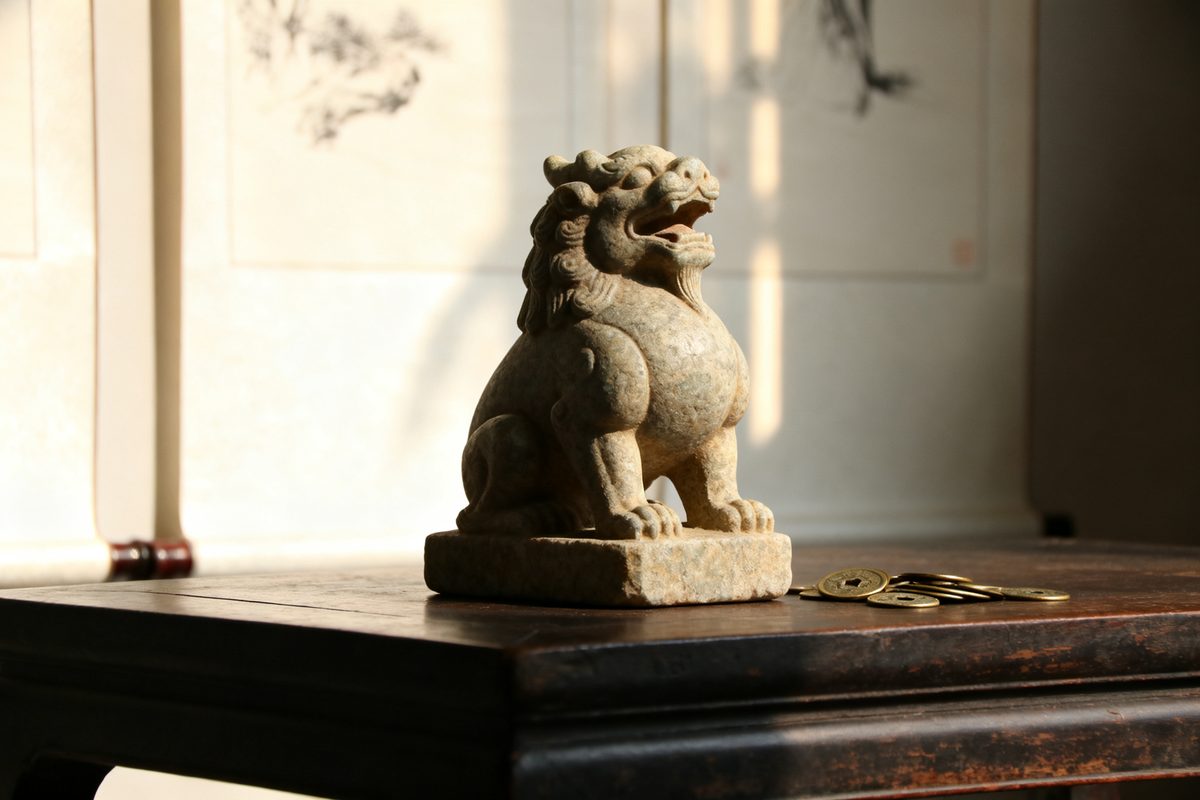
Last week a new colleague joined our office. She's Danish. On her second day, I noticed two new things on her desk: a rose quartz crystal and a small potted pothos. Placed carefully — the crystal on her left, the plant just behind her monitor.
I asked about it, and she was completely open: she'd learned it from TikTok. It's called desk feng shui. The videos said this arrangement reduces anxiety and attracts helpful people. She showed me one — hundreds of thousands of comments, mostly Westerners, seriously discussing which direction their desks should face.
I almost laughed. Then I didn't. Because my mom told me all this when she set up my desk in elementary school. And what she told me went a lot deeper than TikTok.
She asked me: you're Chinese, do you know this stuff?
When my new colleague asked, I actually got stuck.
Do I know it? Sure, my family observes these things. Do I understand it? Honestly, I'd never thought about why.
That weekend I went back to my parents' place, dug up the things my mom used to say, and checked some books. It turns out the Chinese have been thinking about how to place a desk for two thousand years. And when you unpack those two thousand years, almost every rule maps onto something in modern environmental psychology.
Start with four characters: sit solid, face open.
It means where you sit should be "solid" — a wall behind you, a bookshelf, a screen. Anything stable. And what you face should be "open" — clear space in front of the desk, not a wall, not a pile of clutter.
The old phrase for this is "a mountain at your back." Sounds mystical — backing, patrons, noble people who help you. But think about something completely ordinary: you're working, your back is to a hallway, people passing constantly, the back of your head completely exposed. Can you settle?
I couldn't. My old desk faced away from the corridor, and every time someone walked by — even mid-sentence, deep in writing — my body would flinch first. Not because I saw anything. I heard it, and my body reacted on its own. By the end of each day I was drained, and I assumed I just hated my job.
Later I learned psychology has a name for this: a stress response. The instinct to never leave your back exposed is written into our genes. Feng shui spelled this out two thousand years early: the back needs to be solid. As for why it's called "noble person luck" — think about it. A person with solid backing is calm. They move without panic. People find them reliable, and reliability attracts opportunities. Circle all the way around, and it's still the human heart.
The open space in front of your desk has a name: the Bright Hall
The second principle: keep the space directly in front of your desk clear. This space has a beautiful name — the Bright Hall.
The old saying goes: an open Bright Hall, an open future. Sounds like a fortune-cookie line. But look at what's actually in front of your desk. Mine had three delivery boxes, a stack of unfiled papers, and five tangled cables under the monitor stand. Every morning when I sat down, that pile was the first thing my eyes landed on.
During that stretch I always felt a tightness in my chest. I blamed the chair. A new chair didn't help. Then one day I moved the boxes out and cleared maybe thirty centimeters of open space in front of the desk. The moment I sat down, I felt it clearly: I could breathe.
Here's how I'd translate "an open future" now: the place your eyes rest every day is your psychological horizon. A person whose desk opens outward looks at far things. A person whose desk is walled in by clutter has a view that stops a foot away. Live like that long enough, and it changes something in you.
I'm not the only one. My Danish colleague said the day she cleared her desk following the TikTok video, it "felt like a new desk." I told her: exactly. The Chinese old phrase for this is sweeping out the old to make room for the new. You're more Chinese than you think.
Higher on the left, lower on the right
The third principle is the most vivid: left high, right low.
On your desk, things on the left can be tall — a lamp, a shelf, a plant. The right side stays low and clear. The ancients called the left the Azure Dragon position and the right the White Tiger position. "Better a dragon ten thousand feet tall than a tiger raising its head."
Anyone hearing that for the first time assumes it's pure mysticism. When I dug into it, I found a rather wonderful explanation: Chinese people, indoors, do things with the right hand — writing, using a mouse, pouring tea. If your right side is piled up, your range of motion gets compressed, and everything you do requires a detour. The left side sits idle anyway; tall things there never get in the way.
So "dragon high, tiger low," in plain speech, means: keep your working right side clear, use your idle left side. That's storage design. That's circulation planning. The ancients didn't call it ergonomics — they named it after a dragon and a tiger, because names like that are easy to remember and easy to pass down.
Two thousand years later, IKEA's storage guides say the same thing.
My own desk
So here's what I actually did with mine. Three things:
First, I asked admin for a seat with my back to a wall. If you can't move, don't worry — a tall broad-leafed plant behind you, or a low bookshelf, does much the same. The point is having something at your back, so your body can rest.
Second, I cleared thirty centimeters in front of the desk. Not tidied — cleared. Papers into drawers, cables into a organizer, only the thing I'm currently using stays out.
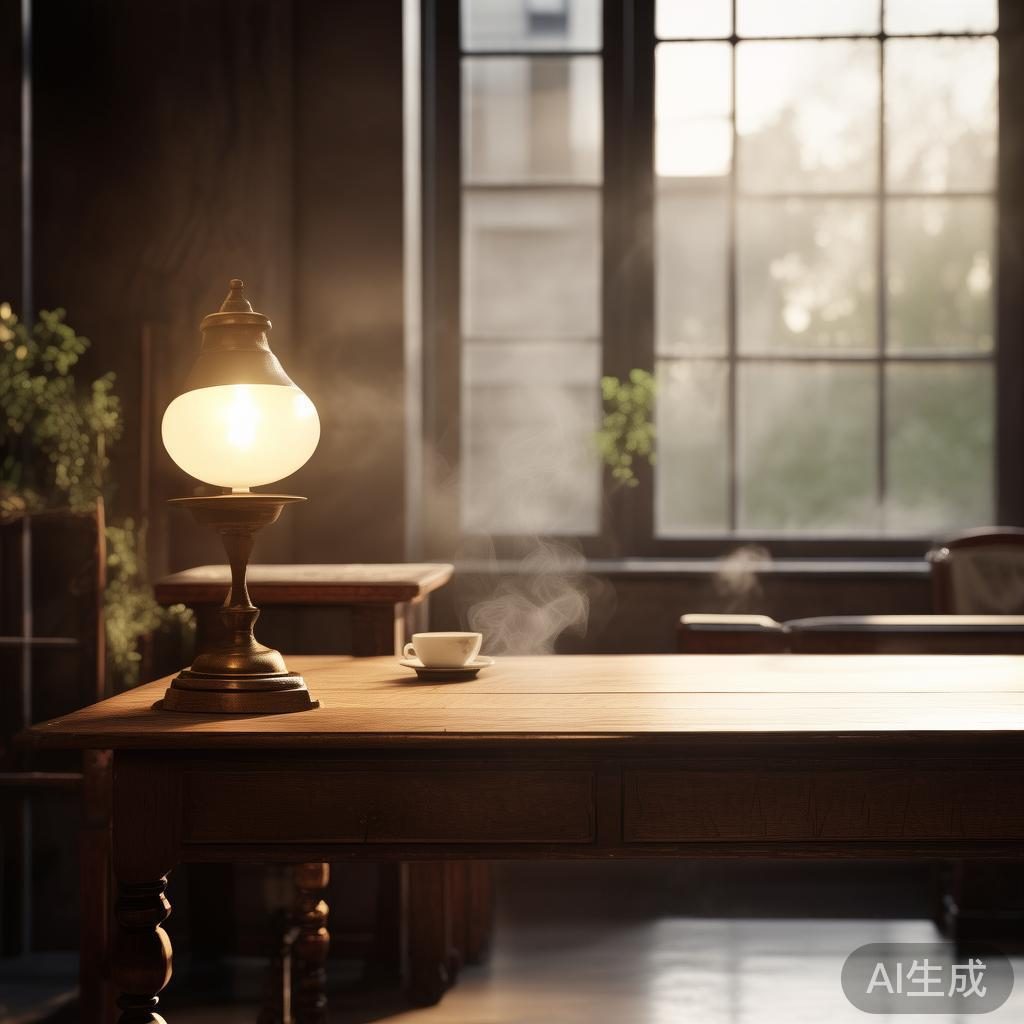
Third, the lamp moved to my left. Only my tea cup lives on the right now. The cup moves every day, and things that move should live where your hand naturally reaches.
After these three changes, the biggest difference in my desk is honestly just: fewer things. A colleague walking by said my desk looked "expensive" now. I laughed for a long time — feng shui books call this gathering qi, which roughly translates to: a clean desk just looks worth more than a cluttered one.
Promotion and riches? Honestly, no. A desk can't do your work for you, and feng shui doesn't have that feature.
But there is one small change. Before, when I got to the office and sat down, something in me clenched and I started firefighting. Now I sit down — open space ahead, solid wall behind — and I drink one sip of tea before I begin. That's it. One sip's worth of time.
One sip a day, three hundred-odd sips a year. My grandmother used to say a life is lived one mouthful at a time.
A desk is small, but it's yours
Writing this, I suddenly understood why my Danish colleague believes in it.
She's in a foreign country. The apartment is a landlord's, the desk belongs to the company, even the chair was assigned by admin. What she owns, what she has full authority over, is this one square foot of desktop. She places the crystal, sets the plant, angles the desk toward the light — and in that moment, this tiny territory is hers.
Maybe that's what Chinese feng shui has been saying for thousands of years: when you own nothing else, at least arrange this small space in front of you into something you love.
Dragon and tiger, mountain and Bright Hall — those are just names. The substance is: let the body sit secure, let the eyes see far, let the hands move freely.
Which way your desk faces doesn't matter much. What matters is which way you face, sitting there.
Three questions, for you, and for me:
- Your current seat — is your back solid or exposed? On the days you come home drained, has it been quietly working on you?
- What's directly in front of your desk: a wall, a pile of stuff, or open space? Have you ever chosen the first thing your eyes see each day?
- If you could change only one thing tomorrow — add a lamp on the left, or clear one stack on the right — which would you pick?