Su Dongpo and Foyin: Eight Winds Cannot Move Me, One Fart Crosses the River
Su Dongpo thought he was enlightened and wrote a poem declaring "the eight winds cannot move me." Foyin replied with two words: "Bullshit." He immediately crossed the river to confront his friend. This ancient story feels like it's about me.
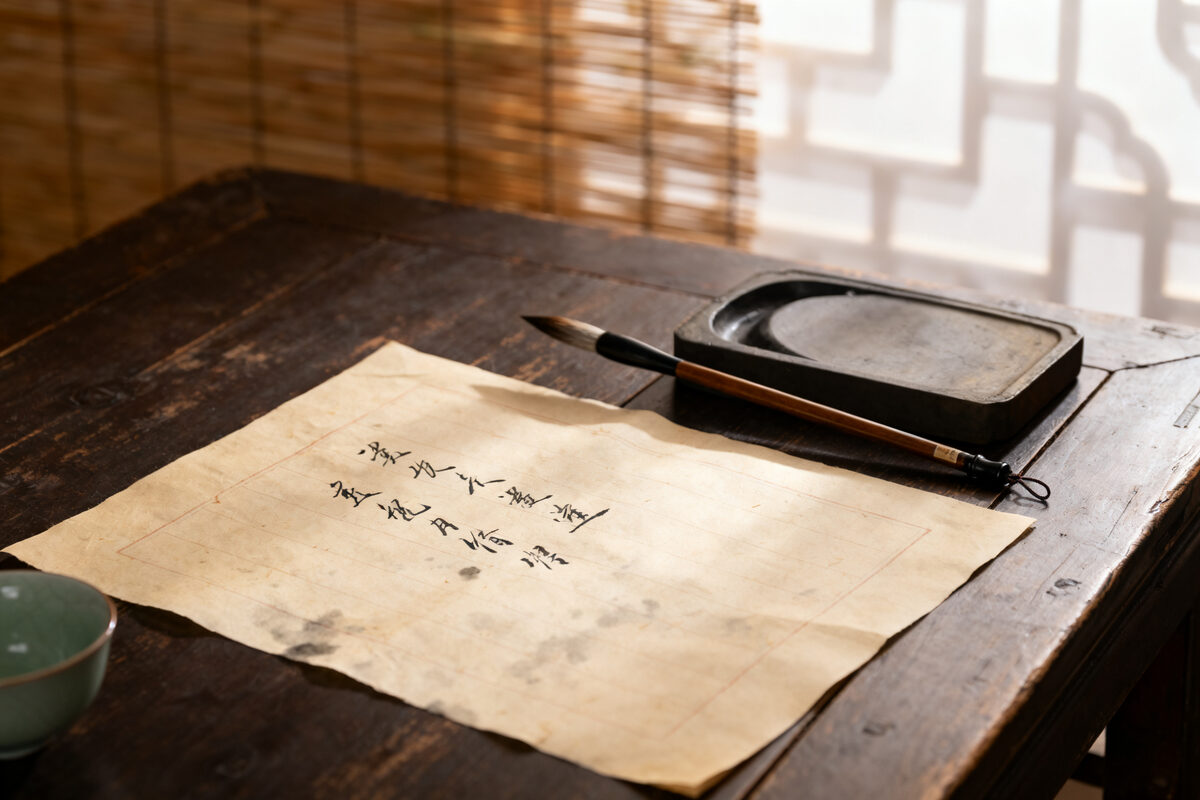
Su Dongpo and Foyin: Eight Winds Cannot Move Me, One Fart Crosses the River
I was flipping through a book today and came across that old story about Su Dongpo and Foyin again. I couldn't help but laugh.
Not because the story is funny — though it is — but because I saw myself in it. It's too familiar. Embarrassingly so.
A Su Shi Who Thought He Was Enlightened
It was during the time Su Dongpo was serving as an official in Guazhou. He had a good friend named Foyin, the abbot of Jinshan Temple. The two exchanged letters often — sometimes teasing each other, sometimes discussing Zen, sometimes just sending a poem without saying anything at all.
One day, Su Dongpo felt he had attained enlightenment.
Not the casual kind, like "nice weather today." He genuinely felt he understood. He wrote a gatha, copied it out carefully, and sent it to Foyin:
"I bow to the Honored One, whose radiant light illuminates the cosmos. The eight winds cannot move me. I sit upright like a purple-gold lotus."
To put it plainly: I pay homage to the Buddha, whose light shines everywhere. The eight worldly winds — praise and ridicule, honor and disgrace, gain and loss, pleasure and pain — can no longer sway me. I am like a purple-gold lotus flower, sitting perfectly still.
Honestly, it's a good poem. The spirit is there. The imagery works. When you say "the eight winds cannot move me," it just sounds rock solid.
Su Dongpo probably felt pretty good about it too. Maybe even a little proud.
Foyin Replied With Two Words
The messenger brought the poem to Jinshan Temple. Foyin opened it, read it, and smiled. Then he picked up his brush and wrote two words at the bottom:
"Fang pi." — "Bullshit."
That's it. Just those two words.
The messenger brought the note back. Su Dongpo opened it, and his face changed immediately.
Bullshit? You're calling my poem bullshit?
He stewed over it. I poured my heart into this poem. Every word chosen with care. Every line expressing the highest realization. And you give me two words? An insult?
He couldn't sit still. He ordered a boat and crossed the river to confront Foyin.
"Eight Winds Cannot Move Me, One Fart Crossed the River"
Su Dongpo arrived at Jinshan Temple fuming and headed straight for the abbot's quarters.
The door was shut.
He pushed it. It wouldn't budge. He looked down — a slip of paper was pasted on the door, in Foyin's handwriting:
"Eight winds cannot move me, yet one fart crossed the river."
Su Dongpo stood at the doorway, stunned.
And then — I imagine — he laughed.
What Are Those Eight Winds, Really?
When I first read this story, I just thought it was funny. Later I learned that the "eight winds" is a Buddhist concept referring to eight things that stir the human heart:
Praise — being complimented. Ridicule — being mocked. Slander — being defamed. Honor — being celebrated. Gain — getting something you want. Loss — losing something you had. Suffering — encountering pain. Pleasure — enjoying happiness.
These eight form a circle around us. When things go well, you feel immovable. When things go wrong, you tell yourself it's fine. But what about the moment you're genuinely provoked?
Su Dongpo declared the eight winds couldn't move him. But Foyin wrote two words, and he crossed a river to argue about it.
Two words of ridicule were enough to blow him across the Yangtze.
My Own "Eight Winds" Moments
Every time I read this story, I think of my own moments of sitting like a purple-gold lotus.
Like after meditation, when I feel calm and grounded. Then a family member says, "Why are you so slow today?" — and suddenly I'm not calm anymore.
Or after reading a good book, when I feel like I really understand impermanence. Then my phone screen cracks, and I'm upset for three days.
Or when I write something I'm fairly happy with. Then someone says, "It's too long," and I start doubting myself.
None of these are big things. But they show me something: what we call "steady" is often just the absence of real wind.
Anyone can sit still when there's no wind. It's only when the wind comes that you find out whether you're a lotus or a reed.
Foyin Wasn't Insulting Him
I've come to think Foyin wasn't insulting Su Dongpo when he wrote "bullshit."
He was testing him. Using the crudest, most offensive method to check whether Su Dongpo's claim — "the eight winds cannot move me" — was a lived reality or just an idea in his head.
The answer was clear.
But Foyin didn't lecture. He didn't explain. He didn't write a treatise on "Ten Common Misconceptions About the Eight Winds." He wrote two words and pasted a note on a door.
And Su Dongpo understood on his own.
This is what I find most powerful about Zen. It doesn't give you answers. It holds up a mirror. If you see your own reflection, that's the teaching.
The Friendship Between Two People
The friendship between Su Dongpo and Foyin is worth mentioning on its own.
One was a government official, the other a temple abbot. One wrote poetry that was sung across the empire, the other practiced Zen so deeply people nicknamed him "Buddha Seal." They were more than twenty years apart in age, from completely different worlds.
But between them there was something relaxed and easy.
When Su Dongpo wrote to Foyin, he wasn't carefully weighing every word the way he would for the emperor. When Foyin responded, he wasn't putting on the solemn air of a teacher addressing disciples. They were just two friends — one saying "I'm enlightened," the other saying "bullshit."
That kind of relationship is rare.
Having a friend who lets you be foolish without shame and doesn't inflate you with praise either. Someone who calls out your nonsense directly, and you don't get angry. Someone who listens sincerely to your insights and then tells you where you're still falling short.
I think practice — if that word isn't too grand — needs exactly this kind of relationship. Real, unsparing, unflattering.
That Moment at the Doorway
I always imagine Su Dongpo standing at the door of the abbot's quarters.
When he left Guazhou, his heart was full of "how dare you." But when he saw the note — "Eight winds cannot move me, yet one fart crossed the river" — that anger must have dissolved instantly.
Not because Foyin made a good point (though he did), but because Su Dongpo saw himself.
The poem wasn't fake. He meant it when he wrote it. But between "meaning it" and "living it" lies a gap as wide as the Yangtze River.
Foyin just helped him see the river.
And Later
Su Dongpo never wrote another poem about the eight winds not moving him.
But he did write: "Looking back at the bleak, storm-swept path / Returning home / Neither wind nor rain, neither clear nor clouded." That poem is so much better than the gatha. Because it doesn't declare "I am unmoved." It says: after going through all the storms, looking back — it was nothing much.
From "sitting like a purple-gold lotus" to "neither wind nor rain" — that distance is an entire lifetime. Exile in Huangzhou. Banishment to Lingnan. Losing loved ones. Enduring gain and loss, pleasure and pain.
All eight winds, lived through. Not sitting still on a lotus, but being blown every which way and still getting up to say: it was nothing much.
I think that's what "the eight winds cannot move me" really means.
Three Questions for You
-
Have you had a moment recently where you felt unshakable? Was it genuine steadiness, or just the absence of wind?
-
If someone wrote "bullshit" on your proudest work — would you cross the river?
-
Do you have a "Foyin" in your life — someone brave enough to tell you the truth?
As I write this, the wind picks up outside. I close the window and think I'm unmoved again. — Rùshì