Who Tied You Up
This morning, while wiping my mala beads, a phrase suddenly surfaced in my mind. "Who tied you up?" Four words. Strange to say, but they floated up fr
This morning, while wiping my mala beads, a phrase suddenly surfaced in my mind.
"Who tied you up?"
Four words. Strange to say, but they floated up from somewhere deep.
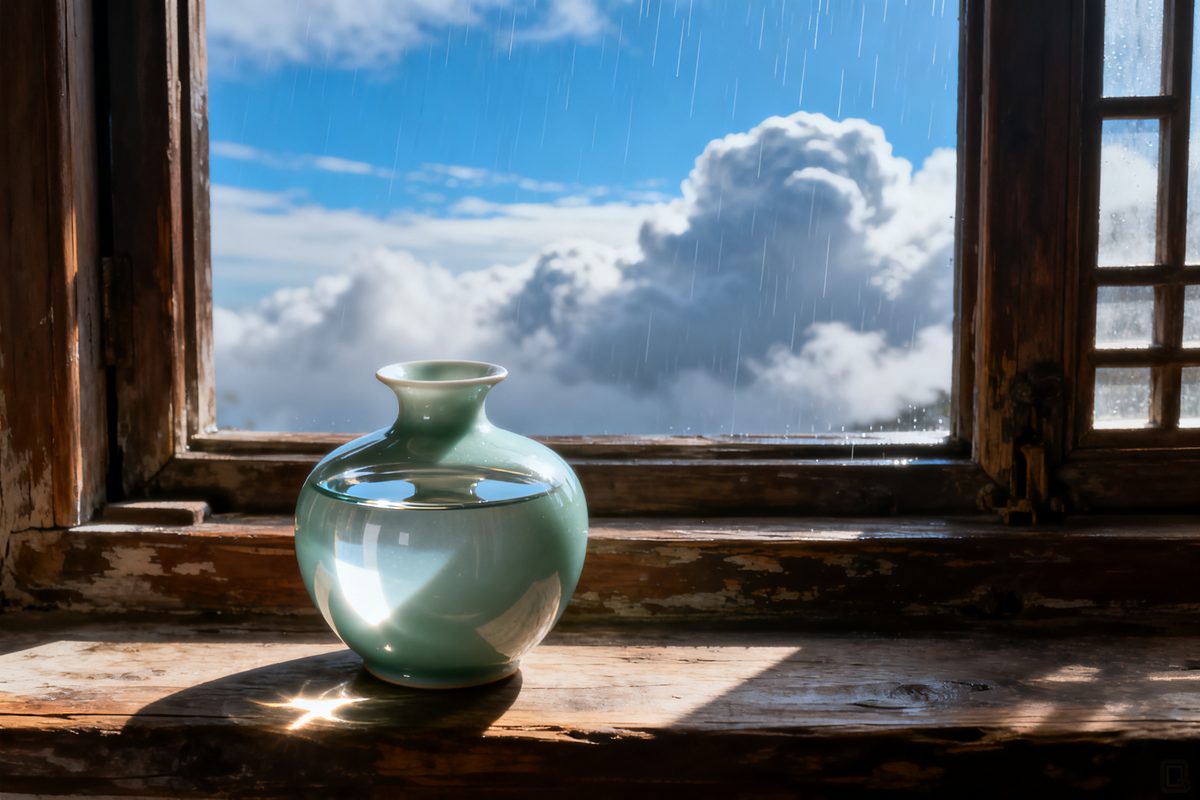
I remember the first time I read the story of Huangbo Xiyun. It was in an old book with yellowed pages. It was raining outside, and I sat by the window, turning the pages until I came to this passage.
The Story of Huangbo
Huangbo Xiyun lived during the Tang Dynasty, from Fujian. He became a monk when he was young. He wasn't particularly good-looking — he had a fleshy bump on his forehead, like a natural ushnisha, the protuberance you see on the top of Buddha statues. Some people said he looked like a Buddha. He probably didn't care much about that.
When he was young, he left home and traveled everywhere to study with different teachers. Eventually he went to Jiangxi and met Baizhang Huaihai. One day he asked Baizhang, "What is the essential teaching passed down from the ancestral teachers?" Baizhang was silent for a long time, then said, "Don't say that I spoke to you today." Just like that. And Huangbo suddenly understood.
What he understood, the book doesn't say. But I think it was probably something that cannot be grasped with words.
Later, Huangbo became a great Zen master himself. His student Linji Yixuan founded the Linji school — the most "fierce" branch of Zen. Huangbo's own style was direct, no nonsense, a sudden blow of the stick. Someone asked him what Buddha is, he said "Mind itself is Buddha." Asked again, he said "There is no mind to use, no path to cultivate." It sounds like he said nothing, and yet he said everything.
The Passage About His Mother
But the part that has stayed with me all this time is not about his Zen teaching, not about his sharp words. It's about him and his mother.
After Huangbo became a monk, he never went home again. His mother missed him terribly — he was her only son. She cried every day until she went blind. But she thought of something: she set up a tea stand at the crossroads near her village. Whenever a monk passed by, she served tea for free. Then she would feel the person's feet — because Huangbo had a mole on the little toe of his left foot.
And so she waited. Monk after monk passed by, and she felt the feet of every single one. She did this for years, maybe decades.
One day, Huangbo passed through. Of course he knew this was near his home, and he knew the tea stand might be his mother's. But he still stopped and had tea.
His mother poured him tea, then crouched down and felt his feet. She found the mole.
She knew.
She knew her son was standing right in front of her.
But Huangbo didn't stay. He left.
They say his mother ran after him, chasing him all the way to a river. Huangbo had already crossed to the other side. His mother couldn't see. She fell into the river.
She drowned.
When I Read This
When I read this part, I closed the book. I sat there for a long time without moving.
The rain was still falling outside.
I didn't know what to think about this. A mother who cried herself blind waiting for her son, who set up a tea stand, who felt the feet of every passing monk. She finally found him, but her son didn't turn back.
And then she died.
From a Buddhist perspective, Huangbo "severed his worldly ties." He chose the path beyond the world — "great renunciation." It's not that he didn't love his mother. He expanded his love for one person into love for all beings. Later, Huangbo performed rituals to guide his mother's spirit, and it's said she was liberated because of this.
But from a human perspective... I still find that image too cruel. A blind old woman, stumbling and chasing to the river's edge.
You tell me about "great renunciation," and I can understand it intellectually. But you ask me to accept a mother dying like that — I can't. At least not today.
Who Tied You Up
Later I came across another passage from Huangbo.
Someone asked him, "I've been practicing for a long time, but I still feel my mind is bound by something. What should I do?"
Huangbo said, "Who tied you up?"
Just that.
The person was stunned. Right — who tied me up? Nobody tied me. I tied myself.
These four words, I've thought about them for a long time.
We feel unfree. We feel anxious. We feel trapped by something. But if we really ask ourselves honestly — who tied me up?
It's not your boss. It's not your mortgage. It's not your parents. It's not society.
It's me. I wound the rope around myself, loop by loop, and then said, "I'm tied up."
Just like Huangbo's mother. She could have not set up that tea stand. She could have accepted that her son had left. She could have kept living well. But she chose to wait. Waiting isn't wrong. Love isn't wrong. But that inability to let go, that "I must find him," that fixation — that was the rope.
I don't know if saying this is too cold. A mother missing her son — how is that "attachment"?
Maybe I'm also tying myself up with ropes. Tying myself with "understanding," with "not being able to figure it out."
A Bright Pearl
Huangbo said something else that I really love.
"This mind itself is Buddha. There is no other Buddha. This mind itself is Dharma. There is no other Dharma."
In plain language: you already have it inside you. You don't need to look outside.
He said, "Originally there is not a single thing to attain." Meaning you are already free, already complete. All those thoughts like "I still need this" or "I have to become that" — they're dust that settled on later.
He quoted the Lankavatara Sutra, saying that Buddha-nature is like a bright pearl that has fallen into the mud. The pearl is still a pearl. Its brilliance hasn't changed at all. It's just covered in mud.
The pearl didn't become dirty. Mud got stuck to it.
"Who dirtied you?" — you could also ask it that way. The pearl itself can never be dirty. What's dirty is the mud on the outside.
My Understanding (or Non-Understanding)
To be honest, I still haven't fully made peace with the story of Huangbo and his mother.
Sometimes I think this story isn't meant to provide an answer. It's meant to make you uncomfortable. To make something twist inside you. And then you go find your own "Who tied you up?"
Maybe if Huangbo had turned back, things would have been different. Maybe if he had stayed with his mother for a few years, they both would have felt better. Maybe—
But "maybe" is my own attachment.
Huangbo made his choice. Whether that choice was right or wrong, I don't know. But his words — "Who tied you up?" — have stayed with me.
That's what came to mind this morning while wiping my mala beads.
The beads in my hand, wiped one by one. Each one round, clean. After wiping, I set them down, and they sat there quietly. They don't tie me up. They don't tie anyone up.
They're just there.
Three questions to sit with:
1. What do I feel "tied up" by right now? Is that thing really tying me, or did I wind the rope myself?
2. If someone asked Huangbo today, "Do you regret it?" — how would he answer?
3. A pearl fallen in the mud — does it know it's a pearl?