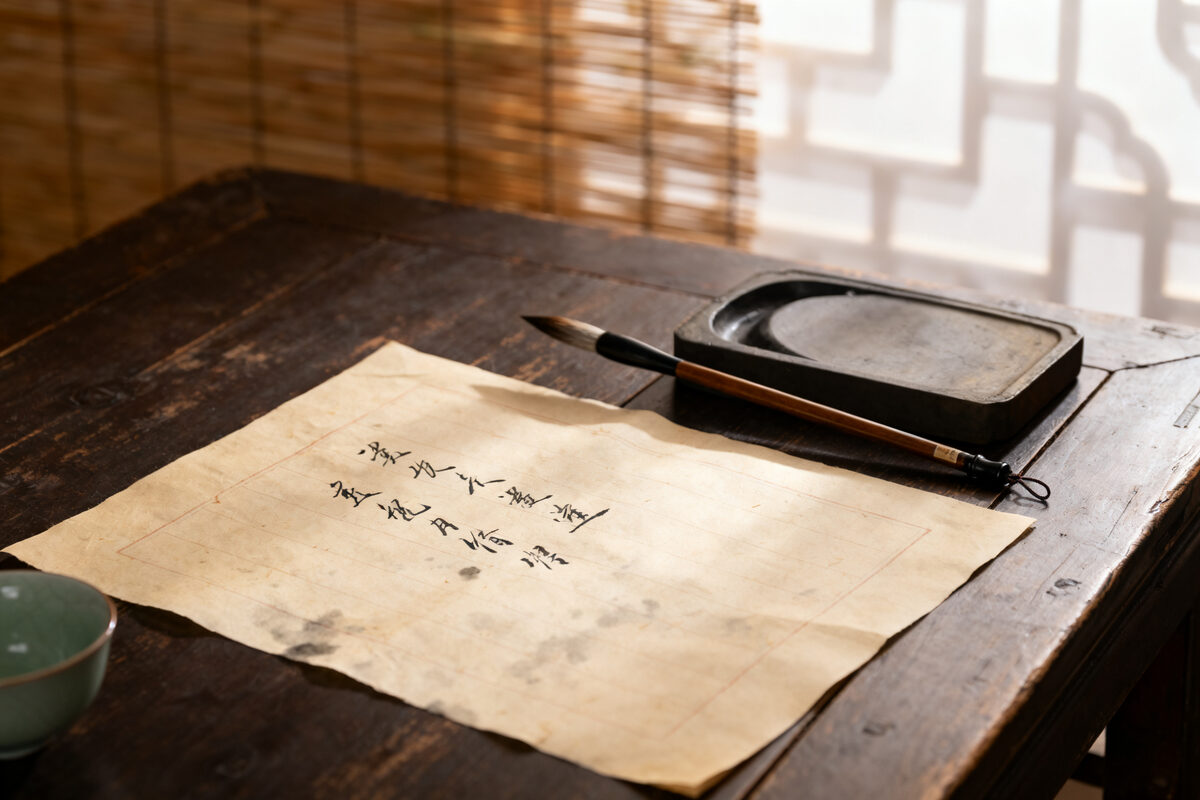
Grinding a Brick into a Mirror: When Someone Told Mazu Daoyi That Sitting Won't Make You a Buddha
A young monk sat in meditation every day. An old monk sat next to him, grinding a brick. If grinding can't make a mirror, can sitting make a Buddha? This Tang Dynasty story made me wonder—am I grinding bricks too?
Grinding a Brick into a Mirror: When Someone Told Mazu Daoyi That Sitting Won't Make You a Buddha
I was reorganizing my bookshelf today and found an old collection of Zen koans I bought years ago. The pages have yellowed, the cover curls at the edges. I flipped through it randomly and landed on a familiar story—grinding a brick into a mirror.
Familiar, except I'd forgotten the details. I just remembered someone grinding a brick. Why? Because they wanted to turn it into a mirror.
Sounds absurd, right? But after reading the whole story, I sat there for a long time.
This story takes place in the Tang Dynasty.
There was a young monk named Daoyi. Later he would be honored as "Mazu Daoyi"—"Mazu" because there was a saying that he walked with the dignified presence of a horse. But at this point he was still young, not yet a "Patriarch," just a very dedicated practitioner.
How dedicated? He meditated every single day. Not the kind of sitting where you get up after a few minutes to stretch. Real sitting. Wholehearted. Motionless.
He found a spot—a quiet corner of Mount Heng in Nanyue, built himself a small grass hut, and just sat there. Morning to night, day after day.
Picture it: mountain mist, moss on stone steps, the distant sound of a stream, a young monk with his eyes closed, completely still. Looks very "spiritual," right?
An older monk noticed him.
His name was Huairang, a Zen master on Mount Heng. He saw Daoyi sitting there day after day and didn't interrupt him. But he was probably thinking: This kid—how long is he going to sit like this?
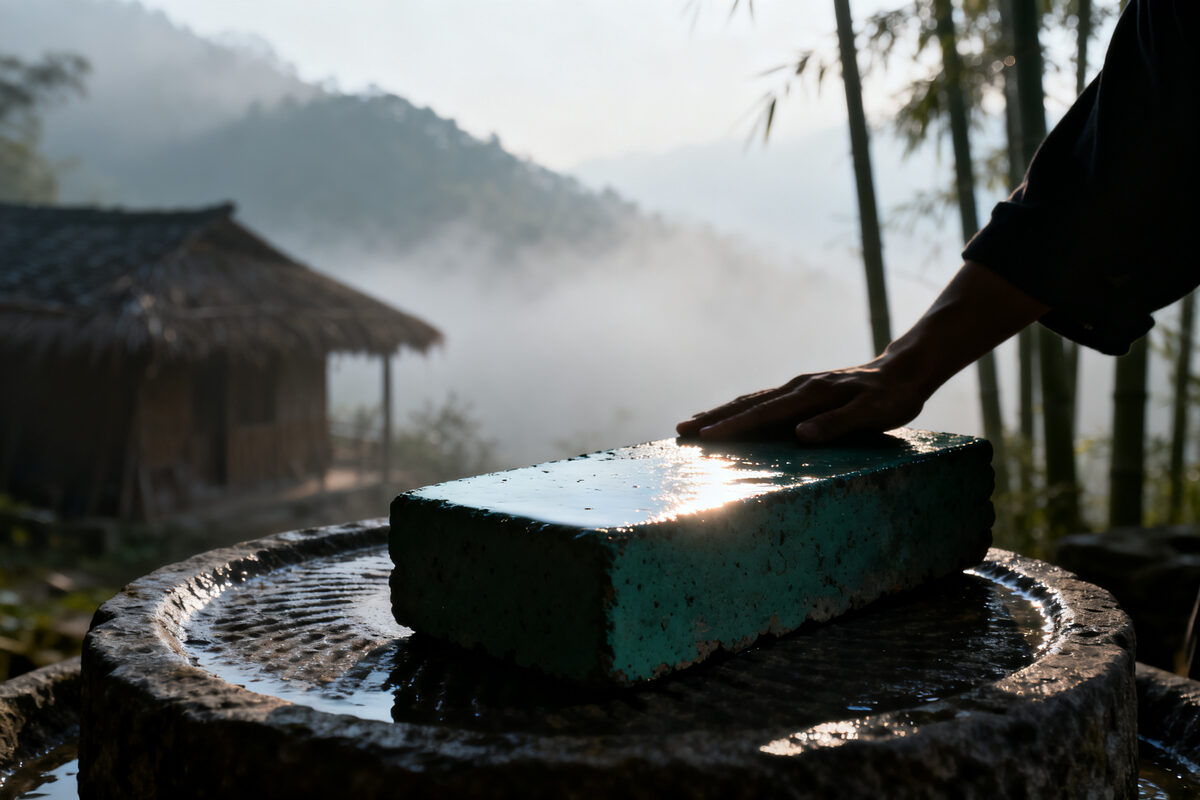
Huairang didn't go talk to Daoyi directly. Instead, he did something interesting—he picked up a brick, sat down next to Daoyi, and started grinding it.
Scritch—scritch—scritch—
Daoyi was meditating, and someone next to him was grinding a brick.
If it were me, I probably couldn't have lasted three minutes before opening my eyes and asking, "What are you doing?"
But Daoyi held out. They say it was several days. Huairang came every day to grind, and Daoyi sat there unfazed.
Finally, one day, Daoyi opened his eyes.
"What are you grinding that brick for?" he asked.
Huairang didn't even look up. "Making a mirror."
Daoyi was taken aback. "How can you make a mirror by grinding a brick?"
Huairang stopped, looked at him, and said the words that have echoed for over a thousand years:
"If grinding a brick cannot make a mirror, how can sitting in meditation make a Buddha?"
The first time I read this exchange, I thought Huairang was rejecting meditation.
But thinking about it more, he wasn't rejecting meditation itself. He was rejecting a mindset—the mindset that treats meditation as a magic key.
It's like someone who thinks chanting ten thousand times will lead to enlightenment, or that burning incense every day guarantees good fortune. We mistake the method for the goal.
Daoyi's problem was that he had made "sitting" into everything.
What Huairang wanted him to understand was that Buddhahood isn't something you can "sit" your way into with a particular posture. It's your mind. It's whether you can stay awake and compassionate in any moment, in any posture, doing anything at all.
The brick Huairang was grinding and the cushion Daoyi was sitting on—they were the same thing. Tools. Tools are meant to be used, not worshipped.
The story doesn't end there.
After hearing Huairang's words, Daoyi wasn't about to give up. He pressed further: "Then what should I do?"
Huairang didn't give him a formula. Instead, he used another metaphor.
He asked: "You're driving an ox cart. If the cart stops moving, do you whip the cart, or do you whip the ox?"
That's a brutal question.
Meditation is the "cart." The mind is the "ox." If the cart isn't moving, what's the point of polishing it? You need to check whether the ox is in the right state.
Daoyi asked: "Then how do you whip the ox?"
Huairang said something to this effect: Are you learning to sit in meditation, or are you learning to be a Buddha? If you're learning meditation, Zen isn't about sitting or lying down. If you're learning to be a Buddha, the Buddha has no fixed form.
—What are you studying? Sitting, or being a Buddha? Sitting is just sitting. Being a Buddha is your whole life.
I thought about why this story made me sit still for so long.
Maybe it's because I catch myself grinding bricks too.
Take my morning tea. For a while, I got really particular about water temperature, steeping time, the choice of teaware. Then one day I realized—when I drank the tea, my mind wasn't on the tea at all. I was thinking about work, about yesterday, about tomorrow's plans.
The ritual was perfect, but the mind had wandered off.
Isn't that grinding a brick?
Or chanting sutras. Sometimes it becomes a mechanical motion—the mouth is reciting, but the mind is somewhere else entirely. You finish and feel like you've "done your practice for the day," but you didn't actually hear a word.
That's grinding a brick too.
Master Huairang wasn't saying "don't meditate." He later taught Daoyi a great deal, and Daoyi continued practicing and became one of the greatest Zen masters in history. What Huairang was saying was: don't mistake the form for the substance.
Form is necessary—meditation is necessary, chanting is necessary, the steps of brewing tea are necessary. But if you stop at the form, you're just grinding a brick, and you'll never make a mirror.
I read some stories about Mazu Daoyi's later years.
After his awakening, his teaching style was remarkably lively. He didn't make everyone sit in meditation. He responded to each person according to their situation.
Someone asked him, "What is Buddha?" He said, "Your mind is Buddha."
Later, someone else asked the same question. He said, "Not mind, not Buddha."
Still later, someone asked again. He said, "Whether it is or isn't any particular thing—none of your business."
His teaching never had fixed answers. Because "Buddha" isn't an answer. It's something alive. You can't ask "What is life?" and expect a standard response.
I reread this story today, and I wanted to write it down.
Not because I want to summarize a lesson, but because I need the reminder: stop grinding bricks.
Meditate when you meditate. Chant when you chant. Brew tea when you brew tea. But don't forget to ask—what am I doing? Where is my mind?
Sometimes the answer isn't on the cushion. It's in washing dishes, in walking, in talking to someone—those moments you think aren't "practice" might be the real practice.
The sound of Huairang grinding that brick—it's been over a thousand years, and it still seems to be ringing.
Three questions for you, dear reader:
-
Have you ever caught yourself "grinding a brick"—mistaking a form for the whole thing?
-
If "Buddha isn't in sitting or lying down," where do you think Buddha is?
-
Today, are you "whipping the cart" a bit more, or "whipping the ox"?