The Three Jewels: Understanding Buddha, Dharma, and Sangha
The Three Jewels — Buddha, Dharma, and Sangha — are the most fundamental concept in Buddhism. This article explains their meaning and relevance for modern life.
The Three Jewels: Understanding Buddha, Dharma, and Sangha
In Buddhism, the "Three Jewels" (Triratna) are the most fundamental and important concept. Whether you are a beginner or a long-time practitioner, taking refuge in the Three Jewels is the starting point of the path. But what exactly are they, and why do they matter?
What Are the Three Jewels?
The Three Jewels are Buddha, Dharma, and Sangha. They are called "jewels" because, like rare treasures in the world, they are precious and extraordinary — capable of guiding beings from suffering to lasting peace.
The Buddha Jewel: The Awakened One
"Buddha" is not a god. It is a title meaning "the Awakened One" — a person who has fully awakened from ignorance.
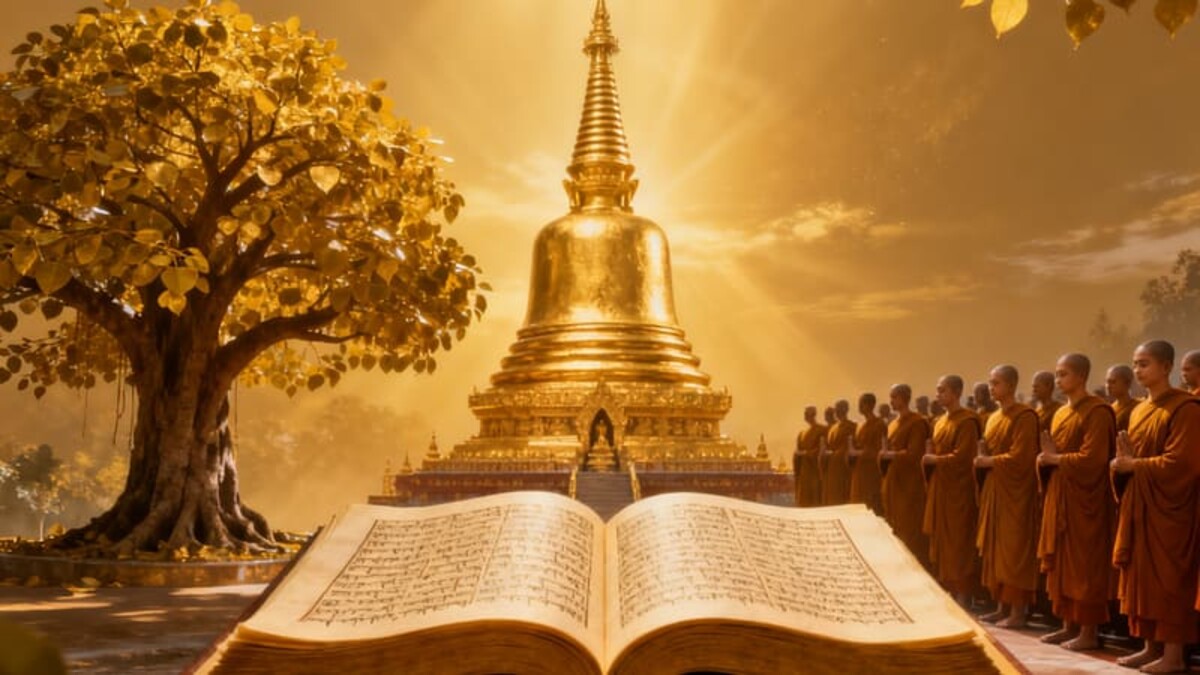
Over 2,500 years ago, Siddhartha Gautama sat beneath the Bodhi tree and realized the truth of existence. He did not create the truth; he discovered it. The Buddha's greatness lies not in supernatural powers, but in finding a path to liberation that anyone can walk.
The Buddha's core message: You can do this too.
The Dharma Jewel: Teachings and Truth
"Dharma" has two layers of meaning:
- The truth of the universe — The law of how all things exist: dependent origination and emptiness
- The Buddha's teachings — Methods to help us recognize and practice this truth
Dharma is not dogma — it is method. The Buddha compared himself to a doctor, the Dharma to medicine, and beings to patients. Medicine exists to heal, not to be worshipped.
"Rely on the teaching, not the person; rely on the meaning, not the words; rely on wisdom, not consciousness; rely on definitive meaning, not provisional meaning." — Mahaparinirvana Sutra
The Sangha Jewel: Community of Practitioners
"Sangha" refers to the community of practitioners. In the broadest sense, anyone sincerely practicing the Dharma is part of the Sangha.
The Sangha serves a vital purpose: the spiritual path is not a solo journey. With fellow practitioners for encouragement and wise teachers for guidance, the path becomes steady and sustainable.
Why "Taking Refuge"?
"Taking refuge in the Three Jewels" is not worship — it is setting a direction.
- Refuge in the Buddha: Taking the Awakened One as an example, confirming life's direction
- Refuge in the Dharma: Taking truth as the standard, establishing guidelines for action
- Refuge in the Sangha: Taking the community as support, finding fellow travelers
Think of it like learning music: you find a great musician as your role model (Buddha), study their methods and theory (Dharma), and join a community of music learners (Sangha).
The Three Jewels in Modern Life
In our age of information overload and competing values, the wisdom of the Three Jewels remains profound and practical:
- Buddha reminds us: every person has the potential for awakening
- Dharma guides us: face life with wisdom, not just emotion
- Sangha supports us: genuine growth requires community
The Three Jewels are not symbols of religious ritual — they are guides to a wiser way of living. Whether or not you identify as Buddhist, what they represent — pursuing awakening, seeking truth, supporting each other — is a path to a better life.
Taking refuge in the Three Jewels is not seeking something outside yourself — it is returning to the awakened mind you already possess.