Laozi's Wu Wei Is Not About Lying Flat
Many people translate wu wei as doing nothing. I used to think so too. Then I actually read the Dao De Jing and discovered wu wei isn't about giving up - it's about doing what you need to do without twisting yourself up inside.
A while ago I kept seeing a word online. The word was "lying flat."
It means: I don't want to try anymore. I don't want to compete. Let me just be.
The comments were a war zone. Some said it was laziness. Some said it was wisdom. I didn't say anything, but a phrase came to mind — Laozi's "wu wei."
A lot of people translate "wu wei" as "doing nothing." I used to think so too. Wu wei — not acting, lying flat, being zen, stop making an effort.
Until one day, I actually sat down and read the Dao De Jing.
What Did Laozi Actually Mean by "Wu Wei"?
Chapter 37: "The Dao does nothing, yet nothing is left undone."
I read that sentence over and over. "Does nothing" and "nothing left undone" — right next to each other. Sounds like a contradiction.
Then it slowly started to make sense.
Wu wei doesn't mean "don't do anything." It means "do without forcing."
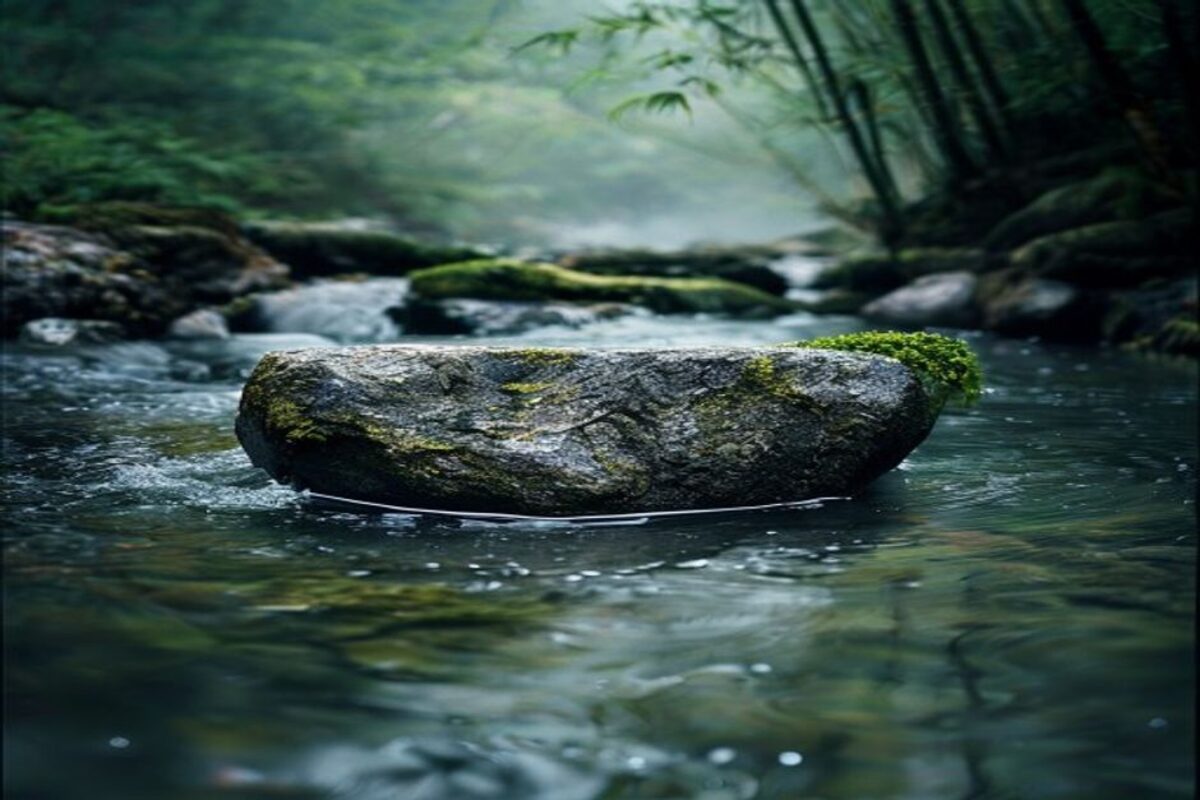
Water flows downhill. It's natural. Water doesn't tell itself "I must try hard to flow downward." It just flows. It has no agenda, yet it reaches everywhere it needs to go.
What Laozi calls "the Dao" is this kind of effortless, unforced way of moving through the world.
I suddenly realized that so much of my suffering came from trying too hard.
A Story About Trying Too Hard
Let me share something personal.
Last year I was really anxious. I wanted to push harder at work. I wanted to meditate an hour every day. I wanted to read fifty books a year. I even wanted to brew tea at a "professional level."
Every day I made lists. Checked boxes. If I didn't finish, I'd feel terrible.
And the result? Work didn't go where I wanted. I couldn't sit still during meditation. I bought piles of books and barely opened them. My tea brewing got more and more tense — worried the temperature was wrong, the timing was wrong, my technique was wrong.
One evening I sat at my tea table holding a cup I'd brewed too strong. It was bitter. I winced.
And then I almost laughed.
I was trying too hard even to drink a cup of tea.
The Wisdom of Water
Laozi loved using water as a metaphor for the Dao.
Chapter 8: "The highest good is like water. Water benefits all things and does not compete. It dwells in places people despise, and so it is close to the Dao."
The best things are like water. Water nourishes everything, but doesn't fight for anything. It flows to the lowest places, where nobody else wants to go.
I thought about it: has water ever "tried hard"?
No. Water just follows the terrain. When it meets a rock, it flows around. When it meets a hollow, it fills it and moves on. It doesn't slam itself against the stone, but eventually it reaches the ocean.
If water were like us, hyping itself up every morning — "I'm going to break through that rock!" — it would probably just shatter itself against it.
But water doesn't do that. It goes around.
Isn't that wu wei?
Not doing nothing, but not fighting against the natural order.
Why Are We So Tired?
Sometimes I wonder: why is everyone so exhausted?
We invented so many labor-saving tools. Washing machines, food delivery, GPS, AI. In theory, life should be easier. But everyone says: tired.
I think it's because we're pushing in the wrong direction.
We push hard on paths we don't even want to be on. Jobs we don't like — gritting our teeth. People we don't enjoy — forcing ourselves to socialize. Lives we don't want — making ourselves live them. And then we tell ourselves: this is discipline, this is ambition.
Laozi saw through all of this 2,500 years ago.
Chapter 48: "In pursuit of learning, every day something is added. In pursuit of the Dao, every day something is dropped. Drop and drop again, until you reach wu wei."
At first this felt backwards. Shouldn't more be better? Why is the path about subtraction?
Then I understood. What you subtract isn't knowledge — it's unnecessary effort.
You subtract the extra anxiety, the extra comparison, the extra self-punishment. When all that is gone, what remains is "wu wei."
You're still doing things. You're just not twisted up about it anymore.
I Tried Wu Wei
Here's something that happened recently.
I used to set an alarm for 5:30 every morning to meditate. I kept it up for three months. Every day I was exhausted. I'd sit there drowsy, counting the minutes until it was over.
One day I thought: forget it. No alarm.
The next morning I woke up naturally at 6:15. Felt great. Sat for thirty minutes. My mind was quiet.
In that moment, I think I finally understood wu wei a little.
It's not that I stopped meditating. I stopped forcing it. If I can't sit today, I don't sit. When I do sit, I sit properly. No struggle.
I started letting that attitude spread to other things. At work, I stopped micromanaging every detail and started trusting people. With reading, I stopped chasing a number — good books I savored, bad ones I just dropped. Tea that brewed too strong, I drank strong. Too weak, I drank weak.
Strangely, things went better than before.
Probably because a mind that isn't anxious is a clear mind.
But...
I have to be honest. Wu wei isn't a cure-all.
Some things require force. If someone in your family is sick, you can't say "let nature take its course" and do nothing. If you're working on something that truly matters, pure effortlessness won't get you there.
Wu wei is not an excuse for giving up.
I've seen people use "wu wei" to dodge responsibility. Don't want to work? "I'm practicing the Dao, I'm wu wei." Avoid conflict instead of resolving it? "Just go with the flow."
That's not wu wei. That's avoidance.
The difference?
Wu wei means doing what you need to do, then letting go of the outcome. Avoidance means doing nothing and calling it wisdom.
The key to Laozi's phrase "does nothing, yet nothing is left undone" is actually the last part — "nothing left undone." Everything that needed doing, got done. But your heart stayed relaxed while doing it.
Confucius Came to Ask Laozi
There's a famous story that when Confucius was young, he went to visit Laozi to ask about ritual and propriety.
Confucius asked all about systems, rules, and ceremonies. Laozi listened, then said something like:
"The things you ask about — the people who made them are dead and gone, only their words remain. When the time is right, act. When it's not, be like grass in the wind. Let me tell you something: the greatest merchants hide their wealth and look like they have nothing. Those with the deepest virtue look simple, even foolish. Drop your pride and your ambitions. Drop that self-important air. None of it helps you."
The story goes that when Confucius returned, he didn't speak for three days.
Then he told his students: "Birds — I know they fly. Fish — I know they swim. Animals — I know they run. For all of these, I have my methods. But a dragon? A dragon rides the wind and clouds to heaven. The man I met today — Laozi — he must be a dragon."
I love this story every time I read it.
Confucius represents "you wei" — action, teaching, building order. Laozi represents "wu wei" — stop pushing so hard, stop clinging.
Both are great. But even Confucius admitted he couldn't reach Laozi's ease.
What About Us Ordinary People?
I'm no sage. I'm no philosopher. I'm just someone who read a few pages of an old book at home.
But I think wu wei, for ordinary people, probably looks like this:
Do what you need to do, but don't make it your entire identity.
Go to work and work well, but don't tie your whole worth to your job. Take care of your family, but don't hollow yourself out. Try hard when it's time to try, but when you can't, let yourself rest.
Don't be twisted up about it.
Water flows around the rock not because it's lazy, but because it knows — its destination is the ocean, not this particular stone.
Some stones really aren't worth the head-on collision.
A Few Questions
After writing all this, I still don't have definitive answers. I just want to leave a few questions — for myself, and for you:
- What have you been "trying too hard" at lately? What would happen if you loosened your grip a little?
- Can you tell the difference between "letting go" and "giving up"? In your life, which is which?
- If you could flow like water and not fight every stone you encounter — which stone would you most like to go around?
Good night.