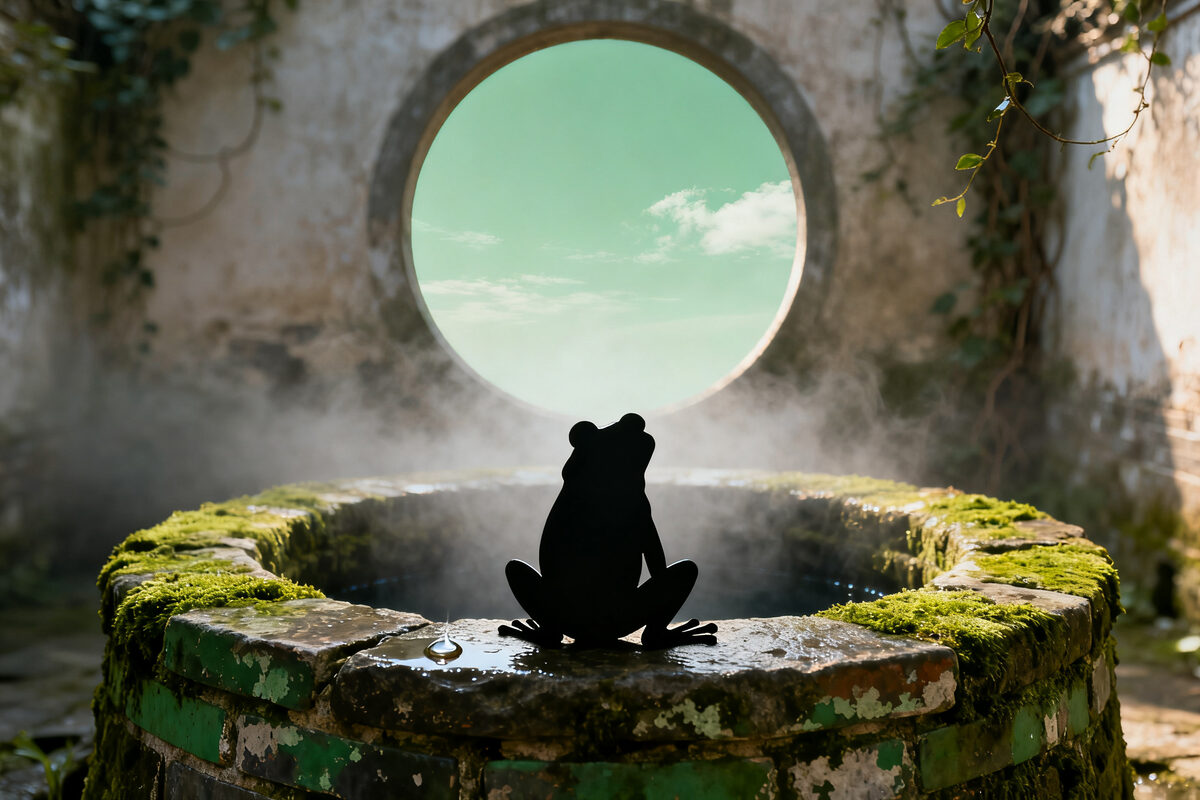
Zhuangzi's Butterfly: What Silicon Valley Spends Millions Proving, He Dreamed Up in an Afternoon Nap
A friend sent me a video: Google's chief scientist says there's a 90%+ chance we live in a simulation. One comment read: a Chinese man figured this out 2,000 years ago — he dreamed he was a butterfly. That night, I couldn't sleep.
A friend sent me a video with a scary title: Google's chief scientist says the odds that we're living in a simulation are over ninety percent.
The comment section exploded. Some people seriously discussed how to "escape the matrix." Some said it was time to start "accumulating merit." One of the top comments read: a Chinese man figured this out two thousand years ago. He dreamed he was a butterfly.
His name was Zhuang Zhou.
That night I couldn't sleep. I tossed and turned, thinking about this dream. I'd heard the story as a kid. But that night, for the first time, I actually heard it.
A Dream from 2,300 Years Ago
The original text, from the Zhuangzi, is only a few dozen characters:
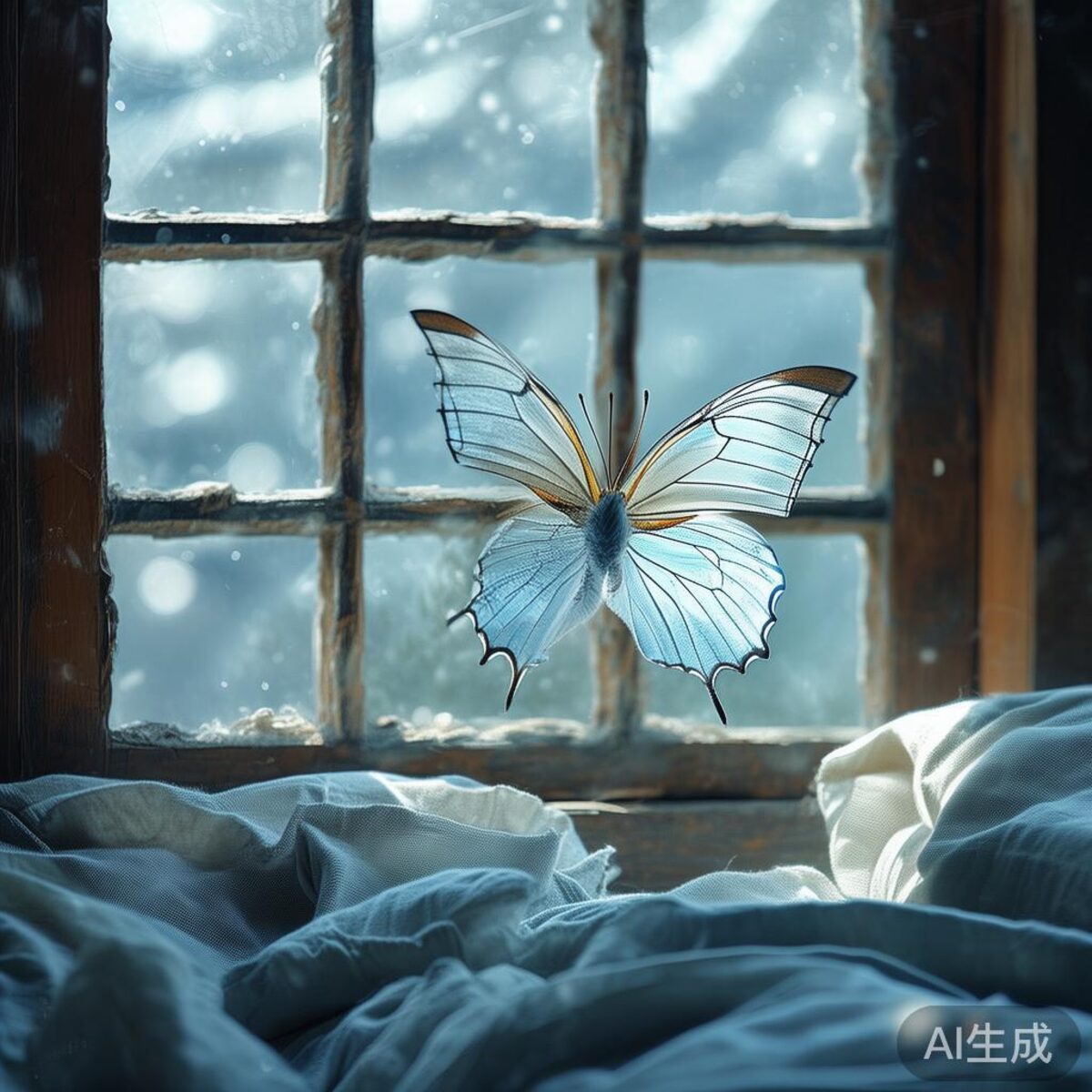
"Once, Zhuang Zhou dreamed he was a butterfly, fluttering happily — a real butterfly, with no idea he was Zhuang Zhou. Then he woke up, and there he was, solidly Zhuang Zhou again. But he couldn't tell: was he a man who had dreamed of being a butterfly, or a butterfly now dreaming of being a man?"
Notice — he didn't say "this must be the dream." He didn't say "this must be real."
He just left the question there.
Two thousand three hundred years later, an Oxford philosopher named Nick Bostrom wrote a paper. The argument goes roughly like this: if civilizations ever become able to run "ancestor simulations," the number of simulated minds would far outnumber real ones. So statistically, we are probably inside one of those simulations.
Silicon Valley fell in love with the idea. Elon Musk has said he believes it. People run actual experiments trying to find "bugs" in the program. Netflix made a documentary simply called A Glitch in the Matrix.
A friend of mine who studied philosophy put it well: with supercomputers and probability theory, they went all the way around the mountain — and ran into the same wall Zhuangzi hit during an afternoon nap.
Only Zhuangzi didn't calculate the odds. He just went to look at the butterfly.
The Butterfly Didn't Know It Was Zhuang Zhou
That sleepless night, I kept chewing on four words in the original: no idea he was Zhuang Zhou.
When he was the butterfly, he was completely the butterfly. The wings were his. The flower was right there. The wind was real. It knew nothing of Zhuang Zhou, or the Warring States, or the chapter called "Equalizing Things."
We assume "waking" means more real. But think about it: in dreams, pain really hurts. Crying really cries. Joy is genuinely joy. You wake from a nightmare at 3 a.m. — the pounding heart is real, the sweat is real. On what grounds do we call that "false"?
The Diamond Sutra has a line almost everyone in China knows: "All conditioned things are like a dream, an illusion, a bubble, a shadow." Many people read it as pessimism — life is empty, don't get attached.
I've always felt that reading is too narrow.
When the Buddhists say "like a dream," and when Zhuangzi dreams of the butterfly, neither is telling you to flip the table and walk away — it's all fake anyway, so why bother. Quite the opposite. They're saying the same thing: the "absolute reality" you take for granted doesn't exist. Even the concept of "real" is something the mind constructs.
And if that's so — then when it hurts in the dream, hurt honestly. When there are flowers in the dream, look at them carefully. That's not nihilism. That's a deeper kind of honesty.
You Switch Modes Every Day
Later I realized: we all switch between "Zhuang Zhou" and "the butterfly" every day. We just don't notice.
Those two hours scrolling short videos — who were you? Where were you? Hard to say. An algorithm wove a dream around you, and inside it you laughed, got angry, were moved. Two hours later you looked up: stiff neck, dark sky. Were those two hours "real"?
You put on headphones and go running, and at some point "you" disappear — there's no runner, only running. Psychologists call it flow. Zhuangzi called it "sitting in forgetfulness."
Then turn the question around: this feeling I have right now, that "I am awake" — could that line also be a line inside another dream?
Most people get anxious at this point. I did too, the first time.
But Zhuangzi wasn't like that. At the end of the story, he's neither panicked nor conclusive. He writes: "There must be some difference between Zhou and the butterfly. This is called the transformation of things."
There is a difference. But no need to panic. Dream and waking are different — but you don't have to grab one and deny the other.
Don't Rush to Answer the Question
I've met two kinds of people.
One kind hears "life might be a simulation" and immediately gets anxious. They research how to "wake up," how to "beat the game." They buy books, take courses, practically want to install antivirus software on their own soul. They turn a quiet question into a stressful homework assignment.
The other kind hears the same thing and smiles: real or fake, whatever — I'll still eat my dinner and go to work. Is that freedom? Sometimes. Sometimes it's just numbness.
Zhuangzi sits between them.
He raised the question not to get an answer, but to keep the question alive. A question that stays alive keeps loosening your grip on "absolute reality." And when the grip loosens, a person actually settles. This isn't mysticism — look at the relaxed people around you. They haven't figured anything out. They've just stopped needing to figure it out.
My grandmother couldn't read, but she once said something I still think about. When she was young she fell severely ill and was unconscious for three days. In her dream she walked a very long road. When she woke, the first thing she asked was: is the porridge still on the stove?
You see — someone waking from a great dream doesn't usually ask "was I in a simulation just now." She asked about the porridge.
I think that's more honest than a lot of philosophy.
How I Finally Fell Asleep
Back to that sleepless night.
I didn't resolve the simulation hypothesis. I didn't resolve Zhuangzi. I was just thinking and thinking, and then suddenly I thought: that butterfly was quite beautiful. The powder on its wings was pale blue in the sunlight.
Then I fell asleep.
The next morning I woke up with sunlight on the blanket. I stared for a few seconds and honestly couldn't tell: had Zhuang Zhou just been asleep, or had the butterfly just woken up?
No need to tell.
I made porridge. Ate it. Went to work.
If this is a simulation — then the porridge in this simulation tastes pretty good.
Three questions for you (and for me):
- When was your most recent moment of forgetting you were you — completely absorbed, no self? What were you doing?
- If someone showed you ironclad proof tomorrow that this is all a simulation, what things in your life would you keep doing exactly the same?
- Have you ever woken from a dream and felt a strange loss for a long while? What was in that dream?