My Coworker Asked Why Li Has Been Wearing Red from Head to Toe
Mark quietly asked me: has Li joined some kind of group? No, I said. She's just in her Ben Ming Nian — her zodiac year. What is Tai Sui? Why is every twelve years a threshold? Does red really protect you from anything? I tried to explain this two-thousand-year-old system — and realized red socks are a talisman from your mother.
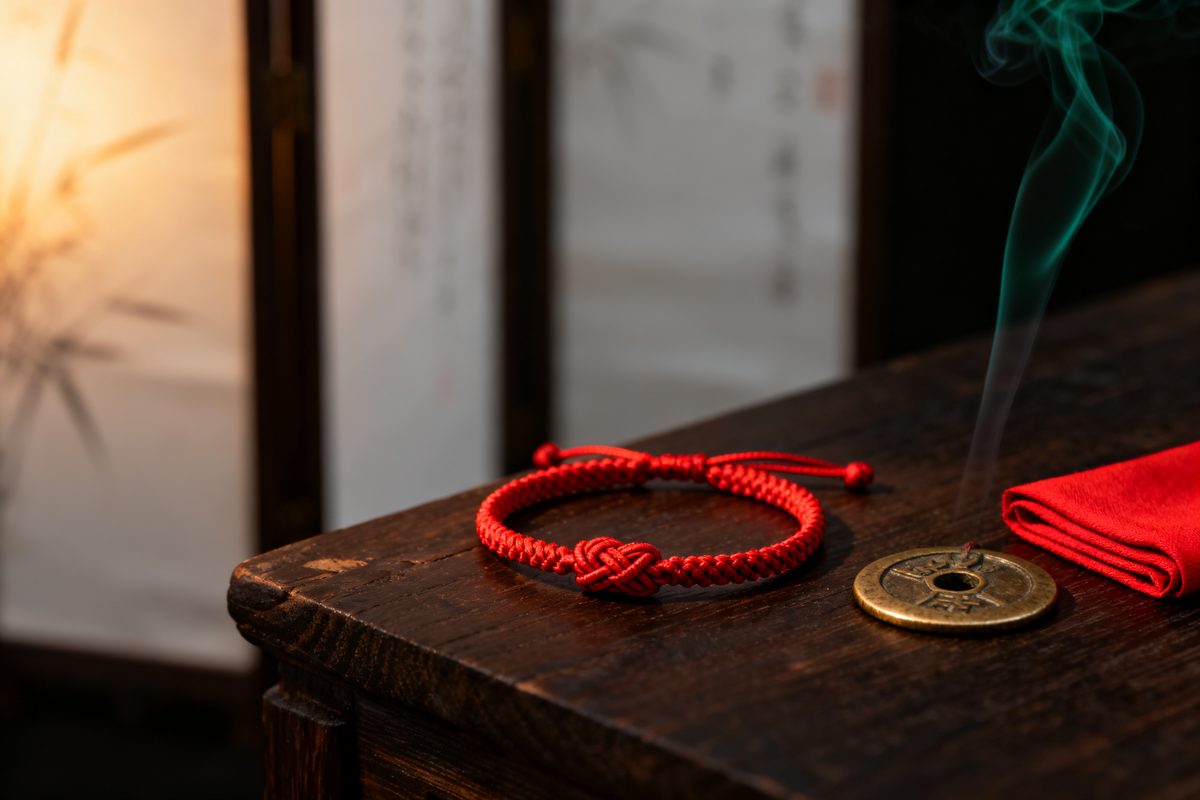
Mark from my office quietly asked me last week: "Have you noticed Li has been wearing red from head to toe this year? Socks, bracelet, even her phone case. Has she joined some kind of group?"
I said no. She's just in her Ben Ming Nian — her zodiac year.
Mark looked more confused. "What's a zodiac year?"
I opened my mouth and realized I couldn't explain it. My mother dressed me in red every twelve years my whole life, and she never explained it either. Just like nobody explains why Spring Festival couplets are red, or why brides wear a red veil. Red in China isn't a color. It's a system.
But today I want to try to explain it. For Mark, and for myself.
Twelve Years, One Circle
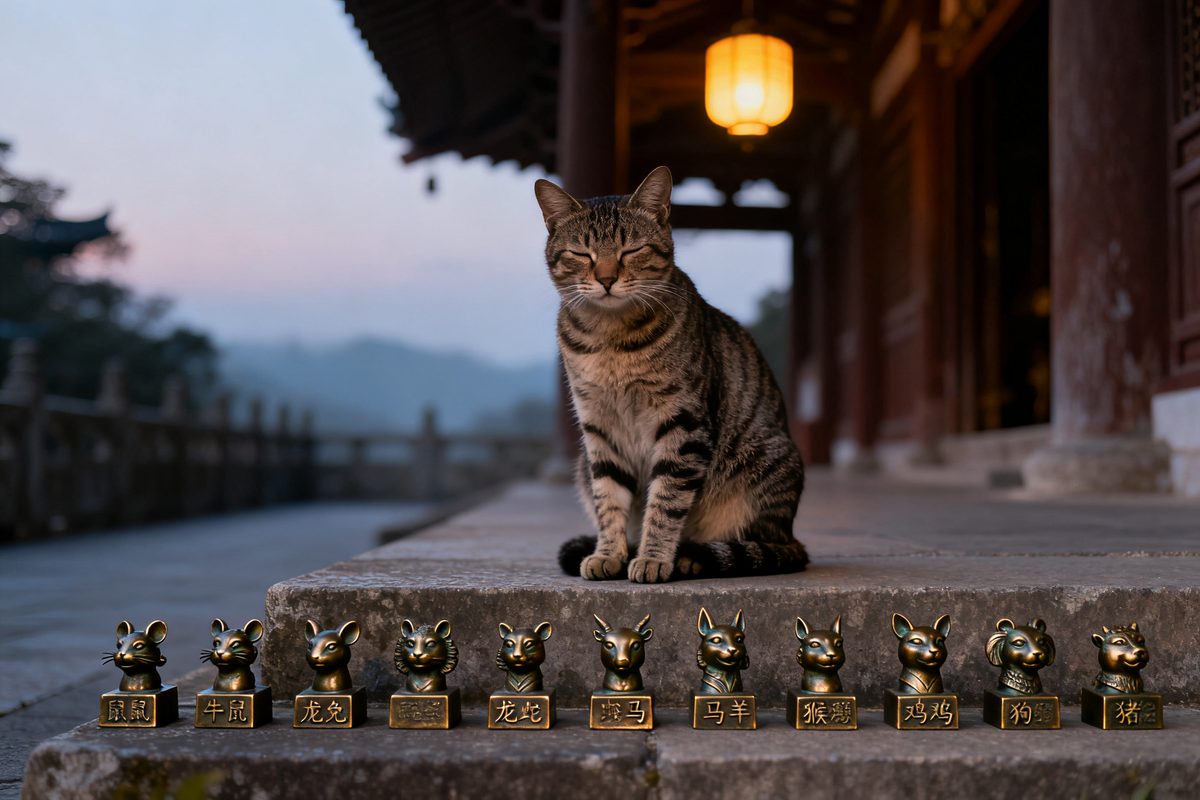
The Chinese mark the years with twelve animals: rat, ox, tiger, rabbit, dragon, snake, horse, goat, monkey, rooster, dog, pig. The cycle turns once every twelve years. The animal of your birth year is your sign. When that year comes around again — at 12, 24, 36, 48 — that year is your Ben Ming Nian.
For the old Chinese, this was not a lucky year. The folk name is "kanr nian" — the threshold year. Like a doorsill you step over. Carefully.
Why? Many explanations exist. The most popular one involves something called Tai Sui.
Tai Sui: An Ancient Clock
Most young people only know these two characters from the phrase "offending Tai Sui," which sounds like some kind of curse. But it's actually an astronomical timekeeping concept.
The ancients watched Jupiter. Jupiter orbits the sun in roughly twelve years, so they used it to mark the years, and called it the Year Star. But the Year Star moves across the sky in the opposite direction from the order people counted years in. So the ancient astronomers invented an imaginary star running the other way — Tai Sui.
It doesn't exist in the sky. It exists only in the calendar. An invented point, made for the convenience of counting time.
Later, in the folk imagination, Tai Sui slowly became sixty generals taking yearly shifts, one on duty each year, governing the human world. If your sign happens to match the year's duty officer — your zodiac year, called "sitting with Tai Sui." If your sign clashes with it, "clashing with Tai Sui." Either way, you're "offending Tai Sui": you made noise at the door of the official on duty, and your year may get bumpy.
What to do?
The old answer is touchingly simple: wear red.
Red: Psychological Armor from Two Thousand Years Ago
The belief that red wards off evil is older than the Tai Sui faith. Firecrackers are red. Couplets are red. A bride's veil is red. A child's bellyband is red. The belt of your zodiac year is red. It's all one system: use the warmest, most alive color to keep the nameless anxieties outside the door.
My mother has a complete operating procedure for my zodiac year. Before New Year's Eve: red socks, red underwear, mandatory. At least one item should be a gift — the things you buy yourself don't work; it has to be "a blessing someone gave you." Left ankle or right ankle for the red string — she and my grandmother once had a serious debate about this.
At 24, I didn't believe any of it. The red socks my mother mailed me stayed at the bottom of a drawer, never worn. That year did go badly — a job change, a breakup, and one medium-sized illness. By year's end I felt a little superstitious myself: was Tai Sui real?
Later I figured it out. That year was bad not because I skipped the red socks. It was because 24 is a turbulent age to begin with — two or three years out of school, changing cities, changing identities, changing your understanding of the world.
Keep counting: at 12, puberty begins, body and heart changing overnight. At 24, from student to working adult. At 36, at the door of the midlife crisis — parents above, children below. At 48, your parents grow old, your children move away, and you begin learning to say goodbye all over again. Every twelve years, life crosses a ridge. Climbing is hard. That's natural.
The ancients didn't have "human development theory." But with thousands of years of observation, they found this rhythm: every twelve years, at these turning points, people stumble most. So they invented the zodiac year — gave the threshold a name, then gave the threshold a remedy.
Naming a fear is the first step to taming it. Give it a name, then give it a red shirt.
This isn't superstition. It's psychological engineering from two thousand years ago.
Lucky Charms Are Universal
That day, after my explanation, Mark was quiet for a while. Then, a little embarrassed: "Um... in college I played baseball, and I had this one pair of socks. Wore them for years. Holes and all. Had to wear them for every big game."
I laughed. See — you have your own "red underwear" too.
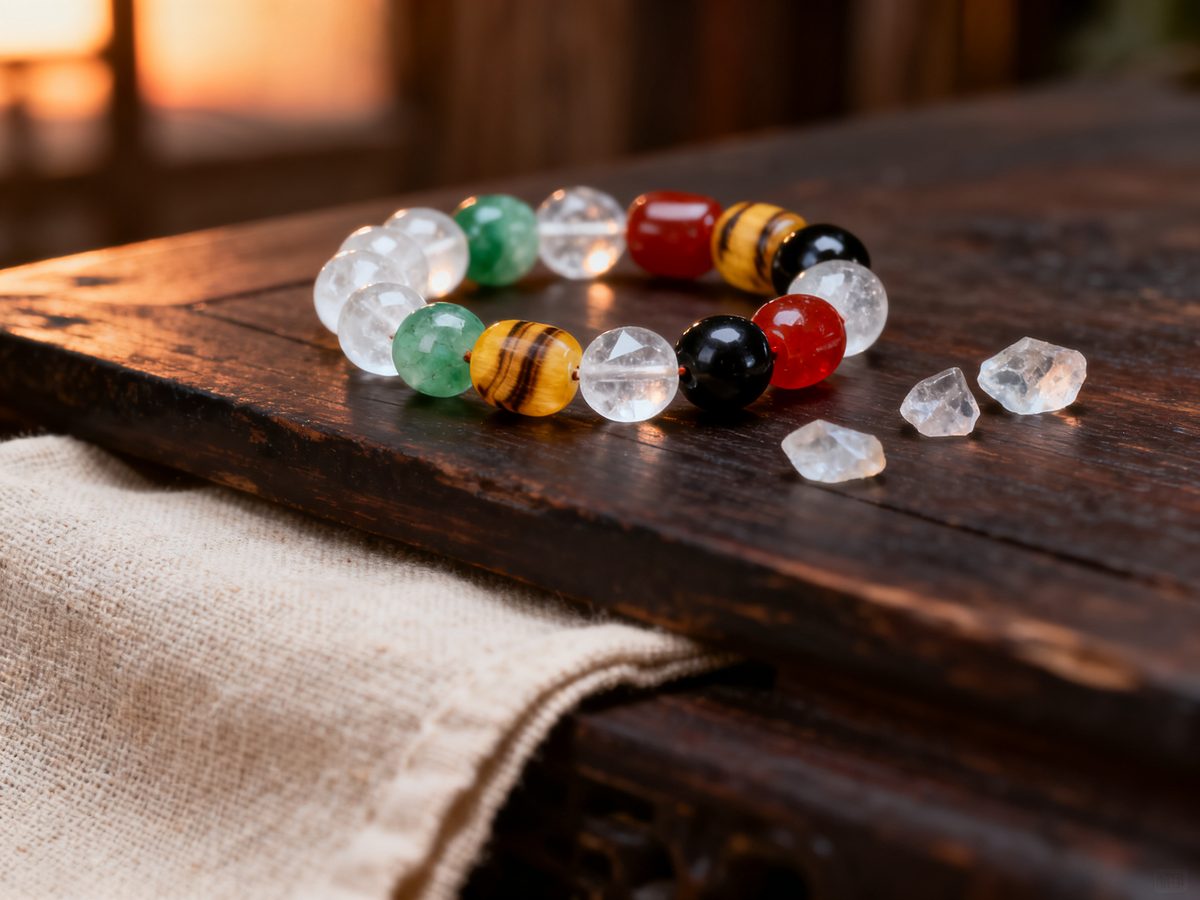
Baseball players tie their shoelaces in a fixed order before taking the field. Thais tie sacred threads around the wrist. Turks hang the blue Nazar eye on the wall to ward off evil. Westerners carry a lucky coin into exams. On TikTok, people whisper to their crystals and take them out to "cleanse the energy" under the full moon.
Anthropologists call this "amulet psychology." Studies suggest that people carrying a lucky charm stay calmer and persist longer in high-pressure situations — not because the object holds any power, but because it carries part of your anxiety for you, freeing your hands to face the real problem.
They don't believe in Buddha. But they want a talisman. Because humans are born longing to be blessed.
This is the deepest thing I've learned from years of making prayer beads. Nine out of ten people who come for a bracelet can't tell you what Buddhism is. But at the turning points of life — exams, new jobs, breakups, illness, farewells — they want one small thing to carry. What the thing is doesn't matter. What matters is the feeling: someone blessed me.
The red socks of a zodiac year are a talisman your mother gives you. Call it superstition — it is. Call it love — it is too.
Another Zodiac Year Is Here
2026 is the Year of the Horse. People born under the horse are standing on their threshold year right now. By the old sayings, rats clash with Tai Sui this year, and oxen and rabbits each have their own particulars. Li's red phone case is her way of settling accounts with the year.
There's a red belt in my drawer, the one my mother gave me at 36. I never wore it — I still can't decide whether I believe in any of this. But I never threw it away either.
Keeping it means, roughly: I know this year might be hard. And I know someone is thinking of me while it's hard. Whether the belt goes around my waist or not, it's fastened here.
Mark asked me finally: "So should I buy something red too?"
I asked: do you still have your lucky socks?
He said yes — when he went back to his mom's place in the States, he keeps them in a tin box.
That's enough, I said. Wear your socks, live through your own "zodiac year" — you may not have one, but everyone, at some point, arrives at their own threshold.
The autumn outside is deepening. Writing this, I keep thinking: what a talisman protects was never the body. It's the heart. The body has food and clothes looking after it. The heart is the one that runs naked all year.
Red underwear, lucky socks, crystals, prayer beads — all of them are a small piece of clothing for the heart.
It's getting cold. Remember to dress your heart warmly.
Three Questions for You
- Do you have a lucky charm? How long has it been with you?
- How was your zodiac year? What happened that year?
- If you were to pick one small thing for a friend going through a hard time, what would you choose?