The Almanac Said "No Moving Today," So My Mom Called Immediately
Before I could sign my lease, my mom called and told me to check the almanac first. I laughed—what year is this? But later I actually opened one, and found a whole way of seeing time. Not superstition. Just how seriously Chinese people take the word timing.
I was about to sign the apartment lease that afternoon when my mom called.
"Don't sign yet. Let me check the date."
I said, Mom, what year is this? She said, Hold on, let me look at the huangli.
I was leaning back on the agent's sofa, feeling amused. Outside the window were CBD glass towers. In front of me was a standard rental agreement. And my seventy-year-old mother was using a paper almanac to decide which day I could move.
I signed the contract anyway. But I did move three days later. My mom said one of those days was "auspicious for moving into a home." I said I didn't believe it, but my body honestly obeyed.
A Timetable Older Than Your Phone
The night after I moved, I dug out the almanac my mom had stuffed into my bag.
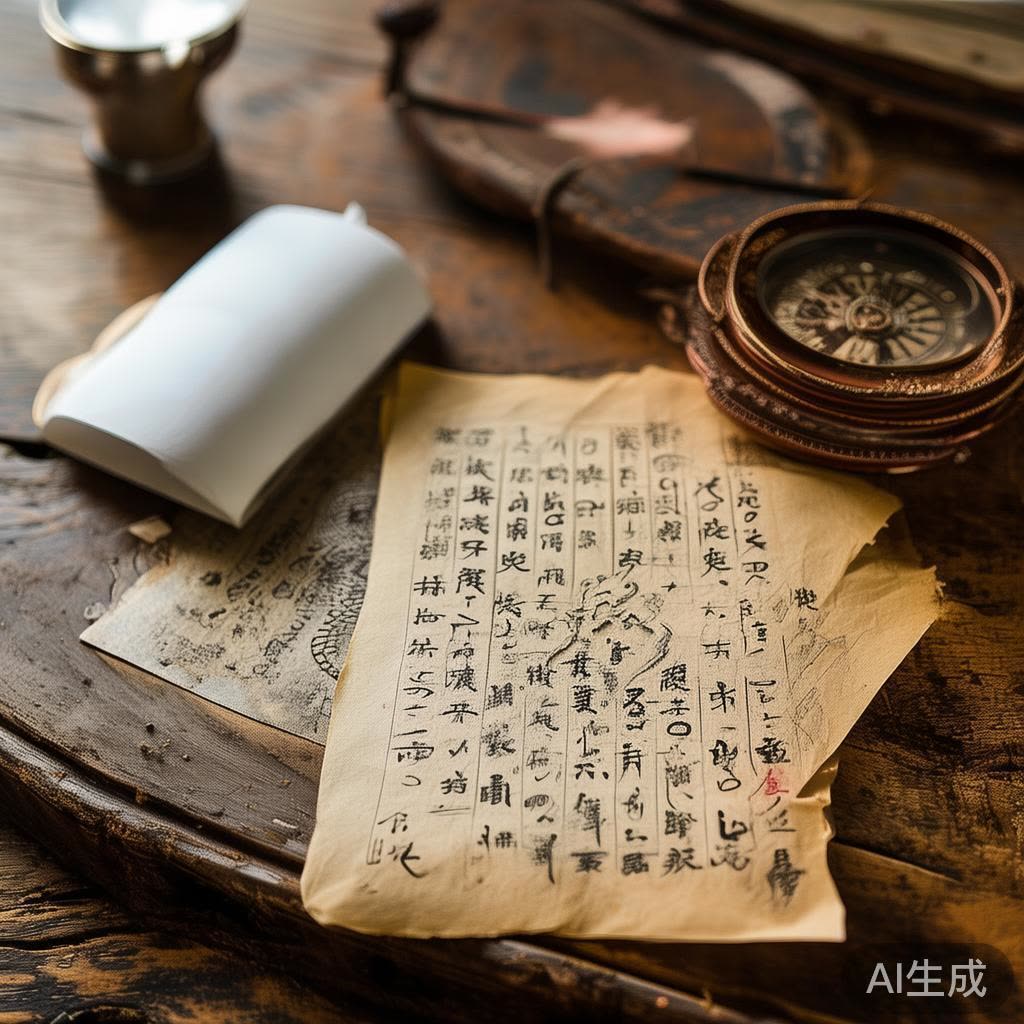
Very thin, yellow cover, printed with the characters "Bingwu Year Tongsheng." The first page had the year's Taisui directional chart, and every page after was densely packed: Heavenly Stems and Earthly Branches, the Twenty-Eight Mansions, daily auspicious and inauspicious activities, solar term transitions, the waxing and waning of the five elements.
I had never seriously looked at this thing before. When I was little, one hung on our wall every year, as natural as hanging a calendar. I never thought it was anything special. It was just there, like air, something you never particularly noticed.
But that night, sitting alone in my newly moved, still-box-filled apartment, I read it carefully for the first time.
What Do "Auspicious" and "Inauspicious" Actually Mean?
The core of the almanac is really just two columns for each day: what's auspicious and what's inauspicious.
For example, today might say "auspicious for offering rituals, praying for blessings, opening a business, making transactions," and tomorrow might say "inauspicious for marriage, breaking ground, long-distance travel." In plain words: what's good to do today, what's not good to do.
At first I thought it was completely random. But the more I flipped through, the more I realized there was a logic behind it.
The foundation of this logic is the Heavenly Stem–Earthly Branch dating system. Ten Heavenly Stems paired with twelve Earthly Branches, cycling endlessly, sixty years per full cycle. Each day has a stem-branch combination, like "Jiazi day" or "Yichou day." Different combinations correspond to different five-element attributes, different fortune judgments.
Digging deeper, there are also the rotating shifts of the Twenty-Eight Mansions, the alternation of the Twelve Day Officers, the distribution of auspicious and inauspicious spirits. These layers upon layers of systems combine with each other, ultimately producing each day's simple "auspicious" or "inauspicious."
Honestly, this system is so complex I still haven't fully grasped it. But one thing I started to understand: it's not saying you'll have bad luck today. It's saying that under certain energy combinations, certain activities might not go as smoothly.
How Seriously Chinese People Take "Timing"
After reading the almanac for a while, I gradually felt that this is really a body of knowledge about timing.
Westerners see time as linear—time is an arrow, shooting from the past toward the future, every second brand new. Chinese people see time as cyclical—like a spiral, the same combinations will return, the solar terms will repeat, the waxing and waning will alternate.
In this view of time, "when you do something" matters as much as "what you do."
Think about it. Why do Chinese people pick dates for weddings? Why choose auspicious hours for opening a business? Why check directions before breaking ground? It's not because there's some magic on that day. It's because Chinese people believe there's a rhythm between humans and heaven and earth. Follow that rhythm, and things go more smoothly. Go against it, and things might take twice the effort.
This idea isn't unique to China. Farmers watch the seasons to plant. Fishermen check the tides before going to sea. Hunters track the seasons before entering the mountains. It's the same principle: do the right thing at the right time.
The almanac just extends this principle to every aspect of daily life.
I Tried Living by the Almanac for a Month
After moving, I suddenly got curious and decided to seriously live by the almanac for a month.
That month I did these things:
- On "auspicious for transactions" days, I finally processed several reimbursements and contracts I'd been putting off;
- On "inauspicious for travel" days, I didn't schedule business trips and cleaned the apartment instead;
- On "auspicious for prayer" days, I visited a temple, even though I was just passing by;
- On "inauspicious for breaking ground" days, I resisted the urge to rearrange my furniture.
After a month, honestly, did my life undergo an earth-shattering transformation? No.
But there was a subtle change I felt myself.
I started to notice each day.
Before, when I woke up, I'd glance at the date on my phone and think: what day is it, how many meetings do I have, how many emails to reply to. Days slipped through my fingers like water, one day indistinguishable from the next.
But that month, every morning I'd flip through the almanac and see what was "auspicious" today. Even something as trivial as "auspicious for bathing" gave that day an extra tiny sense of ritual.
I started to feel that every day was different. Each day had its own texture.
The Poetry Hidden in the Almanac
What surprised me most about reading the almanac was the forgotten poetry hidden inside.
Take the solar terms. The almanac marks the transitions of the twenty-four solar terms, and each term has a name: Beginning of Spring, Rain Water, Awakening of Insects, Spring Equinox, Pure Brightness, Grain Rain… Just reading these names aloud feels beautiful.
"Awakening of Insects"—spring thunder wakes the dormant bugs. "White Dew"—the night's chill condenses into dewdrops. "Frost Descent"—the first layer of white frost appears on the morning grass.
Each solar term describes a subtle change in nature. Chinese people didn't abstract these changes into numbers. They gave them names, wrote poems about them. The almanac reminds you every day: which solar term is approaching, what's happening in the world right now.
I've lived in the city too long. I can't feel the solar terms anymore. Air conditioning turned four seasons into constant temperature. Food delivery turned seasonal ingredients into something available anytime. But the almanac is still there, year after year, recording the original rhythm of heaven and earth.
How I See the Almanac Now
After my month-long experiment ended, I didn't become someone who checks the almanac every day.
But what stayed with me from the almanac is an attitude.
It reminds me: not all days are the same. Some days are for beginning. Some days are for waiting. Some days are for going out. Some days are for staying home, brewing a cup of tea, and doing nothing at all.
We live in an era that worships efficiency—every day should be filled, every minute should produce value. But the almanac says, some days, nothing is auspicious.
I used to think "nothing is auspicious" was superstition. Now I think it might be a kind of ancient kindness. It's saying: today, you can rest.
My mom still calls occasionally, saying the almanac says today is auspicious or inauspicious for this or that. I don't laugh anymore. I say, okay, I'll keep that in mind.
Not because I believe it now, but because I think a nation that spent thousands of years carefully observing the patterns of heaven and earth, and then wrote those patterns into the calendar of every single day—that act alone deserves respect.
Outside my window in the new neighborhood, someone is burning paper money downstairs, probably making offerings to ancestors. The smoke drifts up slowly, and there's a faint scent of paper ash in the air.
I pick up the almanac and flip through it. Today it says:
"Auspicious for offering rituals."
Three questions for you:
- Do you still have an almanac at home? If so, have you ever opened it?
- Have you ever made an important decision on a particular day? Looking back, did the "feel" of that day seem right?
- If you had to declare one thing "auspicious" and one thing "inauspicious" for today, what would you write?