How a Single Drop of Water Never Dries Up
Someone asked the Buddha: How can a single drop of water never dry up? Put it in the ocean, he said. Just one sentence. But that afternoon, watching the water stain vanish from my table, I felt there was more to it than that.
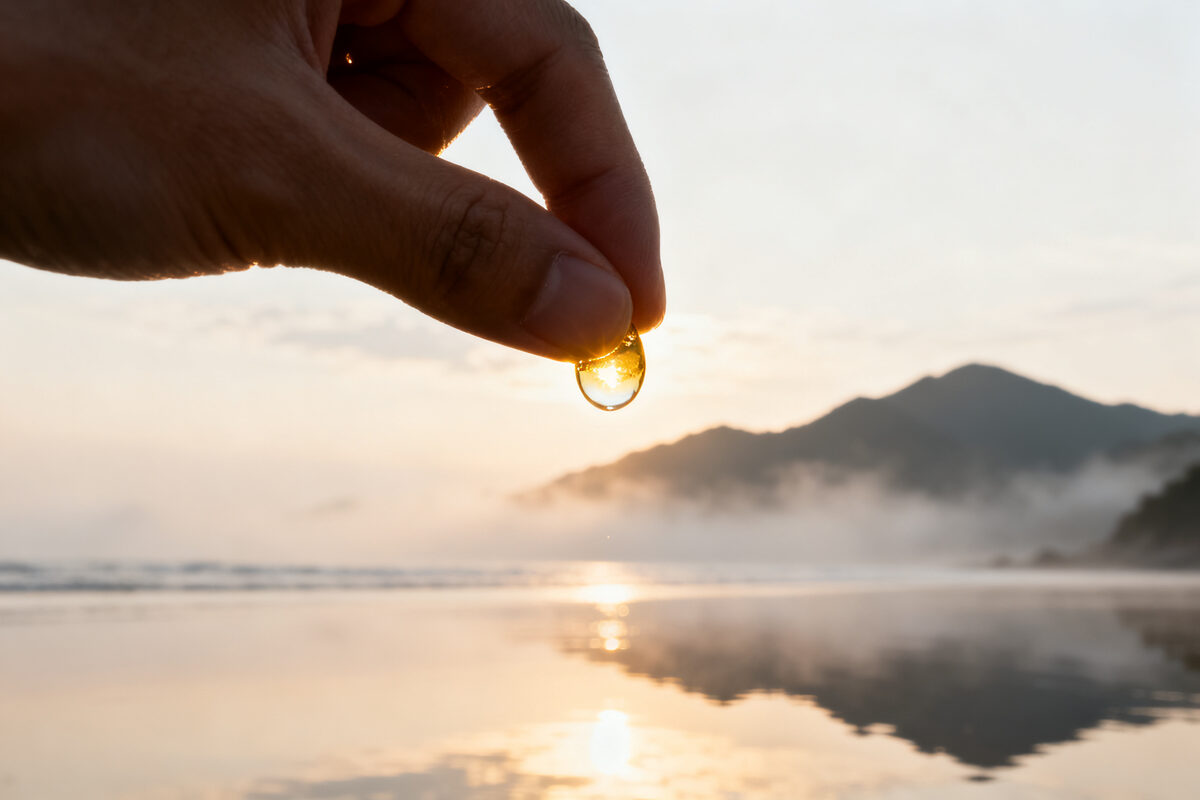
This afternoon, while wiping the Buddhist altar, I accidentally spilled some water from the offering cup onto the table.
A tiny puddle, maybe the size of a coin. I didn't rush to wipe it. I just looked at it. The afternoon sunlight came through the window and fell on that little puddle of water, making it gleam. I figured I'd grab a cloth in a moment.
Then I made myself a cup of tea, sat down, and flipped through a few pages of a book. By the time I remembered to go wipe it, the table was already dry. Just a faint water ring left behind.
In just that short while, a drop of water had vanished.
This reminded me of a story.
Someone asked the Buddha, "How can a single drop of water never dry up?"
The Buddha said, "Put it into the ocean."
Just like that. No long discourse, no profound theory. You hear it and might think, well, isn't that obvious? Everyone knows water won't dry up in the ocean.
But that afternoon, looking at the vanished water stain on the table, I suddenly felt this sentence wasn't so simple.
A few years ago, before I started studying Buddhism, I went through a period of terrible anxiety. Work stuff, family stuff, and all those thoughts in my head that I couldn't quite name or explain. Every morning when I woke up, before even opening my eyes, I'd start thinking about what I needed to do today, what I hadn't finished, what would happen if I couldn't get it all done.
It felt like a drop of water landing on a scorching hot stone — it didn't even have time to take shape before it evaporated.
I tried a lot of things. Running, meditation apps, self-help books, talking to friends. It's not that these didn't help — they helped a little. But that feeling of being consumed never really stopped.
Then one time, I went to a temple and joined a group practice. We didn't do anything particularly special — just chanted sutras together, sat in meditation, and did chores. Sweeping floors, wiping tables, washing vegetables.
The first day felt pretty boring. The second day, I started to feel something. The third day, while sweeping the courtyard, autumn leaves falling one by one, I'd sweep one and another would fall. Suddenly I felt like I was one of those leaves.
Not sad — more like a feeling of being... caught. Held.
Like a drop of water finally reaching the ocean.
I thought about it for a long time after that. What is this "ocean"?
The Buddha didn't say the ocean is some specific thing. He didn't say you have to go somewhere to find it.
But from my own experience over these years, the ocean isn't a place. It's not a temple, not a book, not a person.
The ocean is — when you stop living only inside yourself.
That sounds a bit convoluted. Let me put it differently.
When you're anxious, your entire world is yourself. Your worries, your fears, your plans, your regrets. It's like a drop of water lying alone on a table, surrounded on all sides by dry air, shrinking with every passing second.
But when you start caring about something else — even just sincerely sweeping a fallen leaf, even just listening to someone talk, even just looking up at the clouds — your world grows a little. The drop of water gains a little more support.
I'm not saying the anxiety vanishes right away. It doesn't. But you're no longer an isolated drop.
Once at the temple, I met a fellow practitioner. He was about a dozen years older than me, used to run a big business, then lost everything and owed a lot of money. He didn't come to the temple to "become a monk" — he just came to help out.
I asked him, what do you do here? He said, sweep floors, cook, grow vegetables. I said, aren't you anxious? He said, I am. But being anxious doesn't help, so I might as well sweep the floor clean first.
At the time I thought he was being a bit passive. Later I slowly understood — he wasn't being passive. He had found his ocean.
His ocean wasn't about "accepting fate." It was that in every moment of doing his work, he was no longer just a drop of water evaporating in anxiety. He was connected to the soil, connected to the seedlings, connected to the congee simmering on the stove, connected to every person who came to eat.
A drop of water in the ocean — the water doesn't disappear. It just doesn't dry up.
The more I think about this one line from the Buddha, the deeper it feels.
"How can a drop of water never dry up? Put it into the ocean."
The other way around — if a drop of water remains just a drop, sooner or later it will dry up. No matter how precious this drop is — whether it's mountain spring water, morning dew, or sweet nectar — as long as it's isolated, it's moving toward dryness.
We humans are like this too.
Sometimes I wonder why so many people nowadays feel exhausted, feel empty, feel like nothing matters? Maybe it's not because life is truly that hard — many people don't lack material things. It's because we're becoming more and more like isolated drops of water.
Shut in our own rooms, shut in our phone screens, shut in our own emotions and thoughts. Less and less connection to what's outside. Not because we don't want to connect — but because we've forgotten how.
Even having a meal with a friend, we can't help checking our phones. Even spending time with family, our minds are somewhere else. We've gotten better and better at "being" somewhere without truly being there.
Since I started studying Buddhism, I've slowly learned to do some very simple things.
Like drinking tea seriously. Not tasting it critically, not studying tea ceremony — just carefully brewing the tea, watching the leaves slowly unfurl in the water, then taking a sip and feeling the warmth and flavor. Such a simple thing, but after doing it, my mind quiets down a lot.
Like really talking with someone. Listening until they finish, not rushing to respond, not thinking about what I'm going to say next. Just listening. Sometimes what the other person says doesn't even matter — what matters is that when they speak, you're there.
Like walking seriously. Not walking fast, not walking toward any destination. Just walking. Feeling the contact between your feet and the ground, feeling the wind on your face.
These all sound incredibly silly and small when I say them out loud. But every time I do them, I feel something: I'm getting bigger. Not big in an arrogant way — big in the way a drop of water merges into the ocean.
Sometimes after sitting meditation in the evening, I'll stay a little longer. Thinking about nothing, just listening to the sounds outside. Maybe insects, maybe the wind, maybe cars in the distance. I used to think of these sounds as noise. Now they sound like ocean waves.
Not actual ocean waves. But the feeling is the same — you're wrapped in something, held by something.
It's not that you've grabbed hold of something. It's that you've let go of the fixation on being "just one drop."
You were always in the ocean. You always have been. You just forgot.
This afternoon I did eventually wipe up that water stain. While wiping, I wondered — where did that drop go? It evaporated. After evaporating it became water vapor, the vapor became clouds, the clouds became rain, the rain fell to earth and became water again.
It didn't disappear. It just changed form.
Maybe the ocean has been there all along. It's not about going to "find" the ocean — it's about stopping for a moment and seeing that you've been soaking in it this whole time.
I'll keep this story in my heart today.
Three questions for myself, and for you who are reading:
-
Have you felt like a drop of water about to dry up lately? What does that feel like?
-
Have you ever had a moment where you felt "held" by something — maybe something very small, but suddenly you didn't feel so alone?
-
If the "ocean" isn't a place but a way of living, what is your ocean?