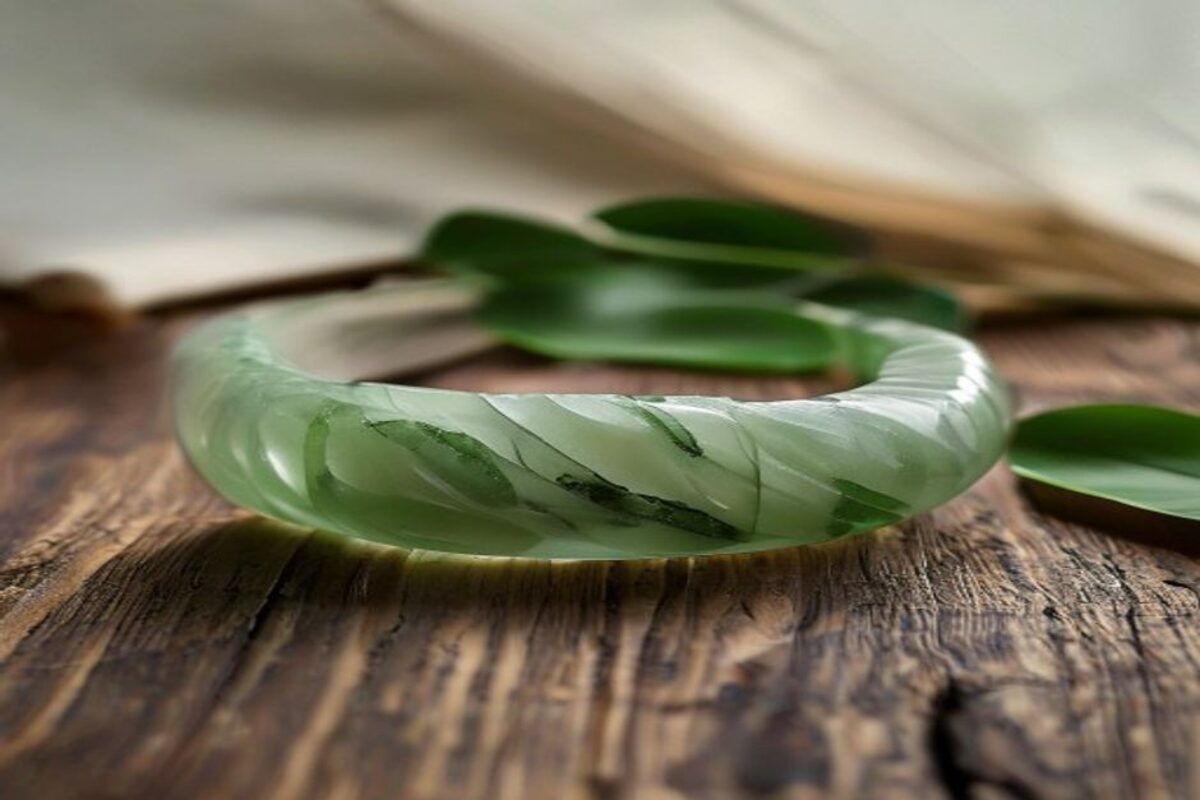
The Red String on Your Wrist: Who Tied It There?
I found an old red string in a drawer — the one my mother tied on my wrist years ago. Red strings have been on Chinese wrists for two thousand years: the long-life thread, the old man under the moon, the zodiac year. Chinese families don't say "I love you." Love turns into soup, a sweater, a string.
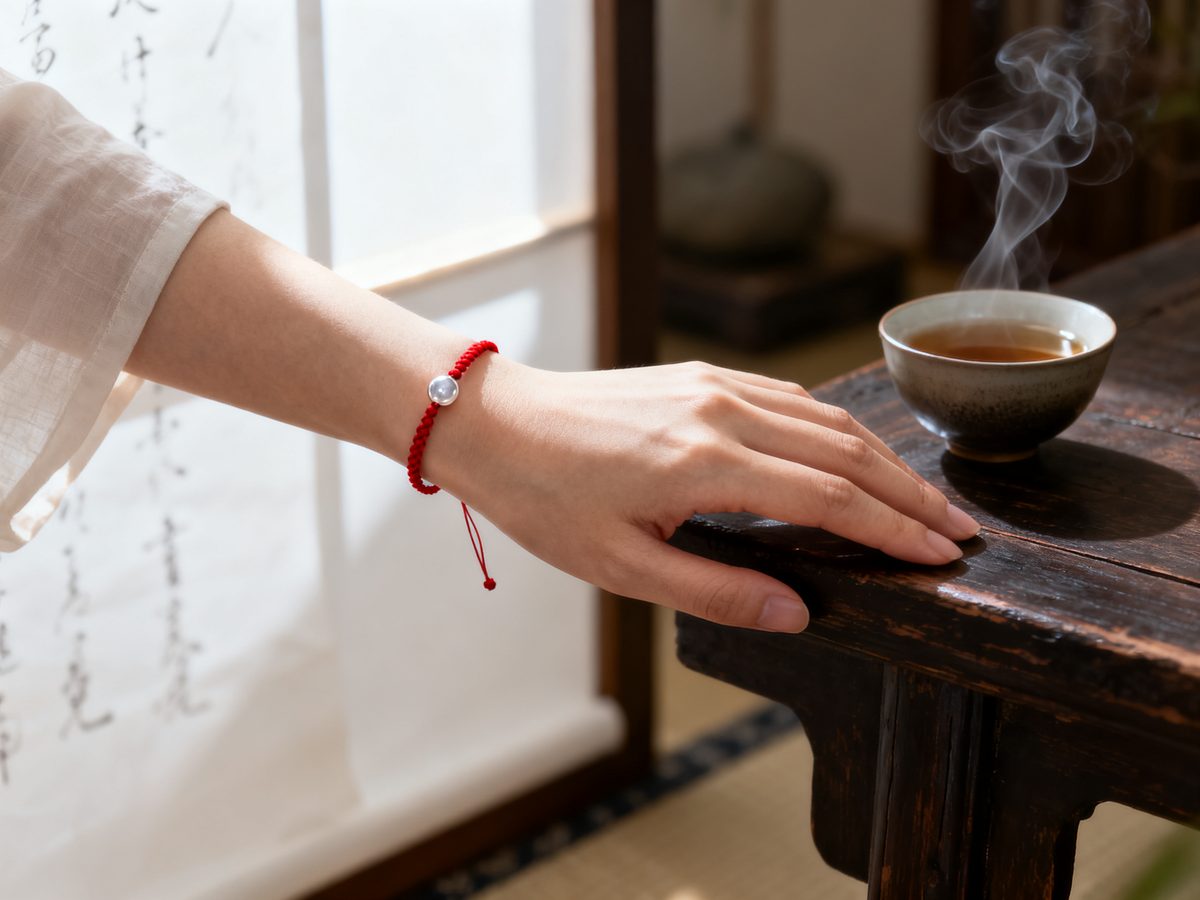
While cleaning out a drawer today, I found an old red string.
The knot had come loose, and the color had faded to that washed-too-many-times pink. I held it for a while and remembered — my mother tied this on my wrist a few years ago. I had just changed jobs. She didn't say anything like "good luck." She just said, at dinner, hold out your hand. I did, and she tied it on.
Afterward she said, keep it on. Don't take it off.
I wore it for a long time. Then one day it ended up in the drawer. I found it again today, and I still couldn't throw it away.
Chinese families don't really say "I love you"
I thought about this for a long time.
Nobody in my family says "I love you" out loud. The way my mother worries about me is by stuffing things into my suitcase, by asking if I've eaten, by tying a red string on my wrist.
Then I realized — it's not just my family. A lot of Chinese families are like this. The word "love" is too heavy; saying it embarrasses both sides. So it turns into something else: a bowl of soup, a sweater, a string.
The red string might be the quietest version of all. It costs nothing — a few coins at any market, or you can braid one yourself. It doesn't show off. One thin strand on your wrist; you barely notice it. But it's always there.
When you look down at it, you know: someone is thinking of you.
This string is older than you think
I looked it up later. This string has been on Chinese wrists for two thousand years.
It started with the Dragon Boat Festival. In Han dynasty times, on the fifth day of the fifth month, people would tie five-colored silk threads — blue, red, white, black, yellow — around children's wrists and ankles. They called it the "long-life thread." The five colors matched the five elements, the idea being that you were tying the whole universe onto your child: may evil keep its distance, may this child grow up safe.
You see, people back then were honest. They knew children get sick, meet danger, grow up and leave. They couldn't protect them every second, so they braided their hopes into a string. Where the string is, the person is.
Later, the red string got tangled up with marriage.
In the Tang dynasty there's a recorded story about a man named Wei Gu. Staying at an inn, he went out for a walk one night and saw an old man reading a book under the moon. He leaned over to look — and couldn't read a single word. The old man said: this is the ledger of marriages under heaven. Your match is written in here too.
Wei Gu asked: then who will my wife be?
The old man said: the daughter of that vegetable seller at the market. She's three years old. Wei Gu went to look — a poor, small girl. He didn't want it. He actually sent a servant to kill her. The servant panicked, missed the vital spot, and only cut her forehead.
Fourteen years later, Wei Gu had become an official and married a governor's daughter. She was beautiful, but she always wore a flower ornament over her brow and never took it off. Only later did he learn — she was that little girl, the scar still under the ornament.
That's when Wei Gu understood: the old man under the moon had already tied a red string around both their ankles. "A match made a thousand miles apart, pulled together by one thread" — that saying comes from this story. Once the string is tied, however you hide, however you run, you end up standing in front of that person anyway.
The first time I read this story, it scared me a little — fourteen years of running and still no escape. Reading it now, it feels like comfort instead. Some bonds really can't be cut. You think you've gone far away, but the string is still there.
The one for your zodiac year
Where you see the red string most is during a person's benmingnian — the year of your own zodiac sign, which comes once every twelve years.
The year my mother tied mine wasn't a benmingnian. But I've seen plenty of people in theirs: red string, red belt, red socks, red underwear, armored in red from head to toe. Even the most skeptical people will quietly put on the red socks that year, then shrug and say, "My mom bought them. Too lazy to say no."
— See? They wore them anyway.
Why red? The old saying goes that in your zodiac year you're "clashing with the year god," your luck gets bumpy, and red — the color of yang — wards off harm. You can believe this or not. What interests me is the act itself: a person who knows perfectly well that a string can't stop anything, tying it on anyway.
That's not superstition. That's a posture. A small handhold you give yourself in an uncertain life.
When I'm anxious I roll the beads between my fingers. When I'm nervous I rub my thumb. Same thing as the red string. When your hand has somewhere to rest, your heart does too.
The queue outside the temple
These past few years, the line of young people outside temples keeps getting longer. Two or three hours of waiting, for one blessed red string.
The first time I saw it, I was surprised — a lot of the people in line didn't look Buddhist at all. Dyed hair, streetwear, bubble tea in hand. They queued outside the hall, went in, received the string, tied it on, came out, took a photo.
Later I understood. They weren't asking for Buddhism. They were asking for the word "peace" that comes tied to a string.
People who don't believe in Buddha still want a talisman. Because everyone is born wanting to be blessed. I didn't read that anywhere; I watched it happen. You can believe in nothing at all, but when "may you be safe" lands on you, you're willing to receive it.
The red string is the smallest unit of blessing. One string, one knot, one small bead. It's cheap, so anyone can have one. It's small, so you can wear it always. It's red, so on your grayest days there's a bit of color on your wrist.
When the string gets old
Someone once asked me: what do you do when it gets old? I heard you can't cut it yourself — you have to wait for it to break, or swap it for a new one at New Year and burn the old.
Those are the customs. But the way I see it, a string carries its blessing until it wears out — by then it has done its job. What happens after doesn't really matter. Cut it, burn it, tuck it in a drawer — all fine. The wish was delivered the moment it was tied on. Everything after is just form.
The one in my drawer can stay there. If it gets lost in a move someday, that's no crime. My mother's love isn't in that string. It's in the phone call where she asks, "Are you still wearing it?"
Afterward
Writing this, I tied the old red string back on my wrist.
The knot was loose, so I tied a new one. It came out crooked, not pretty. But then, no knot is ever tied perfectly.
Do you have a string like that on your wrist? Or something else — a piece of jade, a strand of beads, a coin. Worth nothing, but you carry it anyway.
If you do, take it out today and look at it. Think about who gave it to you, and what they said that day.
If you don't — that's fine too. Maybe one day, someone will say to you: hold out your hand.
Three questions, for you and for me:
- Do you own something worthless that you've never thrown away? Who gave it to you?
- How does your family show they care? Do they say "I love you"? If not, what does that sentence turn into instead?
- If someone tied a red string on your wrist right now, what blessing would you want tied into it?