Why Chinese Moms Always Tell You Not to Drink Cold Water
Thirty-seven degrees. I grabbed an iced cola. My mom called and said don't. I didn't believe her until a Chinese medicine doctor said two words: "stomach cold." After 30 days of warm water, I found out my mom was right all along.
Why Chinese Moms Always Tell You Not to Drink Cold Water: I Was the One Who Got Proven Wrong
Thirty-seven degrees today.
I stood in front of the convenience store freezer for five minutes and grabbed an iced cola. Twisted off the cap, took that first big gulp — cold from my throat all the way down to my stomach. My whole body shuddered. It felt good. Really good.
Then my mom called.
From the other end she said: "It's this hot out, don't drink cold things."
I said: "Mom, it's thirty-seven degrees."
She said: "Thirty-seven degrees is exactly when you shouldn't."
I hung up, standing in the sun holding that bottle, feeling a bit awkward.
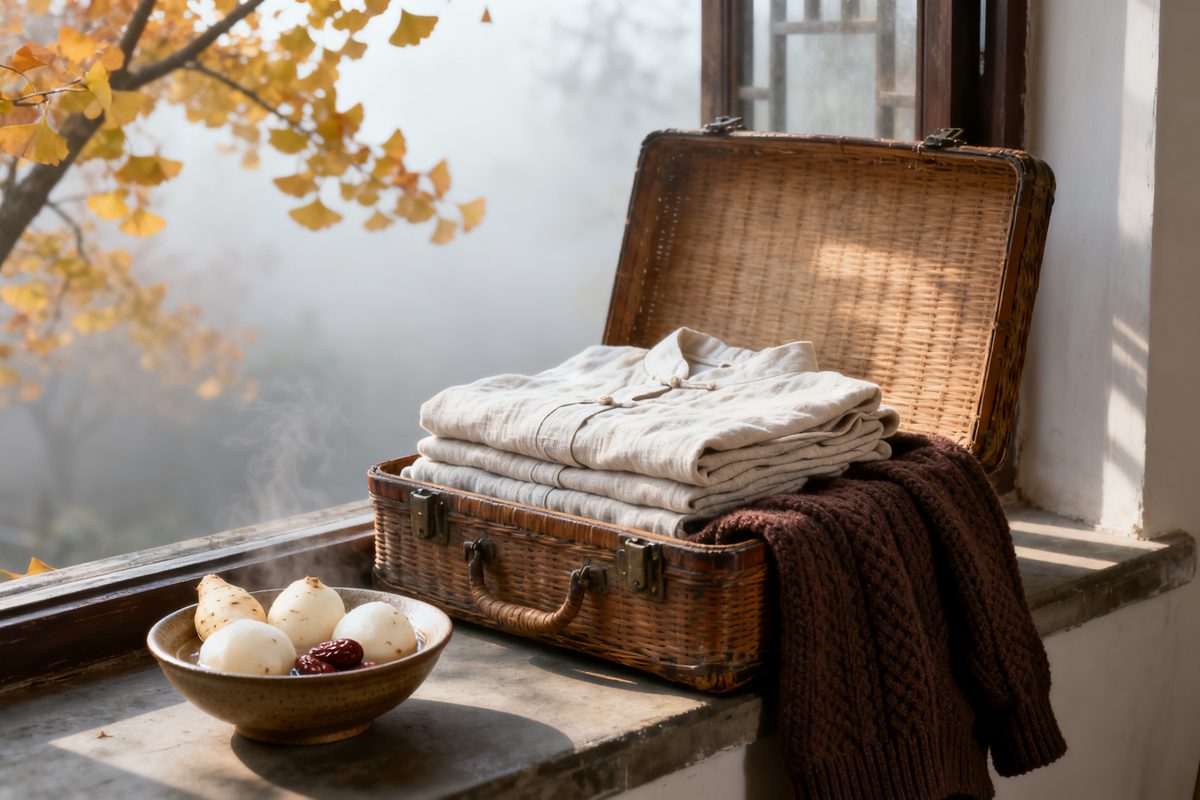
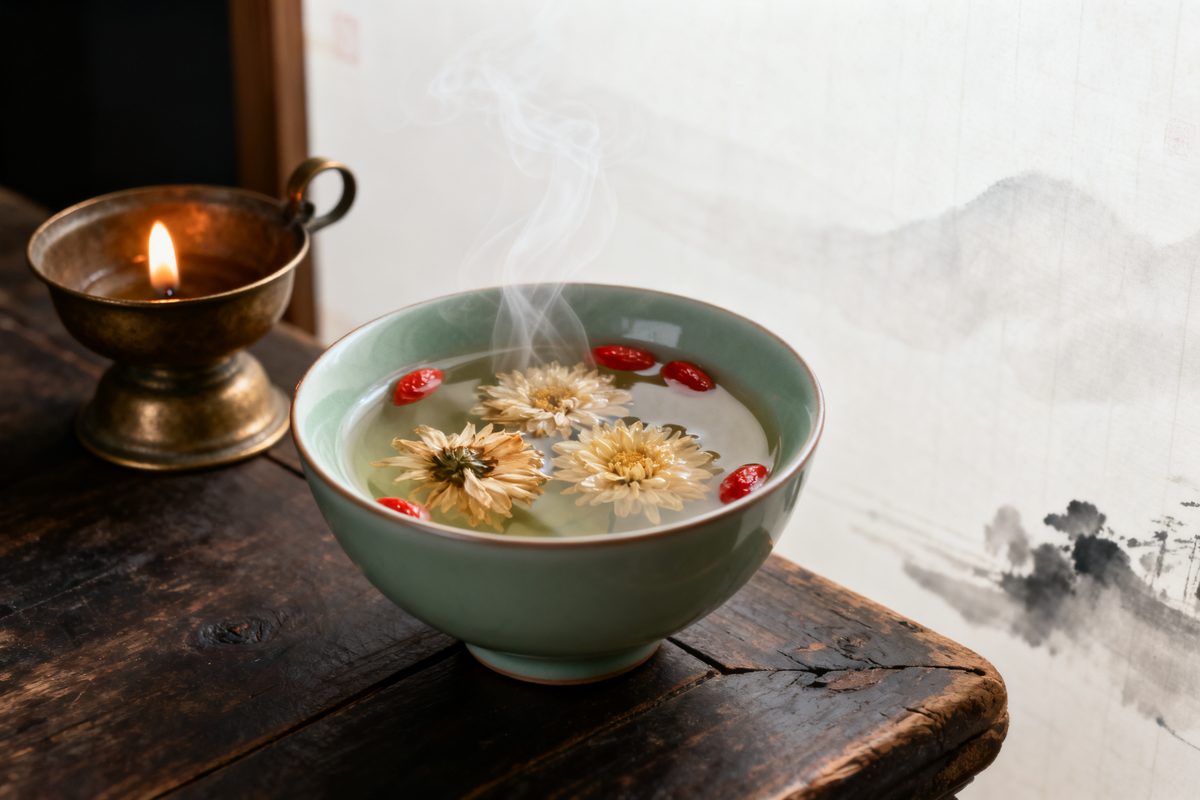
Honestly, my whole life my mom has said "don't drink cold things" too many times. Growing up, I didn't get it. I thought she was being superstitious. Other kids had popsicles and iced sodas, and then there was me, always with a thermos. On school trips, everyone brought room-temperature water bottles. I brought a stainless steel thermos filled with warm jujube water.
You know what that means for a kid who just wants to fit in.
So when I grew up, I drank cold things in revenge. Iced Americanos, iced milk tea, ice-cold beer, even in winter. Like I'd finally been set free. Then a couple of years ago, my body started having problems.
Bloating. After every meal, it just sat there, like a stone that wouldn't digest. I went to a Western doctor — chronic gastritis. They prescribed medication. It got a bit better, then came back when I stopped. I went to a Chinese medicine doctor — an old woman with gray hair. She asked me to stick out my tongue, felt my pulse, and said two words:
"Stomach cold."
My heart skipped a beat. Because those were the exact two words my mom had said.
So What Exactly Is "Cold"?
I thought about this question for a long time.
Western medicine doesn't have the concept of "cold." A stomach is a stomach. Inflammation is inflammation. Bacteria are bacteria. But Chinese medicine says "cold" — and it doesn't mean your stomach temperature has dropped. Your body temperature is always around 37 degrees. Your stomach isn't a refrigerator.
So what does "cold" mean?
I read some books after that, and asked the old Chinese medicine doctor. What she said was actually pretty simple — "cold" is a state. It's when your body's functions have slowed down. When that system that's supposed to be warm and active and helps you digest food doesn't have enough energy.
Think about it — what does the stomach do? It turns what you eat into energy you can use. This process consumes a lot of "heat" — not calories, but a functional, active, warm kind of energy. Chinese medicine calls this "yang qi."
When the stomach's yang qi is sufficient, food goes in and gets broken down, digested, and absorbed quickly. You feel comfortable after eating, have energy, no bloating.
When the yang qi isn't enough? Food goes in like throwing vegetables into a cold pan. The pan is cold, the oil hasn't heated up, and the vegetables just go limp and soggy. They'll never get cooked.
That bloated feeling, slow digestion, the crash after meals, cold hands and feet — these aren't separate problems. They're different faces of the same problem.
And ice-cold things? They're like pouring another scoop of cold water into a pan that was never hot enough to begin with.
Foreigners Are Catching On Too
Here's something interesting.
Recently I came across a video online — an American fitness influencer, the million-followers kind, looking very seriously into the camera: "I stopped drinking ice water for 30 days, and here's what happened."
Then he listed a bunch of things: less bloating, better skin, more energy, improved sleep.
The comments went wild. People saying "same here," "this changed my life," "Chinese people were right."
Someone wrote: "Wait, Chinese moms have been saying this forever?"
I laughed for a long time after watching that.
This isn't some new discovery. Chinese people have been saying it for thousands of years. The Huangdi Neijing, a text from over two thousand years ago, says: "As for food and drink, let it not be scalding hot, let it not be chilling cold." Those are words from two millennia ago.
Your mom telling you to drink warm water isn't baseless. It's just that this reasoning is hard to express in the language of Western medicine.
But in recent years, we've started to be able to explain it. Some studies have found that drinking ice water does affect the speed of gastrointestinal movement. When cold water enters the stomach, the blood vessels in the stomach wall constrict — just like how your hands get cold when you go outside in winter. The body is "conserving heat," pulling blood toward the core. But in doing so, digestion slows down.
Others explain it through the autonomic nervous system. Our stomach is controlled by the parasympathetic nervous system — the one that lets you relax and digest. Ice-cold things stimulate the sympathetic nervous system — the fight-or-flight system. Your body thinks it's in a crisis, pulls energy away from the digestive system, and redirects it to the muscles to prepare for "battle."
The result: you drink a glass of ice water, and your body thinks you're in a fight.
My Thirty-Day Experiment
After the old Chinese medicine doctor told me, I did something I would never have done before: I cleared every cold drink out of my fridge. Then I stuck to drinking warm water, for thirty days.
Honestly, I almost gave up in the first three days. Drinking warm water in the middle of summer, when you're used to ice — it feels like punishment. You come back drenched in sweat, craving something cold, and instead you get a cup of warm water. Your body protests.
By the fourth day, I started getting used to it.
Around day ten, I noticed something: after lunch, I wasn't sleepy anymore. That old feeling of needing to lie down after a meal — it had lessened. Not completely gone, but noticeably better.
Around day fourteen, the bloating was clearly reduced. Before, every afternoon around three or four, my stomach would feel like a stuck balloon — that puffy, indescribably awful feeling. During that period, it was almost gone.
By day thirty, the most obvious change — I weighed myself and was down a kilo. My diet hadn't changed much, my exercise hadn't increased. But that month, my digestion improved, and I just felt lighter.
I don't know if that kilo was water weight, or a placebo effect, or coincidence. But that month, I genuinely felt better.
And that matters more than any theory.
But I Don't Want to Go to the Other Extreme Either
Let me be clear about one thing.
I don't think "ice water is toxic" or "one sip of ice water will kill you." Some Chinese medicine accounts online go way overboard — ice water damages your kidneys, ice water causes infertility, ice water makes you age faster. I think those claims go too far.
The real situation is more like a long-term accumulation. If you have an occasional cold drink, your body can handle it. But if you drink them every day, several a day, from morning to night, the stomach's yang qi is constantly being depleted. It never gets time to recover.
It's like a worker who never gets a day off. They can handle it for a few days, a few months, but after three or five years, they collapse.
So my current approach is: in summer, I'll occasionally have an iced drink, then follow it with some warm water to ease things along. In winter, I basically don't touch cold drinks. The first glass of water in the morning is always warm.
This isn't some grand principle. It's just common sense that one ordinary person learned the hard way — from being taught a lesson by their own body.
So Was My Mom Right All Along?
Yes.
She was right the whole time.
But it took me over twenty years to admit it.
Sometimes I think about how many of those "old-fashioned" sayings in Chinese tradition actually have something behind them. It's just that our generation has so much faith in science — or rather, in things that can be measured, tested, and published in journals.
Just because those old sayings can't be proven in a lab doesn't mean they aren't real. They're the distilled experience of thousands of years and countless generations of people testing things on their own bodies. That kind of experience might be closer to real life than a double-blind experiment.
Because a lab can control variables. Life can't.
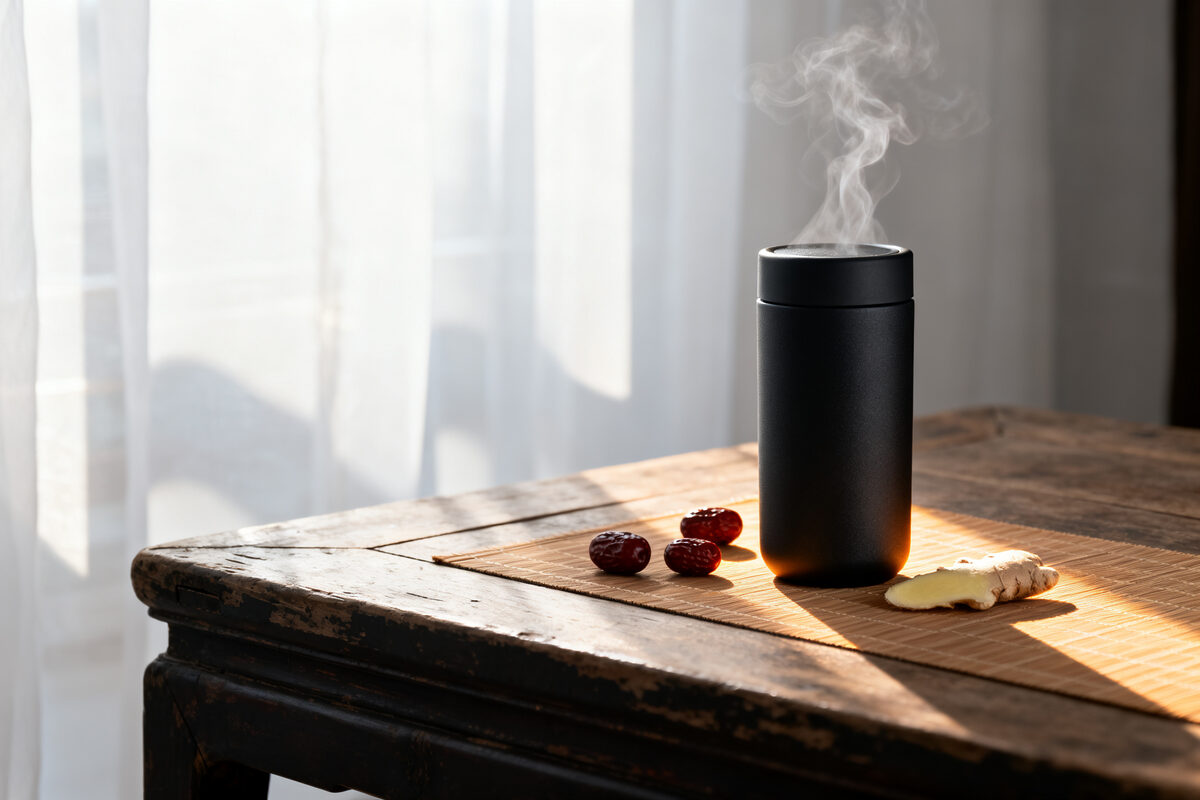
I recently bought a new thermos. Stainless steel, matte black, large capacity. Every morning I boil water, let it cool to warm, fill it up, and take it with me.
A friend saw my thermos and asked: "Since when did you get into wellness?"
I said: "It's not wellness. My mom won."
He laughed. I laughed too.
But when I picked up that thermos, there was a quiet little feeling inside. Like making peace with the kid who didn't want to carry a thermos. And like making peace with the mom who called so many times to remind me: "Don't drink cold things."
Some truths don't need to be rushed.
They'll wait for you. When you're ready, you'll pick up that cup of warm water yourself.
A few questions for myself, and for you who's reading this:
- Have you ever had health issues from drinking cold things long-term? What happened?
- If you tried drinking only warm water for a week, what do you think would be the hardest part?
- Did your mom ever say something "old-fashioned" that turned out to be right?