Three Mouth Ulcers and My Mother Saying: You've Got Fire
Mouth sores, acne, sore throat, swollen gums — why does Chinese medicine call all of these the same thing? After retracing a rough week, I started understanding what my body was saying.
Three Mouth Ulcers and My Mother Saying: You've Got Fire
The other morning I woke up and my tongue hit something sharp.
I looked in the mirror. A white spot on my tongue. Another one inside my lower lip. The worst was on my gum — swollen like I had a pebble stuck in there.
I texted my mom a photo. Took three tries to get it in focus.
She replied instantly: "You've got internal fire. Been staying up late again? Drink some mung bean soup."
I said, Mom, why is everything "fire" with you?
She said, Because with you, everything is fire.
She had a point.
I retraced my week: Monday, worked until 1 AM. Tuesday, had spicy hotpot twice. Wednesday, three cups of coffee instead of my usual one. Thursday, scrolling my phone until 12:30. Friday, someone took me out for barbecue.
I used to think "shànghuǒ" — literally "catching fire" — was unscientific. Canker sores, acne, sore throat, swollen gums, bloodshot eyes, constipation — these symptoms have nothing to do with each other. Why would they all have the same name? In Western medicine, mouth ulcers mean a vitamin B deficiency, acne is a sebaceous gland infection, pharyngitis is an upper respiratory infection, constipation is about fiber — each symptom has its own cause and treatment.
But the strange thing is, they always show up together.
Not one today, another tomorrow, a third the day after. They arrive at once. You wake up and there they are — mouth sore, face breakout, dry throat, the works — like they coordinated. And it always happens after a stretch of days that weren't right. Too much spicy food. Late nights. Too much pressure. Or emotions you swallowed and never let out.
And that's when you start thinking: maybe the Western approach of "one symptom, one cause" really can't explain why they come as a package.
I looked into it, and it turns out Chinese medicine's understanding of "fire" is far more nuanced than "drink water, eat less spicy food."
First, there are different kinds of fire, and they move in different directions.
One is called "excess fire." You genuinely ate too many heating things — hotpot, barbecue, fried food, even lamb and dried longan. Your body can't process that much heat at once, so it overflows outward through the mouth and skin. Excess fire comes on strong but leaves fast. A couple days of mung bean soup, some bitter melon, a plain diet, and the fire retreats.
The other is "deficiency fire." This one is subtler. It's not from eating too much of anything. It's because your body's "foundation" is depleted. The Chinese medicine term is "yīn deficiency" — you don't have enough "water" in your body. When yin fluid is insufficient, it can't hold down the yang energy, and that yang rises upward and spills outward, creating a false kind of fire.
Deficiency fire is slow to arrive and slow to leave. It doesn't blaze up like excess fire. It lingers — chronic mouth ulcers that keep returning, hot palms and soles at night, shallow sleep, dry mouth but no desire to drink large amounts of water, a red tongue with little coating.
Here's the irony: you absolutely cannot "clear" deficiency fire the way you clear excess fire. If you try mung beans, bitter melon, or coptis root on deficiency fire, you'll make it worse. Those are bitter-cold remedies that further damage yin.
Deficiency fire needs "nourishing yin" — not extinguishing the fire, but adding water. Tremella mushroom, lily bulb, pear, ophiopogon root, dendrobium — these moistening things are the right answer.
I checked myself and realized I probably had both.
The excess fire came from the barbecue and hotpot — only twice, but my digestion is weak to begin with. The deficiency fire came from consecutive late nights and coffee overload. Lack of sleep is the most yin-damaging thing there is, and coffee is a diuretic that accelerates fluid loss.
So my mom's mung bean soup was only half right. It would clear the excess fire, but for the deficiency part, I should have been having a bowl of tremella and lotus seed soup.
I explained this to my mom. She was quiet for a moment, then said: "Drink whatever you think is right. But first, put your phone down and go to bed at ten tonight."
Well. She was entirely right.
The more I thought about it, the more I felt that the reason "shànghuǒ" has such staying power in everyday Chinese life is because it's actually a body language.
Your body can't speak. It can't tell you, "Hey, your lifestyle lately has been off." But it can remind you another way — by making you hurt, making you swell, making you uncomfortable.
Western medicine thinks: mouth ulcer → vitamin B deficiency → supplement vitamin B. It's a "replace the part" logic. Fix what's broken.
Chinese medicine thinks: your overall state of balance has tipped, and one part of your body is showing it. It doesn't care whether the ulcer is on your tongue or your lip. It cares about — what in your life lately has gone wrong?
I don't think one is better than the other. But when you're sitting at home, looking in the mirror at a blister-lipped, dark-circled version of yourself, you know "where does it hurt" isn't the real question.
The real question is: you've been living too rough lately, haven't you?
My mom sent another voice message later. Sixty seconds. The gist:
When she was young, she was always getting "fire." Mouth sores were routine. Back then she didn't think about it — if it hurt, she endured it. Then a neighbor, a retired Chinese medicine doctor, told her something: "Fire doesn't just come in through the mouth. It comes out from the heart."
Meaning: emotions can cause fire, too.
Anger. Anxiety. Holding things in. Worrying constantly.
Back then she was raising a child alone while working, her husband away on business trips. She felt wronged, anxious, irritable — but she never said a word. And then her mouth would break out. Over and over, wouldn't heal for months. Later, when the kid grew up and work eased and her heart settled, the sores stopped coming.
She finished with: "So don't just think about what soup to drink. Think about whether there's a fire inside you that you haven't let out."
I put my phone down and thought about it.
There was.
There's a project at work that's been going badly. Not my fault, but not something I can fix either. Every meeting leaves me holding my breath, a frustrated anger I can't name. I'm not someone who complains — I feel like it won't help. But these things don't disappear just because you don't speak them. They just find another way out — through your mouth, in this case.
Chinese medicine calls this "liver constraint transforming into fire." The liver is responsible for the smooth flow of qi — energy moving freely through the body. When you're angry, suppressed, or unhappy, the qi gets stuck. Stuck long enough, it generates heat. Heat becomes fire.
And this fire loves to rise — to the head and face, causing dizziness, headaches, red eyes, bitter taste. To the mouth, causing ulcers and swollen gums.
So sometimes the fire you think came from food actually came from feelings.
Knowing all this, I did a few things:
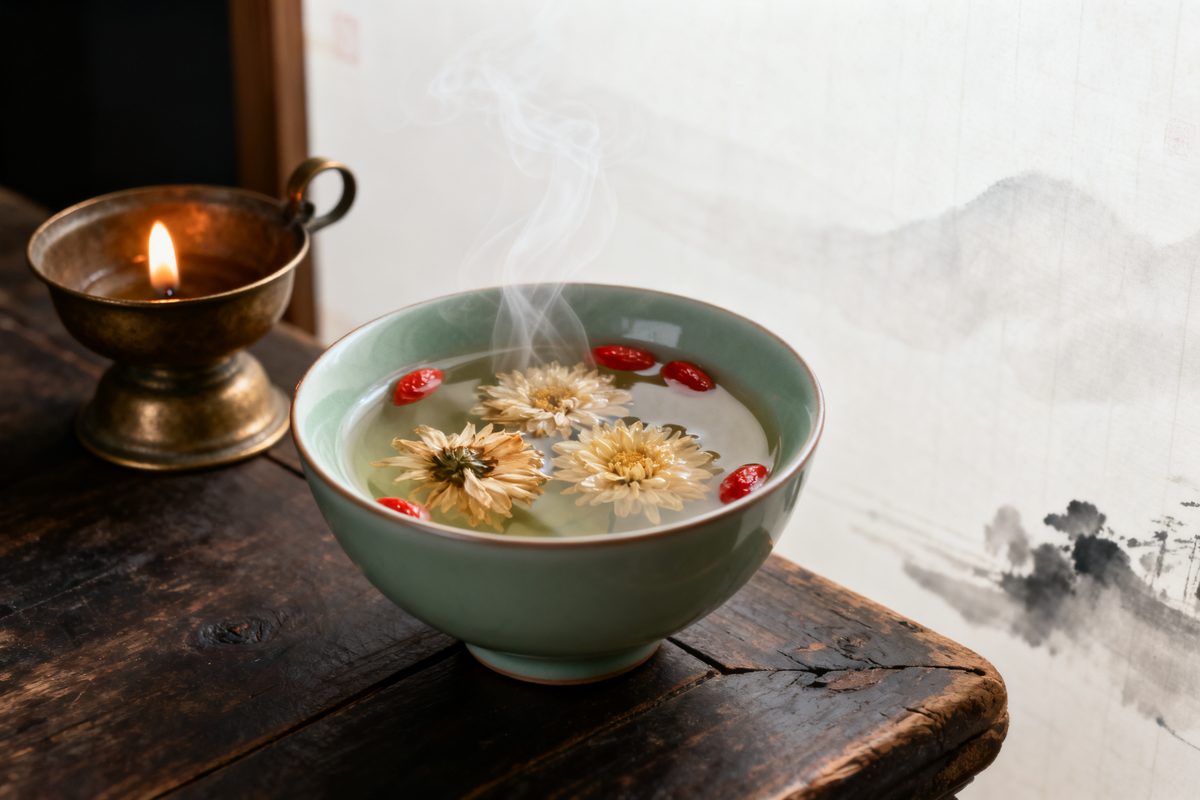
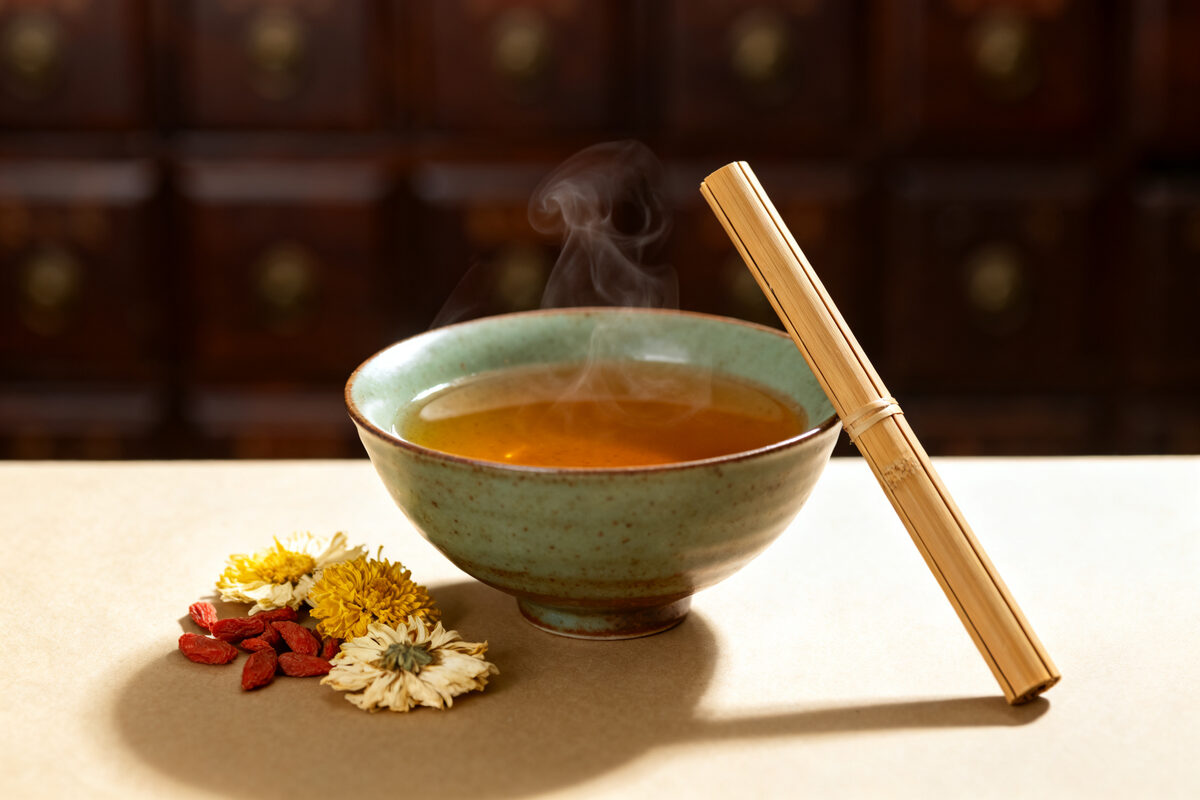
First, I made myself a pot of tremella and lily bulb soup. Not because I believe in ancient remedies, but because it's genuinely good and comforting. Tremella cooked until silky and thick, a few red dates and goji berries, simmered on low heat. When I drank it, my throat felt coated, and something inside me seemed to soften a little too.
Second, I cut my coffee back to one cup. The rest of the day, plain water, or chrysanthemum tea. Chrysanthemum clears the liver and brightens the eyes — exactly what I needed.
Third, and most important — that evening, I found a quiet spot and let that held breath out. Not to anyone in particular. Just to myself. This situation makes me uncomfortable. That person let me down. This decision feels wrong. After saying it all out loud, my chest did loosen, just a bit.
Then, at 10:30, I put my phone down.
Not early by any standard. But an hour and a half earlier than usual.
The next morning, my tongue found the ulcer again. Still sore. But somehow, less sharp.
I'm not the type to attribute every improvement to a single cause. Ulcers have their own healing cycle — maybe it was just time. But the overall feeling those next few days was genuinely better. Not "my mouth doesn't hurt" better. More like my whole self had loosened a notch.
As if my body was saying: Okay. I got your signal. You're starting to listen. I'll help you fix it slowly.
Later I thought about how there's always a kind of dialogue between us and our bodies.
It's just that most of the time, we don't want to hear it.
Mouth breaks out? Apply some ointment, tough it out for two days, move on. Next month, it comes back. Because the root cause — the late nights, the overeating, the swallowed emotions — is still there.
"Shànghuǒ" sounds like a folk term, unsophisticated. But I think it's actually one of the gentlest ways Chinese culture has of understanding the body. It doesn't say you're "sick." It doesn't scare you. It just says: you've got fire. You're overloaded. You should rest a bit. Pull back a little.
Drink more water. Go to bed early. Don't hold it in.
Sometimes the plainest advice is the best medicine.
Three questions for you:
1. The last time you had "fire" — was it from something you ate, or something you held in?
2. Has your body been trying to tell you something lately?
3. If you put your phone down at 10:30 tonight, what would you do with that extra hour and a half?