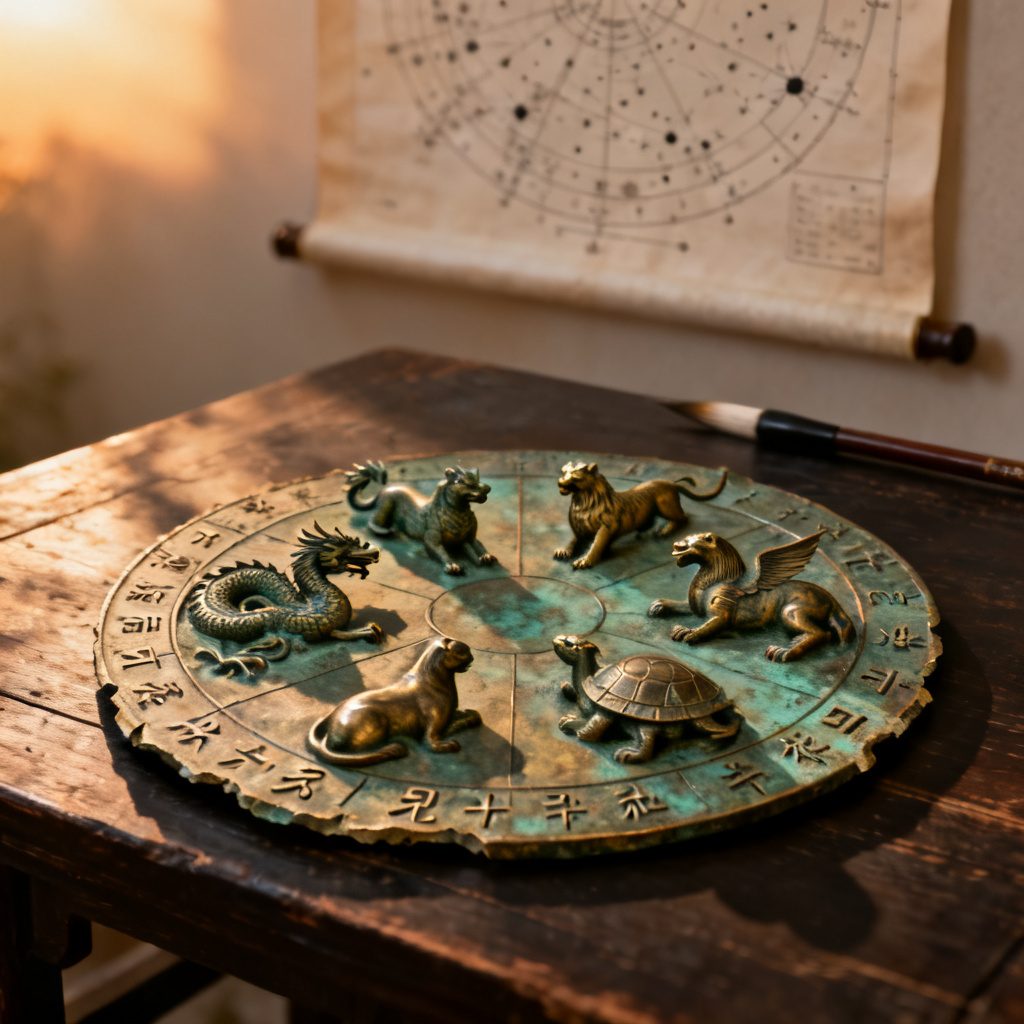
The Only Zodiac Animal Nobody Has Ever Seen
My coworker Kate asked me where she could see a dragon. I almost said "the zoo." Then I remembered: there is no dragon anywhere in the world. An animal nobody has ever seen — how did it hold a seat in the zodiac for three thousand years?
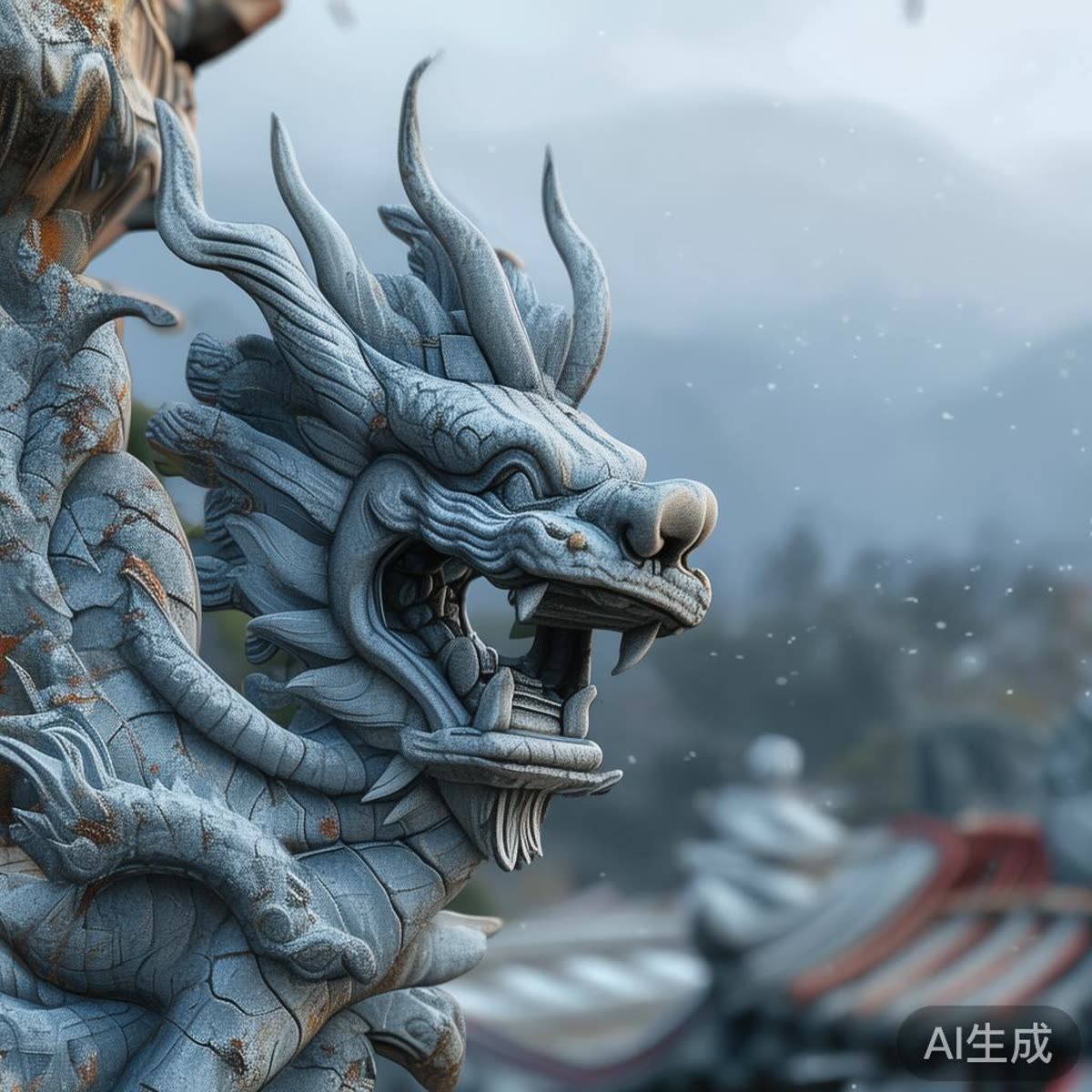
Last week my coworker Kate came over, all excited. "What's your zodiac animal? I'm a dragon!" Her eyes were shining, like it was the coolest thing a person could be.
"I'm a dragon too," I said.
She paused, then asked me a question that stopped me cold:
"Where can I see one?"
My first instinct was the zoo. The words were almost out before I remembered: there is no dragon in any zoo. Not in the aquarium. Not anywhere in the world. Of the twelve zodiac animals, the ox, horse, goat, rooster, dog and pig live on farms; the rat, tiger, rabbit, snake and monkey live in zoos. Only the dragon — nobody has ever seen one.
An animal nobody has ever seen. How did it hold a seat in the zodiac for three thousand years? And a seat near the very front?
I've been turning this over for a week now. The more I turn it, the more interesting it gets.
It isn't one animal
The first person to describe a dragon to me was my grandfather. The dragon, he said, is "nine resemblances, none of them complete": the antlers of a deer, the head of a camel, the eyes of a rabbit, the neck of a snake, the belly of a clam, the scales of a fish, the claws of an eagle, the palms of a tiger, the ears of an ox.
As a kid I thought this was the dragon's flaw — it couldn't make up its mind about what to be. Years later I read the scholar Wen Yiduo's theory, and understood it might be the dragon's greatest strength.
His idea: the dragon is a merged totem. Long ago, each tribe had its own animal — a snake tribe, a deer tribe, an eagle tribe, a fish tribe. Tribes fought, then joined into bigger alliances. Take a piece of your totem, a piece of mine, until you get something that carries a shadow of everyone and fully resembles no one.
The dragon isn't one animal. The dragon is everyone.
I can't judge whether the theory holds up academically. But I like it. It means the dragon was never meant to be seen. It was meant to unite.
What a dragon does
A Western dragon's main jobs: breathing fire, hoarding gold, getting slain by knights. A Chinese dragon's job is much humbler — rain.
That's it. Rain.
Go look at the old Dragon King temples. Most of them stood in the middle of farming villages, and incense burned thickest not on holidays but in droughts. Farmers didn't care what the dragon looked like. They cared that the ground was cracking, the seedlings were dying — Dragon King, please.
So the Chinese dragon's skill list is refreshingly practical: call the clouds, send the rain, manage the waters. Prayed to in droughts, prayed to in floods. It was the weather bureau of an agricultural world.
As a kid I thought that was a small job. Now I think: for people who ate by the sky's mood, no job was bigger than deciding whether it rains tomorrow.
Today we check the forecast on our phones, and the Dragon King is out of work. But he didn't disappear. He moved — into festivals. Dragon dances. Dragon boat races. The early-spring day called "the dragon lifts his head." From a god into a celebration.
I don't think that's a demotion. A god nobody needs to beg anymore, but everybody still likes — that's a good retirement.
Nobody has seen it. Why keep believing?
This is the part I most want to say.
Back to Kate's question: since nobody has seen a dragon, why have Chinese people believed in it for thousands of years?
I think the question is backwards. Maybe it survived because nobody has seen it.
Have you seen a dragon? No. So what does the dragon in your mind look like?
I'd guess everyone's dragon is different. A farmer's dragon is dusty and smells of coming rain. A carpenter's dragon coils on a roof beam, scale carved by carved scale. A child's dragon flies, and lives in a palace behind the clouds. My grandfather's dragon was probably the paint-flaked clay statue in the village temple — he lit incense there on the first and fifteenth of each month, and what he was really asking for wasn't rain. It was a settled heart.
A thing you can see gets stared at until it's boring. It gets disproven. It goes out of fashion. A thing you cannot see — every person's imagination can move in and make a home.
The dragon's antlers came from the deer, its eyes from the rabbit, its claws from the eagle. It was assembled by countless people, and it lives separately in countless hearts. It belongs to no zoo, which is exactly why it is everywhere.
Loong, not dragon
One more small thing. In recent years, more and more people translate the Chinese word for dragon — 龙 — as loong, not dragon. At first it seemed fussy to me. Gradually I got it: "dragon" arrives carrying fire, evil, and a knight's sword. Ours carries none of that. Ours doesn't breathe fire — it calls rain. It doesn't guard gold — it guards good weather and full harvests.
Kate asked me later whether the dragon year is considered especially lucky, whether couples wait for it to have a baby. It's true — birth rates jump in dragon years. She laughed: a creature nobody has ever seen, and all these very real people lining up for it.
I found it funny too. Then I thought: how many unseen things do we all carry? Luck. Blessing. Protection. "Next year will be better." Nobody has ever seen any of them. No one's life works without them.
Kate the dragon, me the dragon, millions of us dragons. None of us has seen the dragon. All of us are willing to believe it means something good.
Maybe that's why it never left. The dragon isn't in the water or the sky. It lives in the small willingness to believe — the little place in a person where hope keeps a seat warm.
Three questions, for you:
- What does the dragon in your mind look like?
- If a dragon were actually found one day — alive, proven real — would that be a good thing, or somehow a little sad?
- What unseen things are you willing to believe in anyway?