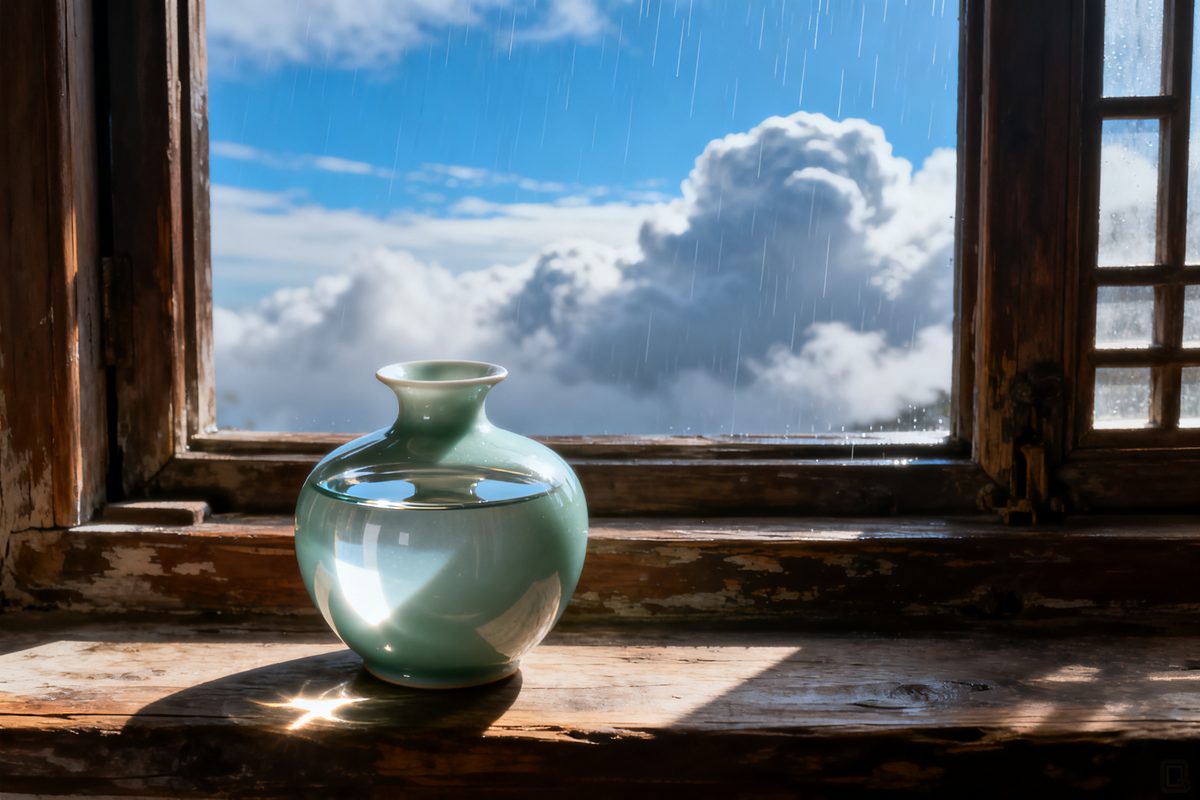
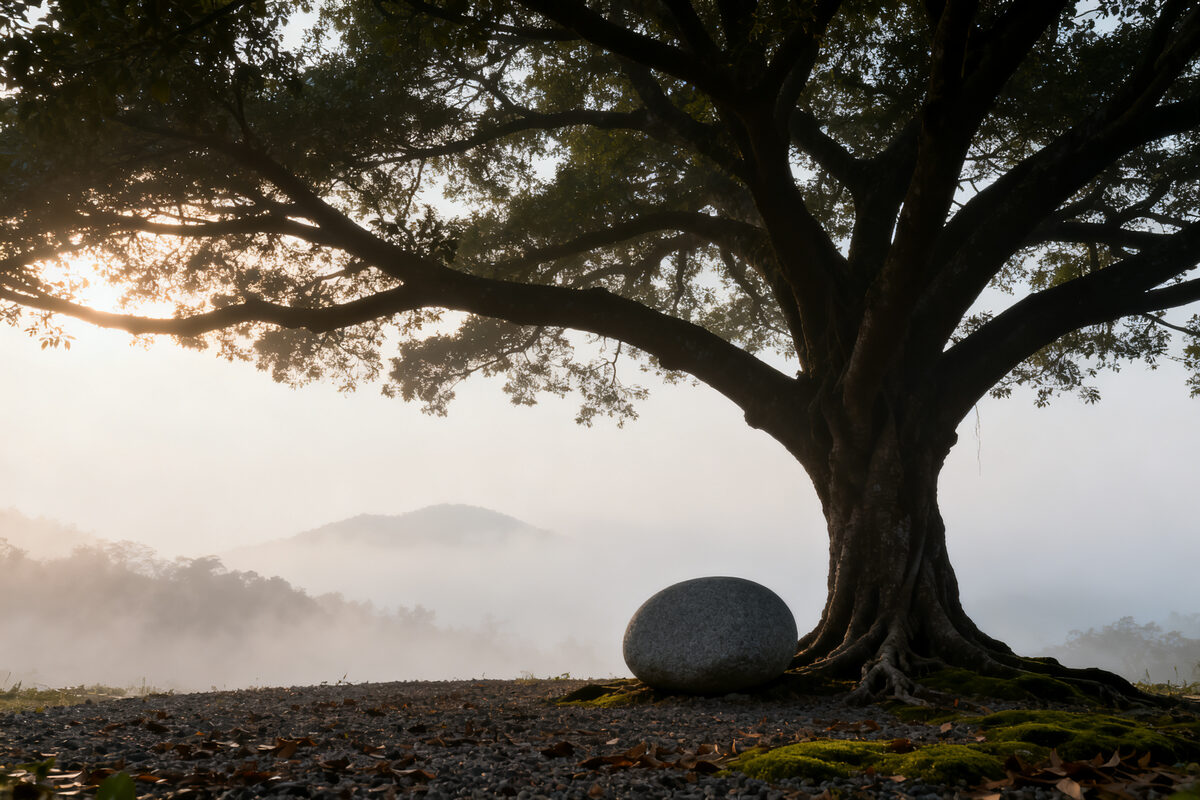
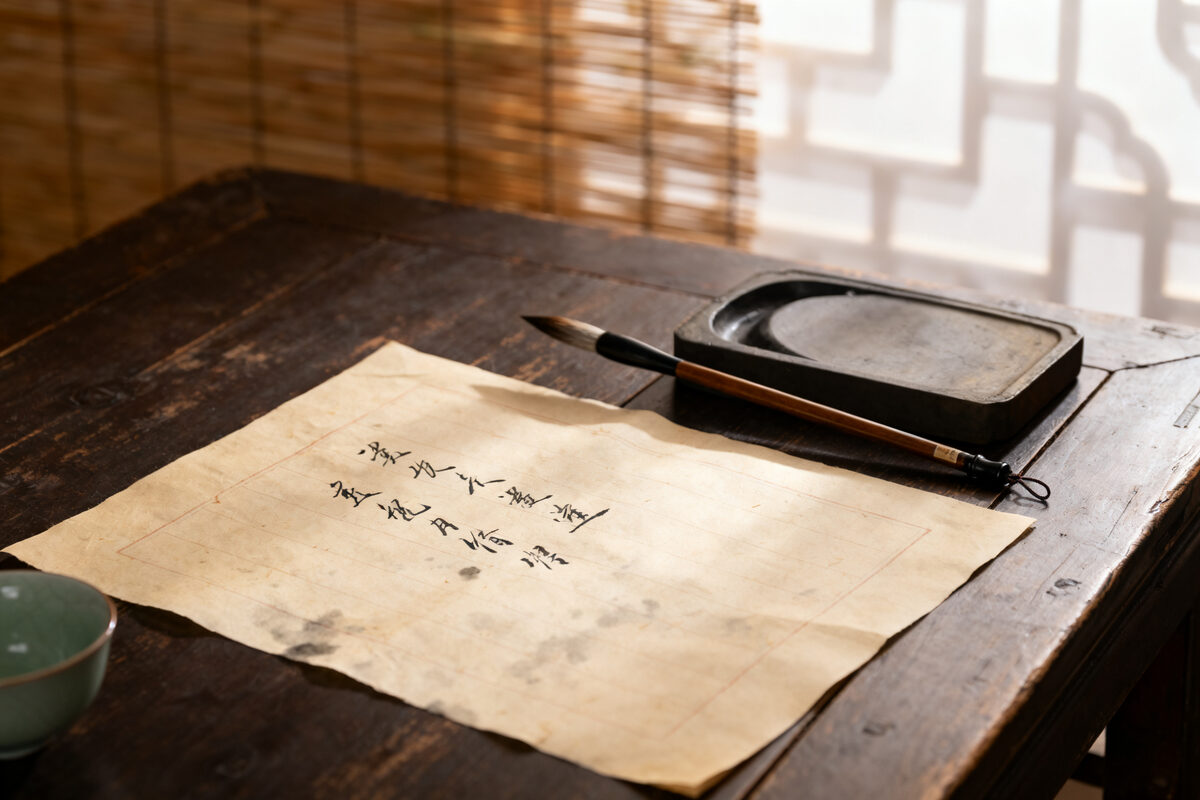
Your Own Treasure: Dazhu Huihai and the One Who Searched Outside
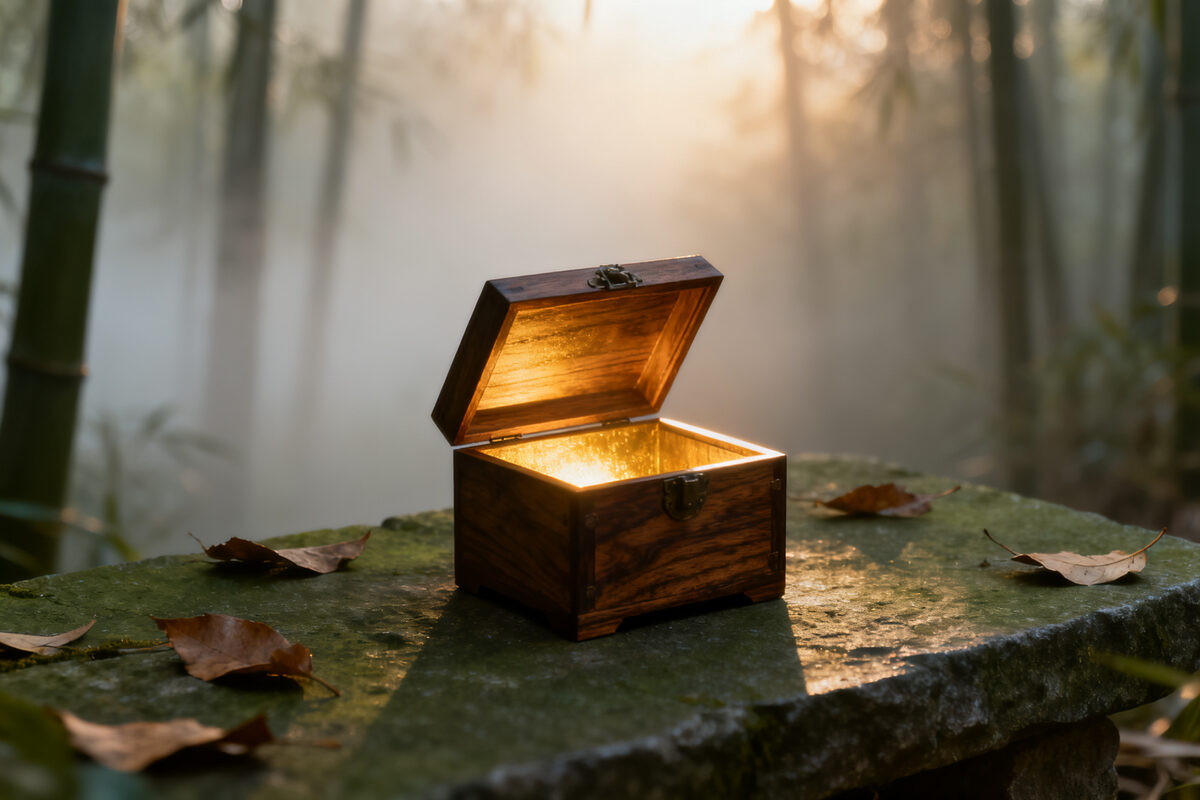
A monk asked Zen Master Dazhu Huihai how to attain the Dharma. Huihai said: "Your own treasure, why not open it?" This story stayed with me for a long time. What we've been searching for might never have been out there.
Your Own Treasure: Dazhu Huihai and the One Who Searched Outside
A couple of days ago I was flipping through an old book and came across a conversation. I stayed on that page for a long time.
A monk went to ask Zen Master Dazhu Huihai: "Teacher, I've been practicing for years, but I still haven't grasped the essentials. What should I do to attain the Dharma?"
Huihai said something very ordinary: "Your own treasure — why not open it?"
The monk was caught off guard. "My own treasure? What treasure? I'm quite poor, I don't have any treasure."
Huihai said: "The very thing you're using to ask me right now — that is your treasure. It has everything, not a single thing is missing. And yet you come to me asking for something."
This story is very short, but after I finished reading it I sat there for a long time without turning the page.
I understand that monk.
I understand his way — going everywhere asking people, flipping through books, searching for a "method." Because I'm the same way.
It's a little embarrassing to admit. In the years since I first encountered Buddhism, the detours I've taken could circle a temple three times. In the beginning, I bought books everywhere. The Diamond Sutra, the Surangama Sutra, the Lotus Sutra — stacked beside my bed like a wall. I'd flip through a few pages of each, find I couldn't understand them, and buy the next one. Then I started listening to all kinds of lectures — this teacher's talks, that master's recordings — my phone was stuffed with dozens of gigabytes.
For a while, I was obsessed with finding the "best" method of practice. Should I sit in full lotus or half lotus? Should I count my breaths or follow them? Which sutra should I recite? Which mantra should I chant? Every time I saw someone online saying "this particular method is incredibly effective," I wanted to try it.
Like being in an enormous supermarket, pushing a shopping cart, wanting to put everything in.
Then one day — a completely ordinary day — I was sitting at home brewing tea. The tea was ready, I picked up the cup and took a sip, and suddenly felt — this is it.
Nothing special happened, no radiant enlightenment. Just that moment: the tea was the right temperature, birds were singing outside the window, I was sitting there, thinking about nothing, chasing nothing, searching for nothing.
And then I realized — the thing I'd been searching for might never have been in those books, those methods, those "better" places.
It was right here. In the hand that held the cup. In the ear that heard the birds. In that fleeting moment when my mind was completely empty.
Maybe that's what Dazhu Huihai meant by "your own treasure."
This story comes from the Jingde Record of the Transmission of the Lamp. Dazhu Huihai was a disciple of Mazu Daoyi and was quite well-known in the Tang Dynasty. Many people came to ask him about the Dharma, and his answers were always remarkably simple.
Someone asked him: "How can I become a Buddha?"
He said: "No need to become one."
"Why not?"
"Because you already are."
This kind of answer might seem like evasiveness today. But the more I think about it, the more I feel he wasn't being evasive at all — he was pushing people back toward themselves. Stop running outward, come back and look at yourself.
We humans seem to have a built-in sense that we're not good enough. Not smart enough, not diligent enough, not spiritually gifted enough. So we always feel the answer is out there — with someone wiser, in some deeper scripture, in some more exalted practice.
But if you forever believe the answer is out there, you'll never stop to see what you already hold in your hands.
Later I thought about why the phrase "your own treasure" moves me so much.
I think it's because it gives you a completely different starting point.
Usually we think practice begins with lack — I lack wisdom, so I study. I lack concentration, so I sit. I lack compassion, so I practice. There's nothing wrong with this starting point, but it has a trap: if you always feel you're lacking, you'll always be searching.
But "your own treasure" means the starting point isn't lack — it's fullness.
You are already complete. Your mind is already pure. Your Buddha-nature has never been lost.
This doesn't mean you don't need to practice. It means the meaning of practice changes — it's not about acquiring something from outside, but about discovering what you already have.
It's like a jar of gold buried in your backyard. You don't know it's there, so you go around borrowing money from everyone. Someone tells you "there's gold in your backyard." You're not "acquiring" the gold — it was always there. You're just uncovering it.
What Dazhu Huihai said was simply: "There's gold in your backyard."
Later I reread this conversation and noticed that the monk actually asked a follow-up question.
The monk said: "You say I have a treasure — how come I can't see it?"
Huihai said: "Who is asking this question?"
The monk couldn't answer.
That's a brilliant exchange. You ask "how come I can't see it?" — but the very thing capable of asking that question, that is your treasure. The thing that can perceive, think, doubt, question — isn't that your treasure?
We always want to use the treasure to trade for another treasure. Use the eyes to see "seeing" itself. Use the hand to grasp the "hand."
Huihai's point is: stop searching. The very thing you're using to search — that is it.
Of course, knowing about "your own treasure" and actually living from that place are worlds apart.
It's the same for me. I understand it intellectually, but when things happen I still habitually run outward. When I'm anxious, I look for methods. When I'm lost, I look for answers. When I'm unhappy, I look for happiness.
But sometimes, in very small moments, I can feel that peace of "no longer searching."
Like watering plants in the early morning — water sprinkling on leaves, sunlight passing through the droplets. In that moment, nothing is missing.
Like taking a walk after dinner in the neighborhood — streetlights on, the smell of someone's cooking in the air. In that moment, I don't want to be anywhere else.
Like sitting in my study late at night — the tea beside me has gone cold, insects chirping outside the window. The world feels vast, I feel small, but completely at ease.
These moments aren't something I practiced into existence. They were always there. It's just that normally I'm running too fast to stop and notice.
If Dazhu Huihai were alive today, he'd probably say: See, you said it yourself — those moments "were always there." So what are you running for?
I don't know if you, reading this, are like that monk — searching for something right now.
Maybe you're searching for inner peace. Maybe for the meaning of life. Maybe for a way to let yourself relax.
I wouldn't dare to tell you "stop searching." I can't even do that myself.
But I'd say — sometimes, you might try. Just stop. Right here.
Feel your breath. Look at the light outside the window. Listen to the sounds around you.
The you that can feel all of this — doesn't lack anything.
Truly.
Three questions for you, if you've made it this far:
- What if the thing you're searching for right now is already in your hands — what would it be?
- When was the last time you weren't thinking about anything, weren't chasing anything?
- If the "treasure" isn't somewhere far away, but right where you're sitting right now — what would it look like?