My Friend Cleans Her Rose Quartz in Moonlight. My Mother Calls It Peach Blossom Luck
Moonlight cleansing, a note under the stone, careful placement by the bed — the Western recipe for love, step by step. My mother knows none of it. She just calls the whole thing peach blossom luck, a phrase that grew out of a Tang dynasty poem. Where is your peach blossom corner? I laid the two traditions side by side and found them saying the same thing.
A friend came back from Austin and brought me a small bag of rose quartz.
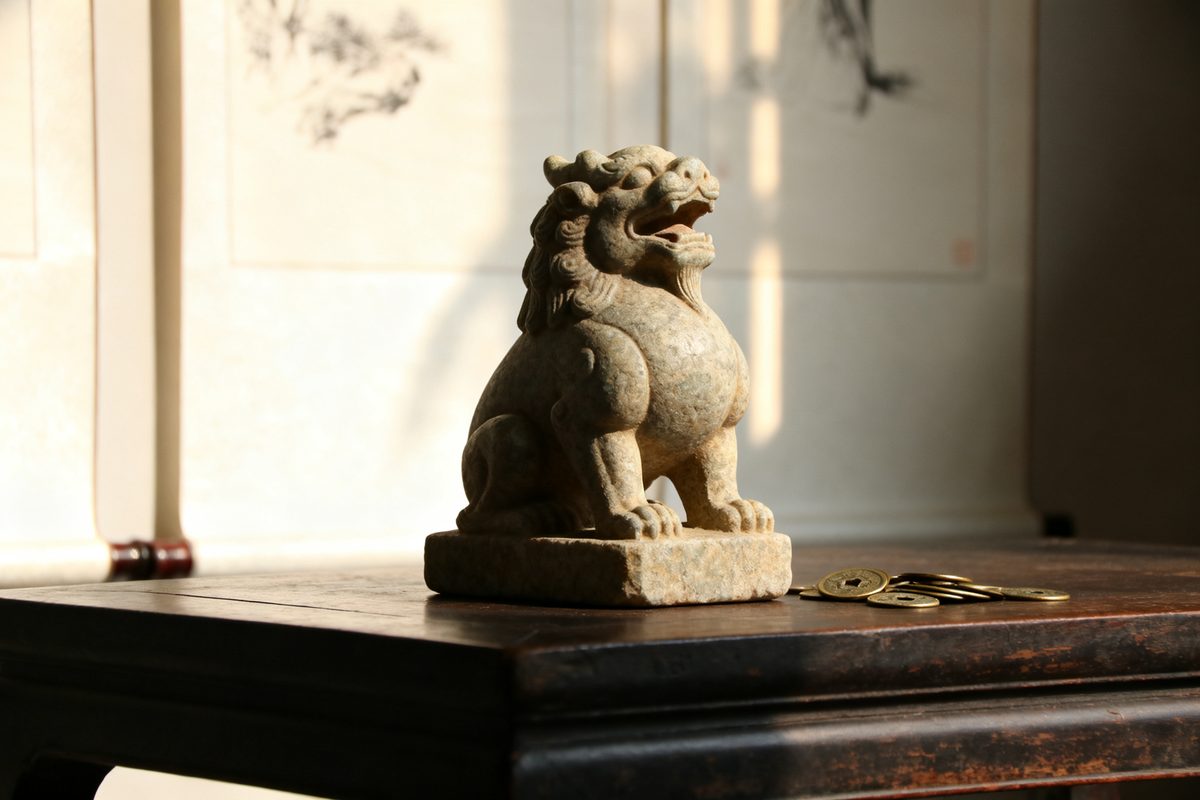
She said it's a thing over there now. Rose quartz, "the love stone." You can't use it right away — first you cleanse it. Leave it under moonlight overnight, full moon if possible. Then you write down what kind of love you want, on a small note, and set the stone on top of it. Look at it once a day.
She explained all this very seriously. I didn't laugh. I just thought to myself: my mom calls this peach blossom luck.
The Chinese have been talking about peach blossom luck for over a thousand years. Same wish, two vocabularies. A pink stone pressing down on a note full of longing. A flower that blooms in early spring, growing in the southeast corner of your home.
Later I looked into it, and the Western version is more elaborate than I expected. The rose quartz goes by your bedside, but never facing the door. It should be smudged with sage first. Crystals get "tired" of people over time, so they need to go back into the moonlight to rest.
See — they also talk about direction, about cleansing, about a thing that needs to be tended.
And on our side, we talk about the peach blossom position.
Where the Peach Blossom Position Is
In feng shui, the most common way to find your peach blossom position starts from the earthly branch of your birth year. Your zodiac animal maps to a branch, the branch maps to a trine, and the trine points to a spot called xianchi — the salt pool. That's your peach blossom position.
Sounds convoluted. The folk version is much simpler, just four lines:
Monkey, Rat, Dragon — your peach blossom is in the west. Tiger, Horse, Dog — in the east. Pig, Rabbit, Goat — in the north. Snake, Rooster, Ox — in the south.
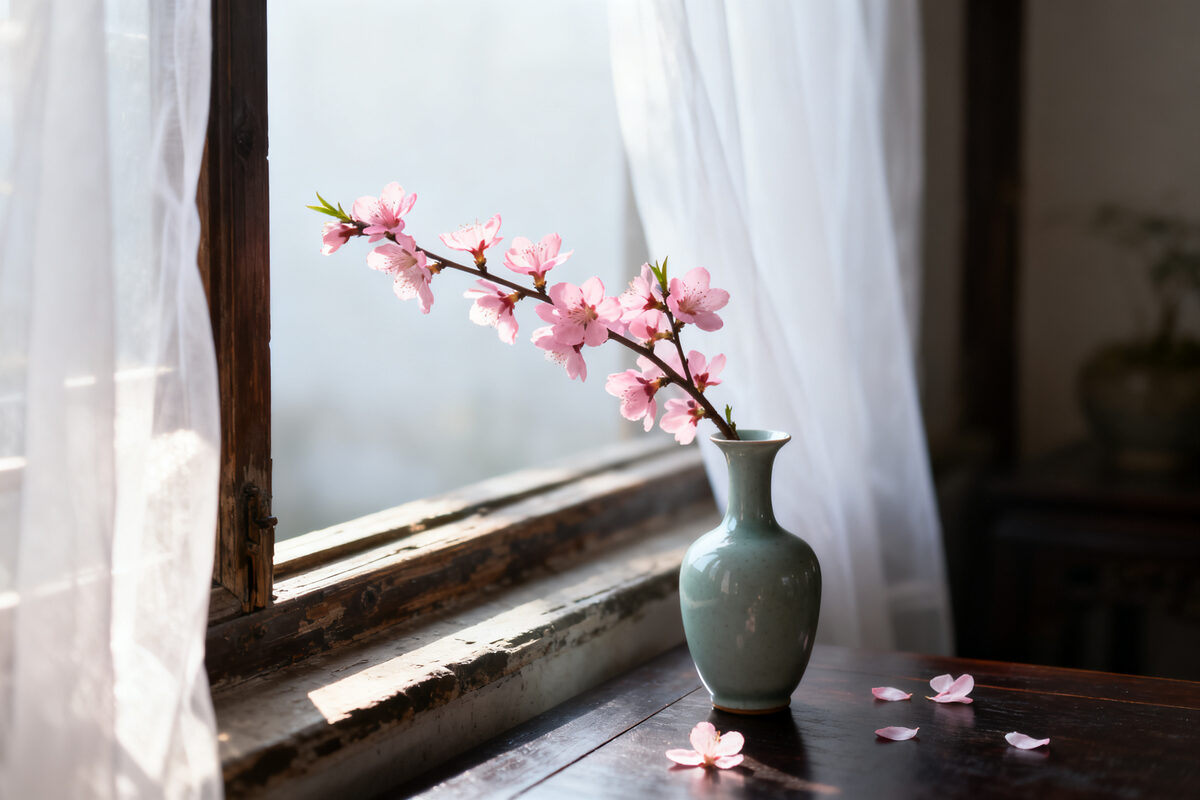
The usual advice: put something alive in that corner of your bedroom. Fresh flowers, a cup of clean water, either works. Some say a vase with fresh flowers, change the water often, replace the flowers the day they wilt. The whole idea comes down to one word: alive.
When I was reading up on this, something caught in my chest. Peach blossom positions, moonlight cleansing, the southeast corner, no crystals facing the door — two traditions separated by the Pacific Ocean, saying the same thing.
When a person wants love, they become willing to do something for it. Even if it's just one small gesture.
The Phrase Came From a Poem
Before you call peach blossom luck superstition, let me tell you where the phrase comes from.
In the Tang dynasty there was a poet named Cui Hu. One Qingming festival, he went walking alone south of the city, got thirsty, and knocked on a door to ask for water. A young woman opened it, gave him water, and stood leaning against a peach tree in full bloom. The flowers were pink, her face was lit, they reflected each other. He drank the water, thanked her, and left.
The next year, on the same day, he thought of that place and went back. The door was locked. The tree was still there, still blooming. The person was gone. So he wrote a poem on the door:
Last year, on this day, at this gate, her face and the peach blossoms glowed pink together. Her face, I know not where it has gone. The peach blossoms still smile in the spring wind.
Four lines. One meeting. One missing.
From that poem, "her face and peach blossoms" became the Chinese shorthand for a love you missed, and "peach blossom luck" slowly became the luck of meeting love at all. There's no god in this phrase, no ghost, no talisman. Only a tree that blooms on schedule, and a person who didn't stay.
I've always felt that when Chinese people talk about peach blossom luck, underneath it is this story. Not "to summon," but "to meet." When the luck arrives, are you there? Did you stay?
The Western rose quartz is about attraction — pulling something toward you. The Eastern peach blossom is about encounter — two people arriving at the same place at the same time.
Which is better? I don't know. Probably you need a little of both.
The Vase, the Water, and the Length of One Stick of Incense
I don't want this to become a how-to guide. But since my friend asked, I'll write down what I know, the common sayings — the way I'd tell them to her.
Fresh flowers in the peach blossom corner of the bedroom — that's the most widespread practice. Real flowers only. Dried flowers don't count. Plastic counts even less. Change the water every couple of days. The moment the flowers fade, replace them. Never keep wilting flowers there.
Why not dried flowers? The feng shui explanation: fresh flowers carry living qi, dried ones carry dead qi. Step out of the feng shui frame for a second and look at it plainly — changing water every other day, replacing flowers every few days, this is a person regularly tending something alive. Tending changes a person. When you keep flowers in your peach blossom corner, what you're really keeping is the version of yourself that's willing to change the water every day.
A person who can't be bothered to change the water probably couldn't catch the peach blossom even if it fell.
That's harsh, I know. The first person I thought of was me. The cup of clean water in my corner had been sitting there for a week, collecting a layer of dust I couldn't even see.
Another rule: no clutter in the peach blossom position. Old boxes, clothes you don't wear, cardboard packages you've been meaning to break down — none of it. The reasoning is simple enough — the spot is occupied, so nothing new can come in.
I laughed writing this. Isn't this just decluttering? The thing Japan learned from Zen, America turned into a bestselling book, and Chinese feng shui compresses into one sentence: don't pile stuff there.
One insight, three kinds of packaging.
My Mother's Version
My mother has never heard of a peach blossom position. She has her own version.
The year I left for college, she tucked a small peach-wood branch into my suitcase, wrapped in red string. "Peach wood wards off evil," she said. "You'll be far from home. Keep it with you."
Peach wood protects. Peach blossom attracts. Same tree, opposite jobs. The tree doesn't care. The tree just blooms after Qingming, every year.
Later I read that the ancients separated these two things early on: peach wood was the door — defense, "may nothing bad come in." Peach blossom was the meeting — openness, "may the right person appear." The peach tree at the family gate: in spring its flowers said welcome, its wood charms said guard. One tree, saying both the opening and the closing of a door.
My friend in Austin has a moonlight-cleansed rose quartz by her bed. I have my mother's peach-wood branch at the bottom of a drawer. Neither of us has met anyone. But we both keep the stone, keep the branch.
Maybe it was never about whether it works. Maybe what matters is that neither of us has given up on meeting.
Before the Meeting, Become That Person
This is where the article should end. But there's one more line I've been hesitating over.
All of it — peach blossom corners, rose quartz, red strings, moonlight — these are gestures of welcoming. They tidy up a spot and wait for something to arrive. But the old feng shui texts have a second half of the sentence that almost nobody quotes: the position may be strong, but the person must match it.
You can tend the perfect corner and still be a bitter person. You can be kind and bright and never need a corner at all.
So if you ask me whether peach blossom positions really work, my honest answer is: it depends on what you let it cultivate in you.
A person who changes the water regularly, throws out the wilted flowers, clears the clutter, keeps the space open — that person is living in a way that has room for someone else. I don't know if the feng shui works. I do know that way of living is closer to meeting.
Same with the rose quartz. My friend looks at that little note every day, which really means: every day she reminds herself what she's asking for. Ask often enough, and you slowly grow into the shape of your own answer.
The stone doesn't work. The person who keeps asking — that one might.
Ending
I gave the rose quartz back to my friend. Not because I don't believe in it, but because that stone chose her, not me. Her moonlight is better anyway.
I kept my mother's peach-wood branch. It isn't in charge of love. It's in charge of reminding me that someone, in the place I set out from, wished me safe.
When the peach blossoms open is not up to me. The water in the vase is.
Tomorrow, first thing, I'll change that water.
Three questions to leave with yourself:
- If you really had a peach blossom corner, what is piled on it right now?
- Is there one small thing you'd be willing to change the water for, every day?
- When was the last time you made room for a meeting?