Too Much Heat: The Word That Won't Translate, and the Weather Inside Your Body
My coworker said stressed. My mom said fire. One word my language has that English can't hold — and a two-thousand-year-old way of reading the body as weather.
A pimple appeared on my chin. Hard, sore to the touch.
A coworker saw it and said, very naturally, "You're stressed." She wasn't wrong — the project deadline had been brutal. She suggested switching to half-caff, sleeping earlier, maybe some cream if it got worse.
That evening my mom called. She took one look at me through the camera and said: you have too much heat in you.
I froze for a second. The two diagnoses — stressed, and "heat" — seemed to be about the same thing, and yet not the same thing at all. My coworker saw pressure. My mom saw fire. Pressure lives outside. Fire lives inside.
I kept turning this over. "Shanghuo" — rising heat — is a word I grew up with. Canker sores, swollen gums, pimples, constipation, nosebleeds: all heat, always heat. I never once asked what it meant, the same way you never ask why the sky is blue.
Then one day I tried to translate it into English, and found that it wouldn't go.
The word that won't translate
It's not inflammation, though swollen gums do look inflamed. It's not infection, no bacteria involved. And it's definitely not "internal heat" — say that literally and people ask: did you take your temperature? What was it?
Nothing. You have heat, and the thermometer knows nothing about it.
Where is the heat? Nowhere, and everywhere. On the tip of your tongue, at the corner of your mouth, in the color of your urine, in that dry-throat moment when you wake up. It isn't a thing. It's a state, a tendency, a direction the body is leaning toward.
Chinese medicine doesn't see the body as parts. It sees weather. The body has its own climate — cold and heat, dryness and damp, six kinds of "pathogenic qi," and fire is only one of them. When the climate tips out of balance and fire takes over, the body files its complaint: a blister at the mouth is fire finding an exit; sleeplessness is fire disturbing the spirit; a pimple on the chin, the old folks say, means the fire is moving down.
I looked into it later, and it's genuinely interesting: Western medicine has no disease called "heat." But everything behind it — chronic fatigue, a greasy and spicy diet, poor sleep, emotions all knotted up, finally erupting as mouth ulcers, acne, constipation — each of those has its own name and its own papers. They just never get filed in the same drawer.
In Chinese, they've shared one drawer for two thousand years. The label on the drawer reads: fire.
Fire you can eat
My mom's understanding of heat is very concrete: heat is something you eat.
One summer when I was a kid, I ate half a jin of lychees in one sitting and got a nosebleed that night. My mom didn't panic. She looked like she'd been waiting for this exact moment. "See? Lychees are heating." She boiled a pot of mung bean soup — green, no sugar — and had me sip it slowly.
That was the first time I vaguely sensed that in my mom's world, food falls into two kinds. Not meat and vegetable, not carbs and protein. Cold and hot. Lychees, longans, cherries, lamb, anything fried, anything spicy — hot. Mung beans, bitter melon, winter melon, pears, chrysanthemum, lotus seed core — cold.
It has nothing to do with temperature. An iced lychee cocktail is still "hot" in this system; a boiling pot of mung bean soup is still "cold." Hot and cold don't describe the thermometer. They describe which way your body tends after the food goes down. This fascinates me: physical fire and bodily fire obey entirely different physics.
I once explained this to a foreign friend. He said it's like food having a personality — some foods are hot-headed youth, some are calm hermits. Honestly, that's not a bad translation.
Western nutrition looks at food and sees composition: calories, protein, vitamins, antioxidants. Food as a pile of numbers. My mom looks at food and asks where it will push the body. One is a microscope. The other is a weather map.
I can't tell you which is more true. I only know that when the corner of my mouth cracks, the first thing I reach for isn't a vitamin. It's mung bean soup. The body is more honest than the mind. It believed in that language first.
Fire from staying up, fire from swallowing anger
But not all fire comes from the dinner table.
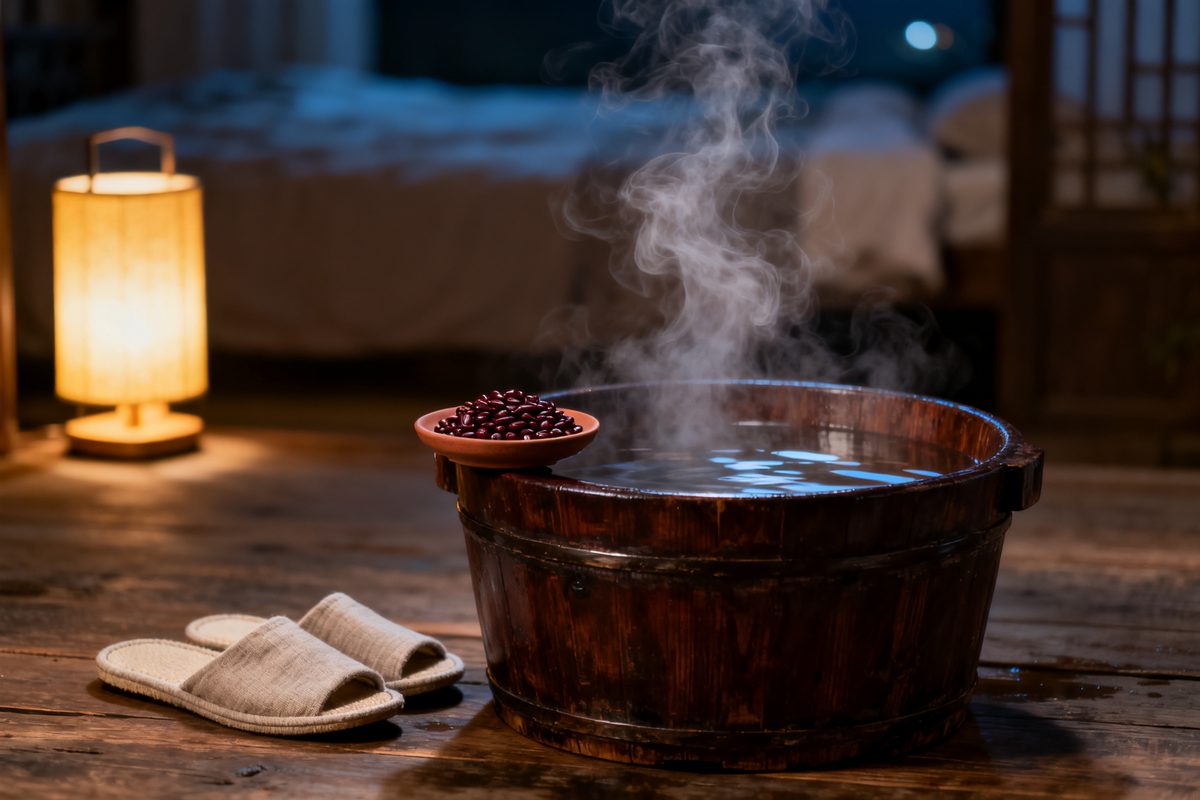
In college I pulled all-nighters for a paper, and by the end there was a sore in my mouth that hurt with every bite. Nobody had explained the link between sleep and fire; I didn't connect it either. Looking back now: those nights were the lamp burning through its oil until the wick caught.
Chinese medicine talks about "yin deficiency, fire flaring" — the water runs low, and the fire relatively high. Like a pond drying: the stones emerge at the edge, the sun touches them, they scald your hand. The sun didn't get crueler. The water got shallow. Staying up late drains yin. What you burn isn't time — it's the pond.
And there is a fire that comes from anger swallowed.
There was a stretch at work when things went badly and I held a breath I could neither swallow nor release. During those weeks I woke every morning with a bitter taste in my mouth. Western doctors found nothing. My mom heard my story and said three words: liver fire.
I'm not sure the "liver" there is the anatomical liver — almost certainly not. In Chinese medicine the liver is a system of functions; it governs the smooth flow of qi. When qi gets stuck, jams up, and sits there long enough, it turns to fire. Like traffic piled up for hours until every engine overheats.
What you notice in this language is that emotions have physical consequences. Grievance becomes a bitter mouth. Anxiety becomes sleeplessness. Swallowed anger becomes lumps in the breast, nodules in the thyroid. The body has been listening all along, keeping the books. You thought swallowing it was the end of it. The body says: no, I wrote it down.
This is probably the part of Chinese medicine I trust most — not because the theory is precise, but because it takes seriously the idea that feelings can injure flesh. And I verified it once, with my own bitter mouth.
Real fire, false fire
One year my heat ran high, so I boiled a huge pot of mung bean soup and drank it daily for a week. The fire didn't go down. Instead I felt more drained, and my appetite went with it.
Later, an elder who knew Chinese medicine said: yours is deficiency fire. The more you clear it, the more deficient you get.
Deficiency fire means, roughly: it's not that the fire is too strong — it's that the water is too little. The same redness and swelling, two different causes. Excess fire is too much wood on the stove; deficiency fire is a kettle nearly dry. The cure for one is to pull the wood out; for the other, to add water. Opposite directions.
When I explained this to a friend, I used the kettle image: the kettle is screaming. Either the flame is too big, or the water is almost gone. Same sound, opposite fix. If the water is gone and all you do is lower the flame — well, fine, but the real problem is the water.
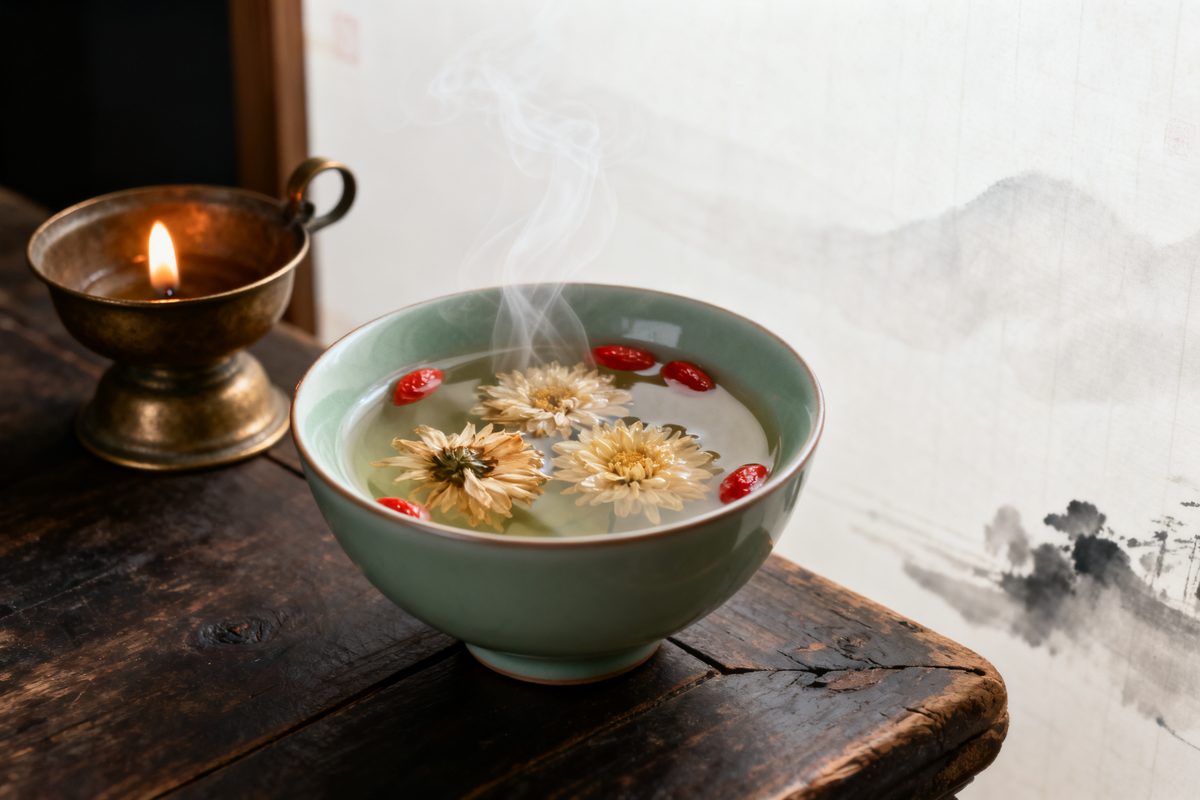
I sounded confident, but honestly I'm not. Is "heat" really inflammation? An immune response? Vitamin deficiency? Or is there truly a cold-hot system running underneath? I still don't know. What I can confirm is experiential: chrysanthemum tea, and my eyes aren't as red; mung bean soup, and my urine runs clear; a few nights of real sleep, and the pimple deflates on its own.
The body votes with results. As for the theory — doctors from two thousand years ago and papers from last year each hold their ground. I listen to both and doubt both. That's my mom's attitude too. She never studied theory. But she remembers every correspondence, like a living farmer's almanac.
Good weather, good body
That pimple from the other day: I didn't put anything on it, didn't do anything special. The project happened to wrap up, I slept a few full nights, ate light dinners, brewed chrysanthemum and goji twice. Three days later the pimple flattened, leaving a small dark mark, like the waterline a tide leaves on sand.
If my mom knew, she'd say: see, the fire went down.
If my coworker knew, she'd say: "See, it was just stress."
They're describing the same thing. One in the language of fire, one in the language of pressure. Different languages — and yet the prescriptions match: rest, eat light, drink water. Two worldviews, walking for two thousand years, finally meeting at "get some sleep."
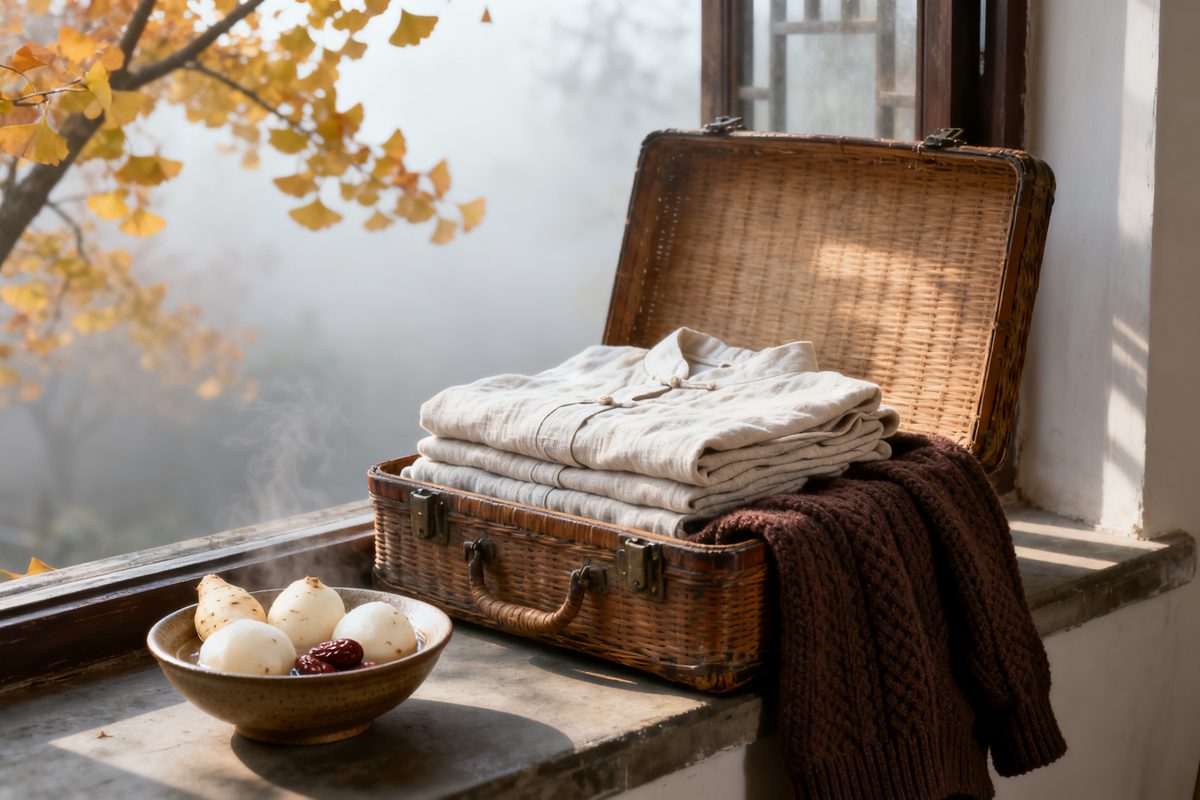
Sometimes I think what moves me most about the word "heat" isn't its accuracy. It's the gentle assumption underneath: that the body is a place with weather. It has its own seasons, its own dry years and rainy years. Fire means drought; clearing means rain has fallen. You can irrigate, you can shade, but you can't lose your temper at the weather.
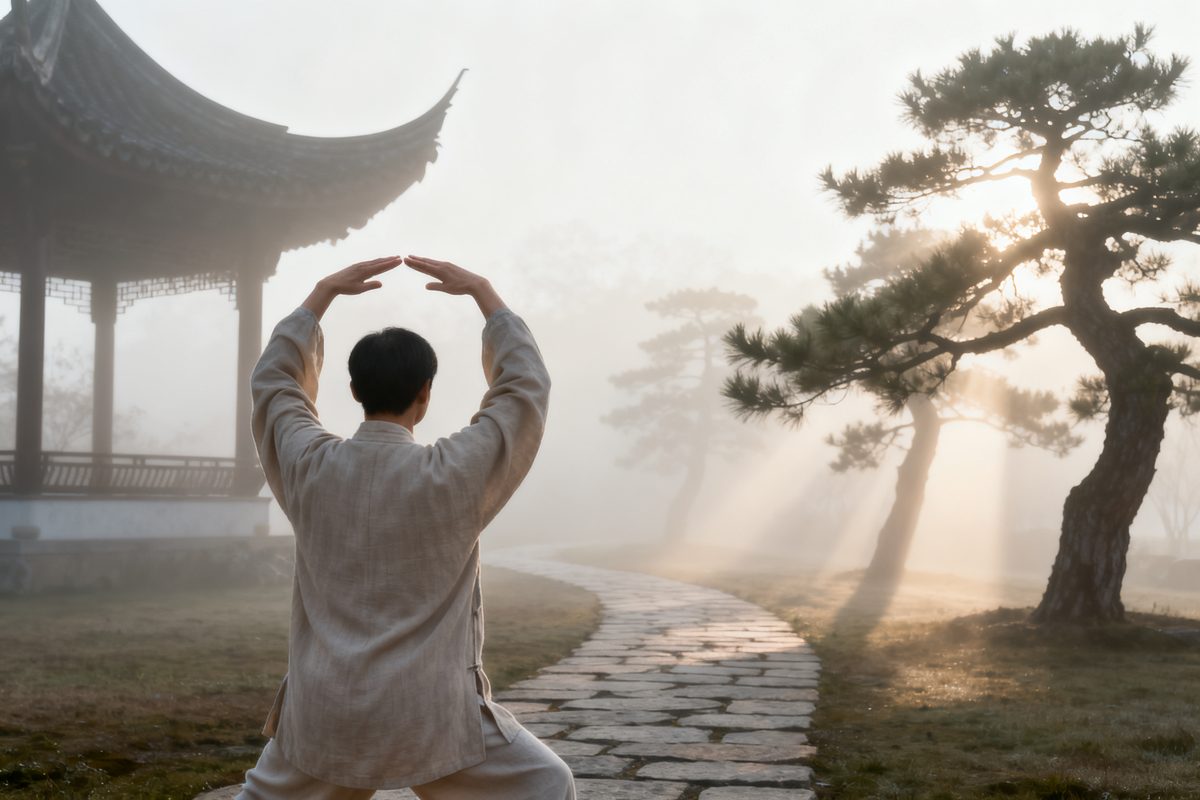
People who treat the body as a machine repair it when it breaks, replace parts when repairs fail. People who treat the body as weather learn to wait, to live along its grain. I don't know which is more scientific. I only know the second one keeps me calmer.
When the corner of your mouth cracks and you know it's fire, and fire recedes — like knowing the rain will stop. That alone is a kind of medicine.
Three questions, for whoever read this far:
- When was your last bout of "heat"? What was your body saying on your behalf, in words you never said out loud?
- If "shanghuo" won't translate — is there a word in your language that doesn't translate either?
- What's the weather in your body lately?